The Remembered Soldier
by Anjet Daanje, beautifully translated by David McKay
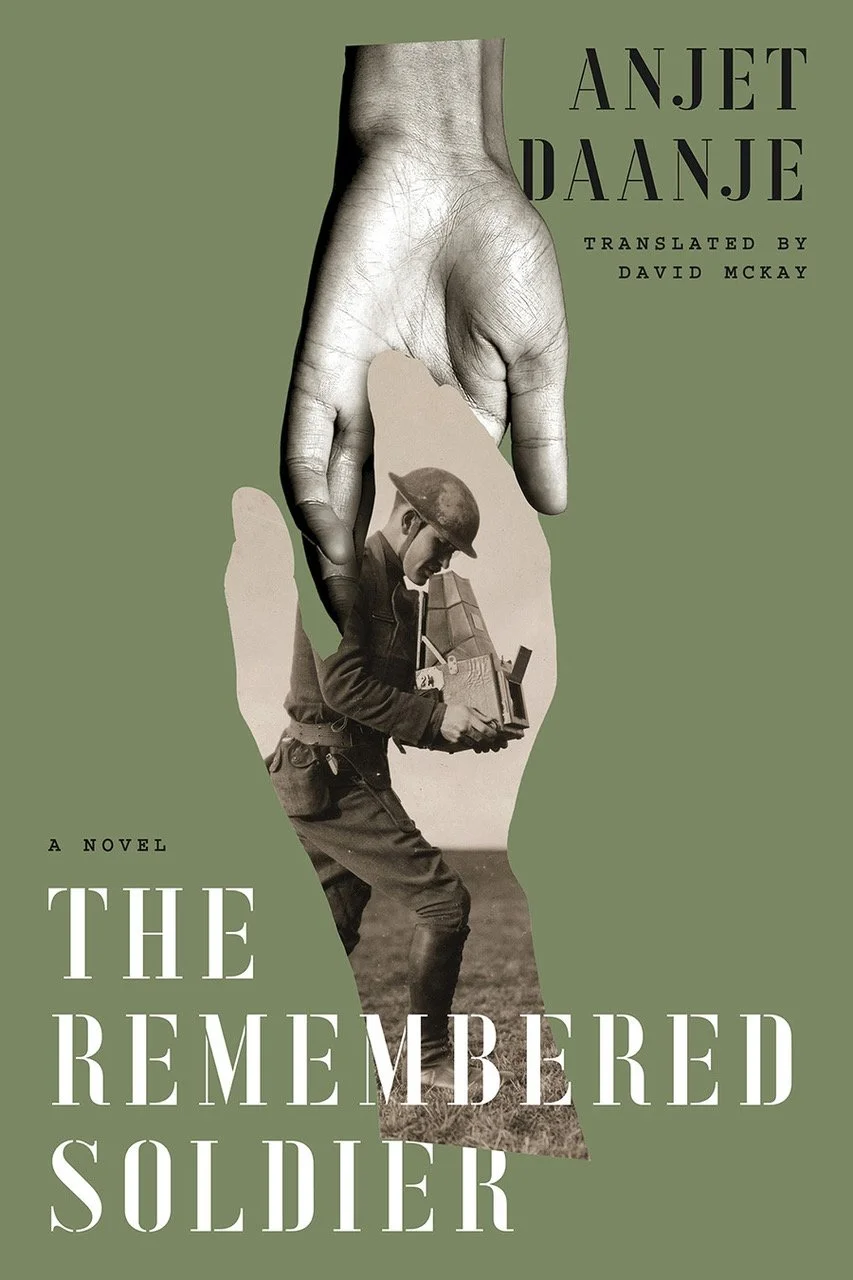
“And the sun turns away from the studio and it grows darker, and without her unconditional love he has no idea who he is, what he’s doing here, and then she opens her eyes and she smiles at him with groggy affection. . . .”
Bienvenue and welcome back to Musée Musings, your idiosyncratic guide to Paris and art. Today I am going to tell you about a book I read all fall. I am usually a fast reader but I slowed down to read this book. You’ll want to slow down, too. It’s that kind of book. The time you put into reading it will be amply rewarded, as will the time you spend ruminating about it afterwards. So, if the next month or so is a time when you look forward to sitting on the sofa with your feet tucked under you and a blanket, maybe from L.L. Bean, draped across your lap, then you should find this book and read it.
If I told you that this was not only a very long book but a book that has very long, mostly run-on, sentences, that mostly begin with the word, ‘And,’ you would be forgiven for assuming that I brought you here to talk about Marcel Proust. Again. But I haven’t. Although I have just looked it up and AI confirms that not only did Proust begin sentences with ‘and’ but that ‘Proust's complex sentences often reflect his exploration of themes like memory, and starting a sentence with a conjunction is an accepted stylistic choice.’ As it was for Proust, so it is for Anjet Daange, the author of this very long book.
While this book is new, the story it recounts is from Proust’s time, right after the Great War. For which every able bodied young man and eventually not so abled nor so young, was called up. But not Proust, he was much too sickly to qualify for active duty.
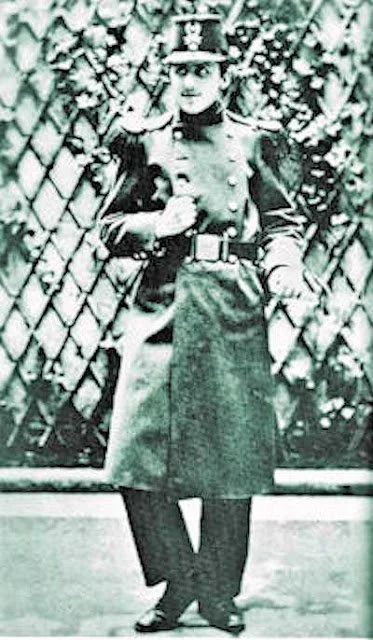
Proust in uniform 1889 during his military service at age 18
When I started reading this book, I was reminded of Le Retour de Martin Guerre. You probably saw the movie with Gerard Depardieu, based upon research done by one of my heroes, the historian Nathalie Zemon Davis. It’s a true 16th century tale, about a man who returns to his small village 9 years after he left. He is welcomed by his wife, his family, his friends, his village. Not because he looks like the man who left 9 years earlier, but because he knows all the details of the life he led before he left.
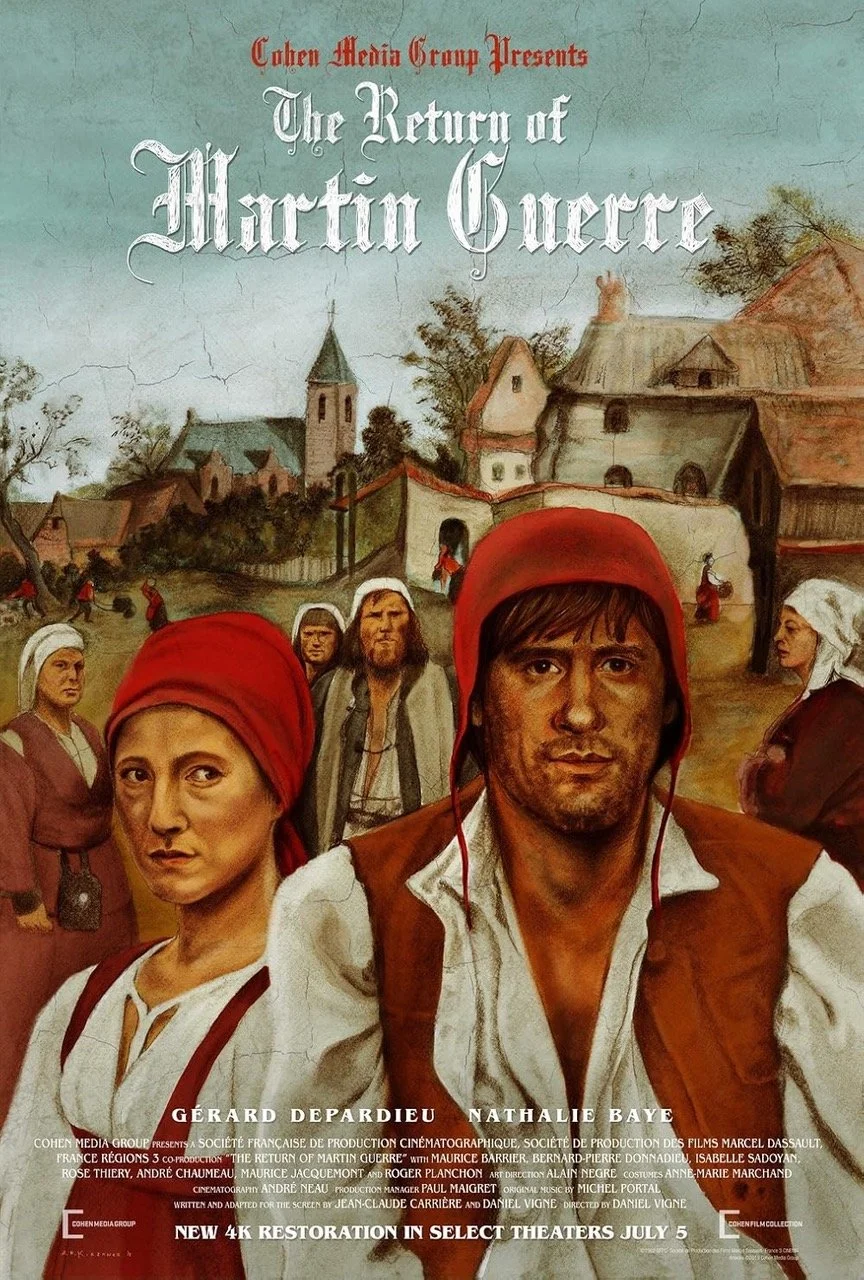
Eventually, however, traveling men, vagabonds, recognize this returned Martin as a man they knew from a neighboring village. A trial is held. A lot is at stake. The punishment for impersonating another is death by hanging. Just as the judge is about to dismiss the case, a witness appears - the real Martin. The impostor confesses. He and Martin were soldiers together. The real Martin told him all about his life and told him that he would never return to it. Years after the imposter was hanged, the judge passes through the village. He sees the wife and asks why she accepted the new Martin as her husband. She explains that although she knew that the second Martin wasn’t her husband, her life with him was much better than her life had been with her ‘real’ husband. At the trial, she “feigned ignorance” to stay alive, to take care of their children.
If you are patient and read The Remembered Soldier all the way through, you will learn how telling a fellow soldier all about your life with your wife can result in something quite different from the one imposed on the imposter Martin Guerre. And you will confront a few dilemmas that have as their source, assumed status.
To Davis, the story of Martin Guerre is an example of “self fashioning,” “the process of constructing one's identity and public persona to reflect a set of cultural standards or social codes.”
The Remembered Soldier is about ‘self-fashioning’ and the fluid nature of identity. Self fashioning here bumps up against and sometimes evades the ‘truth.’ Which we are as hard pressed as the returned soldier to get a handle on even though he/we try.
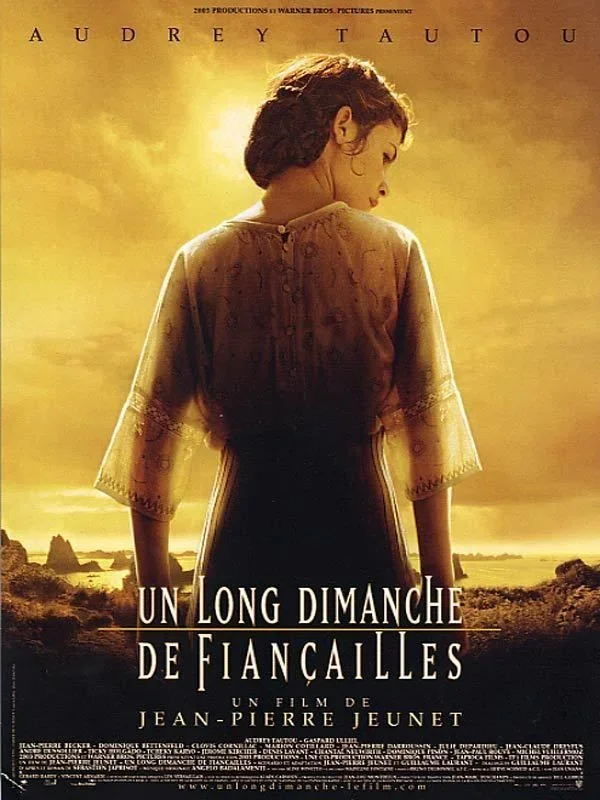
As I continued reading The Remembered Soldier, I remembered another book/film, Un long Dimanche de fiançailles, (A Very Long Engagement). That tale is, like The Remembered Soldier, set in the years following the Great War. The protagonist is a young woman, Mathilde, searching for her fiancé. Who might have been killed during the war or who might still be alive. As she searches, she learns that he was one of five soldiers found guilty of self-mutilation, so desperate were they to avoid the horrors of battle. The punishment for shooting off your trigger finger was severe. Either to be shot or to be thrust into the no man’s land between French and German trenches. To be killed or to starve to death. The punishments were so severe because the military intended them dissuade any other soldier who might consider deserting. Mathilde eventually finds her fiancé in an asylum. He is alive, but he has amnesia. He doesn’t recognize her, he doesn’t know himself. That’s how the story ends. That’s where The Remembered Soldier begins.
In interviews, Anjet Daanje has said that it was a true story about a soldier with amnesia that got her thinking about the tale she would tell. As one critic explained, (WSJ) “They were called les morts vivants, or the living dead…survivors of the battlefields of World War I who were so severely shell-shocked that they no longer knew who they were,” unable to “remember any of their past.” If they were discovered without a ‘dog tag’ the only way to try to find out who they were was to publish their photographs in newspapers to be scrutinized by grieving but hopeful parents and widows. The case that intrigued Daanje was of a man called Anthelme Mangin (the name he mumbled when he was found). He was claimed by more than 20 families when his photograph was published. Even after their facts didn’t match his facts (height, age, teeth, scars), some people couldn’t let go. What happened next was Kafkaesque. For 16 years, one doctor reviewed the claims. But none of them had merit. The mystery of this man’s identity was solved in the most prosaic way. By an old man who wasn’t even looking for his son. But that wasn’t until 1930, when Joseph Monjoin, as the closest relative of his son Octave, missing since 1916, applied for the pension due him. Anthelme’s doctor asked the old man to send a photo of his son and a sample of his handwriting. Finally he asked him to come to the asylum. The men didn’t recognize each other. But the doctor was sure they were father and son. Case settled, right? Wrong. Another 7 years went by, filled with court cases and appeals. By the time the case was finally decided, the father was dead. And 3 years later, the soldier was, too. By which time France was occupied by Nazi forces.
In the Remembered Soldier, Anjet Daanje takes an amnesiac soldier and imagines a life for him, or more precisely, imagines him trying to negotiate a life for himself. The novel begins in 1922, in an asylum where Noon Merckem has been living for 4 years. With other soldiers who also suffer from shell shock and amnesia. His life, like theirs, is mostly calm during the day, filled with garden work and prayers. Their nights are mostly filled with nightmares. Nobody knows who Noon is. The uniform he wore when he was found offered no clues - it was a melange of uniforms cobbled together, presumably from the dead and dying on the battlefield. His name? It was given to him at the asylum. His first hame - when he was found - Noon. His surname - where he was found - on the fields of Merckem. Noon Merckem’s doctor decides to post a newspaper advertisement about him. Widows arrive, hoping that he is their husband. One woman, Julienne Coppens has the most convincing story. Noon is her husband, Amand, the father of her two children, a photographer from the Belgian city of Kortrijk. She has been looking for him for eight years. The doctor asks how she knows that this man is her husband. She says he has a scar on his forehead, under his hair. The doctor checks. He does. Julienne takes Amand home, against the doctor’s advice.
Since Amand doesn’t have any memories of their shared life together, Julienne must tell him everything. Which gives Julienne the luxury of ‘self-fashioning’ a different identity, a more flattering identity for herself. But when the threads of that identity begin to unravel, she is obliged to backtrack and give another version, a less flattering version of herself, of him, of them, before he left for war. At first she told him that they were neighbors. Then she admits that she was his mother’s maid.
As I read this book, I thought about a term I heard a lot in the 1990s, Recovered Memory. It came up in the context of children at a day care center, about whether they had been the victims of child abuse. In the context of this book, it’s how their alleged suppressed memories were ‘retrieved’. In the ‘90s, it was with hypnosis and guided imagery. Are memories retrieved this way authentic? Or is it possible that the person guiding the memories is influencing or even creating them. The children in the child abuse case got their ‘memories’ from therapists and parents. Amand is dependent upon Julienne for his memories. Are the memories that Amand retrieves with Julienne’s help real or are they planted by Julienne. Did they happen, and if they happened, did they happen the way she helps him ‘remember’ them? So many questions!
One thing that gnaws at him (and gnawed at me, too) at the beginning of the book is that Julienne has two children. Who is the father of the younger child, a daughter born after he left for the front. He eventually asks. And when he does, she’s prepared. You came home on leave one time she says. Maybe he did. When he asks about his family, she tells him that they all died in a bombardment of the nearby town where they lived. But when he takes a train to that town on his own, he sees a photography shop with his family’s name on it. It is still standing. How is that possible. He doesn’t ask.
Their life together is a combination of negotiating the present and trying to re/construct a past. Sometimes it doesn’t work and sometimes, even when it does, it’s only temporarily. And just because Amand no longer lives in the asylum doesn’t mean that the nightmares that occasionally tormented him there have gone away. They sometimes make him violent at night. Of course that frightens Julienne and the children.
One day, not long after Amand arrives, he watches Julienne strangle a rabbit that she cooks and later serves with prunes for dinner (a nod to the chicken that Aunt Leonie’s cook strangled then served for dinner in Proust’s Swann’s Way?). Proust’s narrator never imagines that the cook might look at him the same way she looked at the chicken but when Amand says in reference to Julienne that he “feels nothing, as if she’s gutted and skinned him and left nothing but an empty carcass,” we know what he’s talking about.
Julienne keeps telling Amand stories about their past, about their life together. Sometimes what she says sparks something in him. “And she tells her version again and then he tells his, and they compare and repeat and negotiate … and she tells it as he says it was, trying out the new sentences, fitting them into her old story, and then she tells it again herself, in exactly the same words, like a magic charm”. The language is beautiful.
For a while after Julienne brings Amand home, he is more guest than resident. He cannot remember having been married to Julienne so it makes sense that their intimacy takes time to re/establish. Julienne is patient, Amand is hesitant. He has to get used to her round body, her dark hair. And then, when he is finally becoming more familiar with how she looks, her neighbor chops off all Julienne’s hair. Amand is troubled. As one critic notes, “she has used the clean slate of his memory to refashion herself….not just her clothes and her hair, but also her habits, her opinions, her choice of words.” Julienne ‘self fashions’ as Armand looks on in dismay. He may not have memories from before the war but by cutting her hair, she manages to destroy the memories that he is making now.
That they are photographers is the perfect metaphor for their lives together. As one critic notes, “the stories she supplies about their past together can seem carefully cropped” like the photographs she takes and then alters in the dark room. Soon after Amand returns, Julienne finds a new way to make money. She has Amand, wearing a soldier’s uniform, pose for his portrait with a war widow. Widows are eager to pose with a man who miraculously returned home after 8 years. By posing with them like this, he becomes a stand-in for their husbands, the ones who never returned.
Eventually their income grows enough for Julienne to think about moving into a bigger apartment, one with electricity, running water, an indoor toilet. Was Julienne putting on airs, living beyond their means, when she insisted that they move, Amand thought so. But with a husband, Julienne can use her business acumen.
One day, she and Amand go on a battlefield bus tour, taking their photography equipment with them. They visit the ruined city of Ypres, the scene of one of the war’s deadliest battles. Julienne take photos of Amand on the battlefield wearing his uniform. They will make these photos into postcards to sell. While the others on the tour buy souvenirs from children, Julienne and Amand climb over the rubble and stroll through the trenches. That seemed awfully soon to me but it’s true, tourism at World War I sites began almost immediately after the fighting ended. Apparently, early tourism evolved as grave recovery turned into pilgrimage. Like Amand, men who had been soldiers during the war, returned to the places they fought, often bringing their families with them.
As one reviewer (TLS) writes, “(m)emory’s imperfections make it negotiable, and Daanje invites the reader to wonder if Julienne’s version of history is so pliable because she molded it herself.” What we learn as the story unfolds seems to confirm that. But our dilemma, like Amand’s, is that we have nothing upon which to base our questions, our hesitations. That is until Amand begins to have flashbacks that aren’t about the horrors of the battlefield. Armand begins to dream about his past. But his dreams are not about his life with Julienne but his life with another woman, a blond woman. We accompany Amand on his pilgrimage to his past and with him, in real time, we learn about him as he learns about himself. The book delivers surprises, sometimes breathtaking ones, even as the writing insists that you slowly savor every word. As you might imagine, the book holds up to a second reading. Which is exactly what I am doing now. Gros bisous, Dr. B.
Thanks to everyone who took time out from cooking their own leftovers to Comment on how I cooked mine!
New comment on A fridge bursting with leftovers - who could ask for anything more!:
Dang! My turkey leftovers are all gone, so I can't swipe your ideas. But my next rotisserie chicken better watch out!!! Bonnie, California
B, I've waited all year for your annual holiday food fest. Well done, I'm starving now. Kathy, DC
Can we join next year for Thanksgiving? The meal looked wonderful and scrumptious. Your description made me want to be at the table. Benjamin, Baltimore
Oh my, after reading your latest article on Thanksgiving, I'm really not hungry anymore!!! Gérard, Ile de France
The meals you prepared with the Thanksgiving leftovers were absolutely amazing! You could open a gourmet restaurant. I am so impressed! My mouth was watering as I viewed your wonderful photos. Thanks for sharing so many details. Randa, Washington, DC
New comment from on Old Things through New Eyes
Thank you for a well-researched post, titled Old Things through New Eyes, which is so detailed and beautifully written. I have just completed reading Proust’s In Search of Lost Time with Fereshteh Priou’s Greenwich-based Proust book club and am planning a trip to Paris and Illiers-Combray next spring, so your post comes in real handy. I would love to follow your eyes and visit art galleries and museums in Paris and the rest of France with you. If ever you are conducting a tour, please let your fans know! Warm regards, Shiao-Ping from Australia.