A little bit of Normandy, a little bit of Paris and a little bit (too much) of Versailles
A bientôt Ginevra
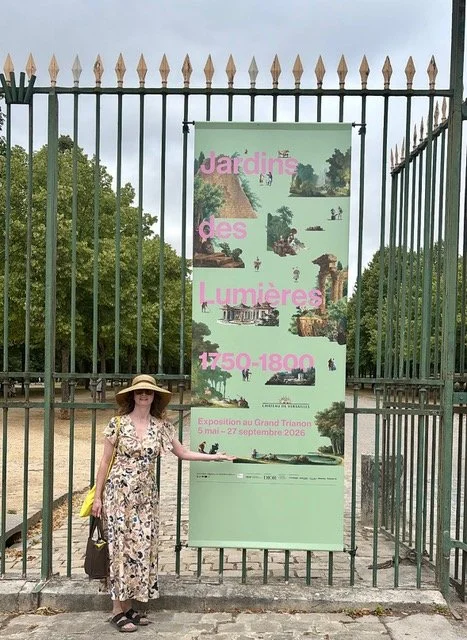
Bienvenue and welcome back to Musée Musings, your idiosyncratic guide to Paris and art. As I’m sure you’ve heard, from anyone who is or has been in France during the past six weeks, we have been in the grips of a series of heatwaves (canicules), relieved every so often by a few days of bearable, seasonal weather.
Here’s how Le Monde described the last heatwave (we made it through that one and have since been plunged into another which is due to end - for a little while at least, next Friday, 17 July). “Schools closed, trains canceled, people suffering: France is struggling as it enters the toughest part of the heatwave that began on Wednesday, June 17 (a month before the current heatwave is scheduled to end, at least for a while). This heatwave has already proven to be unusual, due to its intensity (and) duration…. It could become historic in the coming days, as temperatures continue to climb nationwide during a period that looks less like a peak and more like a prolonged plateau. The end of the episode – (is) hoped for during the weekend of June 27-28…” It sounds dramatic and it is awful to be living through. I have one fan which I bought when I first moved here 8 years ago. I hope it doesn’t conk out because there are no fans to be had anywhere.
The weekend of June 26-28 was the weekend Ginevra and I escaped to Normandie. It’s a place I have come to love but which Ginevra had never visited. We left on Friday, just as the heatwave was breaking. We stopped first in Deauville, which, we agreed, is a little too polished, a little too precious. However she was happy to see the hotel that figured in one of her (many) favorite Hercule Poirot mysteries, Murder on the Links. And happy as well to check out the changing cabins embellished with the names of actors from ‘yesteryear.’ That night and on Saturday night, too, the sky exploded with impressive thunderstorms. They reminded me of the spectacular storms I enjoyed at my husband’s parents’ summer home on Pemaquid Point, in Maine. (Figs 1-3)
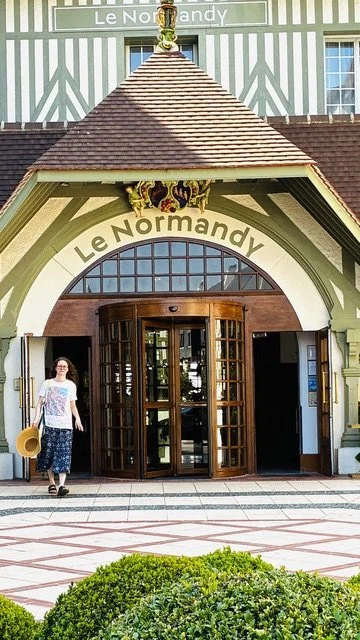
Figure 1. Le Normandy Hotel (which became Hotel Golf in Murder on the Links - an Hercule Poirot Mystery with David Suchet and Hugh Frasier)
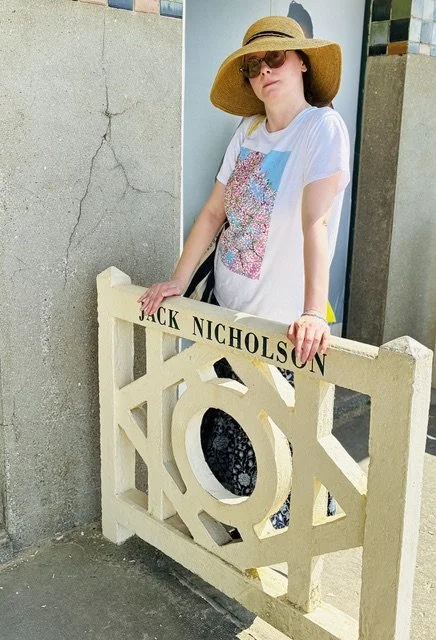
Figure 2. Ginevra on the beach at Deauville
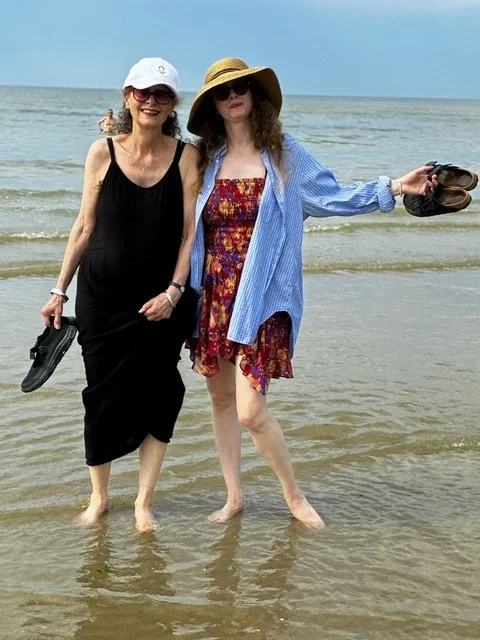
Figure 3. On the beach
On Saturday, we traveled to Beuvron-en-Auge to see the square made famous by David Hockney about which I have written (see last week’s post). Ginevra was a little disappointed - Hockney’s interpretation is so much more fun than the ‘real’ square. On Sunday, on our way back to Paris, we stopped at Chateau de Boutemont, to see gardens I had visited last August. It was fun to see the blooms a month or so earlier this year and through Ginevra’s eyes. (Figs 4-8)
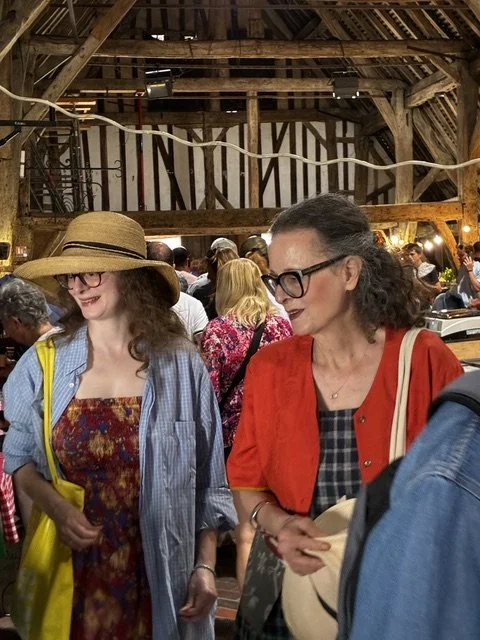
Figure 4. Ginevra & me at the indoor marché in the town in which we stayed, Dives-sur-Mer
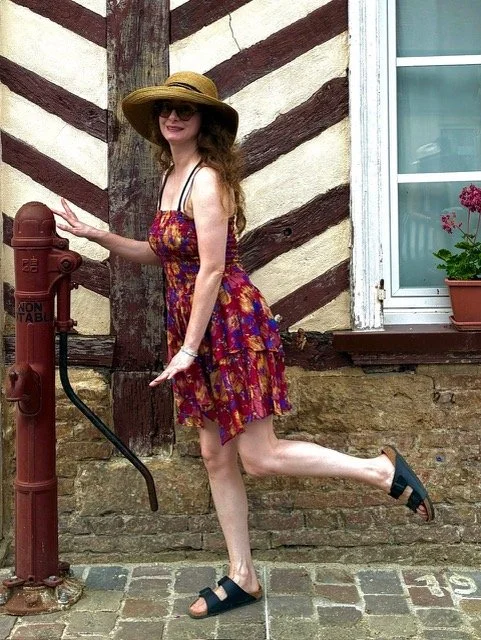
4a. Pumping water in Bouvron
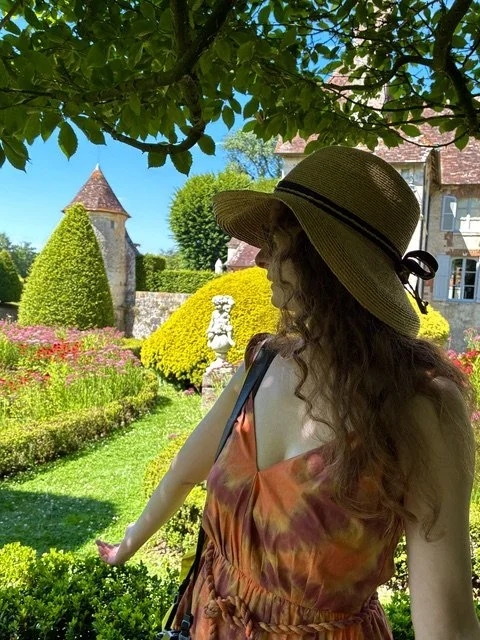
Figure 5. Ginevra in Chateau de Boutemont
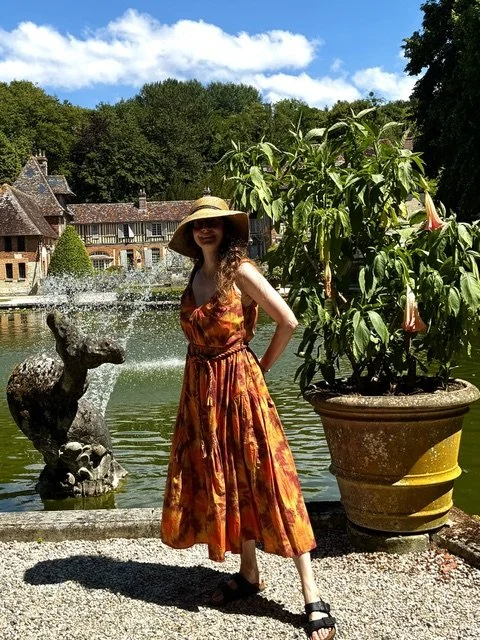
Figure 6. Ginevra in Chateau de Boutemont
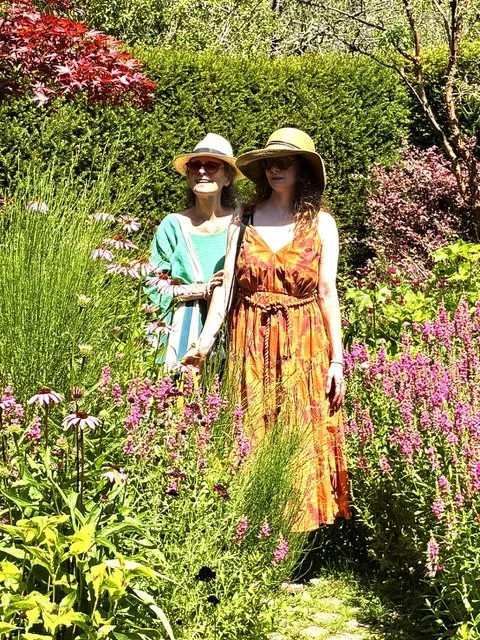
Figure 7. Trying to blend in in the “purple garden”
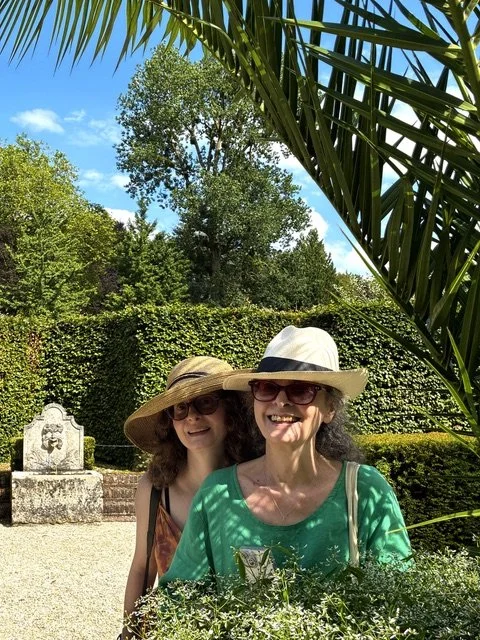
Figure 8. Ginevra and me in Chateau de Boutemont
Then it was Ginevra’s last week in Paris until next time. Happily, the weather was mostly, delightfully, temperate. We crammed as much running around as we could before she left and before the heat drove me back inside, to the shade and shelter of my apartment (where I am now).
One day, we went to both the Museum of Modern Art to see the Lee Miller exhibition and the Grand Palais to see the exhibition on Matisse. It’s only a 20 minute walk between the two museums, so we took time between the two exhibitions to enjoy a leisurely break at the lovely cafe at the Petit Palais. The Lee Miller exhibition is both low-key and moving. I have written about Lee Miller’s professional and personal life with the Surrealist photographer Man Ray in Paris and her years as a war photographer for Vogue Magazine, of which the photo of her in Hitler’s bathtub is probably the best known. In 2024, I wrote briefly about an exhibition of her work in St. Malo, her photographs of that town, first besieged and then liberated.
This exhibition traces her life from her early years as a fashion model in New York through her experiments with Surrealist photography in Paris, to her financial struggles as an independent photographer back in New York City during the Depression. Then we learn about her improbable life in Cairo, the wife of a wealthy Egyptian businessman. From there, she was on to another adventure, as one of the very few accredited female war photographers. After the war, she put her camera away and reinvented herself one more time. She became the wife of artist and art historian, Sir Roland Penrose and the mother (at age 40) of Antony Penrose. By the time her son was born, a whisk had replaced her camera. She took courses at Le Cordon Bleu and became a gourmet chef. The final photos of Lee Miller show her making meals and entertaining guests at her home in Sussex, England - Farleys Farm. Those friends included Picasso and Man Ray, Saul Steinberg and Leonora Carrington. The Tate Britain put this exhibition together, in collaboration with the Art Institute of Chicago. It includes “250 vintage and modern prints, some of which have never been exhibited, offering a fresh perspective on her oeuvre.” It’s a moving exhibition and one you really must see if you are in Paris. Lee Miller’s life was filled with so many twists and turns. (Figs 9-12)
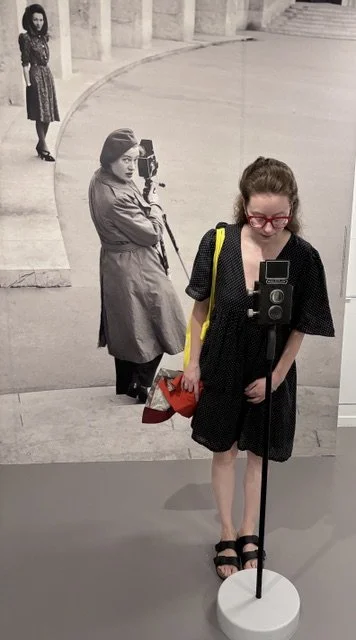
Figure 9. Ginevra looking into the vintage Rolleiflex camera like the one used by Lee Miller in the background, Museum of Modern Art, Paris
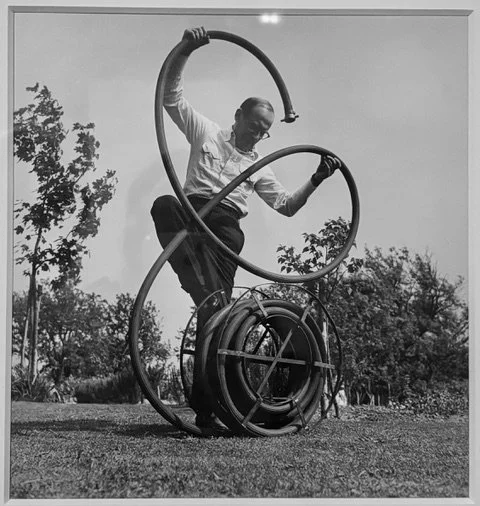
Figure 10. Saul Steinberg trying to roll a garden hose at Lee Miller’s Sussex home, photo Lee Miller
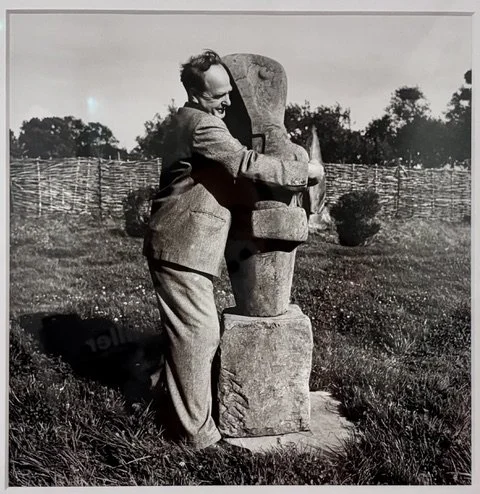
Figure 11. Henry Moore hugging his Mother & Child sculpture, Lee Miller’s home, photo Lee Miller
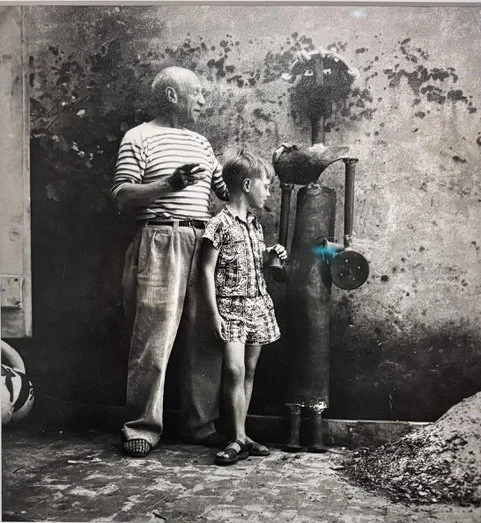
Figure 12. Picasso and Lee Miller’s son, Antony, Lee Miller’s Sussex home, photo Lee Miller
Ginevra wanted to see the Matisse exhibition and I was happy to see it again. If you’re here, you should see it, too. It’s a beautiful celebration of creativity in the face of adversity. An old painter whose failing health and strength demanded that he find new ways of making art even as his body posed ever more restrictions. If he had been able to paint as he had always painted, he wouldn’t have needed to experiment with cut-outs and collages. He worked around the pain and disability. Matisse’s final years reminded me of David Hockney whose creativity at the end of his life was astounding. He was 82 when he moved to Normandy in 2019. For 3 years, he painted landscapes and portraits that have been delighting gallery and museum goers all over the world. Even after he returned to London in 2022 because he required around the clock medical care, he continued painting. The exhibition now at the Serpentine Gallery in London, includes portraits he completed just before his death. Two grand old men of invention. (Figs 13, 14)
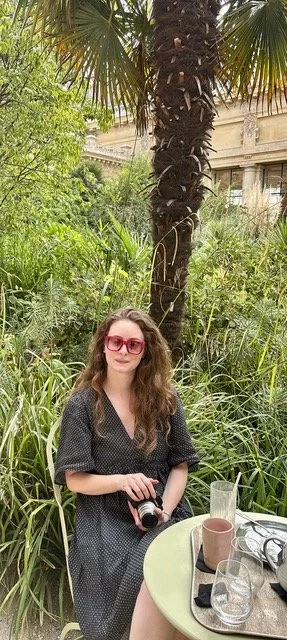
Fig 13. Petit Palais cafe
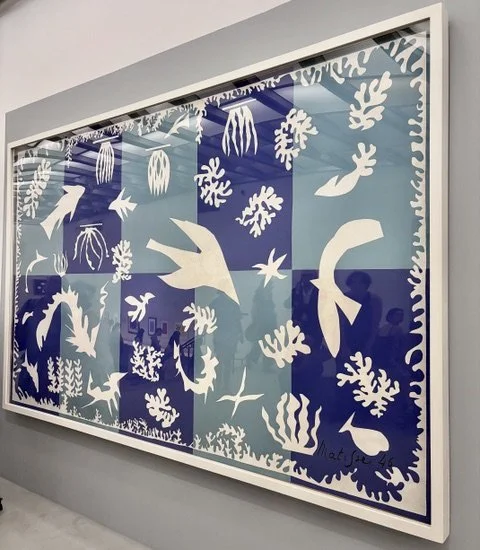
Figure 14. Collage, design Henri Matisse
From the end of June through the third week of July is soldes (sale) time in Paris, so Ginevra and I devoted a couple days to looking for bargains. We walked to Le Bon Marché one day but neither of us found anything even vaguely appealing. I will probably go again just before the sales end, to see if lower prices make anything look more interesting. The day was saved by our picnic lunch and stroll in the Luxembourg Gardens. We next tried Merci, the boutique on Boulevard Beaumarchais in the Marais. We didn’t find anything there, either. But I didn’t come home empty handed, I found a dress and two tops at the agnès b, boutique just down the street from Merci. I’ll return to both of them again, a little closer to the end of the sale.
I had been wanting to see the exhibition on Gardens of the Enlightenment at the Grand Trianon at the Chateau de Versailles since it was first advertised at the beginning of May.. And I knew I wanted to see it with Ginevra. So, on one of the last days of temperate weather, we made our way to Versailles. It’s easy enough to get to Versailles from my flat. A quick metro ride to the Gare d’Austerlitz and then the RER C to the train station in Versailles. That’s where the tedium begins. First, it’s a 20 minute walk to the Chateau. And unless you have a ticket for the Chateau, (which we didn’t) you must walk all the way around the gated Chateau and the gardens to get to the Grand Trianon. That’s another 30 minutes. So, basically an hour walk from the train station in Versailles to the Grand Trianon. We brought a picnic lunch but we weren’t thrilled with the spot we finally found to eat it.
Since it was an exhibition about gardens, I expected it to be in the gardens around the Grand Trianon. But when we got there, the exhibition was in the Grand Trianon. It was fun but not fantastic although it did include paintings and prints of our favorite deposed and beheaded monarch, Marie Antoinette who has been showing up everywhere this year. (Figs 15-19)
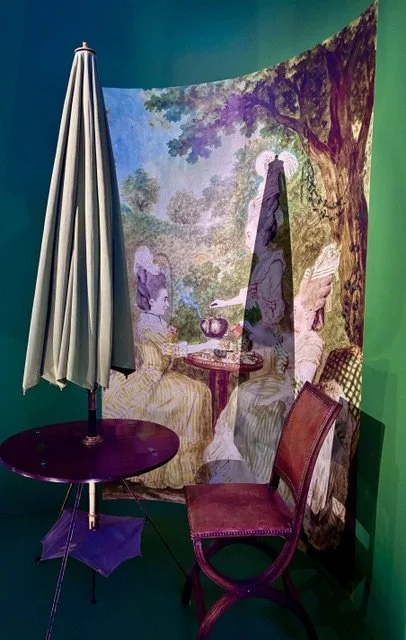
Figure 15. Garden Furniture, with backdrop of tea in the garden, Grand Trianon
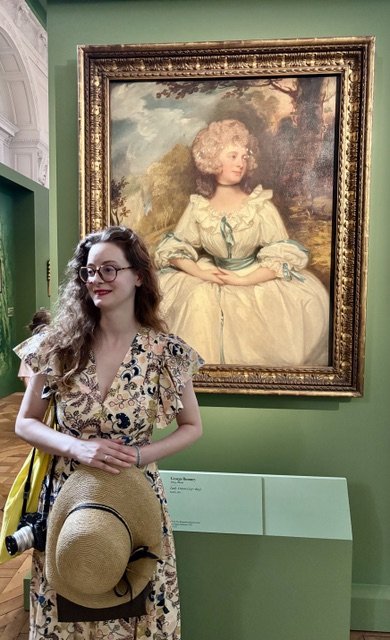
Figure 16. Ginevra striking a pose in the Gardens of the Enlightenment exhibition, Grand Trianon
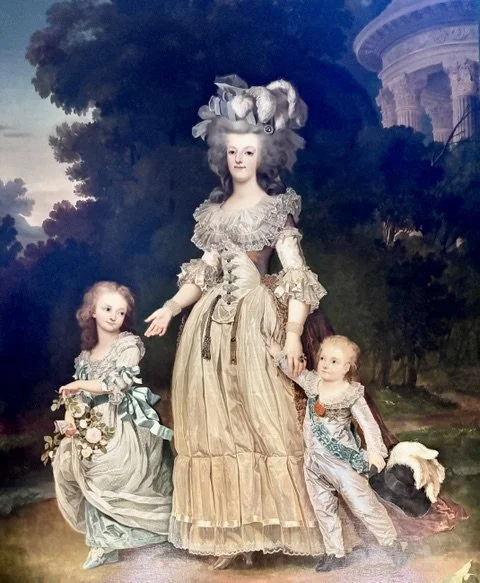
Figure 17. Marie Antoinette and two of her children at Temple of Love in the garden at Versailles
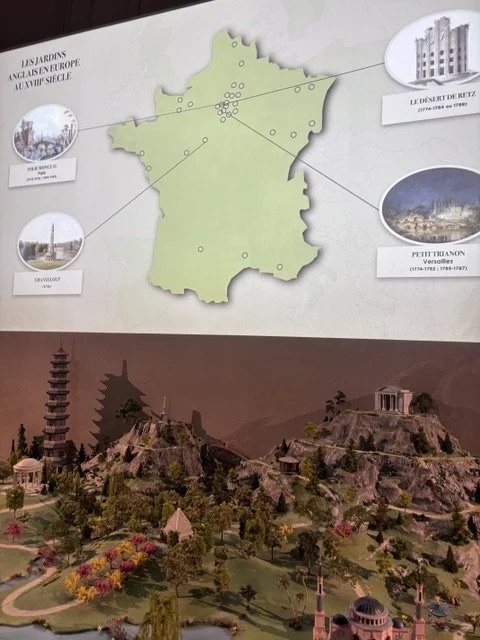
Figure 18. A map of the English influenced gardens in France, 18th century
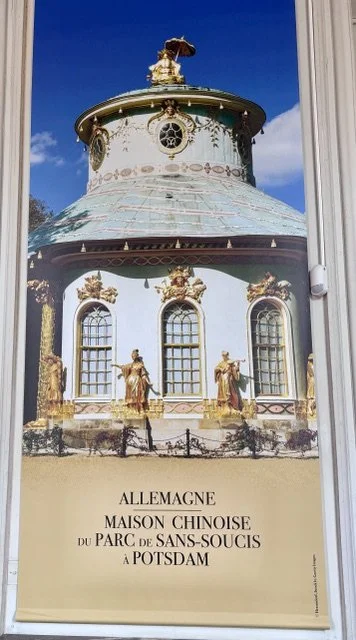
Figure 19. German garden influenced by English gardens at Versailles, San Soucis, Potsdam, Germany
We debated about whether or not to wander over to the Petit Trianon (a trek) but didn’t want to get bogged down at the Petit Hameau (which we inevitably do when we’re there). I wanted to see the formal gardens around the Chateau and we thought (as it turns out, incorrectly) that we could walk back to the train station inside the grounds. Just as we got to where the gardens get interesting, we were stopped. Did we have tickets to the formal gardens. No. Did we want to see them, Yes. Okay, that will be another €30. As the Chateau was closing in less than an hour, we decided to give it a pass. So, we had to backtrack to get back to the gate from which we could leave. It was a long walk back to the train station.
The next day, with only a few days left of her stay, we finally got to the place I had been promising to take Ginevra the entire time she was here - the Caudelie Spa. We fell in love with their spa in Martillac, just outside of Bordeaux. And we visited it as often as we could when we spent our summers in the Dordogne. This time, we each had a facial and a massage. Did we deserve it, you betcha! Should I have them more often, obviously! It’s a beautiful, calm oasis in a bustling city. I must do this more often.
But wait, there’s trouble in Paradise. Remember I wrote (above) that I was surprised that an exhibition about gardens was not held in a garden? Well, silly us. If we had just read the brochure we got in the Grand Trianon, we would have seen that the exhibition continued into the gardens of the Petit Trianon. We had somehow missed the most important part of the landscape exhibition, the landscape. Ginevra wasn’t able to sleep all night. So, the day the heatwave started again, the day after our relaxing spa treatments, we were once again on our way to Versailles. This time we knew exactly what to do and what to avoid. We got to the Gare d’Austerlitz but there were no trains listed going to Versailles. What was going on? We asked a ticket agent and she told us that the RER C was not going to Versailles that day or the next. Something about tracks overheating because of, that’s right, the heat. Had we already purchased our tickets? Well, yes we had. So, this is what she told us we had to do to get to Versailles. Take the RER C to St Michel, then take the Metro #4 to Gare Montparnasse, then take the N train to Versailles Chantier. I have been to Versailles Rive Gauche (the Chateau) and I have been to Versailles Rive Droite on the RER B (when, for some reason the RER C wasn’t running) But I had never been to Versailles Chantier. When we finally got to the train station (the walk from the metro stop at Montparnasse to the train station is interminable, with two rolling walkways and lots of escalators) the N train was fairly easy to find. The train was comfortable and the trip was only 25 minutes (instead of 40 minutes on the RER C). The problem was that Versailles Chantier is even farther from the Chateau that either of the other two Versailles stops. It took us well over an hour to walk from Versailles Chantier to the right gate (porte de la Reine) for the Trianon.
And then, more problems. The map we got at the exhibition isn’t very clear and when we finally did find the spots in the garden that corresponded to the the numbers on the map, they were references to structures that were no longer there and events that had taken place two centuries earlier. There were 10 places on the map that had something to do with the exhibition, we found 8 of them. We were really no more enlightened than if we hadn’t seen them at all. And then, as Ginevra feared we would do, we got caught up in the Hameau and it took us forever to get out. (Figs 20-26)
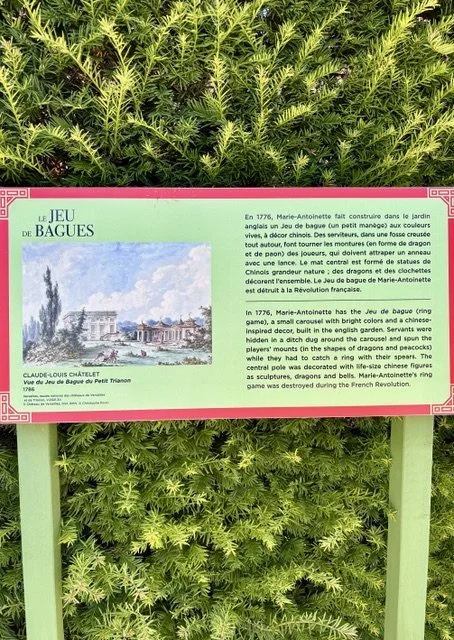
Figure 20. One of the 10 signs dotting the Trianon Garden, we found 8 of them. But most everything they describe no longer exists!
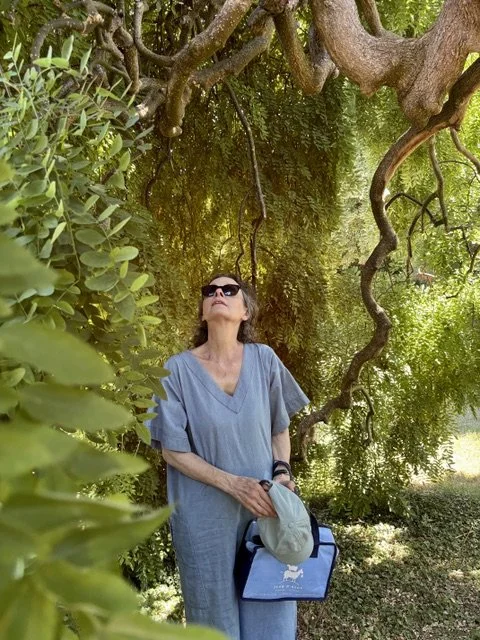
Figure 21, I found a great tree
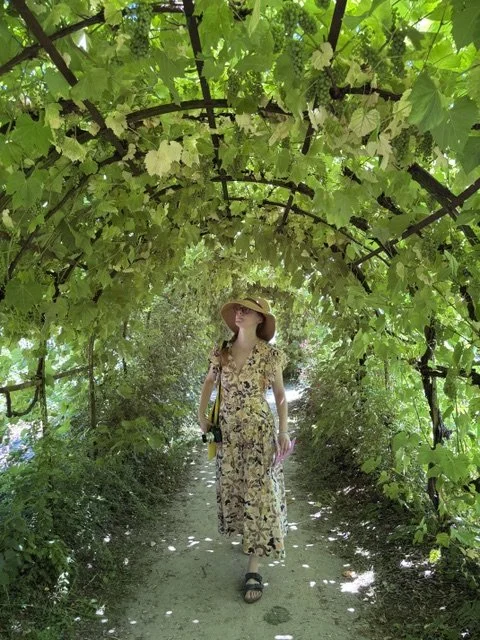
Figure 22. Ginevra found a gorgeous arbor
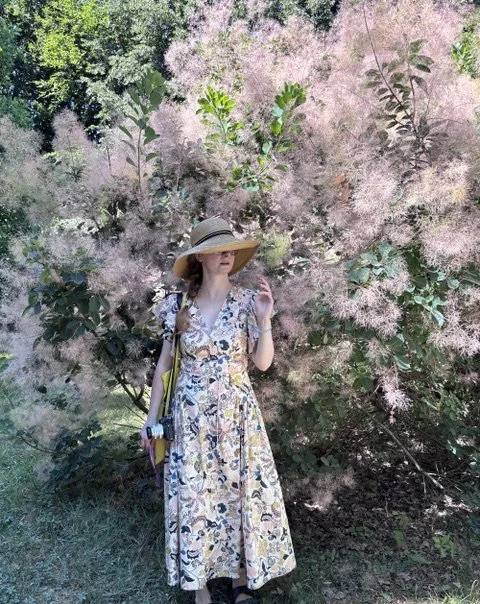
Figure 23. Ginevra also found a gorgeous tree that she matched perfectly
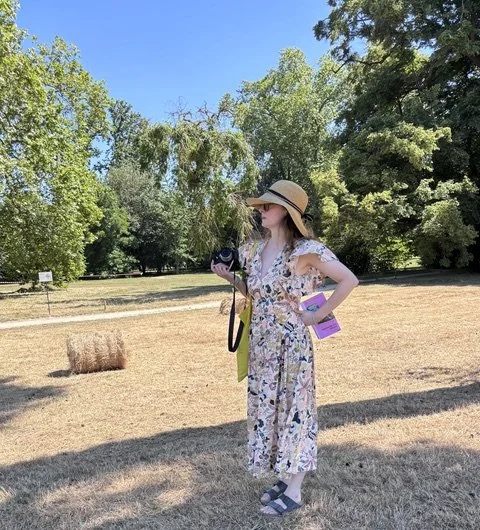
Figure 24, And some hay
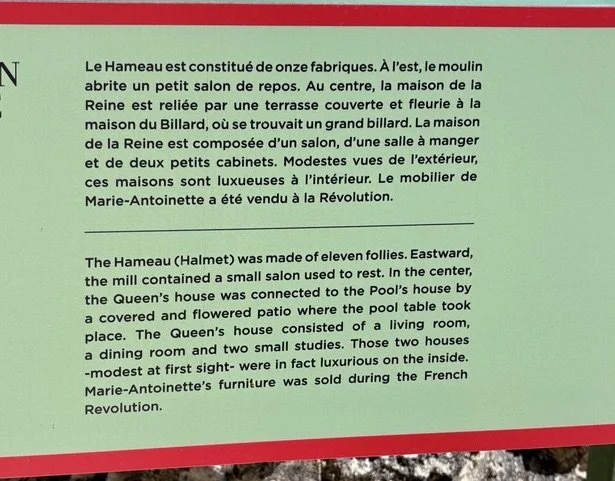
Figure 25. Another garden description, this of places that used to be in the Hameau
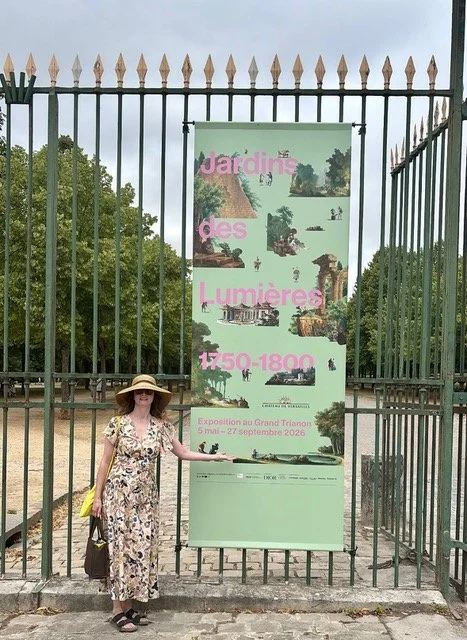
Figure 26. But you’ll have to agree, the posters is gorgeous.
Ginevra decided that we could salvage our visit with a visit to Le Jardin du perfumeur which is only open on weekends during the run of this exhibition. Alas, nobody, and I mean nobody, i.e. none of the guards and not any of the badged workers at the Grand Trianon or on the grounds of the Chateau knew where Le Jardin du perfumeur was. There was signage but the signs disappeared before we got anywhere near anything that looked like a jardin du perfumeur. We never found it.
The entire time we were at Versailles, we kept hearing the boom of cannons. They were part of the weekend-long celebration of the 250 anniversary of the signing of the Declaration of Independence that included “Reenactments, music, and camp life…” So, while I wasn’t feeling too patriotic, given the state of affairs stateside, the boom of 18th century cannons was the background to our visit. We trudged back to the Versailles Chantier train station, although we did find a lovely street (Rue de la Paroise) to walk along which was chock full of boutiques that kept our minds occupied, at least for a while. When we finally got back to my apartment, we had walked over 15 km, the length of some of our walks on the West Highland Way!
Ginevra’s gone, the heat is back, my cousin from Oxford, England arrives in a few days and Nicolas is scheduled to arrive at the end of the month. Hope it’s cooler where you are than where I am! Gros bisous, Dr. B.
Thanks to everyone who has taken time to send Comments, either on Substack or Musée Musings, they are much much appreciated.
Comment on Veni(ce) Vidi Vici.
Ginevra , beautifully written with intelligence wit and humor. Well done , so enjoyed your insights . Franny H, Bay Area
Comment on A Life in Art / An Artful Life, Part 1 Another fascinating post Beverly. It never occurred to me to think of the author himself whilst reading Berenson and getting that exciting first awakening to the magnificence of Italian paintings.. The concept of an art history course without images too! Katherine, Oxford, England
Thank you especially for the Alaia + the Matisse download! Any plans to see the Matisse/ Yves Saint Laurent exhibit in Nice this summer? Elena
Proust for a Day (or two - up to you): Proust & Women, Hotel Litteraire de Swann. Hi Beverly This is an amazing post; it would benefit anyone who reads In Search of Lost Time! Thank you very much for bringing the exhibition to us! I have stayed at a l’Hôtel Littéraire myself - in Nancy, which was really pleasant; I did wonder at the time why all these lovely quotes on the walls of my room! Shiao-Ping, Brisbane, Australia
The Divine Sarah Bernhardt What a woman! Thank you for shedding so much more light on her Beverly. Katherine, Oxford, England
Forever in vogue forever reimagined. Fabulous visual tour. You make it feel like we are there with you as our tour guide. Deedee, Baltimore