Art after Abstract Expressionism
or Is David Hockney the last true Artist?
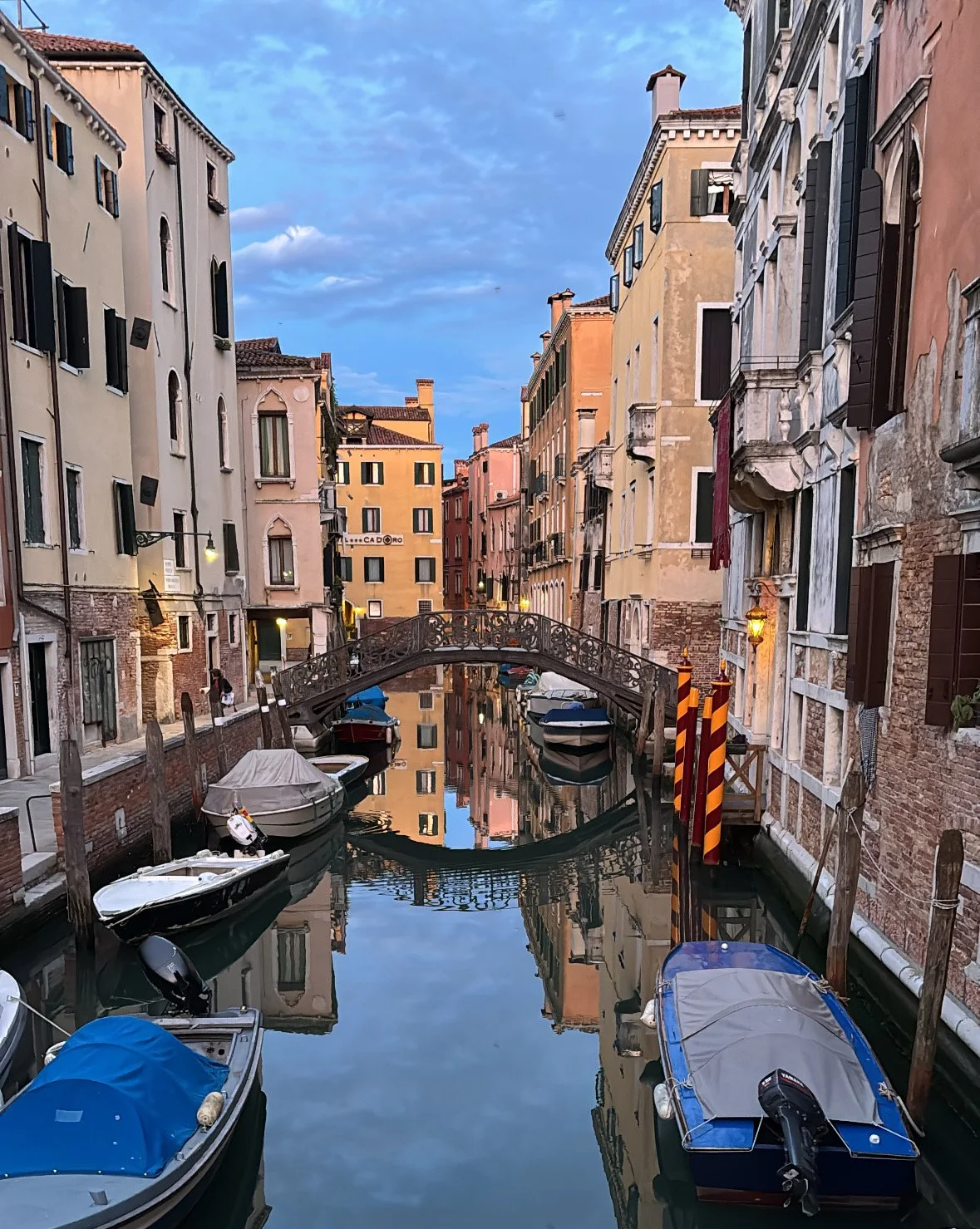
Prologue: Bella Venezia, Part 1
Bienvenue and welcome back to Musée Musings, your idiosyncratic guide to Paris and art. Today, we’re in Venice. Ginevra and I hadn’t been since 2022.
That time, like this, we went for the Biennale.
That time, we flew from Paris and took a boat from the airport into Venice. We are terrible travelers but that boat ride was particularly awful. With no outside seating permitted, we sat inside, sweltering in the heat and gagging on the petrol fumes.
This time, we took a train from Paris (first class). It’s an 11 hour trip, so we broke the trip up with a stay in Torino en route and in Milano, on our return.
That time, our 11 days in Venice dragged on. So, this time, we stayed for a week. That time, we went at the end of July. This time, we went in mid-May.
You know what you’ve read (or experienced) about the best laid plans….The week before we left Paris for Venice, all of Europe experienced a cold snap. It was so cold that it hailed as often as it rained and it rained a lot. The cold spell began, ironically enough, the day after the heat in my apartment building was turned off (until November). When I asked him about it, the concierge told me to buy a space heater …
Paris was cold and rainy the day we left for Venice. But as we barreled along, the temperature climbed. Our arrival in Venice coincided with a heat wave. We had booked a lovely little apartment in the Canareggio. There’s typically something perverse about an Airbnb rental and the perversity of the place we had chosen was that the air conditioner was controlled by the owner rather than the occupant. The first night, we froze. I texted the owner and asked her to turn off the air conditioner, 10 hours later, she did. But we had to keep the windows open to warm the place up a bit. Customer service being either last on the list for Airbnb hosts or not on the list at all, the apartment was either way too hot or much too cold. I don’t think I’ll be staying at an Airbnb again for a while, if ever. A decision which may not be necessary as cities all over Europe pass legislation to eliminate Airbnb rentals or greatly reduce their numbers.
But alas, that wasn’t the worst of it. On our first day in Venice, I started not feeling well. But I did, more or less, soldier on. For our second day in Venice, we planned a train trip to nearby Vicenza to see a few of Palladio’s villas. We had wanted to go in 2022 but it had been too hot. Since I couldn’t bear the idea of getting onto a vaporetto, we set off for the train station on foot. It should have been a 20 minute walk. We got 1/4 of the way there in 20 minutes. I was so fatigued that I had to rest every few steps. For the next 2 hours, we inched our way back to the apartment. It finally dawned on me that I was not well. A profound fatigue had replaced the migraine and vertigo of the first day. My head was clear but my body was spent. For the next week, Ginevra did alone what we had planned to do together. And I tried to figure out how I was going to get out of Venice. Continue reading Part 1 of Ginevra’s excellent adventure. Gros bisous, Dr. B.
“You’ll never meet a dying artist saying god I wish I had been the President of the Bank of America, but you might meet a dying President of the Bank of America who said you know I’d rather have been a poet or an artist. It’s that way around you know?” David Hockney - In Memoriam (Note: I had created my title - Is David Hockney the last true Artist? before finding out my favorite artist had passed away.)
Ginevra here reporting for duty. Mom got sick in Venice and had to stay in bed so I was forced to navigate the canals and the tourists all by my lonesome. And navigate I did.
I went to the Biennale, both locations, Fondazione Dries Van Notten, Anish Kapoor’s Palazzo, Punta della Dogana, Palazzo Grassi and Peggy Guggenheim’s palazzo. I took 2 Rick Steves self guided walks and went to a really cool hotel (called Venice, Venice) that had a special piece by JR that Mom had found out about, for which Mom had gotten us tickets.
I’m going to start with the Biennale which was our main impetus for coming back to Venice after having had so much fun at the Biennale in 2022. The Biennale is held at two sites, the Arsenale - a big warehouse like space of former shipyards and armories - and the Giardini (garden) where every nation has its own little pavilion.
I started with the Arsenale. It is huge, it is dark, it is overwhelming. And obviously, there is a lot of art. You have to choose what to look at and learn about and what to glance at while you are walking by. It’s not all that easy.
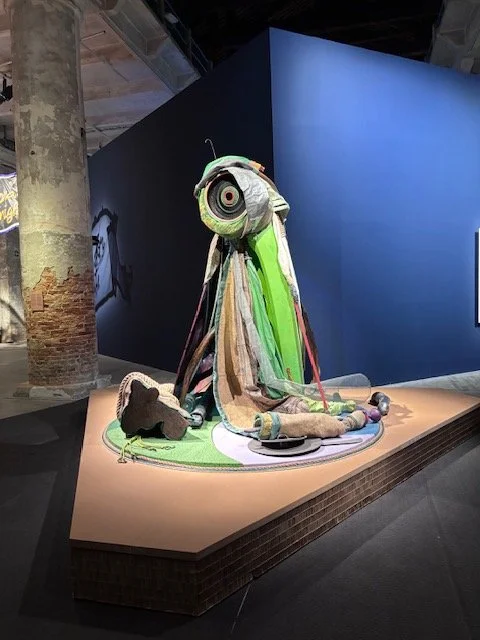
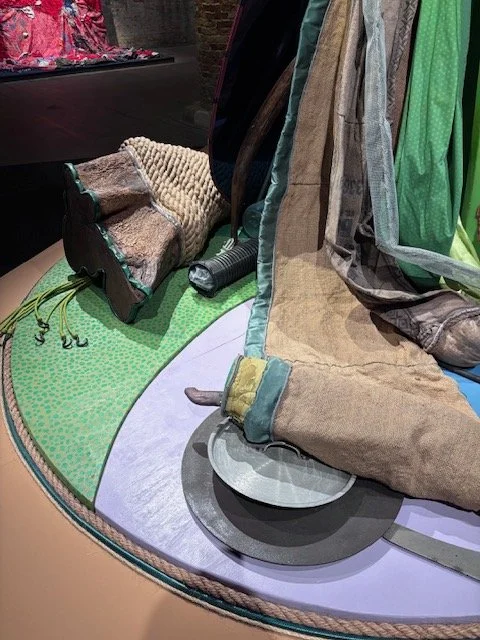
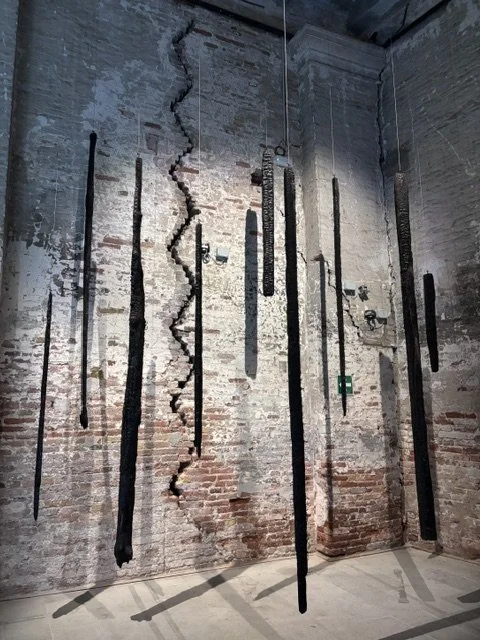
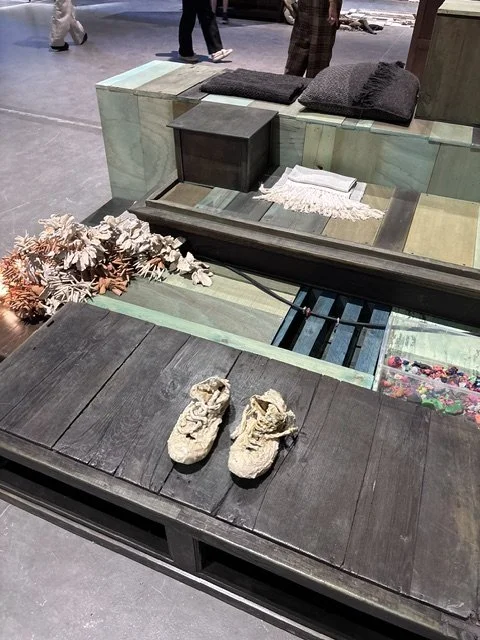
Below is the first piece I saw as my eyes were getting accustomed to the dim lighting. I had just seen a number of works made with found materials at the Fondazione Dries van Notten. This piece exists both as the sum of its parts and each of its parts seperately, as you look closely and discover what each found material is. It’s like oh! That’s a pot! That’s a tree trunk! I did not look for the description.
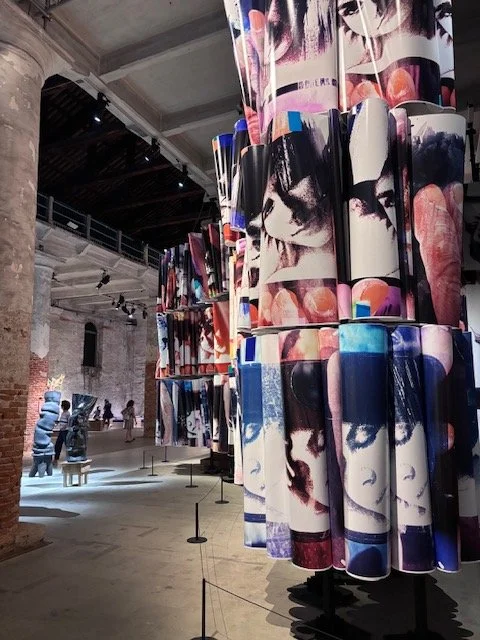
This next piece was visually arresting, I wanted to understand what it was and what it was about. How frustrating to look for but not find a description! So, I decided to appreciate it visually and technically - coming to it as a photographer interested in how this particular artist used both photography and presentation. it took a while to determine what I was actually seeing. Normally, you feed a sheet of paper into a printer but with very large format printers, you can use a roll of paper. The artist did that and then took the continuous roll of printed paper and made it into ribbons, like ribbons of candy. There were three layers of images, so it was very tall as well as very long. The artist’s name is Carrie Schneider. This big piece did not seem to have a title, which was too bad, especially since the titles of her other works were so clever, take a look for yourself, the titles are just below these images.
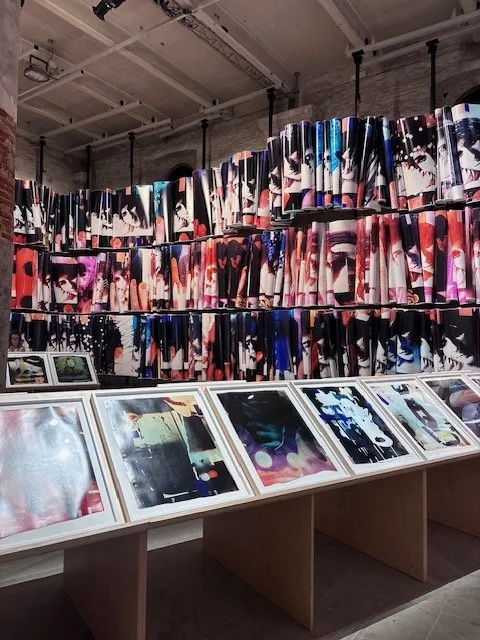
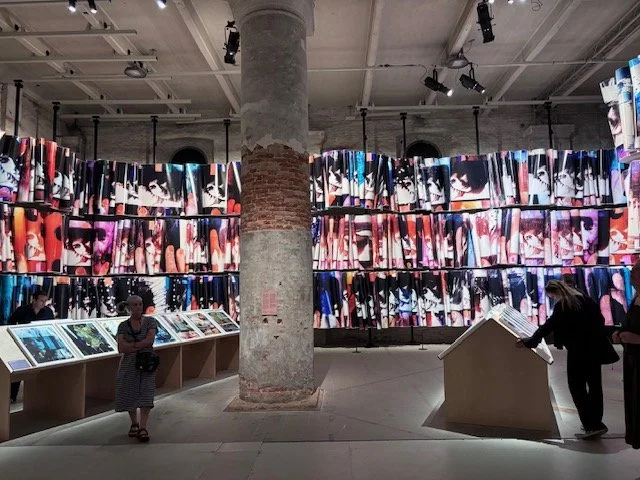
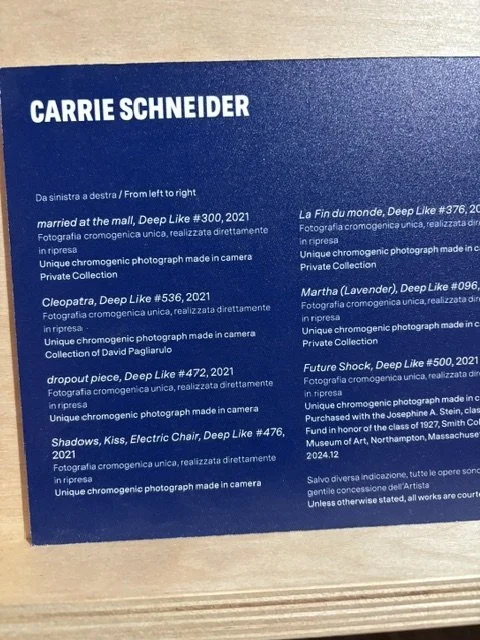
Another fun composite sculpture:
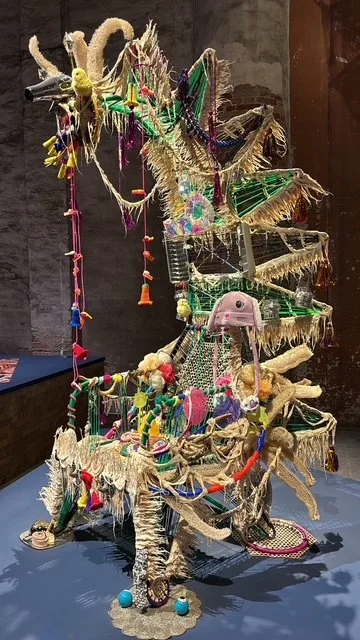
There were lots of artists whose media included film. By which I mean that film was one of the many media for representation that they explored (think David Hockney - film, photography, painting, drawing, iPad etc.)
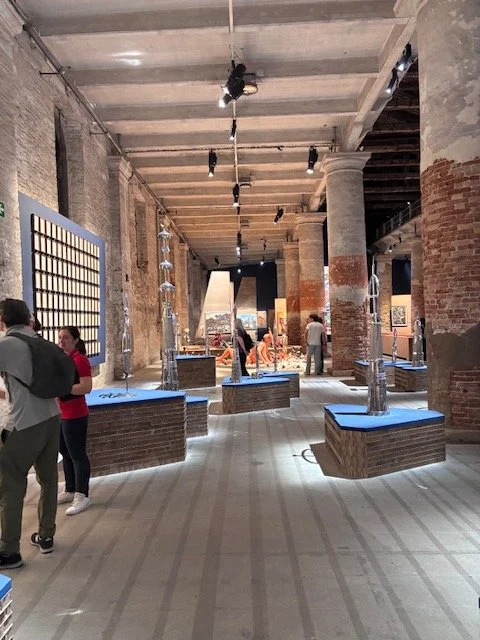
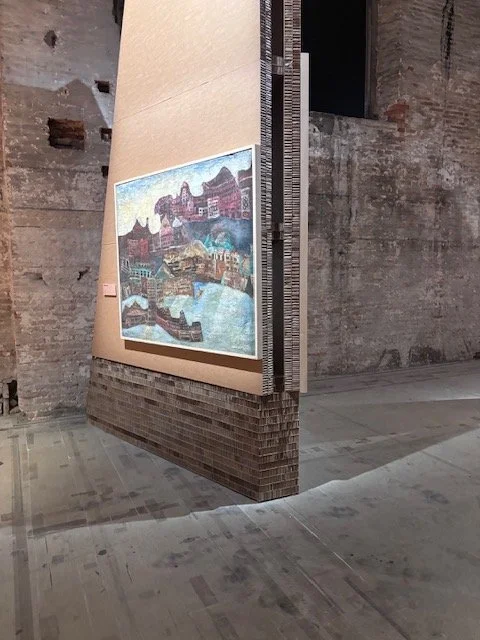
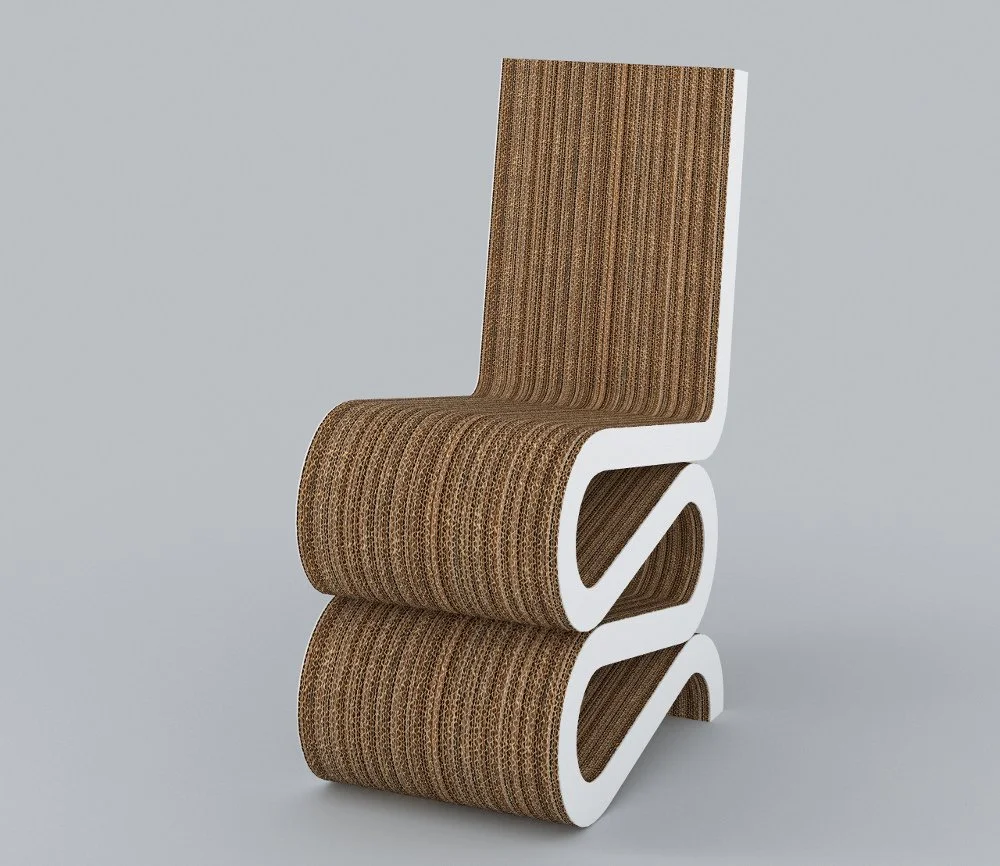
One thing that was unrelated but interesting, at least to me, as a former architecture student was the use of corrugated cardboard to display the art. It was an art in itself. It reminded me of Frank Gehry’s genius wiggle chair.
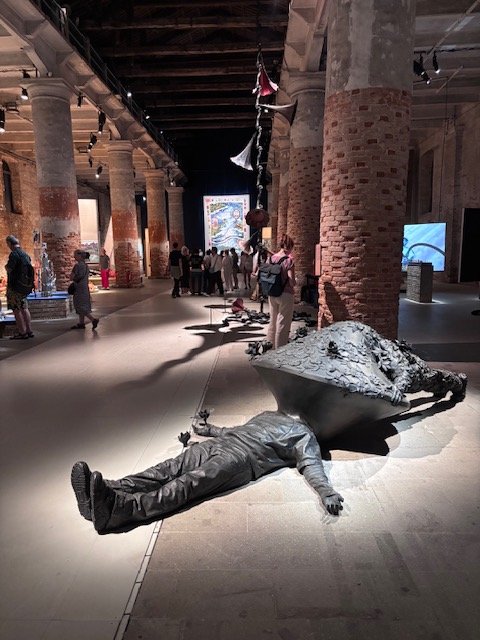
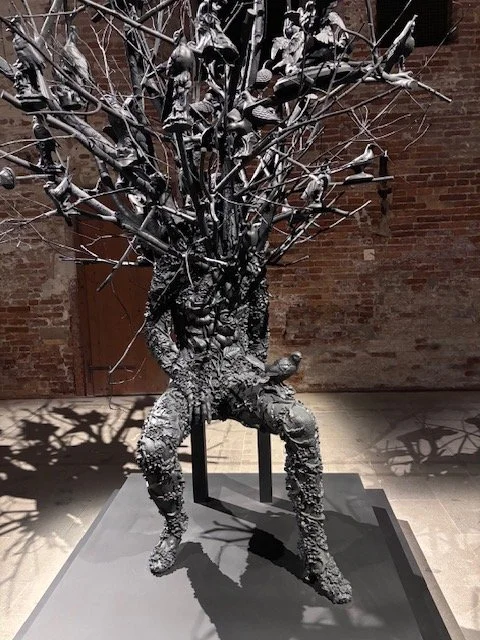
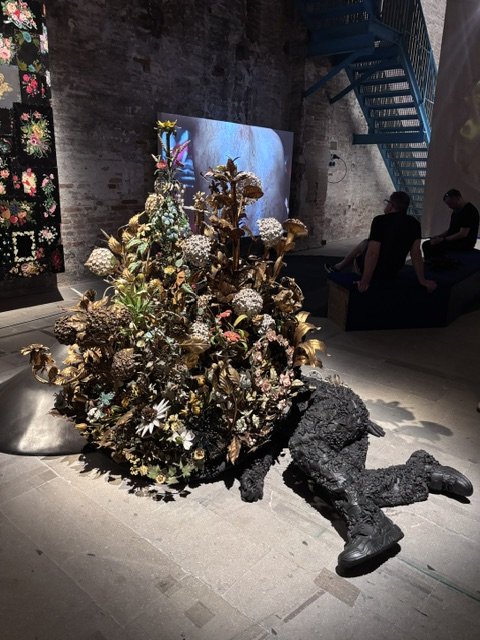
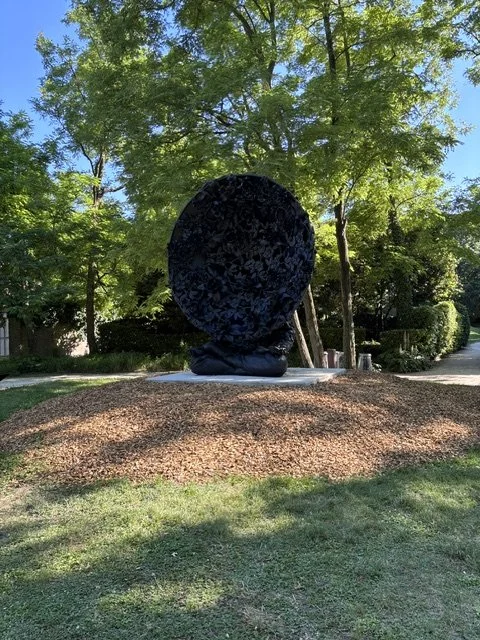
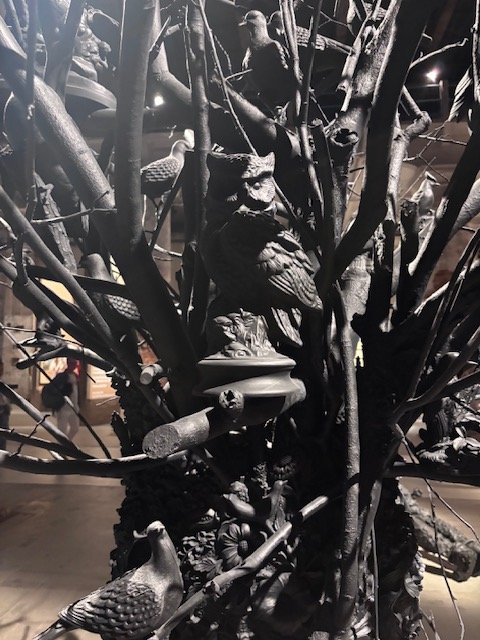
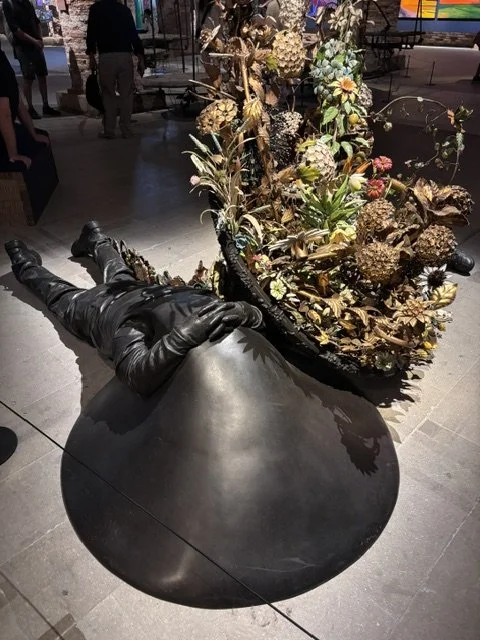
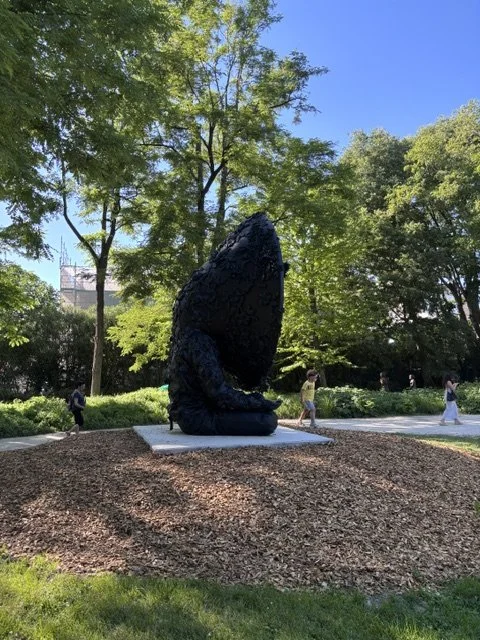
I got so excited by this work (below) that I almost tripped on it - j/k - I saw his feet! This is a piece by the artist Nick Cave. I kept running into his pieces throughout the Arsenale (I’m showing just 8!). I loved them. They were my introduction to his work. His pieces are very playful, they exist without really needing a description. He also had a piece outside of the Arsenale, in the garden. That piece was fabulous, too.
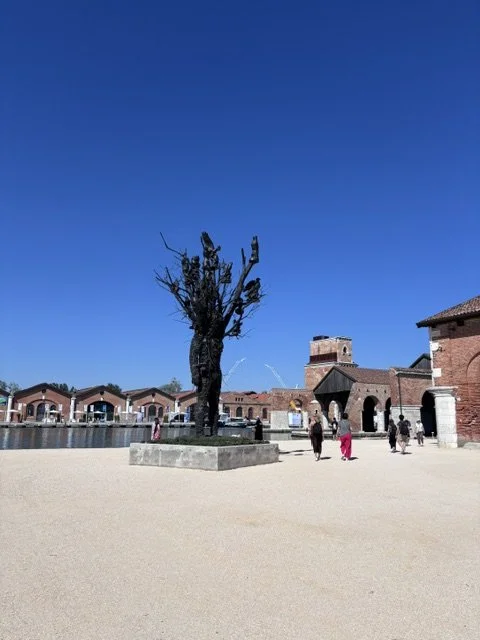
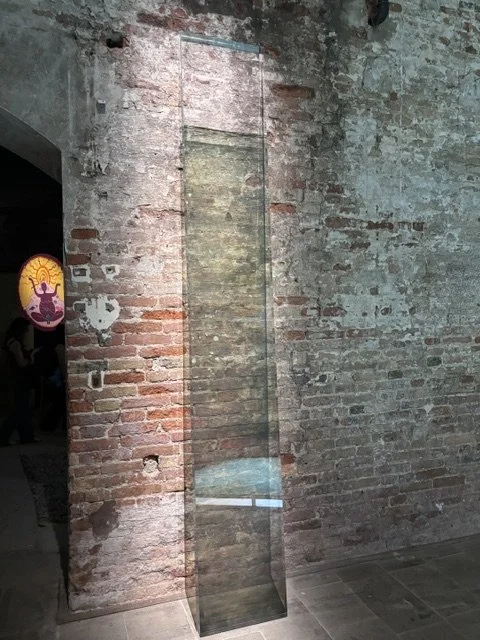
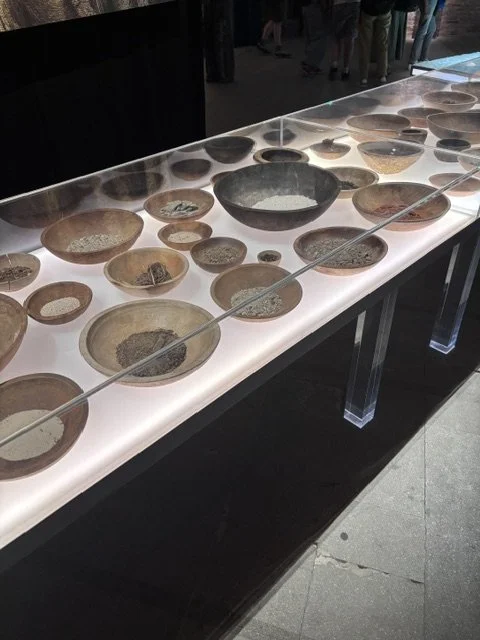
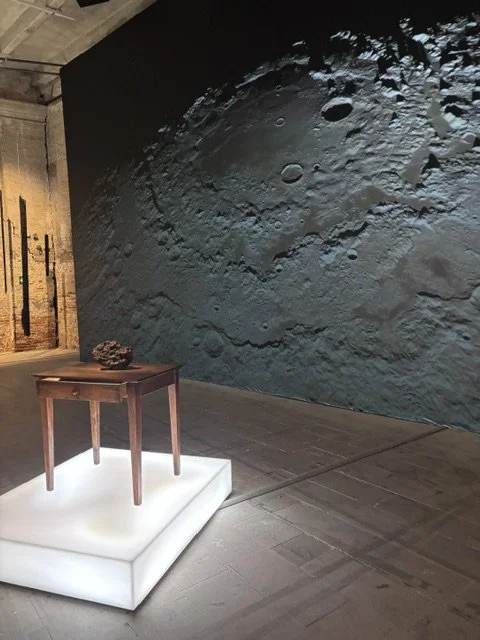
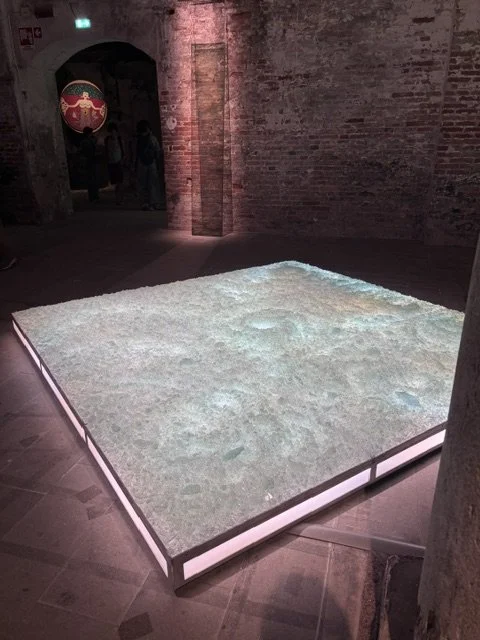
I walked into another area and saw works by a single artist. Once again, interesting but with no explanation nearby, I decided to try to understand it on a visual level alone. Finally, I found the description. The artist, Dawn Dedaux, is from New Orleans. Her work was about Hurricane Katrina and its aftermath - both on the people who were affected by it and on the larger issue of environmental disaster. Venice is a good place to talk about water and two of her pieces referenced the water levels of New Orleans and Venice. The water markers for Venice and New Orleans also just looked good, the flood levels were marked using digital images within the acrylic slabs. Another piece by Dedaux was a table on which beautiful hand turned wooden bowls were displayed. Each bowl was filled with soil from a different part of the world. The piece is called “Dirt Bowl Table” (a reference to the Dust Bowl of 1935?) Here is what I learned from the description when I eventually found it: “Across these and other strategies, DeDeaux marks the costs of our relentless destruction of the planet while focusing at the same time on the plenitude and possibilities available to us today.” (5 images)
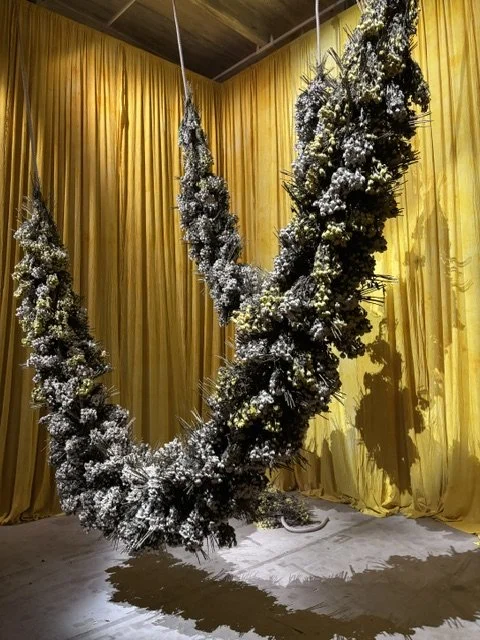
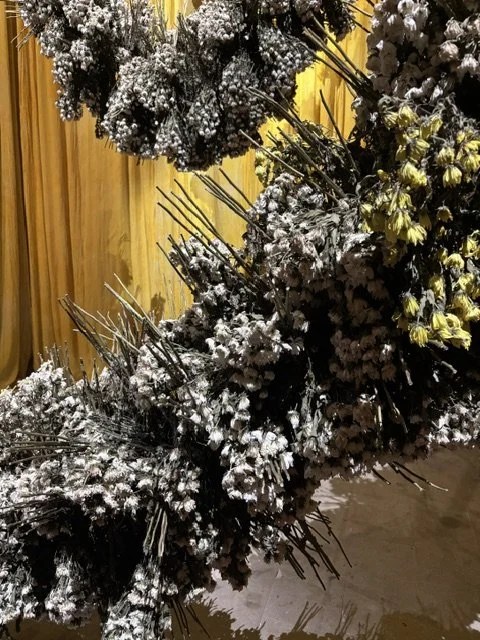
“Ephemeral Temple for decaying beings by Dan Lie” - looked good and smelled good.
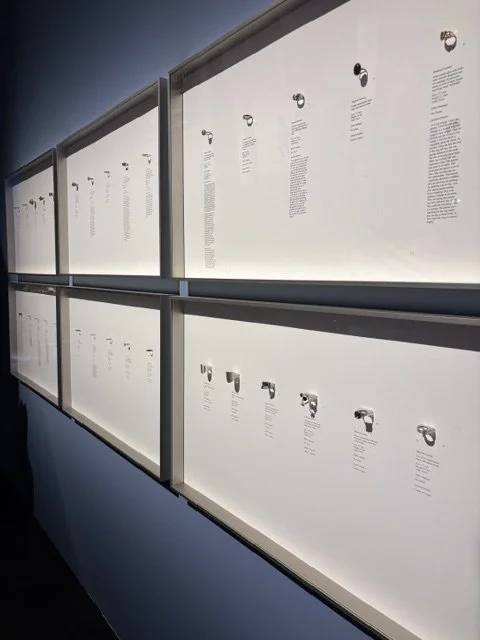
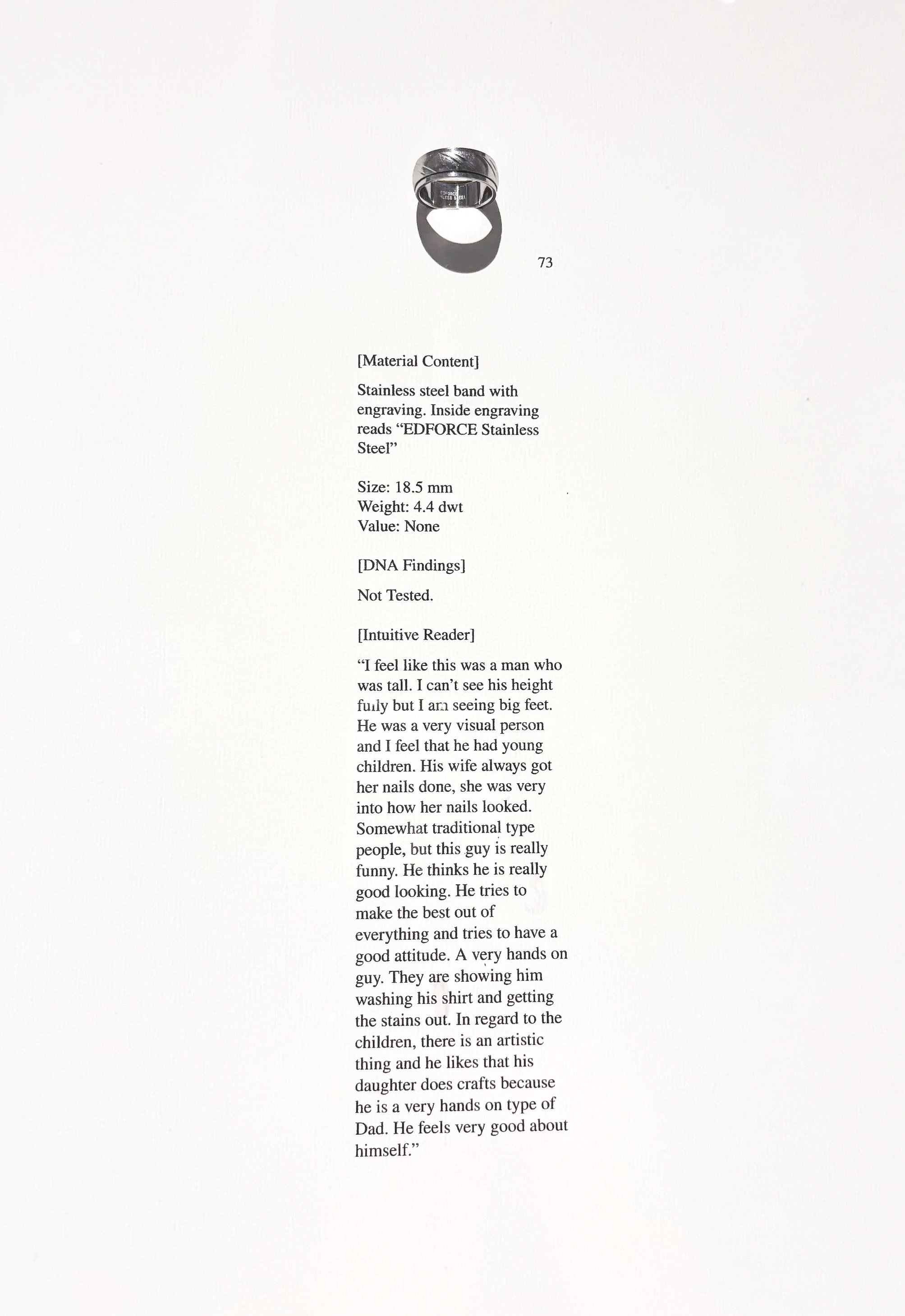
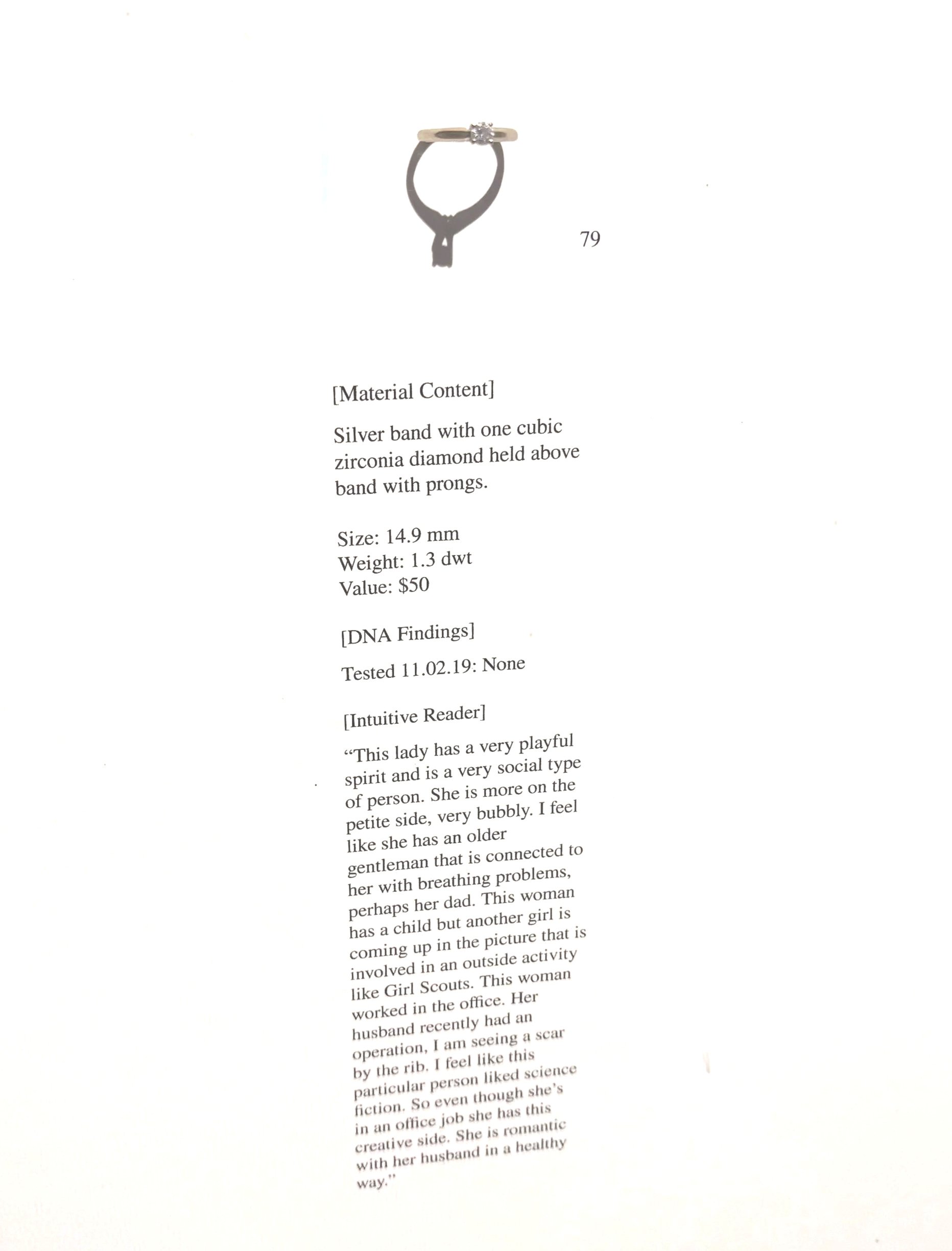
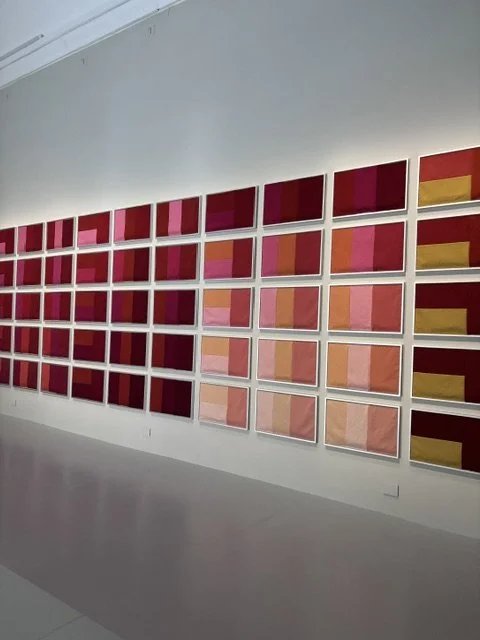
Then there was a row of framed rings with text below. It was a piece that you couldn’t just look at, you had to read it to find out what it was about. So, I did. The artist started finding rings and then decided to start collecting them. First she had them tested for DNA. Then she took them to a psychic. The psychic’s readings are sometimes bizarre, sometimes whimsical but always fun to read. (three images)
This installation caught my eye because of the sign: ‘No Cruising.’ And is why I ventured in to further explore. When I explained it later to my mom, she remembered an exhibition at SFMoMA about Low Riders and Cruising with signs just like this one.
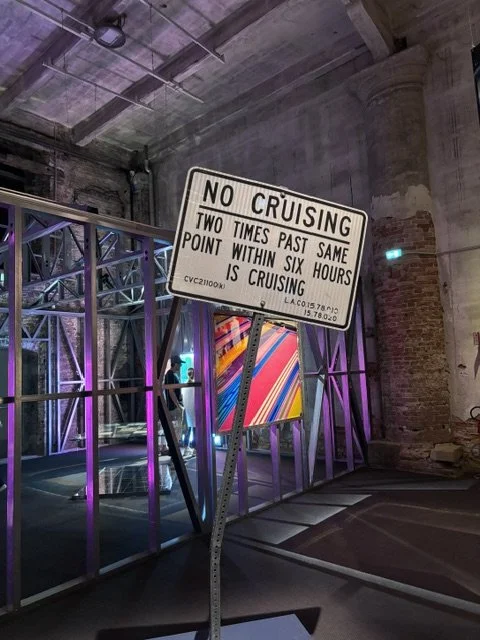
The art below (3 images) is definitely a conceptual art installation. The art is not WHAT is presented but HOW it is presented. The artist wanted to show us what it was like to be a young Latina growing up in Los Angeles in the 1990s. One part caught my eye, the “wallet photos.” I remember those from high school. On Picture Day, everyone had their photos taken and then you could have pictures taken with friends to keep in your wallet, which I totally remember doing.
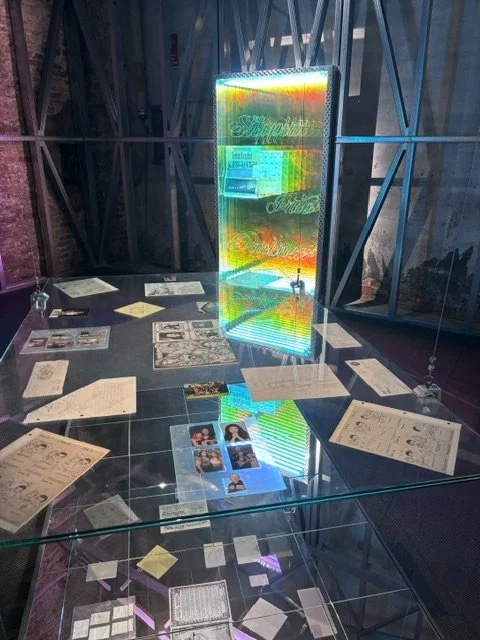
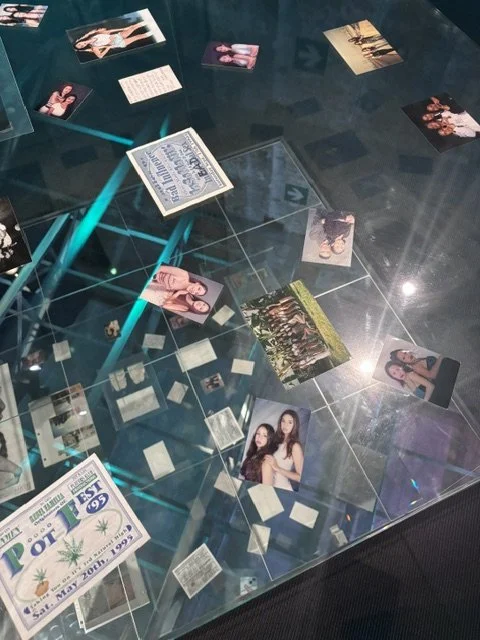
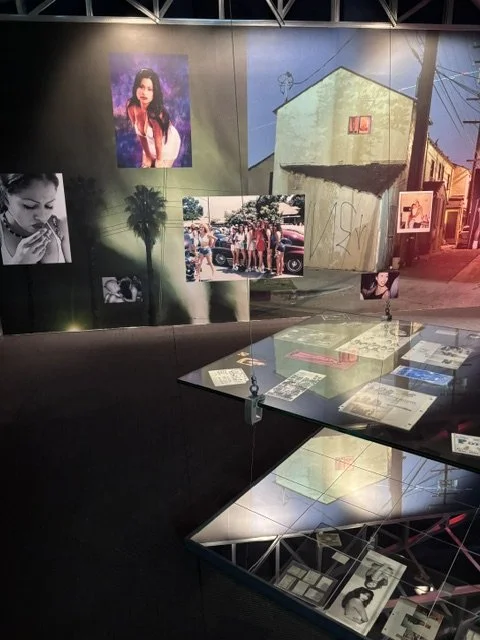
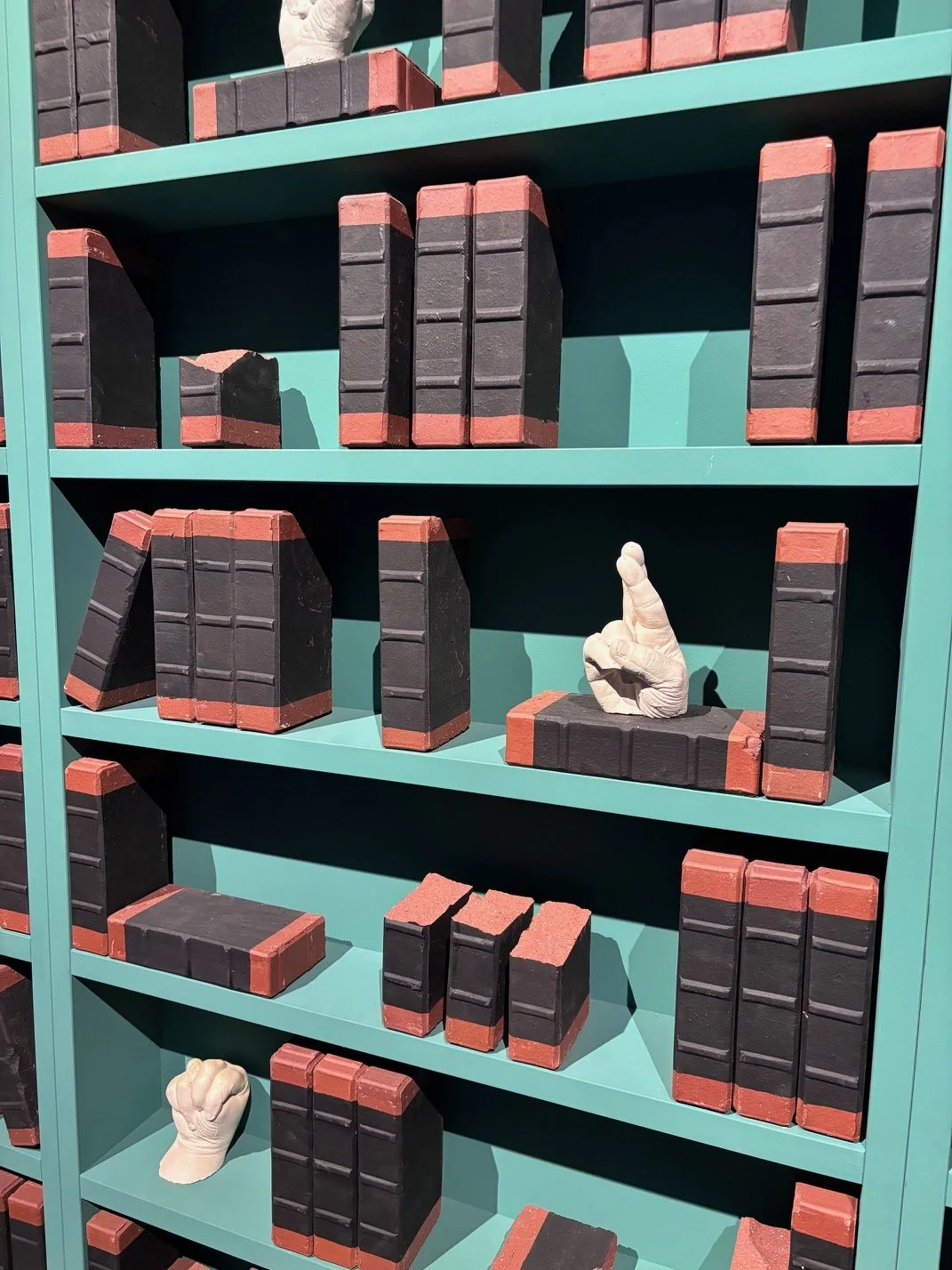
This looked great, books (actually painted bricks) interspersed with hands and fingers using sign language. (2 images)
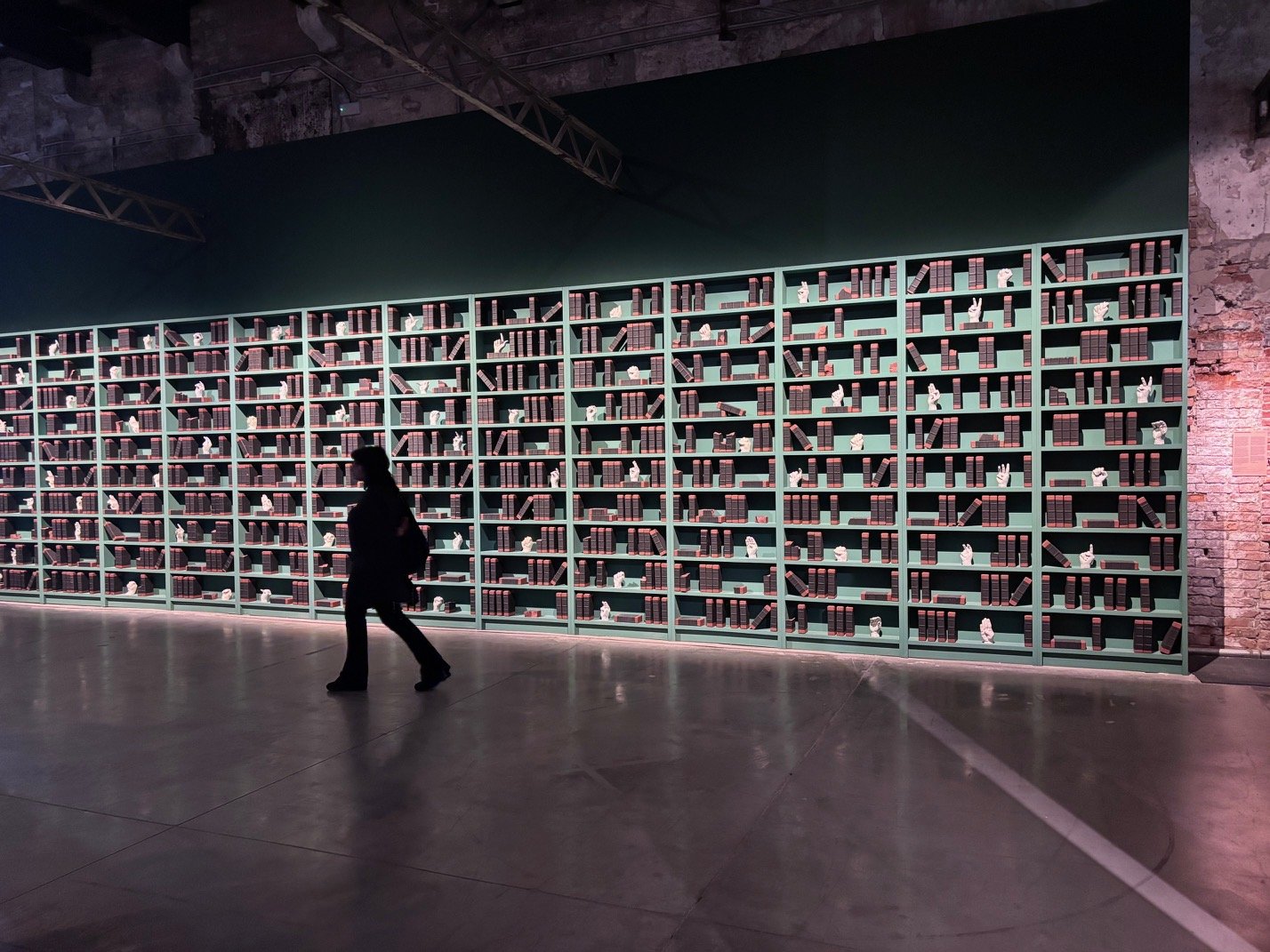
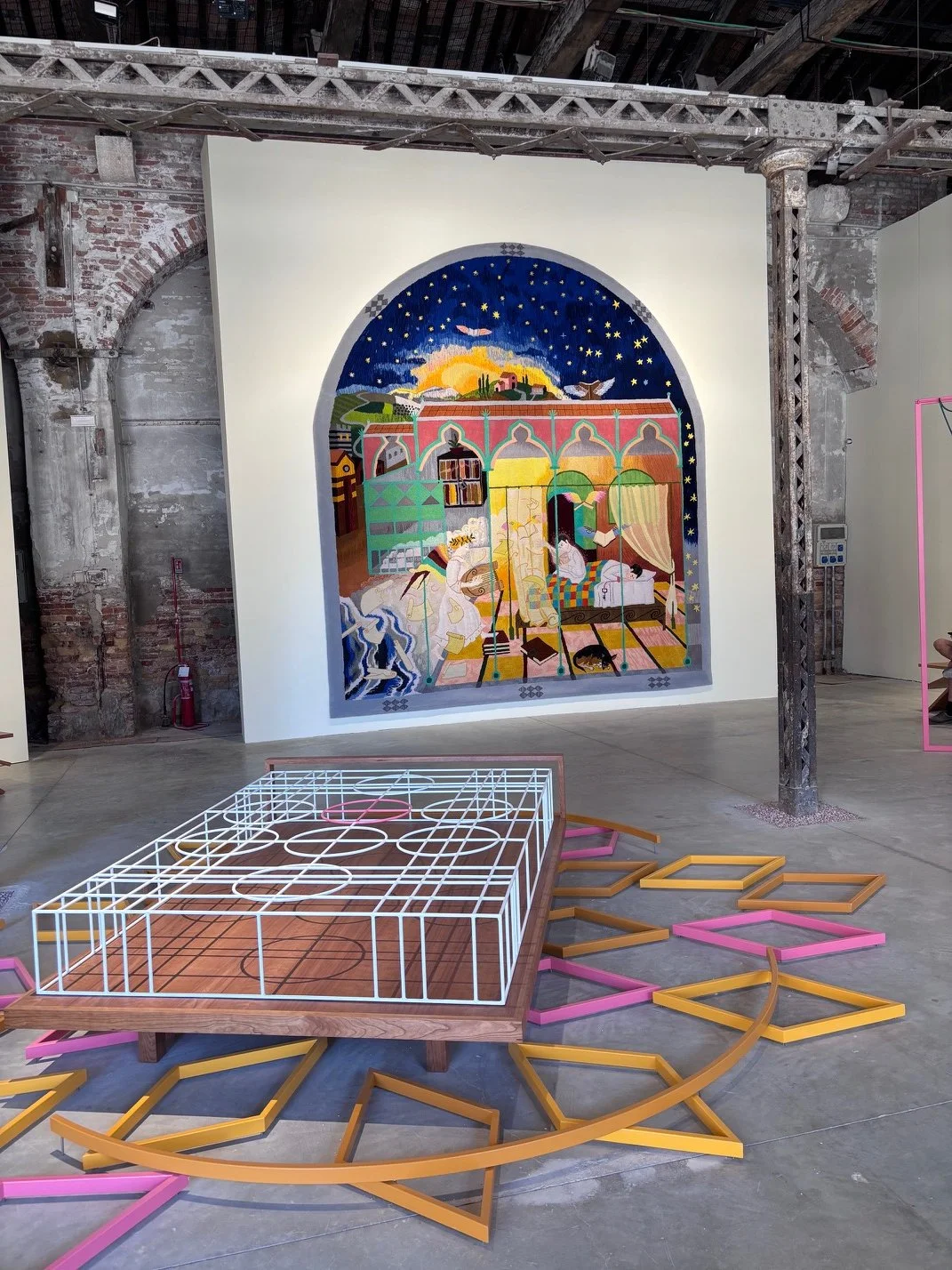
After you go through the main space there are a couple auxiliary spaces with work by individual artists- here are the ones I liked:
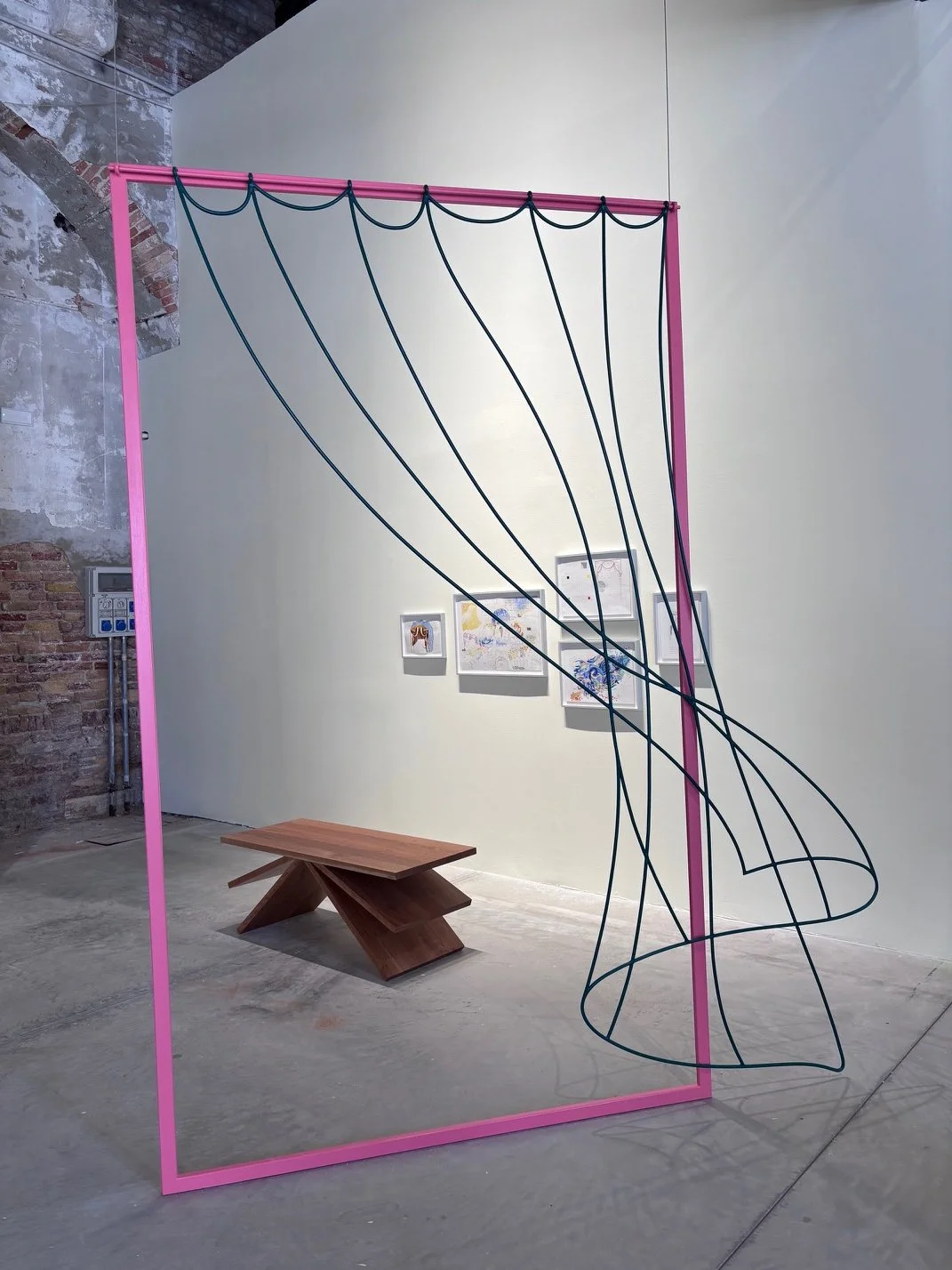
Izbel Nolan “Dreamshook”- This artist said she feels like we are currently living in the middle ages. I have totally had that same thought. I liked her allusions to cathedrals and stained glass and I loved this arched window and billowy curtain.
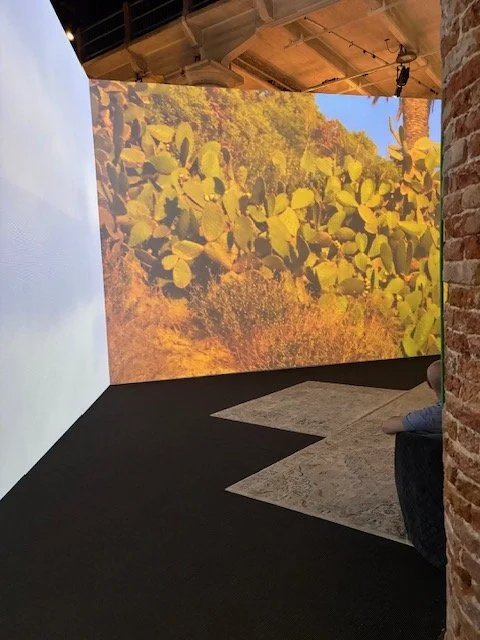
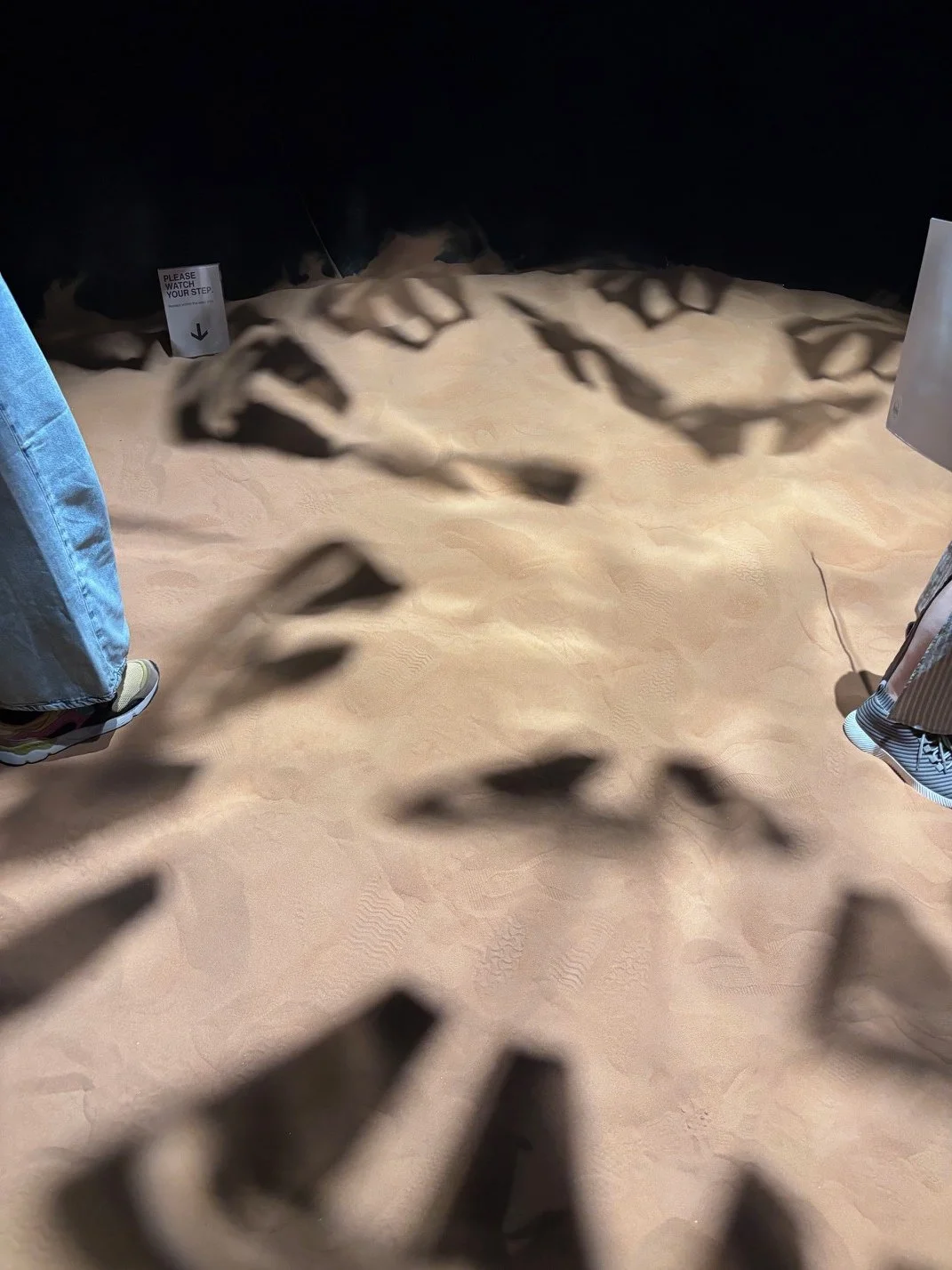
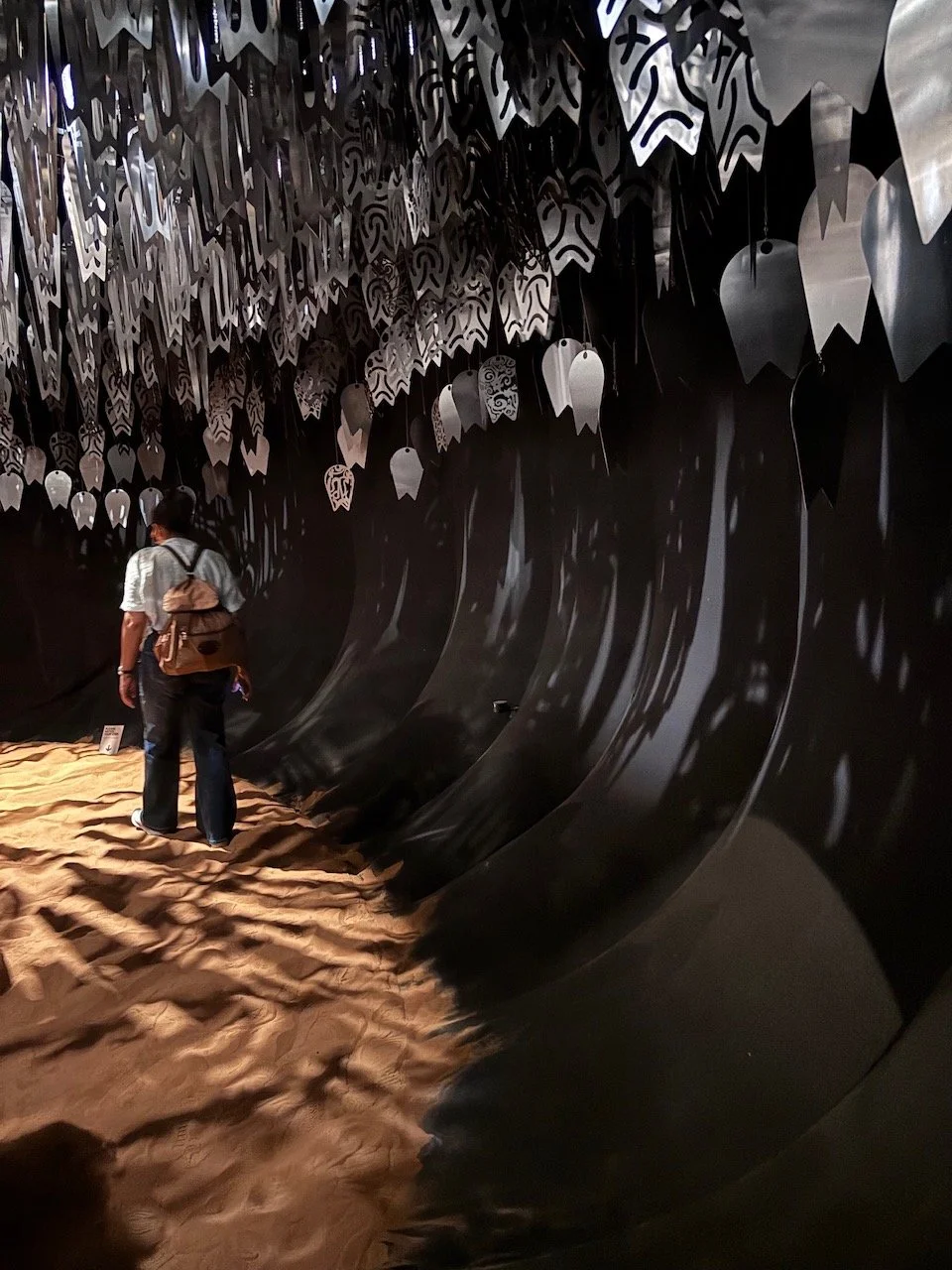
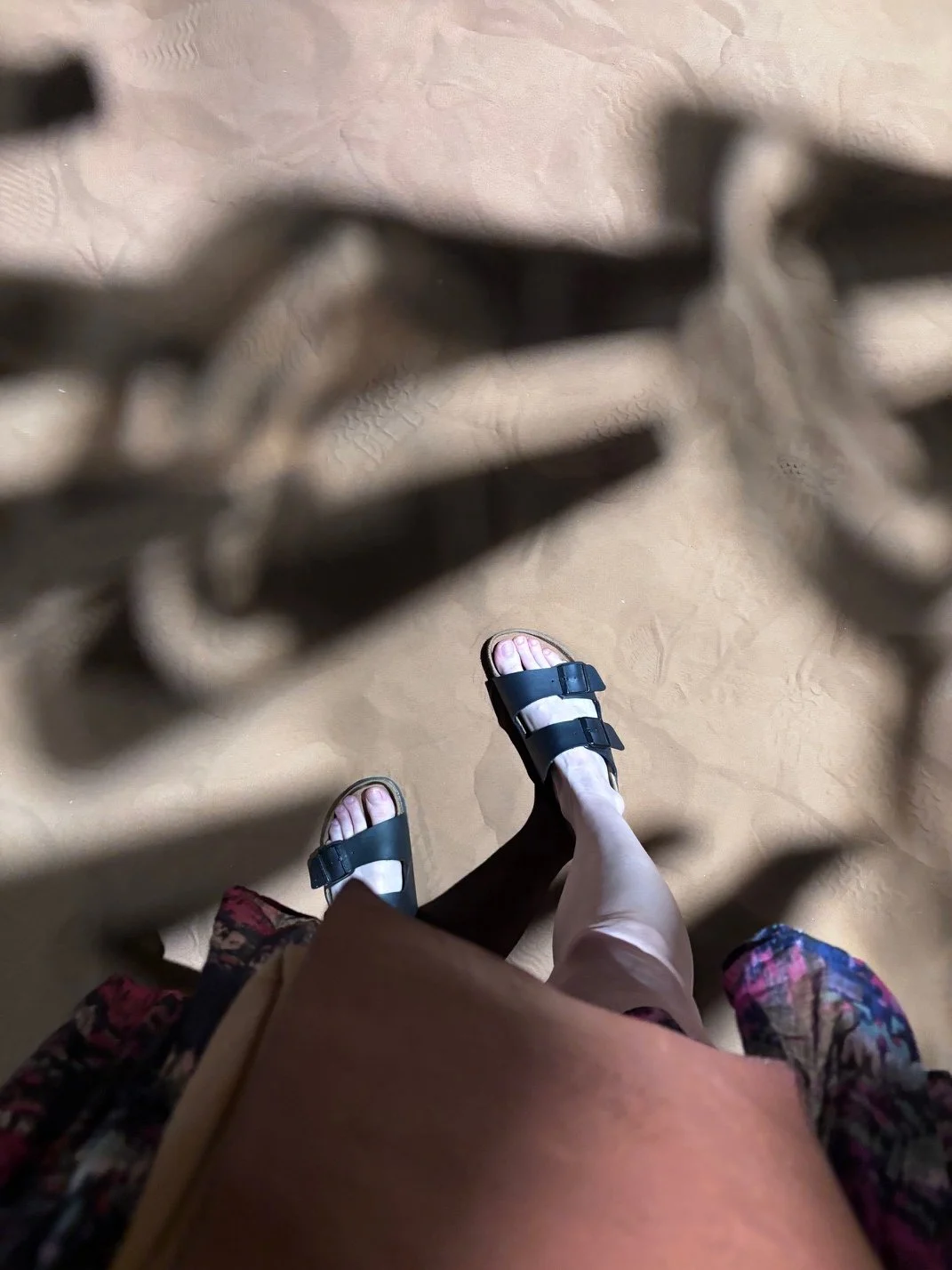
Walking though the Sand…from Oman exhibition was a bit strange because I was wearing Birkenstocks. So I carried the sand around into the other galleries. As I walked I saw other people’s sand in other spaces, too!
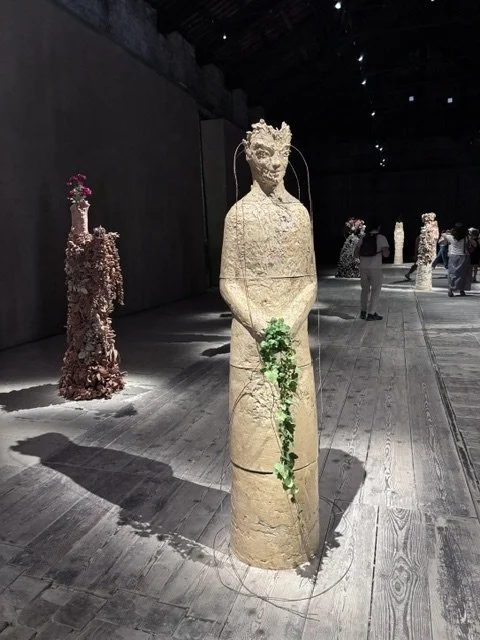
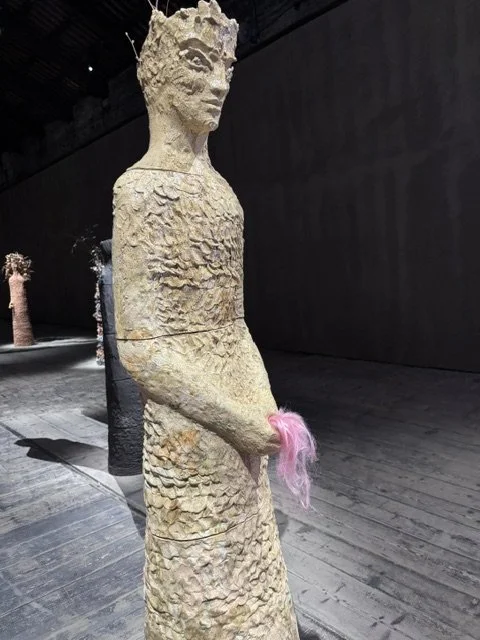
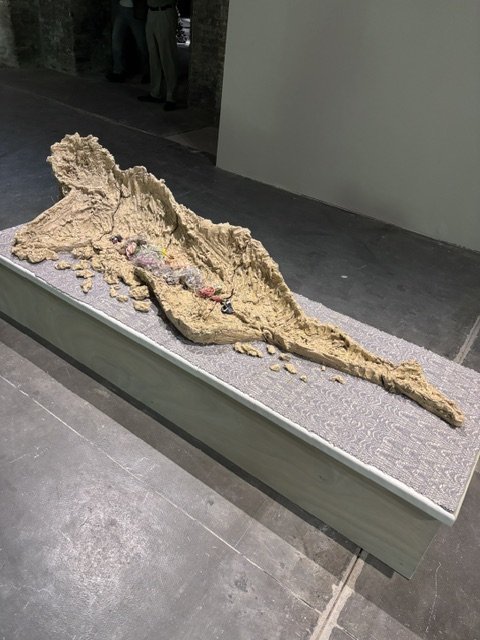
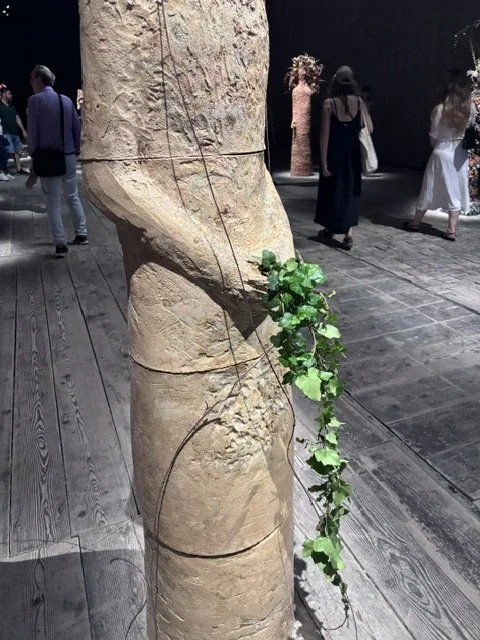
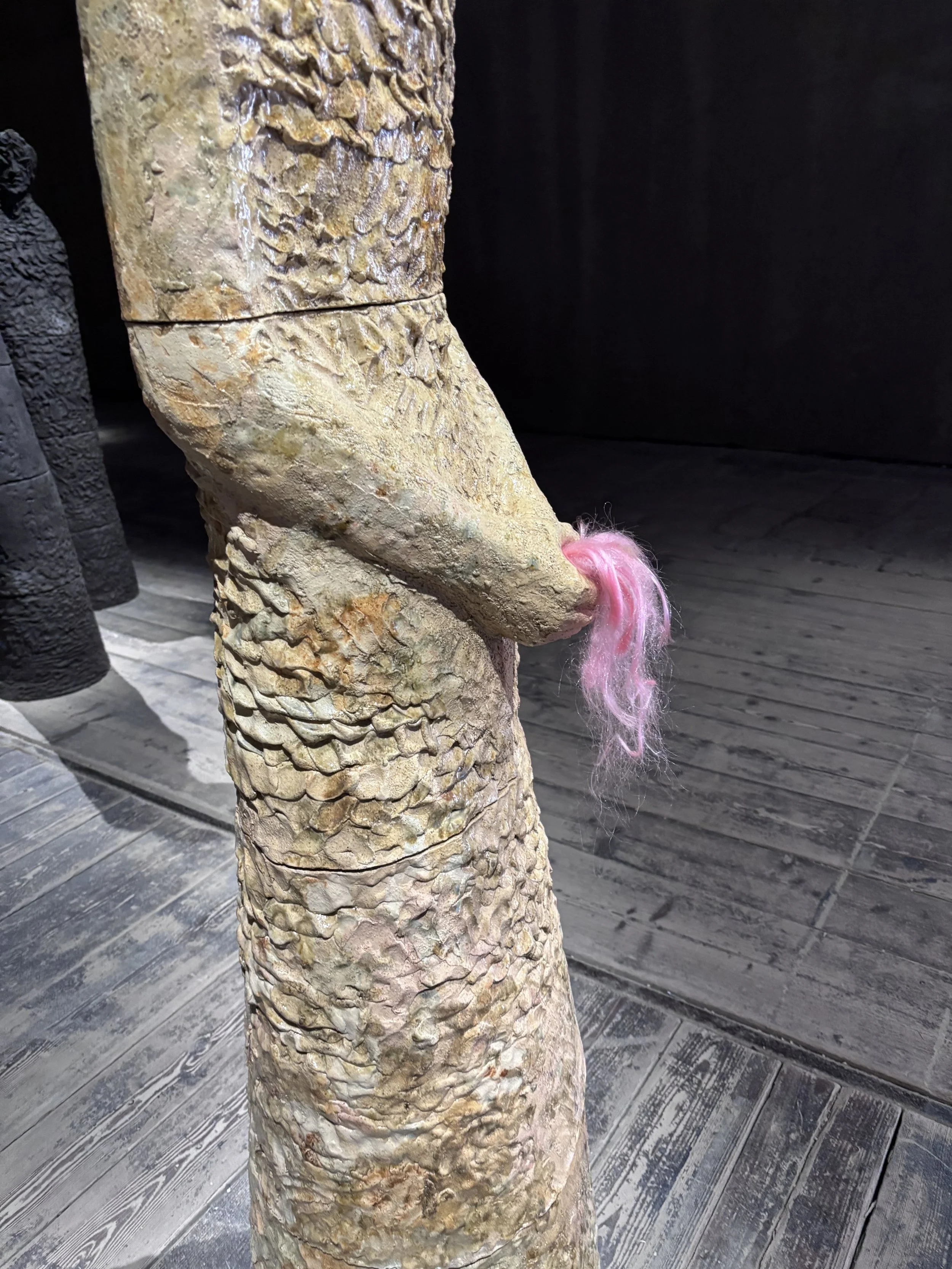
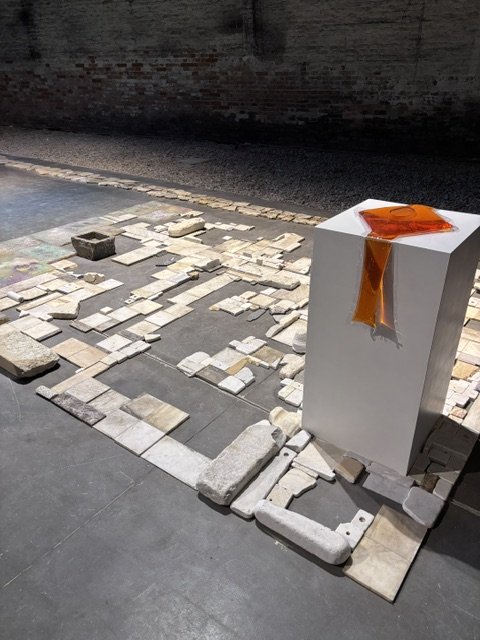
Italian Artist- this was a huge space with lots of fun stuff. Artists create things and then someone comes along and writes a mouthful about them. Sometimes what they write makes sense, sometimes it doesn’t. Sometimes the writing reads better than the art looks. Sometimes it may be better to just look. Just saying.
Giardini:
The Giardini is a big open space (a garden) In it, different countries have their own pavilions designed (mostly) by architects from that country. You meander around checking out whatever pavilions interest you. There is also a very large central pavilion with works by artists from all over the world.
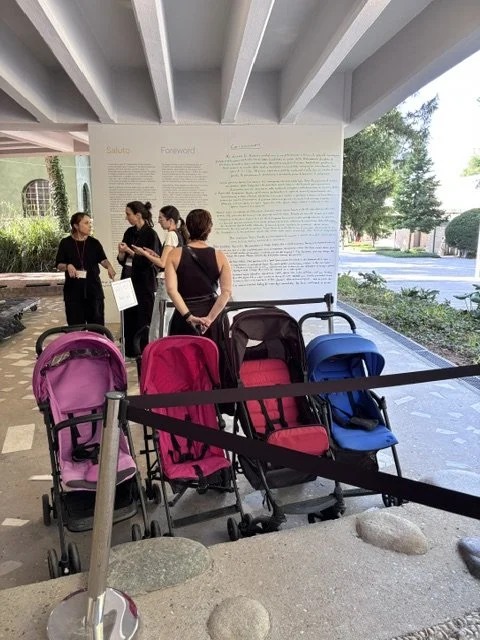
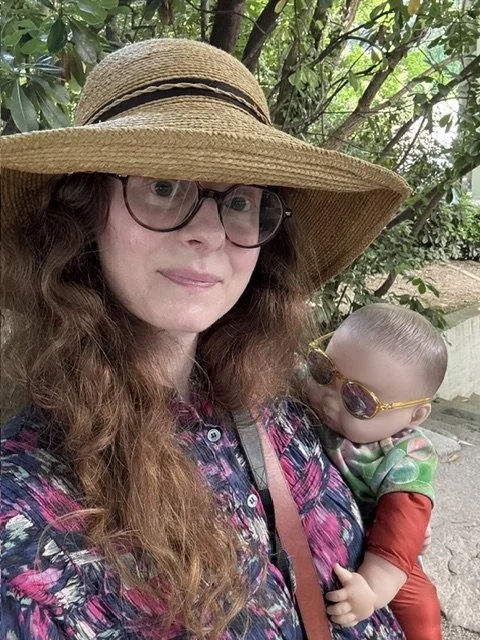
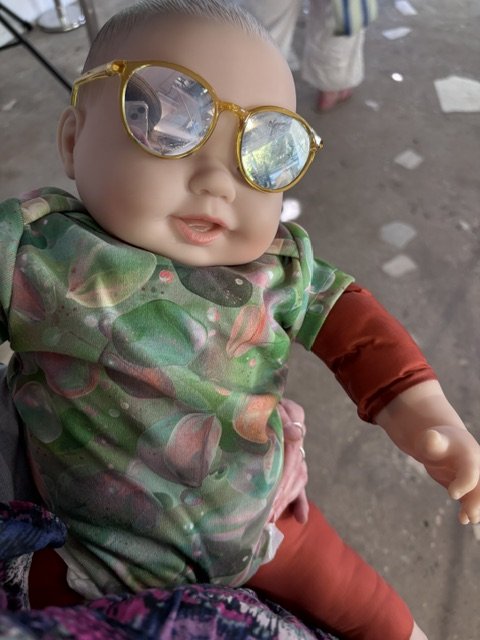
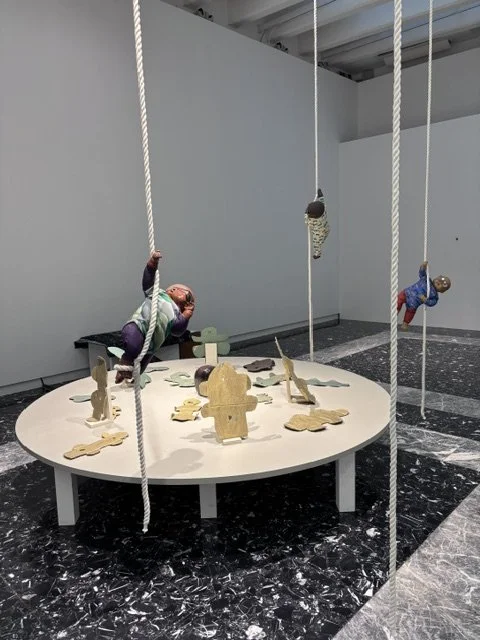
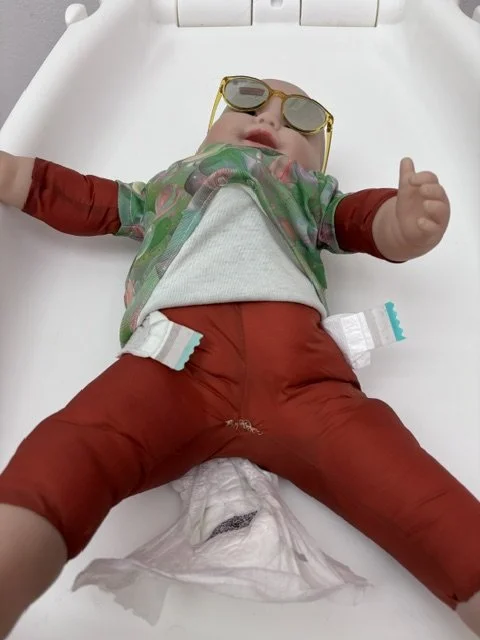
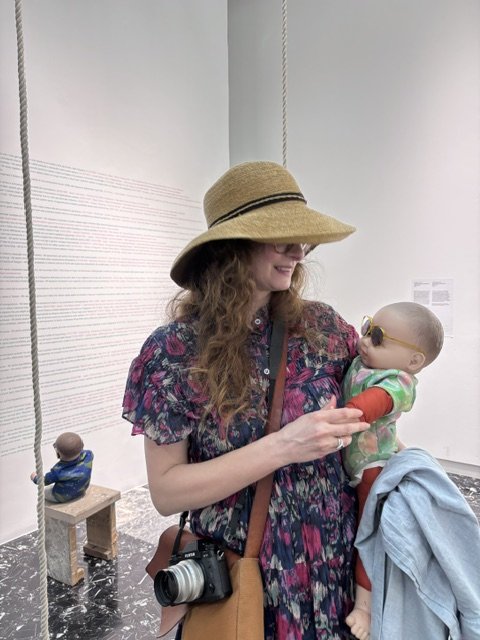
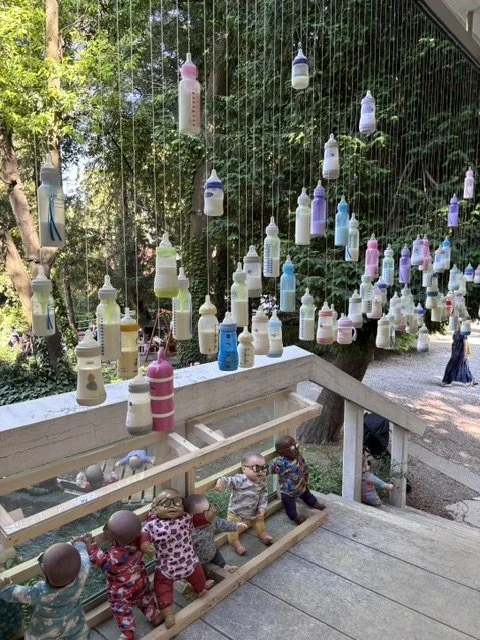
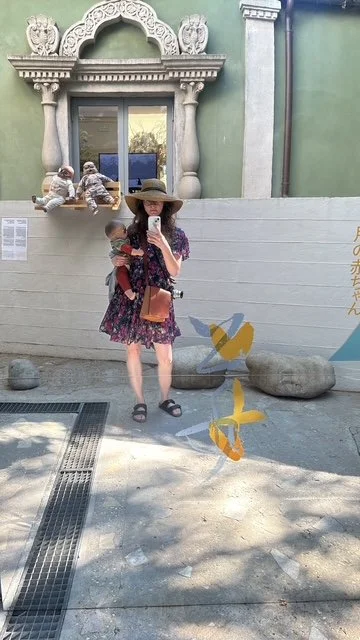
The Japanese pavilion was a little confusing at first, because of all the baby strollers parked in front. Was this a special viewing for mothers and infants? Was this a visit by invitation only? But then I saw people standing in line, who, like me, did not have babies with them. So I listened to the Italian guide who was standing in front of the pavilion, explaining it to the Italian man who was in line in front of me. I learned that the installation is about having children and taking care of them. Visitors have the choice of experiencing the pavilion with or without a baby. If you choose to “have a baby” you get a six pound baby doll, complete with sunglasses, to carry around with you until you get to the second floor where you are given the opportunity to change the baby’s diaper. In exchange for this “act of care-taking,” there’s a QR code in the baby’s nappy and you get a poem! So I decided to have a baby!! The artist is a young lesbian who has just become a mother of twins. She wanted her Biennale piece to draw attention to what it means to have children, especially in societies that are currently experiencing a decline in birthrates, as Japan and so many other countries are. She also addressed the subject of volition - for some people it’s a decision to have a child - especially for gay and lesbian couples. It doesn’t just happen. The exhibition is also about the act of care-taking and how difficult it is to actually just care for a baby when you are out and about. It was a very interesting and thought provoking exhibition. Procreation and care-taking are not so simple, not so obvious. Especially when taking care of babies, like taking care of elders, is such hard work and so poorly compensated (8 images).
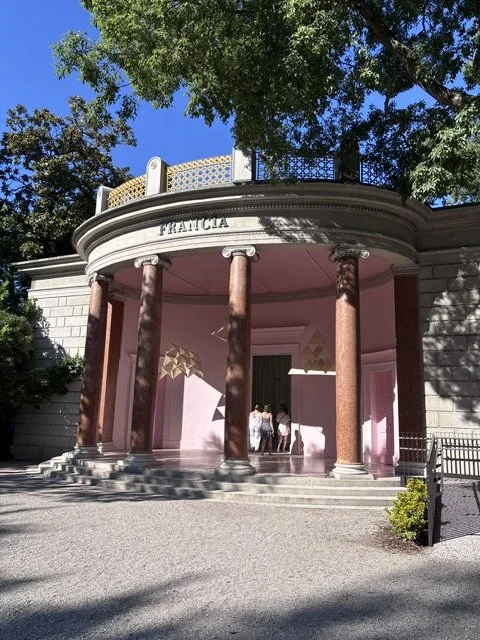
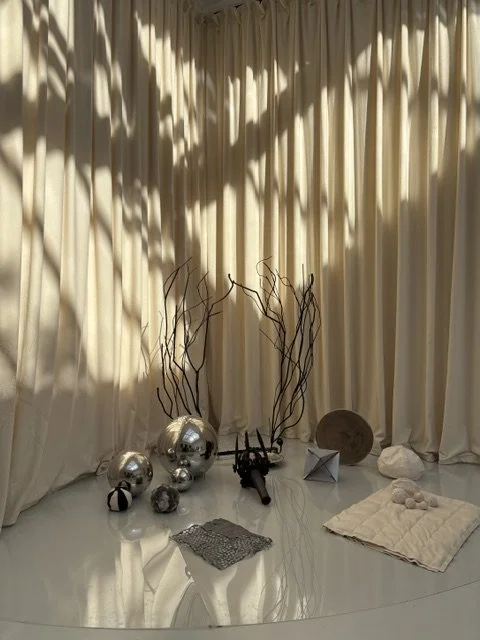
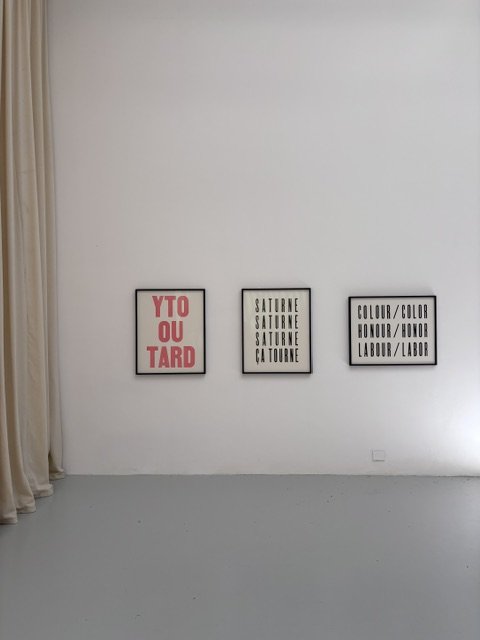
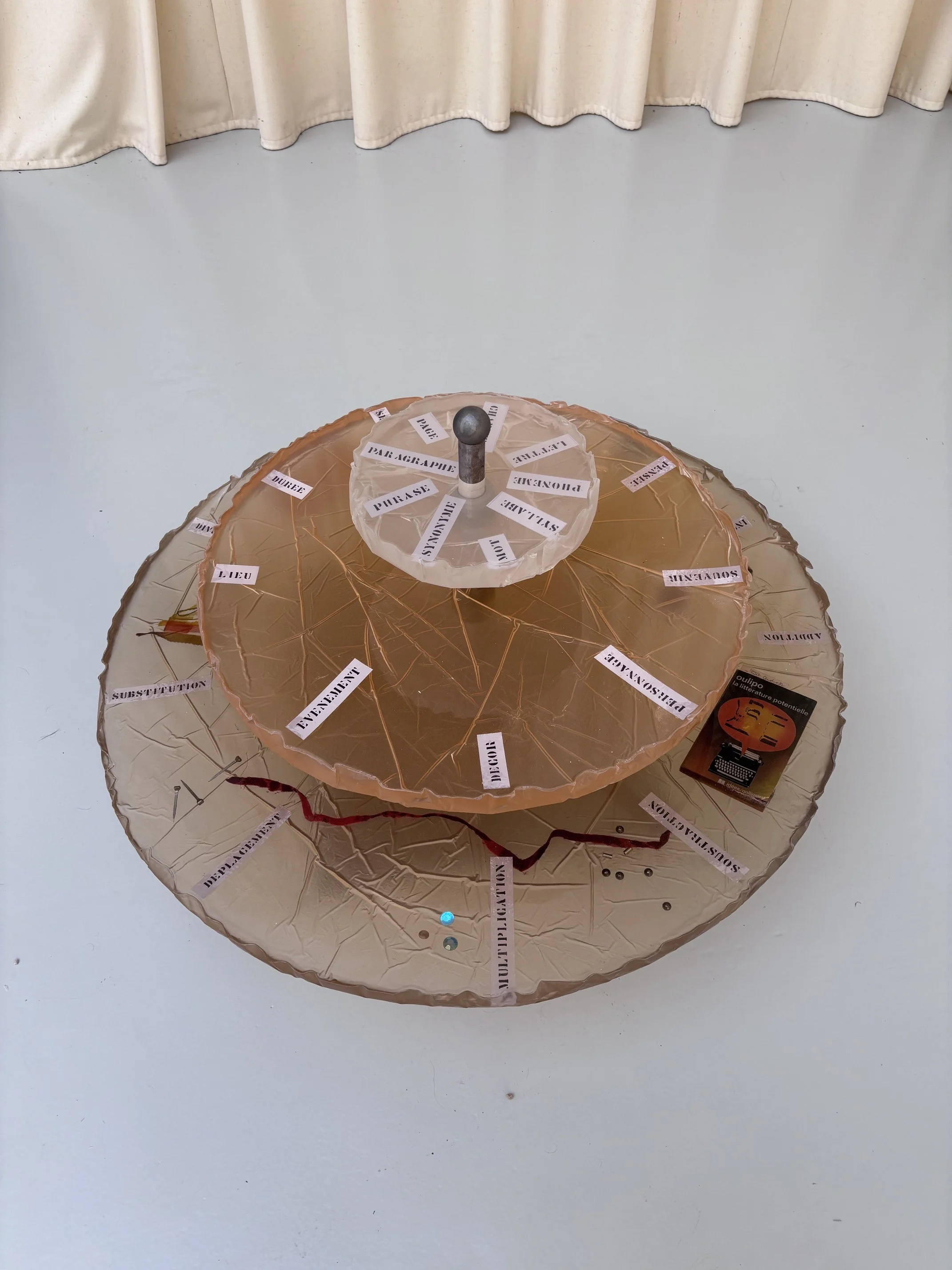
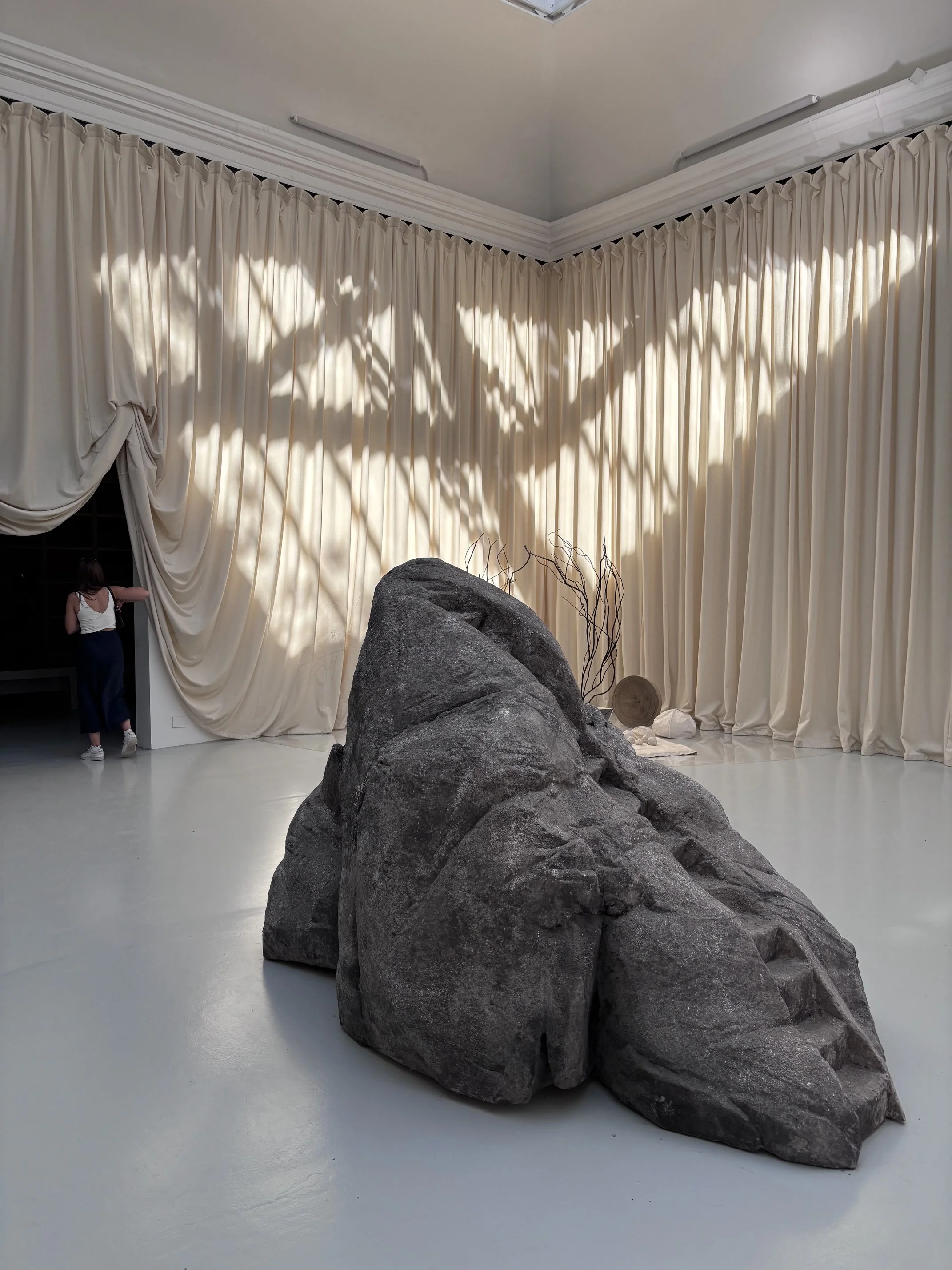
France: The entryway of the pavilion itself is pink so I had to go in! There were a number of beautiful art objects all relating to the theme of Saturn by the artist Yao Barrada. Here’s an excerpt from the description: “During the Renaissance, Saturn, the mythological god of time and renewal, was believe to govern artists. To be born under Saturn was to posses a temperament marked by introspection and creative intensity… In Comme Saturne, Yto Barrada reactivates this cosmological figure - also notorious for swallowing his children- and extends it across ritual and material processes, guided by her long-standing engagment with language and textile practices.” Sometimes the explanations tell you as much about the writer as the artist! (6 images)
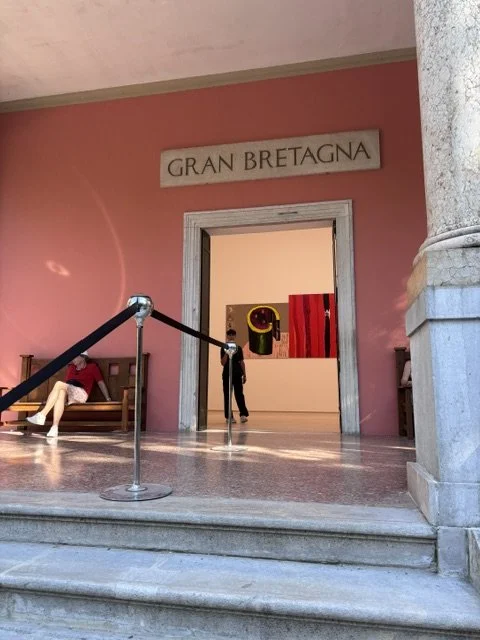
England: In this pavilion the artist considered how five groups confront the idea of “home”. The groups are Architects, Chefs, Gardeners, Tailors and Boat builders. The question is illustrated with paintings, inviting the viewer to consider themselves as part of the conversation. There was also a list of 26 questions which were very interesting as they relate to the idea of not just home but “homeland”. (5 images)
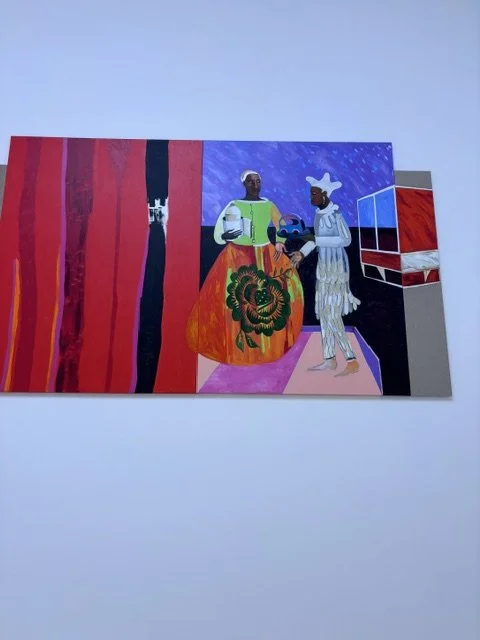
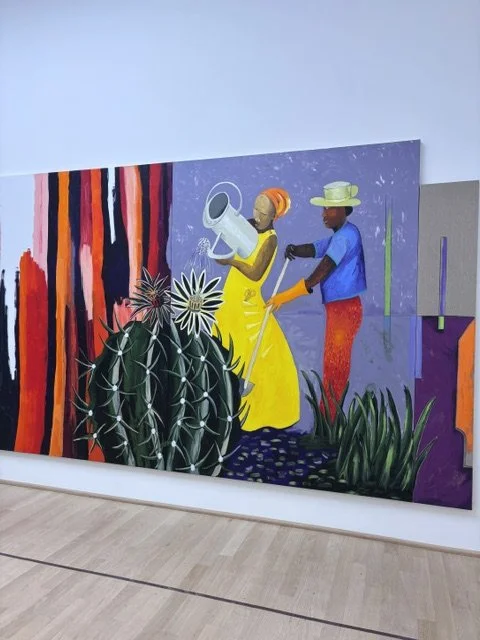
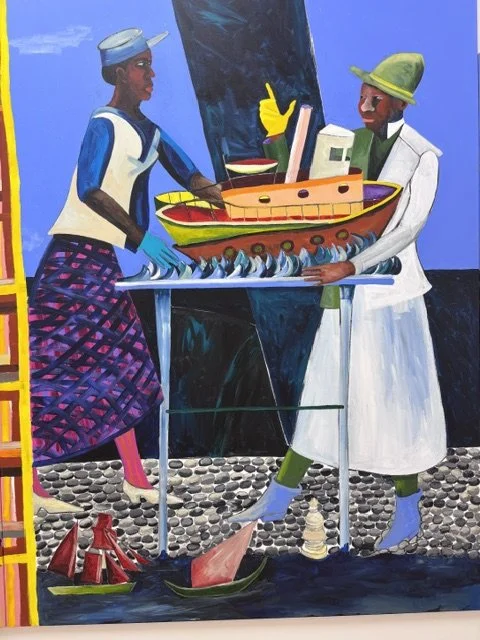
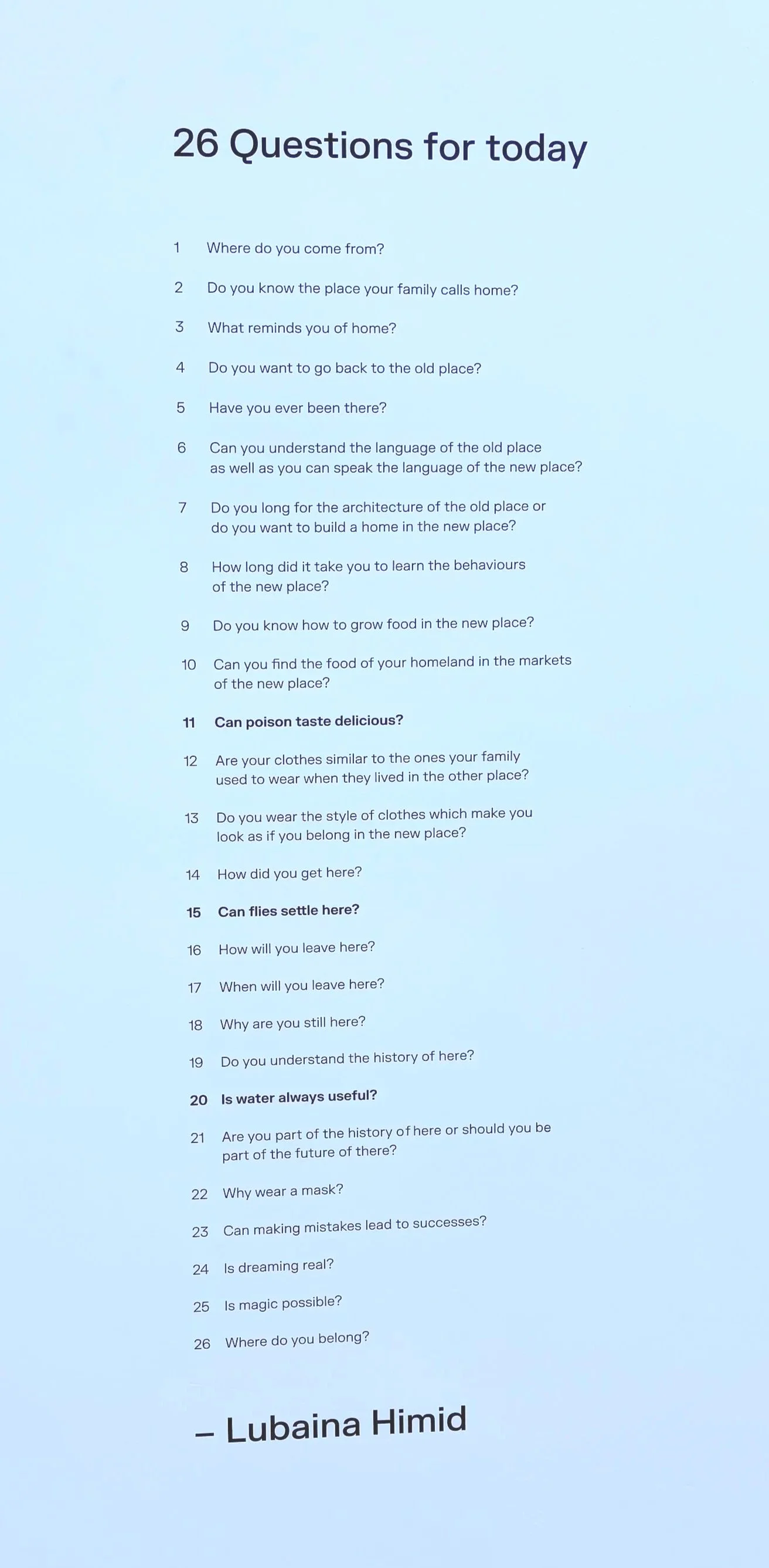
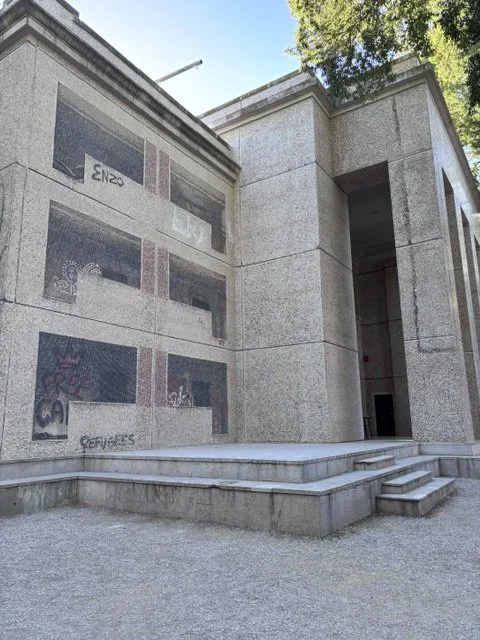
Germany: Two artists here, both reflecting on post-Unification Germany, one of them was Vietnamese and one was German, both methods of installation art were immersive and interesting. I also liked the outside of the German pavilion because it had mosaic murals of graffiti.
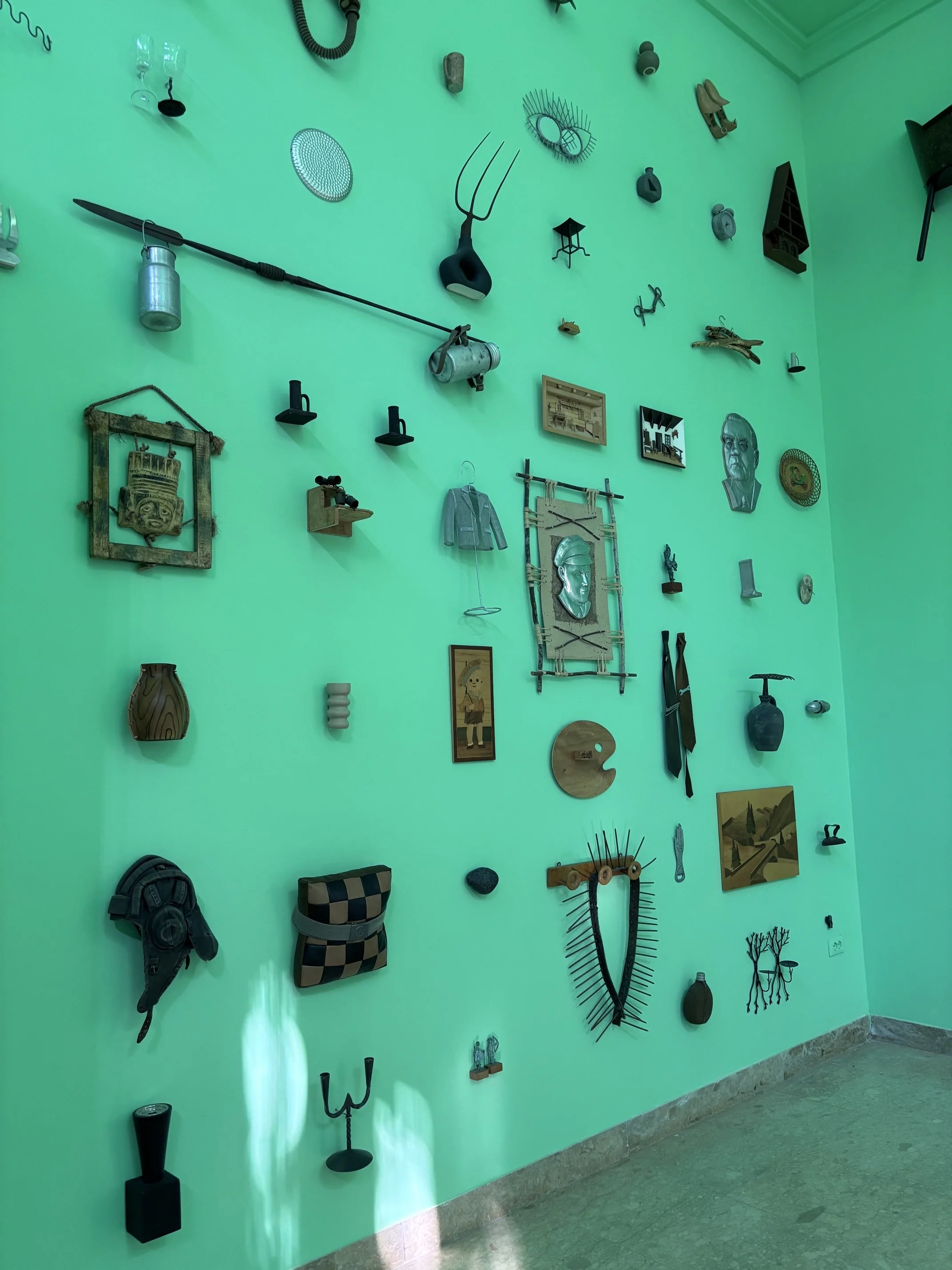
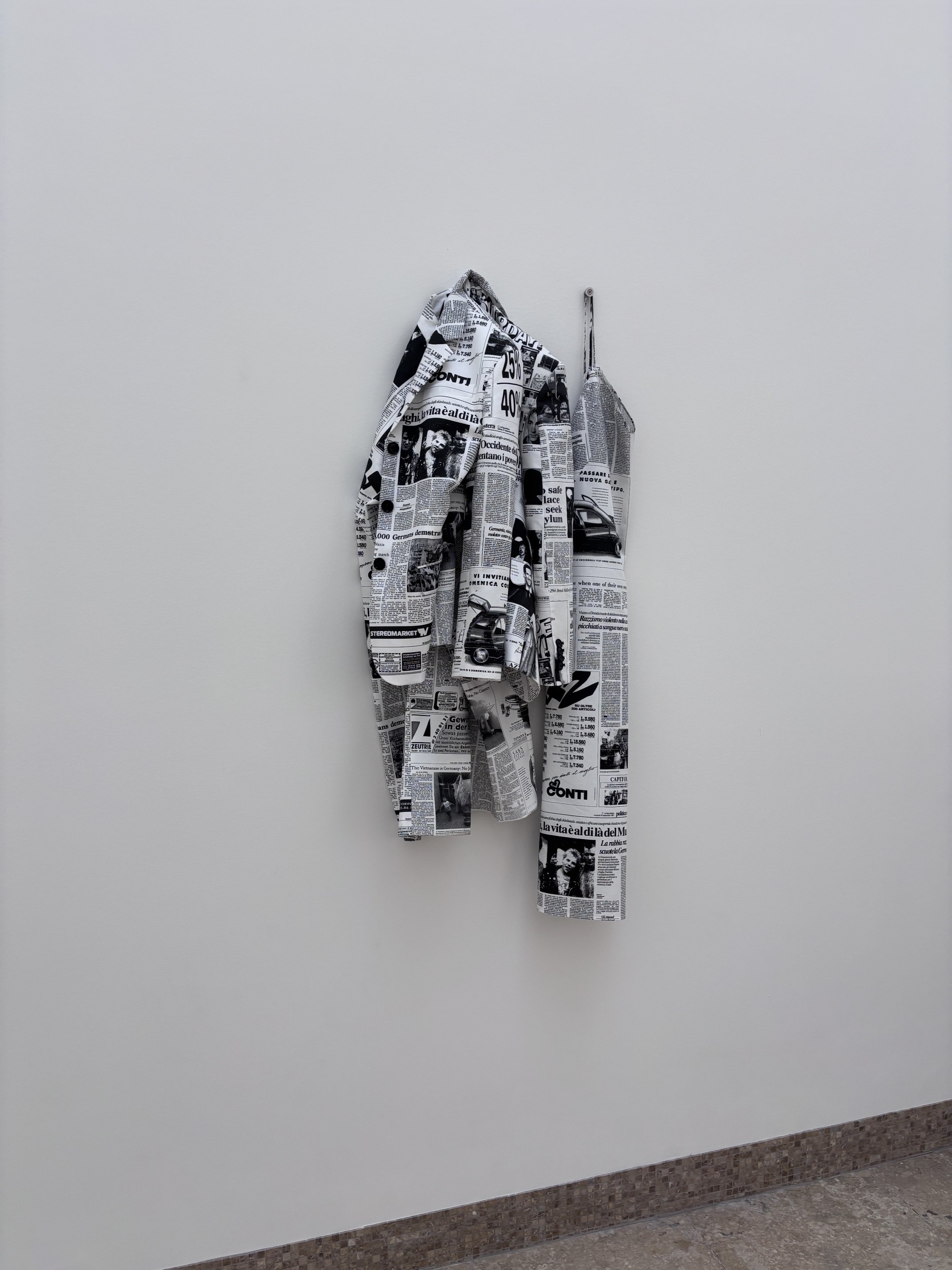
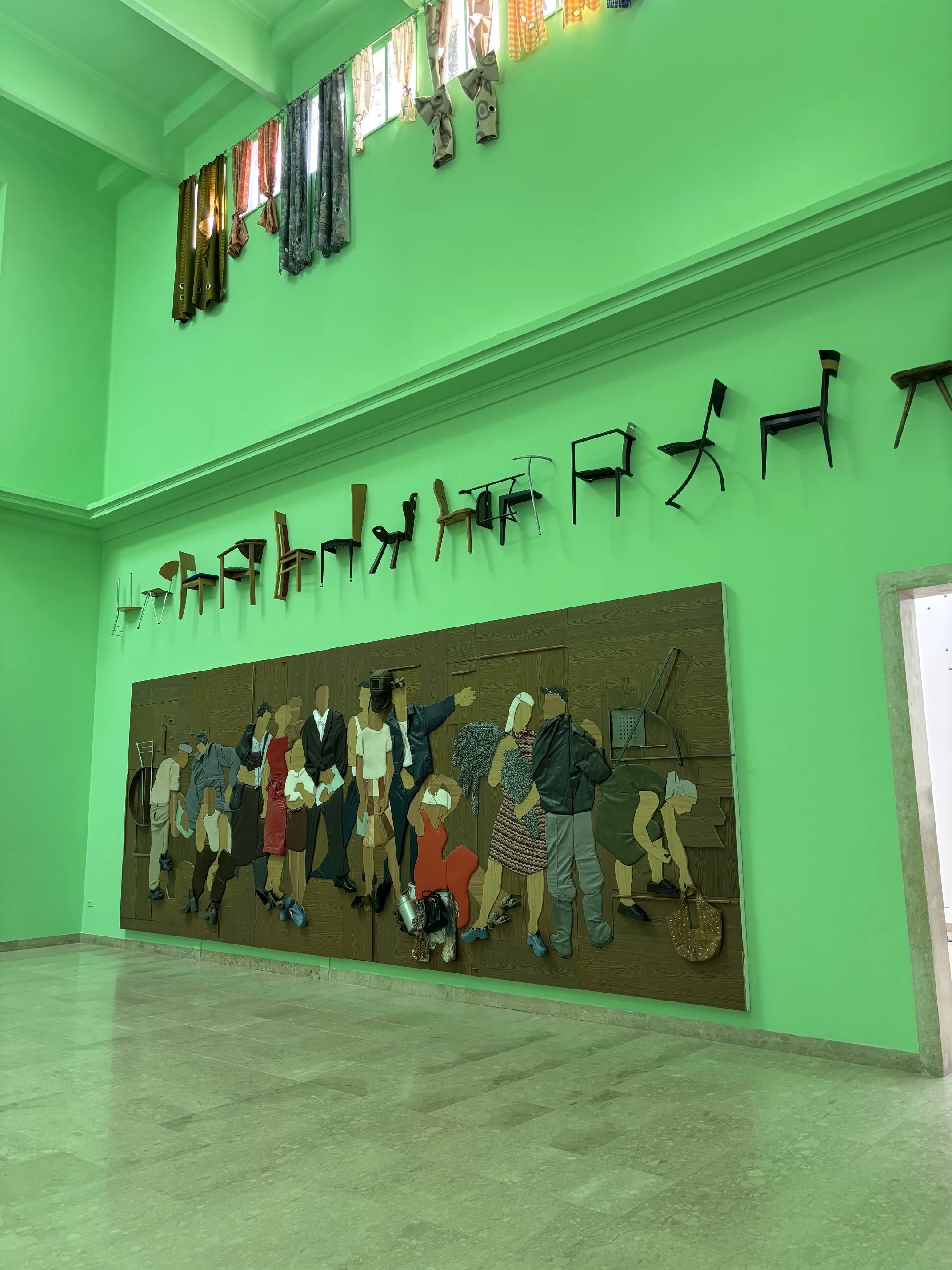
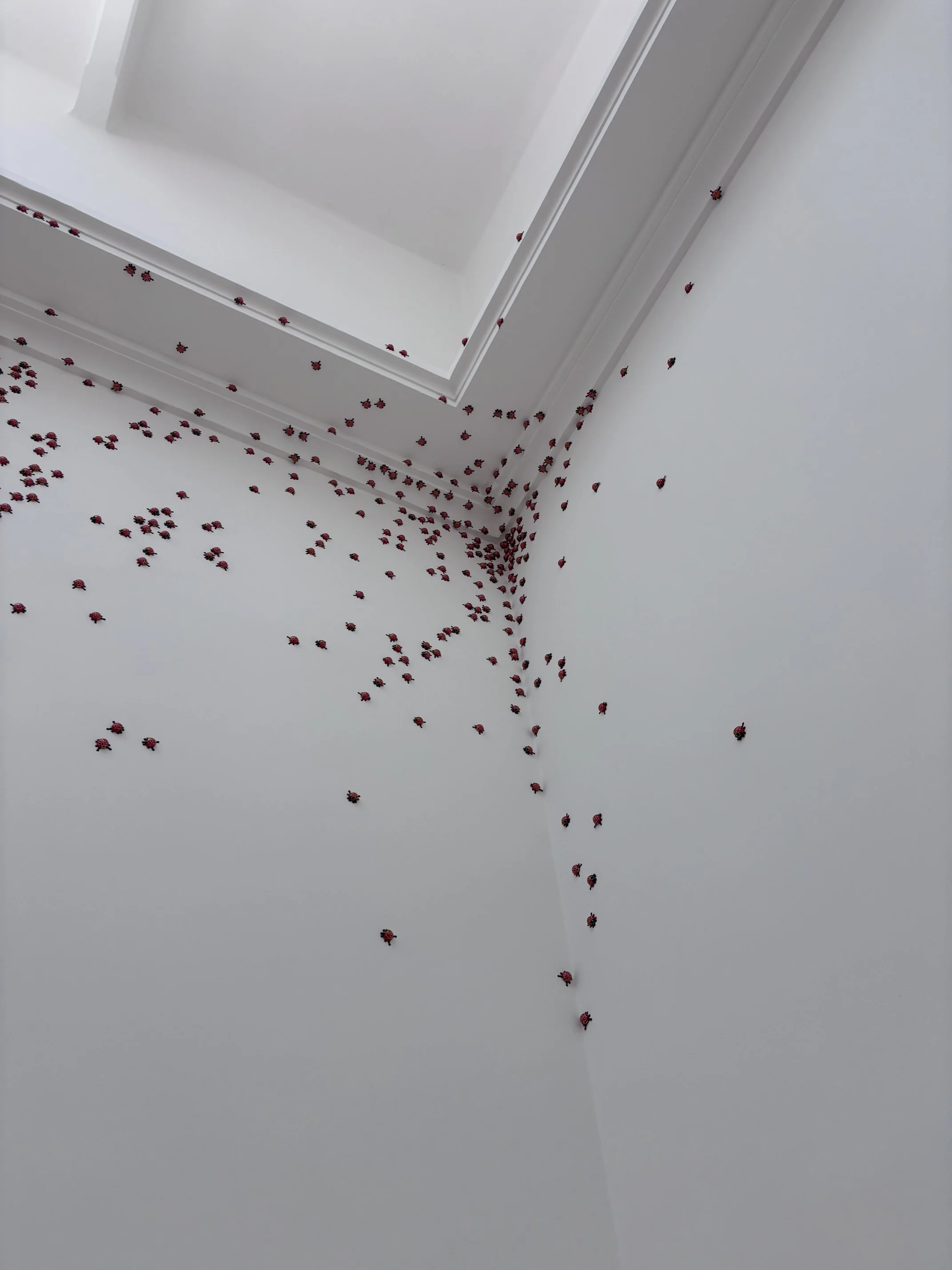
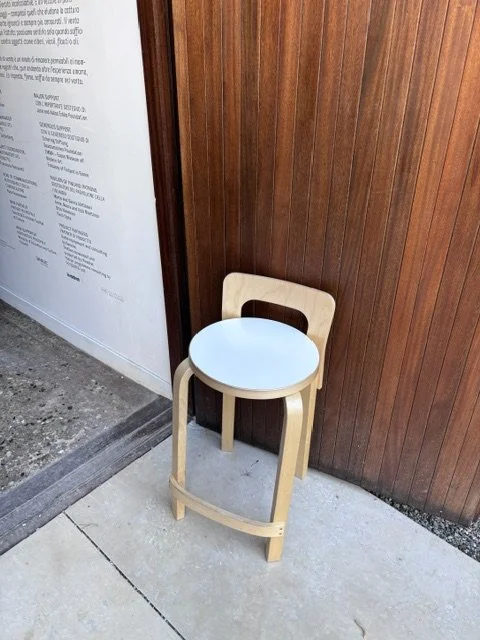
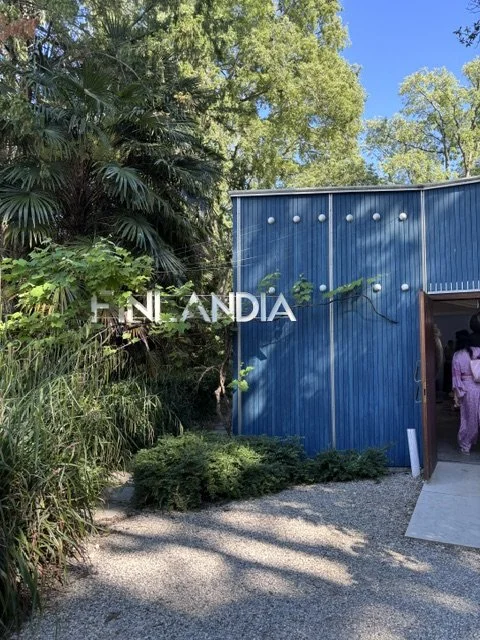
Finland: Being raised by an architect and surrounded by Alvar Aalto furniture (of course) I had to go into the Finnish Pavilion. Needless to say, the young Finnish woman who was this Pavilion’s “attendant” was sitting on an Alvar Aalto chair, in a pavilion designed by Aalto. The installation here focused on the environment and wind.
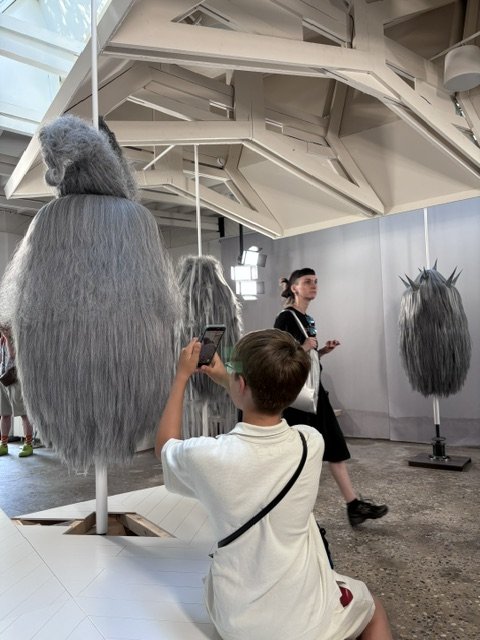
United States - Unlike the Simone Leigh installation we saw in 2022, that had a point of view and a polemic, the sculptor who ‘supplied’ the sculptures for the U.S.A. 2026 pavilion, Alma Allen, didn’t have anything he wanted to say. His pieces each have the same title, “not yet titled”.
Artist Statement:
“Su Wu: Alma, what is it?
Alma: My work is as stubborn as I am , I cannot tell you.
Su Wu: But don’t you worry you will be misunderstood with every work “Not yet Titled”
Alma: Perhaps, but then you might look and move beyond the legible into the recesses of your body and the feelings you hold there.”
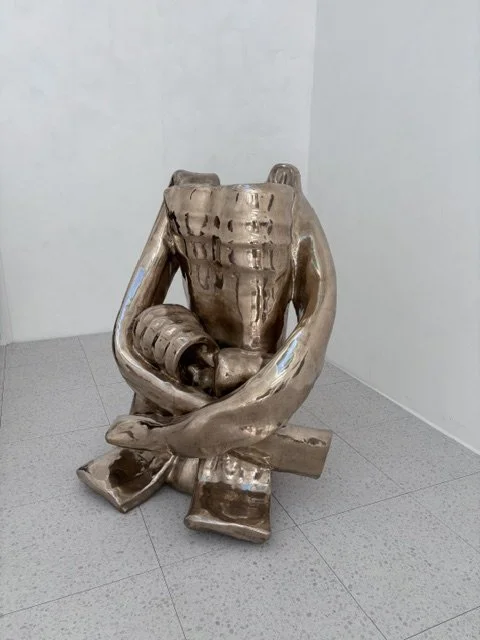
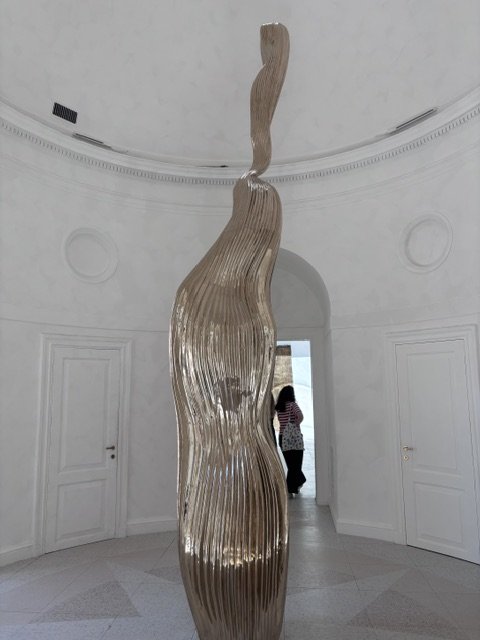
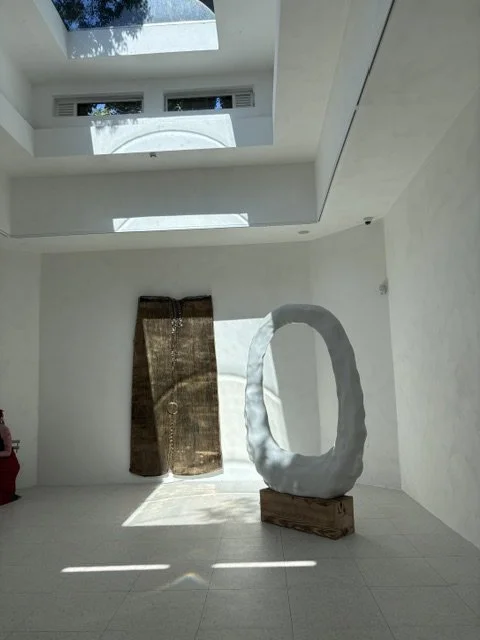
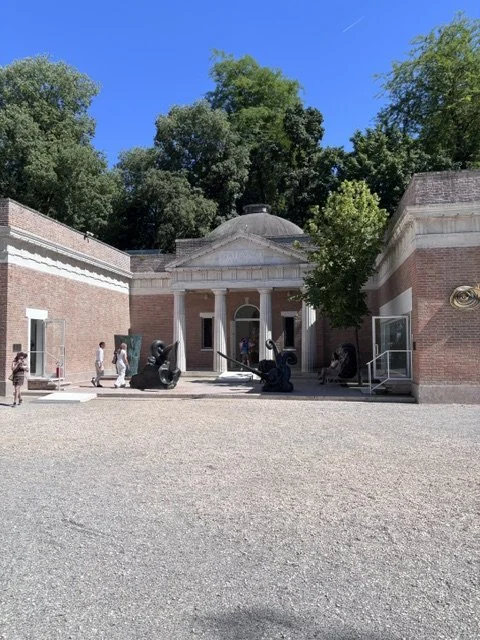
There was a ton of work in the central pavilion. It was visually exhausting and intellectually overwhelming. My favorite favorite favorite part of the big pavilion in the Giardini this year and in 2022 is the Carlo Scarpa designed courtyard - lovely and serene. Something we all need, at least every so often! And to make it even better there was a beautiful piece of art that incorporated plants, combining two of my favorite things, art and gardening!
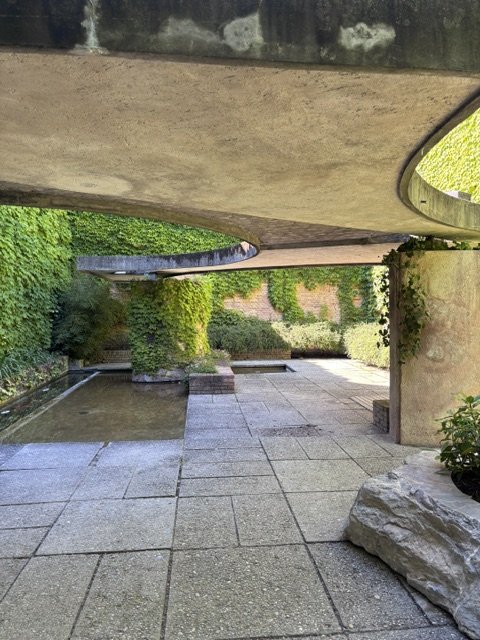
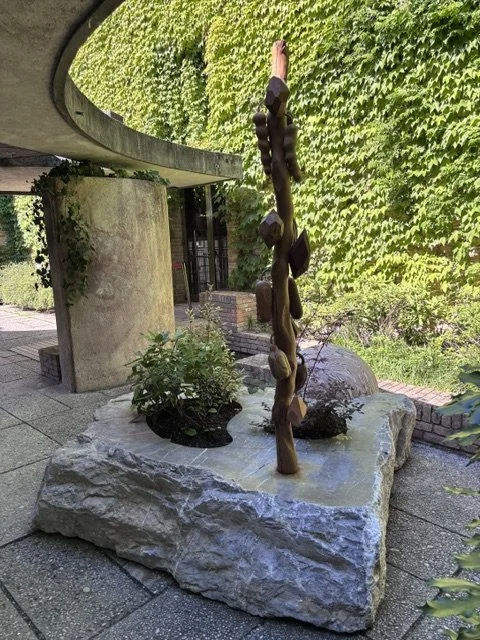
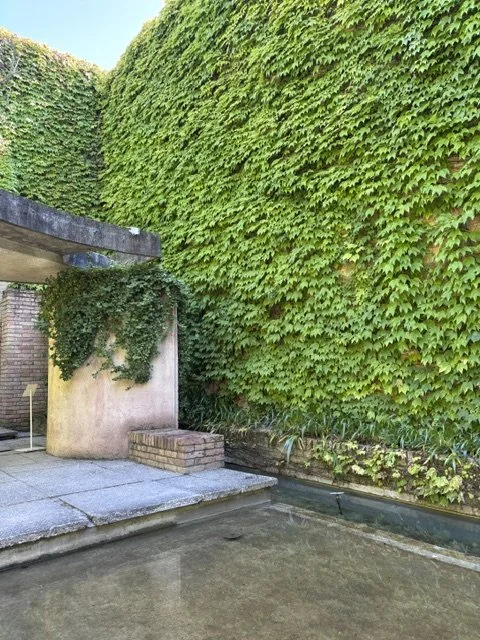
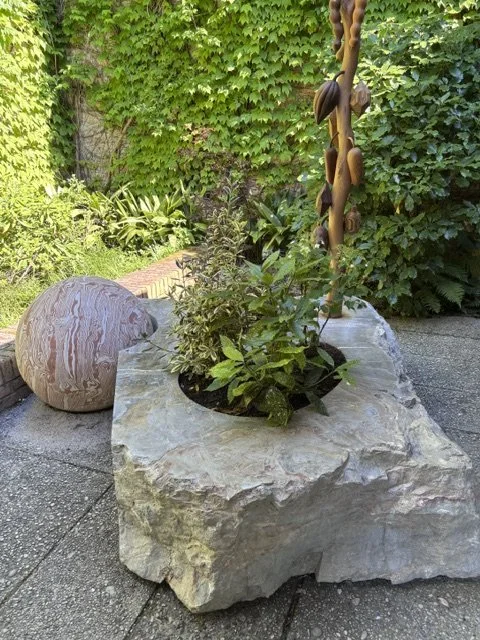
The Biennale is huge, there is so much here, and at times I wondered, “is this art?” But that question is not important. These are people who are brave and creative and examining the world and everything in here was original and thoughtful and I think if there is anything to take away it is that art and the creative force is very much alive and play and observation of the human experience continues and is valued still, and ultimately that is what art is, and I think David Hockney would agree.