Church Lady
Secrets of L’Eglise de la Madeleine revealed
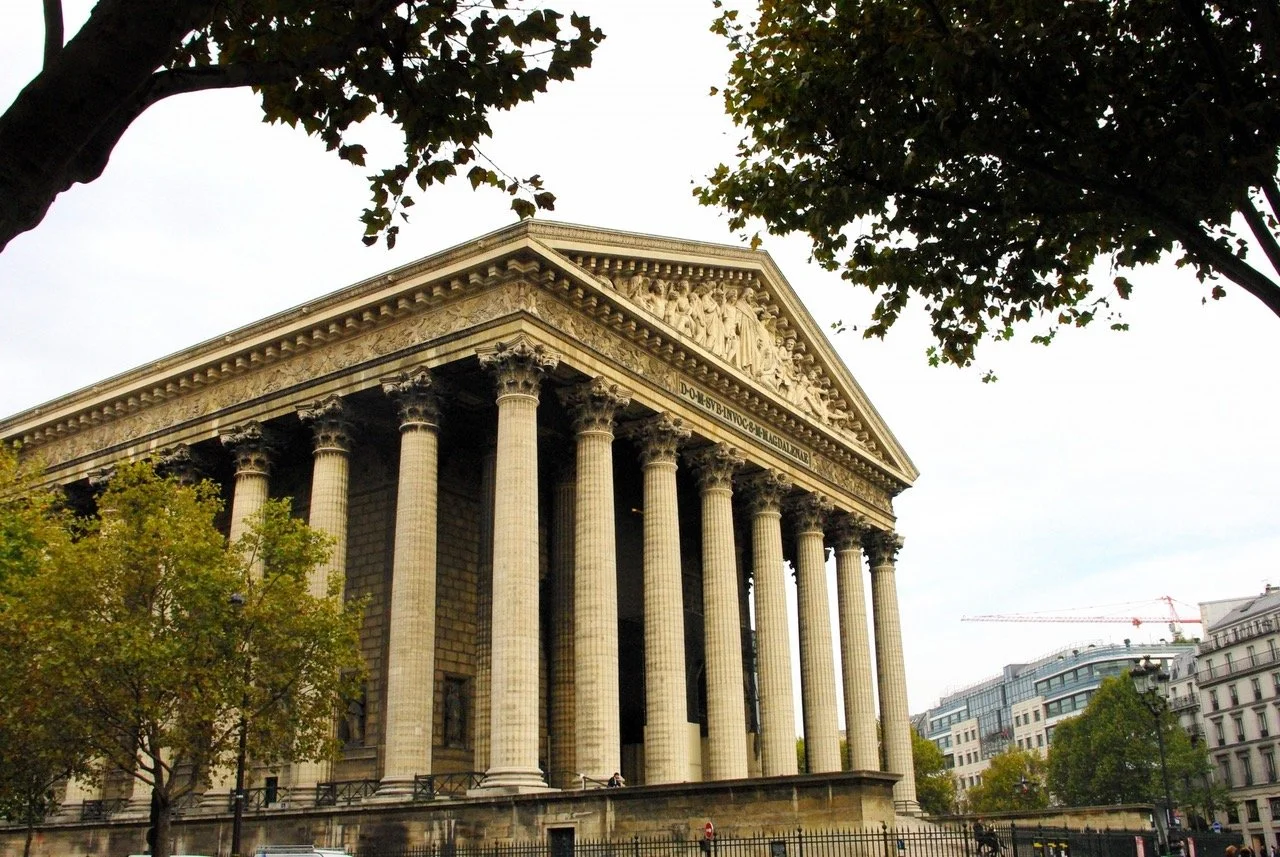
Bienvenue and welcome back to Musée Musings, your idiosyncratic guide to Paris and art. This week we’re at L’Église de la Madeleine where I met up with fellow/fella members of the Association de la Presse Étrangère for a private tour. We were directed to meet at the Parvis of this grand church that dominates the Place de la Madeleine in the 8th arrondissement of Paris. Meeting at the Parvis was just a fancy way of telling us to meet in “the open space in front of .. a cathedral or church, (which is) surrounded by either colonnades or porticoes,” like St. Peter's in Rome, like La Madeleine in Paris.
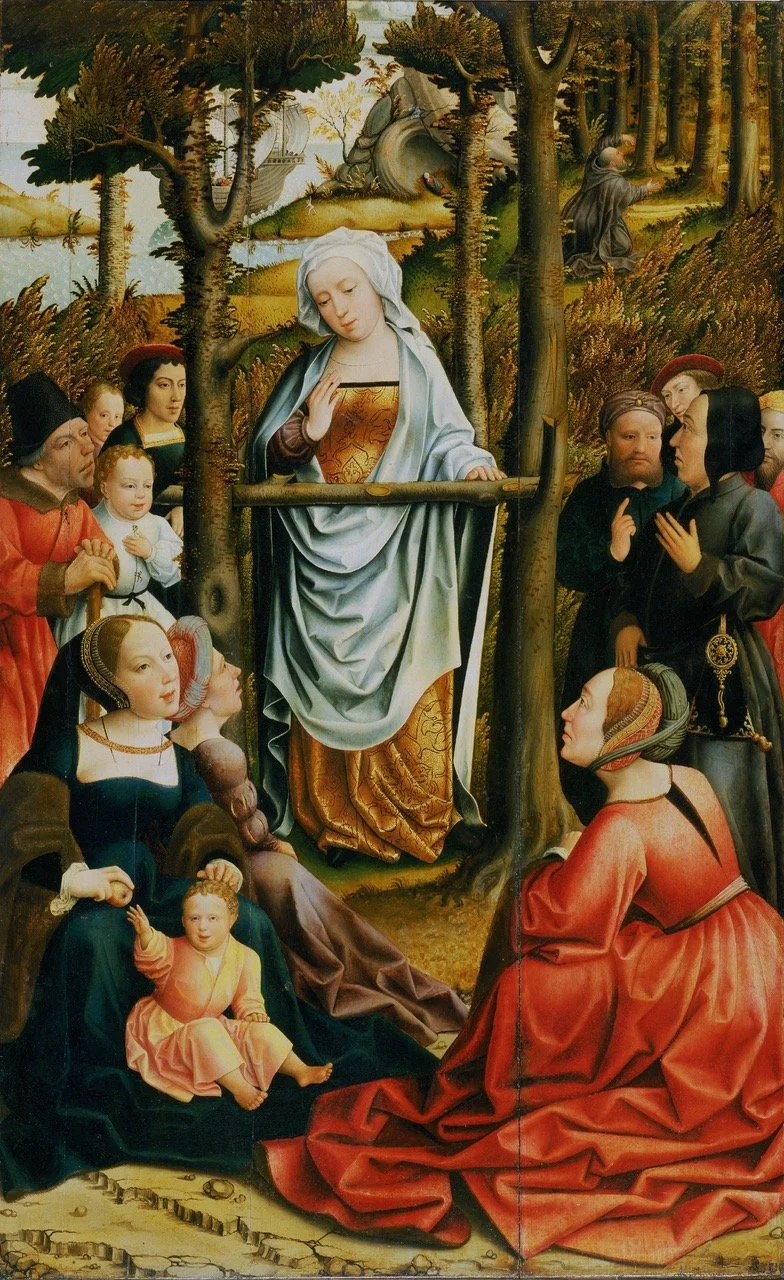
Mary Magdalene Preaching, Master of the Legend of the Magdalene
I had been to La Madeleine before of course, mostly to hear concerts. Last spring, for example, Barb and I attended a free concert performed by a choral group from Berkeley of which my friend Susanne is a member. (Fig 1) But this was my first time at this glorious church with my scholar’s cap on. A guide met us outside and talked about the architecture and the exterior sculpture. Inside, we learned more about the sculpture and also the paintings. After the guide filled our heads with lots of (mostly) interesting facts, the Church’s curé, Patrick Chauvet, (who until a few years ago was Rector of Notre Dame Cathedral) took over. His lively discourse included such diverse topics as relics, the Gnostic Gospels and the many Marys in Christ’s life.
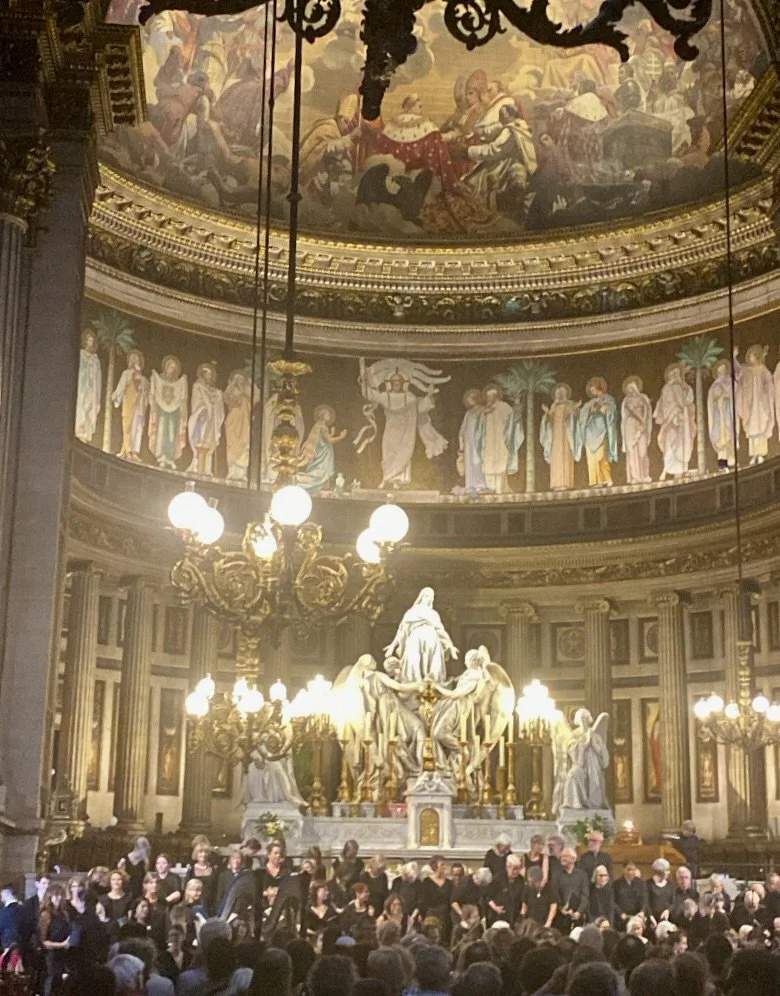
Figure 1. Berkeley Choir performing at La Madeleine Jun3 2025
The history of the building’s architecture is as complex as the history of France, with stops and starts and ruptures and changes of direction. The church was conceived by Louis XV in 1763 as the focal point for the new Rue Royal, which would lead to the new Place Louis XV. A place now known as Place de la Concorde.
The initial architectural concept for this church dedicated to St Mary Magdalene, was a domed structure, similar to the church at Les Invalides. (Fig 2) When the original architect died in 1777, not much more than the building’s skeleton had been built. A mere 12 years later, the French Revolution got underway and with it came the desecration, destruction and looting of churches all over Paris. Construction on la Madelene stalled.

Figure 2. Les Invalides, Paris
After Napoleon was crowned Emperor (in 1804, in a country that only a decade earlier had beheaded its king and queen), the architect Pierre-Alexandre Vignon was tasked with designing, on the site originally intended for a church, the Bank of France, the Stock Exchange and a commercial tribunal. But Napoleon had other ideas. Instead of a church or a bank, he wanted a "Temple to the Glory of the Grand Army.”
The Madeleine was one of three monuments with which Napoleon intended to turn Paris into an imperial capital, based of course, on Rome. Two monuments were built, the Vendôme column (1806-10) and the Arc de Triomphe (1808-10). The Column, constructed of stone, adorned with bronze, surmounted by a statue of Napoleon, was inspired by Trajan’s Column in Rome. (Figs 3.4) And like Trajan’s Column, the one in Paris is decorated with bas reliefs depicting trophies and battle scenes winding in a continuous spiral. The Arc de Triomphe, inspired by the Arch of Titus, honors the soldiers who fought and died for France during the French Revolution and the Napoleonic Wars. The names of French victories and generals are engraved on its inner and outer surfaces. (Figs 5. 6)
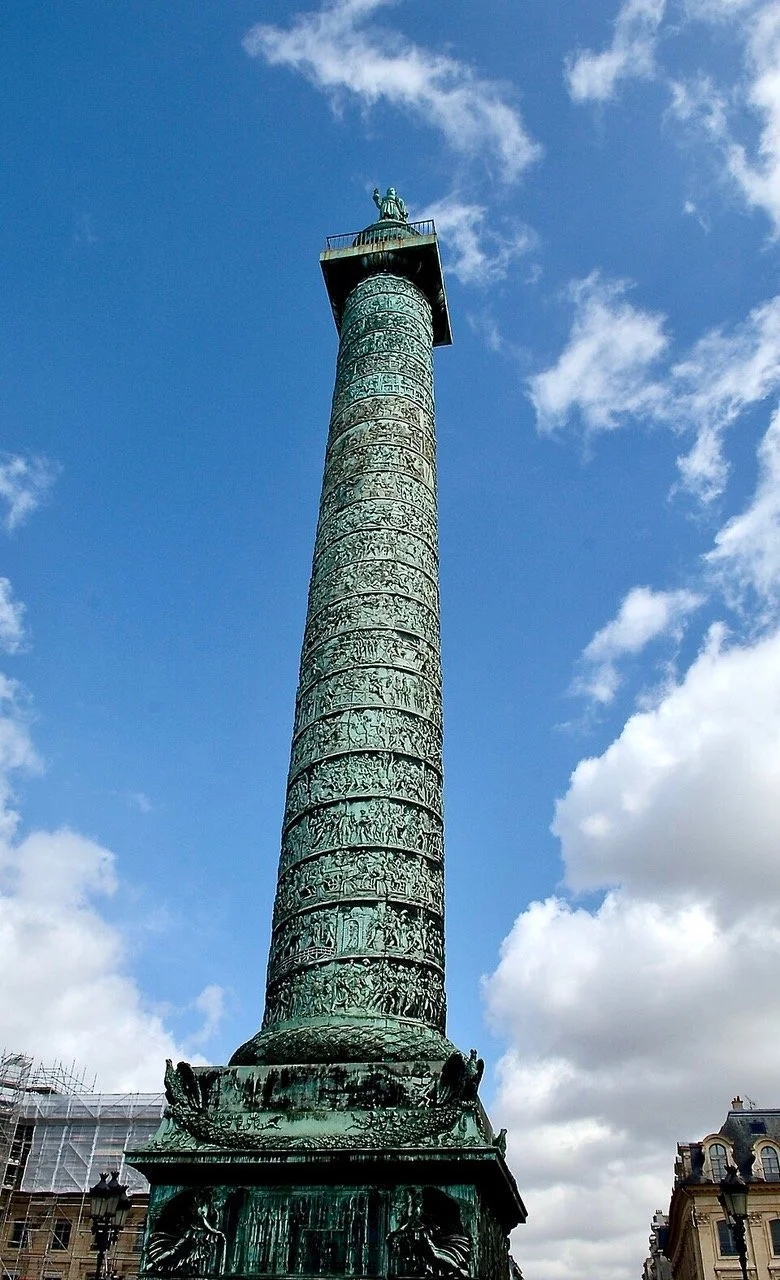
Figure 3. Vendome Column, Paris
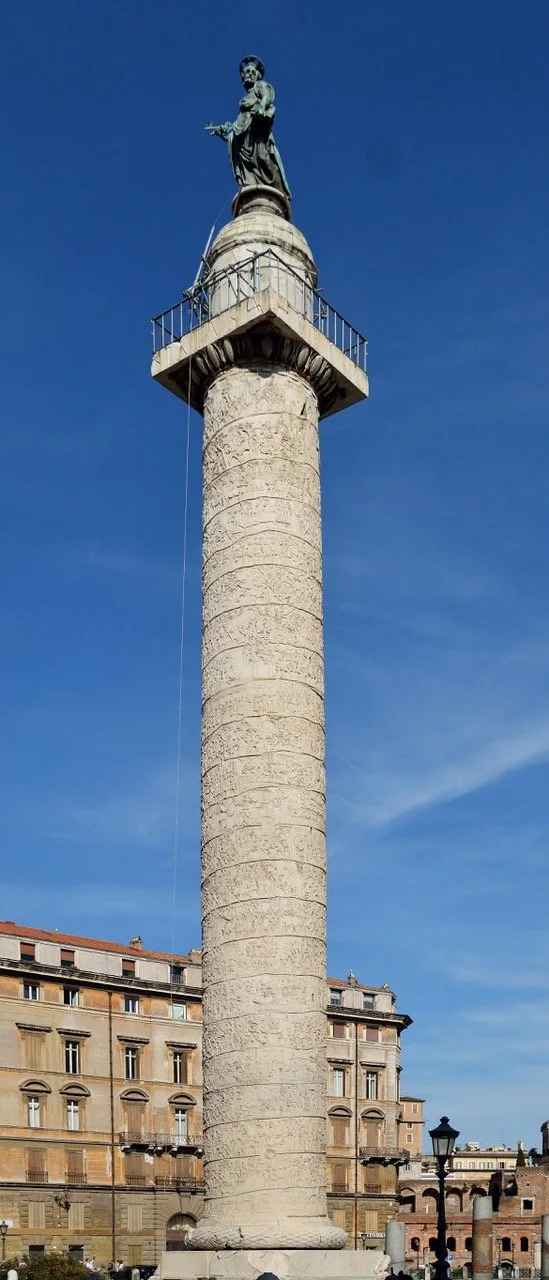
Figure 4. Trajan’s Column, Rome

Figure 5. Arc de Triomphe, Paris
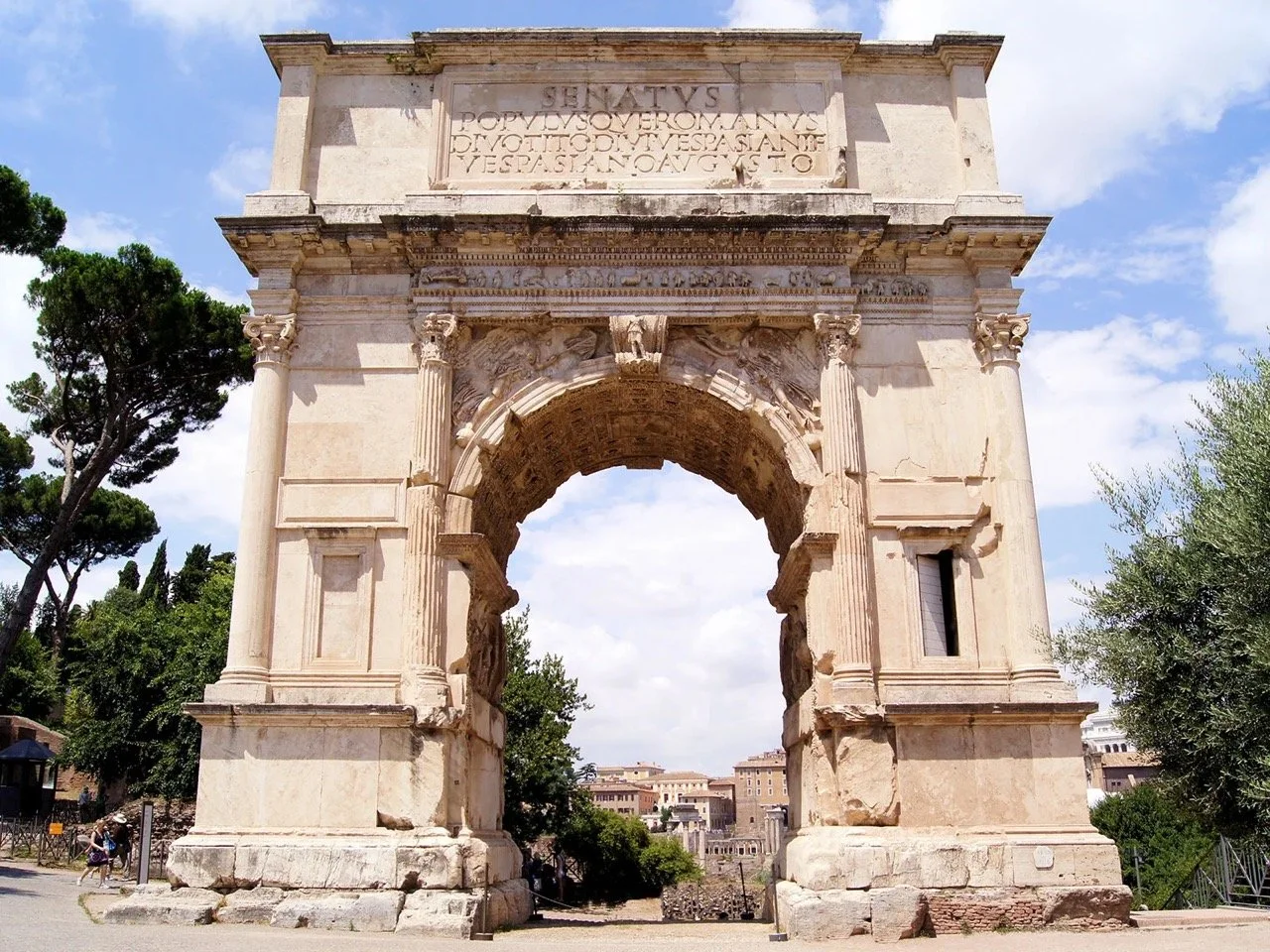
Figure 6. Arch of Titus, Rome
Vignon, the architect of the ‘Temple to the Glory of the Grand Army’ also looked to Roman architecture for inspiration. But the temple that caught Vignon’s eye was not in Rome, but in Nîmes, France, the Maison Carrée, (16 BCE). (Fig 7)
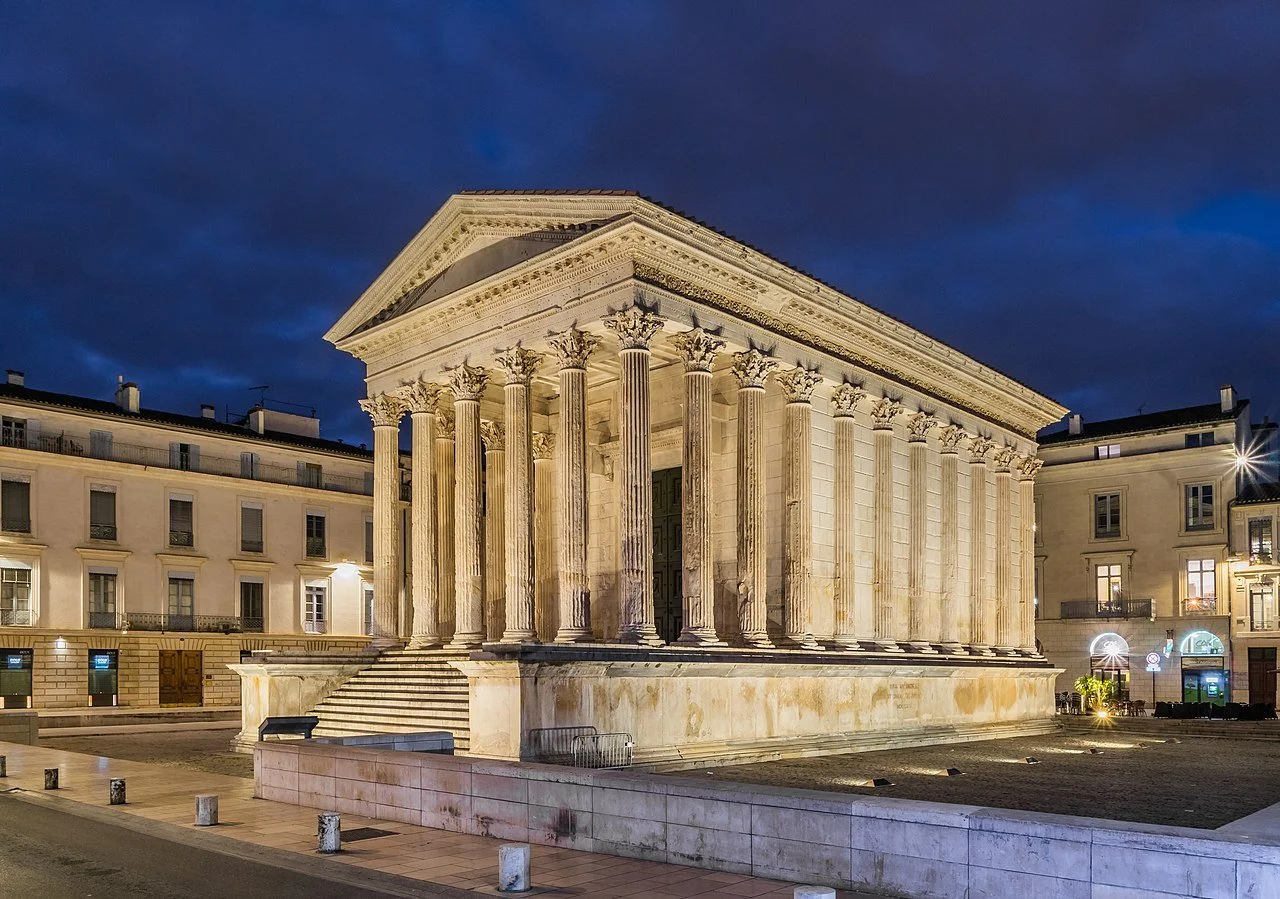
Figure 7. Maison Carrée, Nimes, 16 BCE
Vignon was not the first 18th century architect or gentleman architect to be inspired by that building. In 1785, Thomas Jefferson, while serving as U. S. Minister to France, designed the Capitol of Virginia, basing his design on the Maison Carrée. It was the first public building in America in the form of a classical Roman temple. (Fig 8)

Figure 8. Virginia State Capitol, Richmond, Virginia, 1785
Those of us in Paris can admire a statue of Jefferson as we walk by the Musée d’Orsay, or more precisely, as we walk by the Legion of Honor, just next door. Jefferson’s statue (holding a plan of Monticello) is there because he stood and watched this building being built, when it was the Hotel de Salm. He was so taken with the design that he incorporated it into his design for Monticello. The Hotel de Salm became the Legion of Honor when its owner had an unfortunate run-in with the blade of the guillotine. (Fun fact: The Hôtel de Salm also inspired San Francisco’s Legion of Honor Museum). (Figs 9-12)

Figure 9. Statue of Thomas Jefferson holding plan for Monticello, Paris
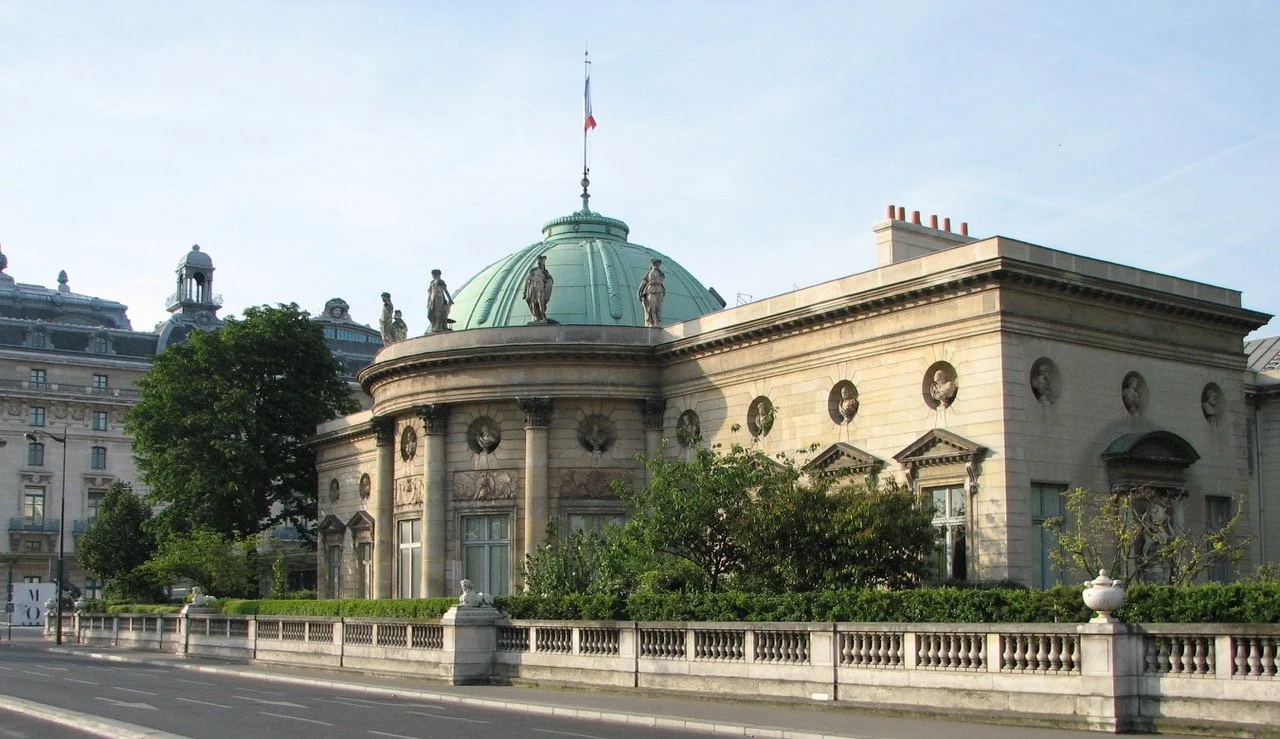
Figure 10. Hotel de Salm, Palais Legion of Honor, Paris

Figure 11. Monticello, Virginia, Thomas Jefferson’s home
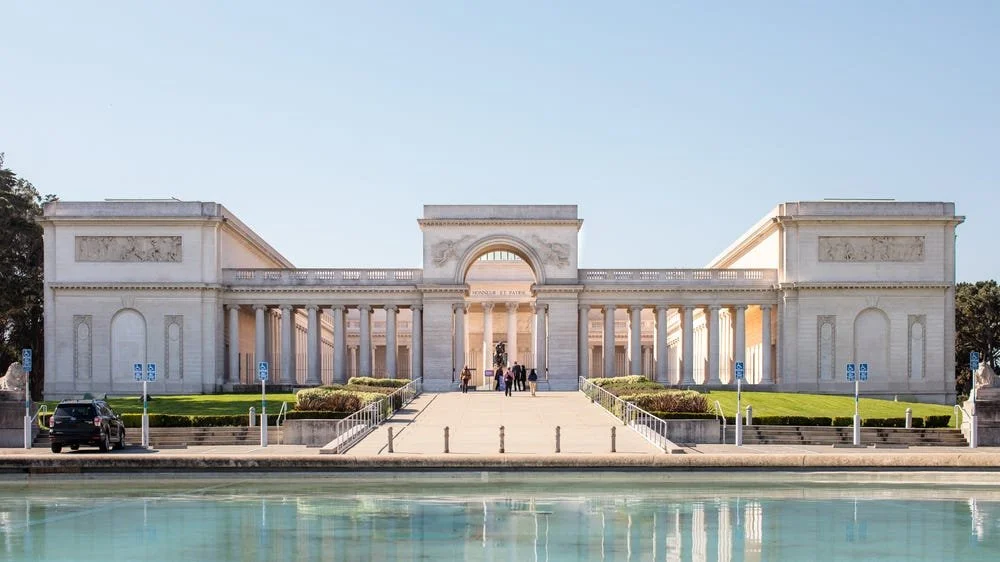
Figure 12. Legion of Honor Museum, San Francisco
How did Jefferson know the Maison Carrée? He visited Nîmes! In a letter to Madame de Tessé, with whom he corresponded for more than 30 years, he wrote on 20 March 1787. “Here I am, Madam, gazing whole hours at the Maison quarrée, (Carrée) like a lover at his mistress…(T)o fall in love with..a house…is not without a precedent in my own history. While at Paris, I was violently smitten with the hotel de Salm, and used to go to the Thuileries almost daily to look at it… sitting on the parapet, and twisting my neck round to see the object of my admiration, I generally left it with a torticollis (twisted neck).
The idea of a temple celebrating the military lost its appeal when Napoleon lost his job in 1814. Construction of the Madeleine as a church resumed. Various events during the next 20 years slowed the work down at times and halted it others. The church was finally consecrated in 1842, 79 years after the cornerstone had been laid.
Before we went inside, the guide pulled shut one of the grand doors, so we could get a better view of the bas relief sculptures that embellished them. (Fig 13) There seemed to be 8 historiated panels, four on each door. But there are actually 10, two are on the semi-circular lintel above. (Figure 14) The sculptor was Henri de Triqueti who happily worked for the Citizen King, Louis Philippe (whose pear shaped face inspired Charles Philipon to make a caricature which resulted in his being sentenced to 6 months in jail). (Fig 15) Triqueti’s doors are massive, twice the size of the doors of St. Peter's in Rome. One reviewer posits that the doors were large so people could see the sculptures. Or maybe “they (were)… an attempt to shore up the authority of the new ‘Citizen King.’” Alas, they didn’t and in 1848, Louis-Philippe and his family fled to England. Unlike his unlucky predecessors, Louis XVI and Marie Antoinette, the Citizen King and his family escaped. Triqueti headed off to England, too. Where he became pals with Prince Albert, Queen Victoria’s consort who “appreciated the sculptor because of “his deep piety and extensive knowledge of Renaissance art.”
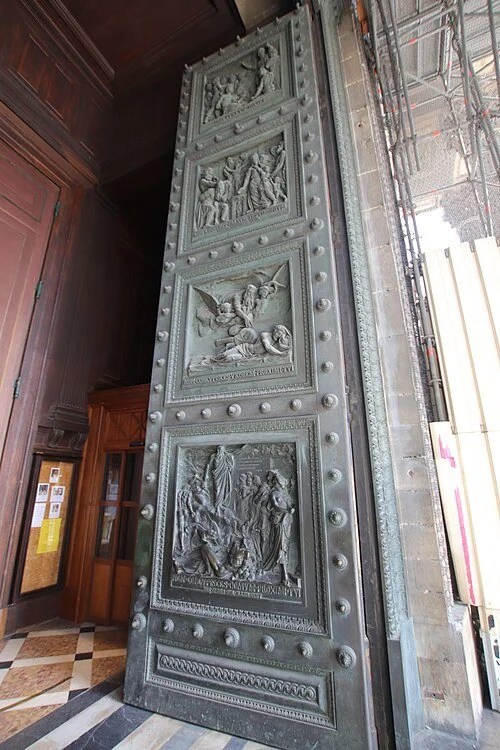
Figure 13. One of two doors of Le Madeleine, Paris
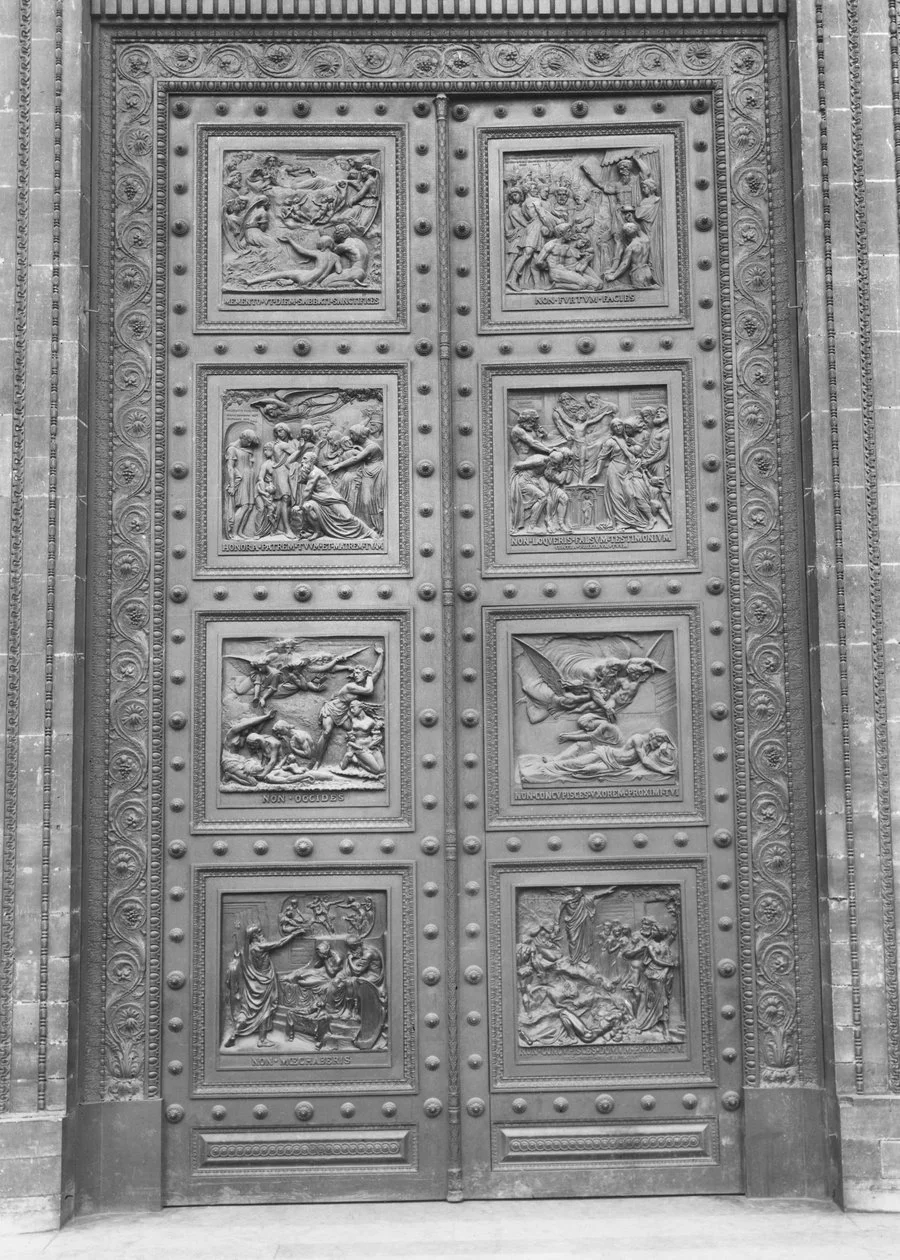
Figure 14. La Madeleine doors, closed
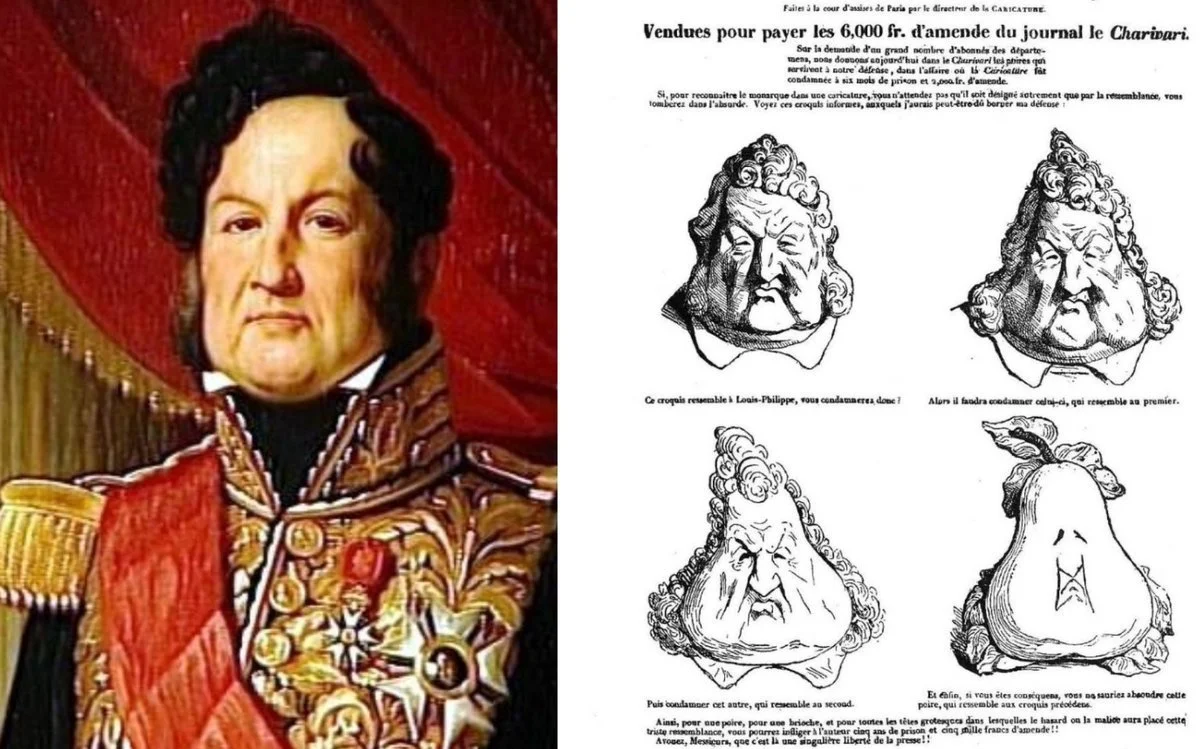
Figure 15. Portrait of Louis-Philippe, left, caricaturist Philipon’s explanation about how a face becomes a poire/pear right
The subject of the bas reliefs? We asked the guide. The Decalogue, he told us. The Decalogue? A bit of buzzing amongst ourselves ensued. Ah, the Ten Commandments. I could name lots of paintings that take Moses and the Ten Commandments as their subject. There’s Moses and the Burning Bush, Moses holding the Ten Commandments, Moses’ anger at seeing the Israelites worshipping the golden calf, Moses destroying the Ten Commandments. I could go on, but I won’t. (Figs 16-18)
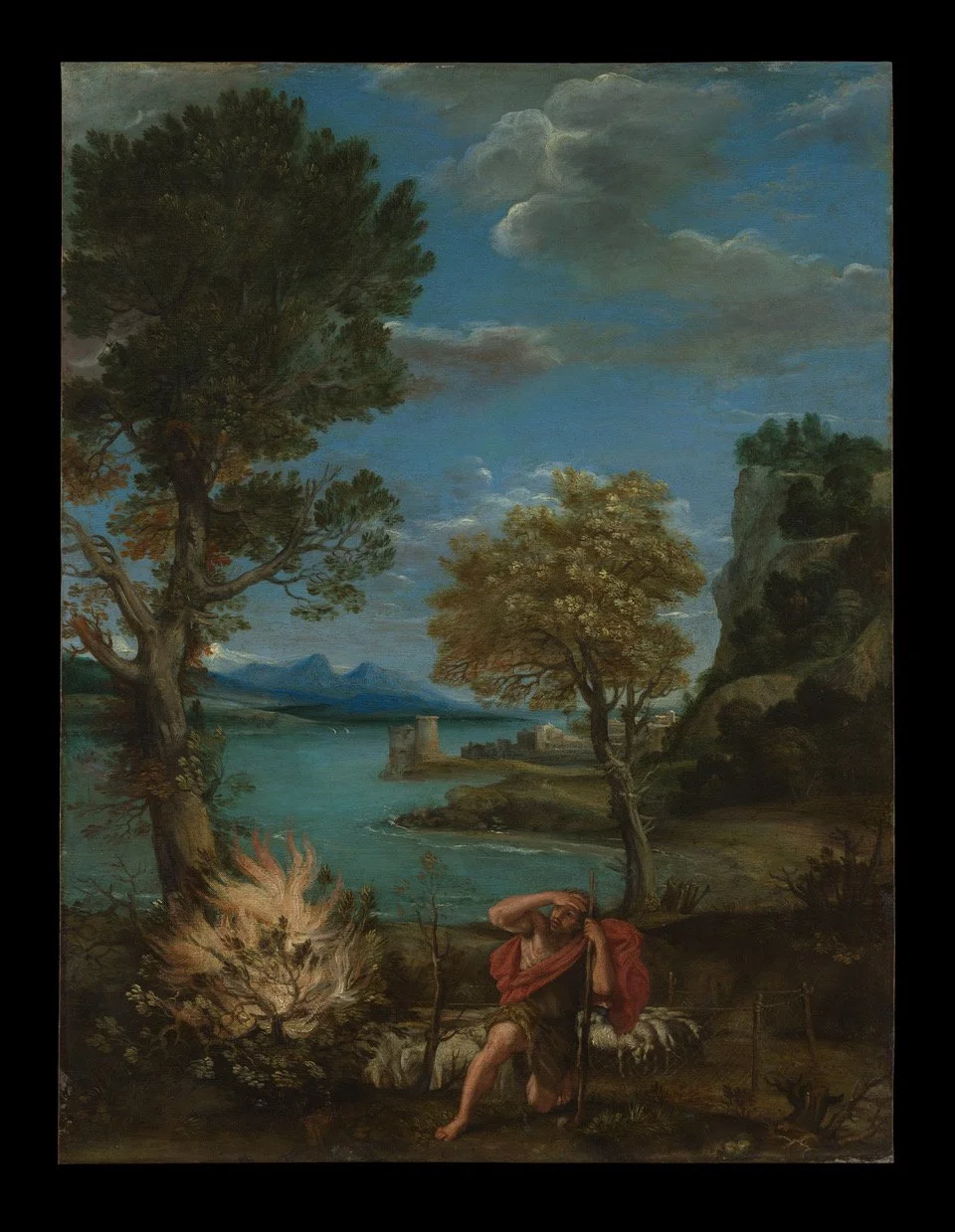
Figure 16. Moses and the Burning Bush, Domenichino, 1610

Figure 17. The Adoration of the Golden Calf, Nicolas Poussin
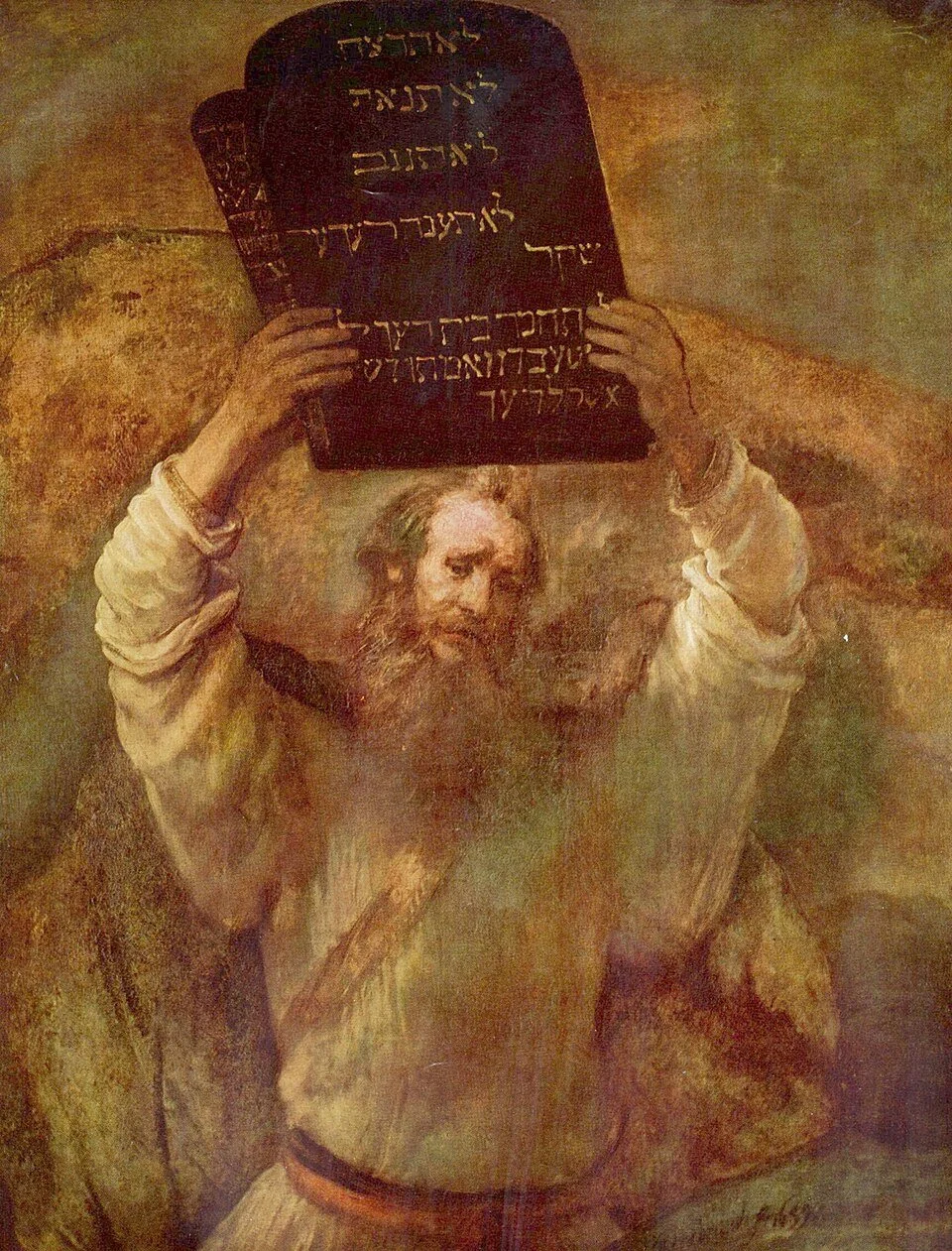
Figure 18. Moses destroying the Ten Commandments, Rembrandt
I don’t remember ever seeing depictions of the individual Commandments qua Commandments. Yes, the story of Cain slaying Abel brings the 5th Commandment, “Thou Shalt Not Kill” to mind. (Fig 19) Wikipedia concurs, “Cain and Abel have been symbols of fratricide and sibling rivalry…from medieval times to present, in literature, theater, music, and (now) film.” But also this, “The story of Cain and Abel is widely interpreted … as a symbolic tale reflecting early agricultural society’s tensions…between nomadic herders and settled farmers.”
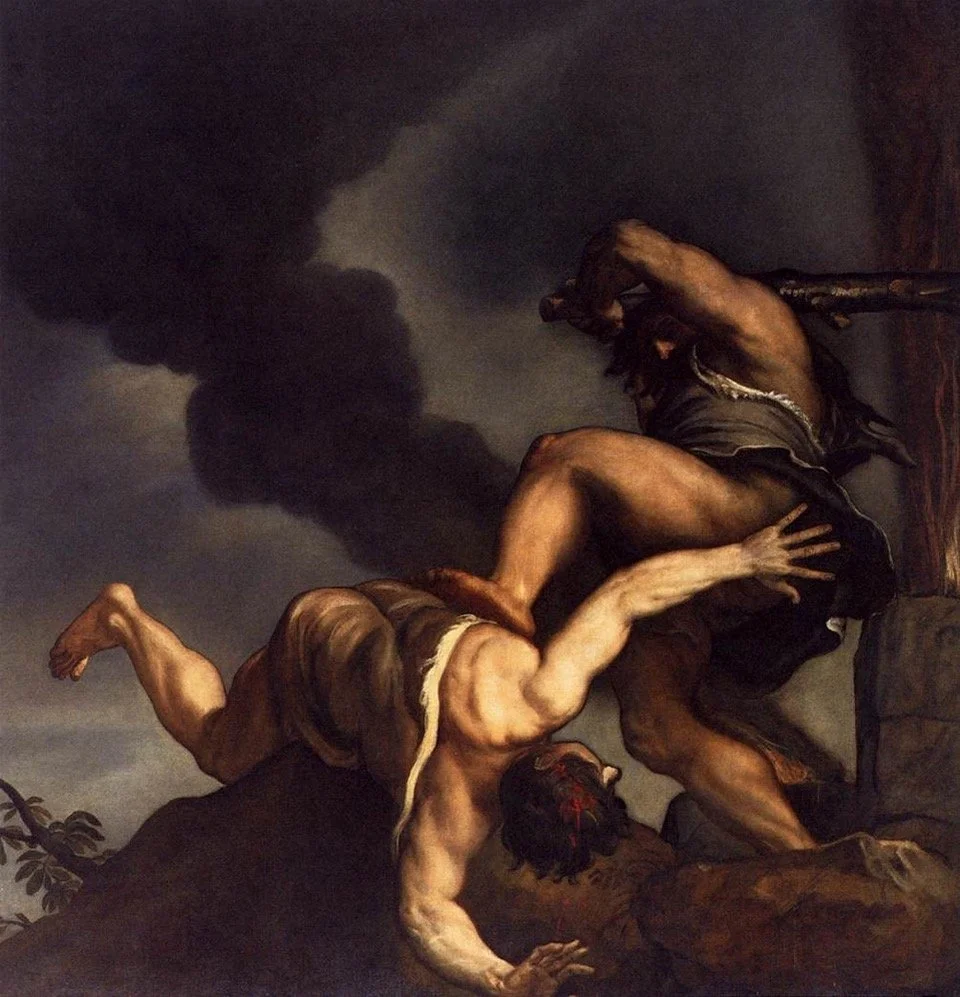
Figure 19. Cain killing Abel, Titian
What about lusting? Here are some biblical stories that immediately come to mind: Joseph and Potiphar’s wife, David and Bathsheba and Susanna and the Elders. (F 20-22) References maybe to the 6th commandment, "Thou shalt not commit adultery” or the 9th, “Thou shall not covet thy neighbor’s wife.’ But I don’t remember seeing depictions of those stories in reference to Moses’ tablets. Actually, I didn’t know of any other decorative cycle with the Ten Commandments as its subject. When I looked, I found one. Lucas Cranach the Elder’s multi-paneled painting from 1516 for Wittenberg Town Hall in Germany. It now hangs in the refectory of Martin Luther’s residence there. (Figs 23, 24)
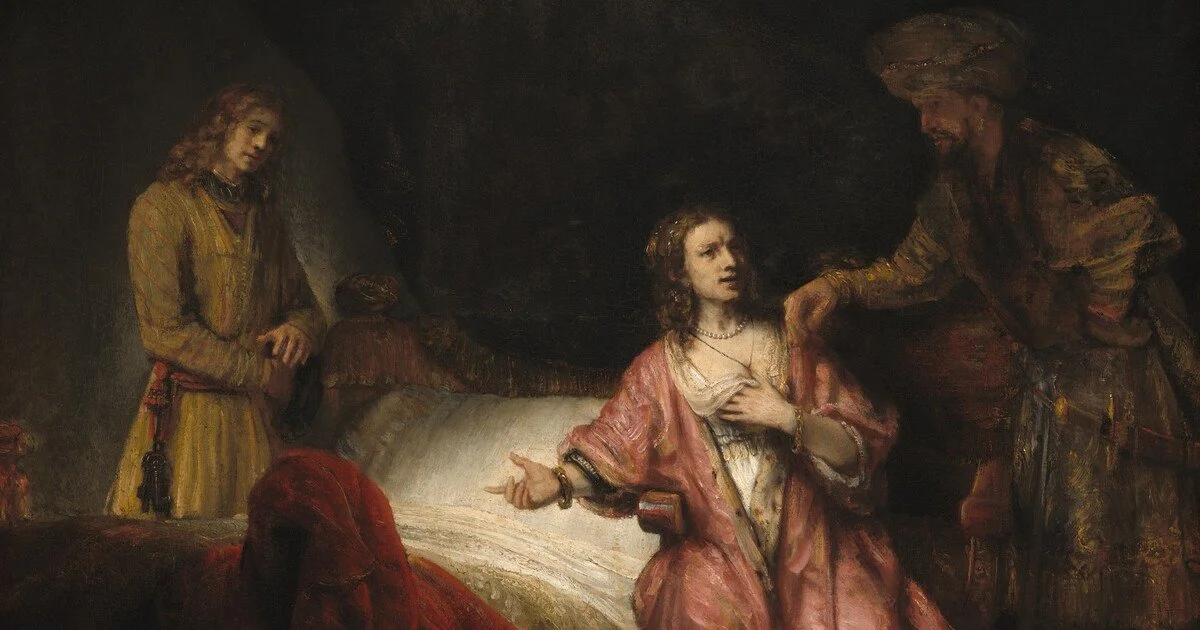
Figure 20. Potiphar’s wife accusing Joseph of accosting her, Rembrandt (he wouldn’t, she lied, he was punished)
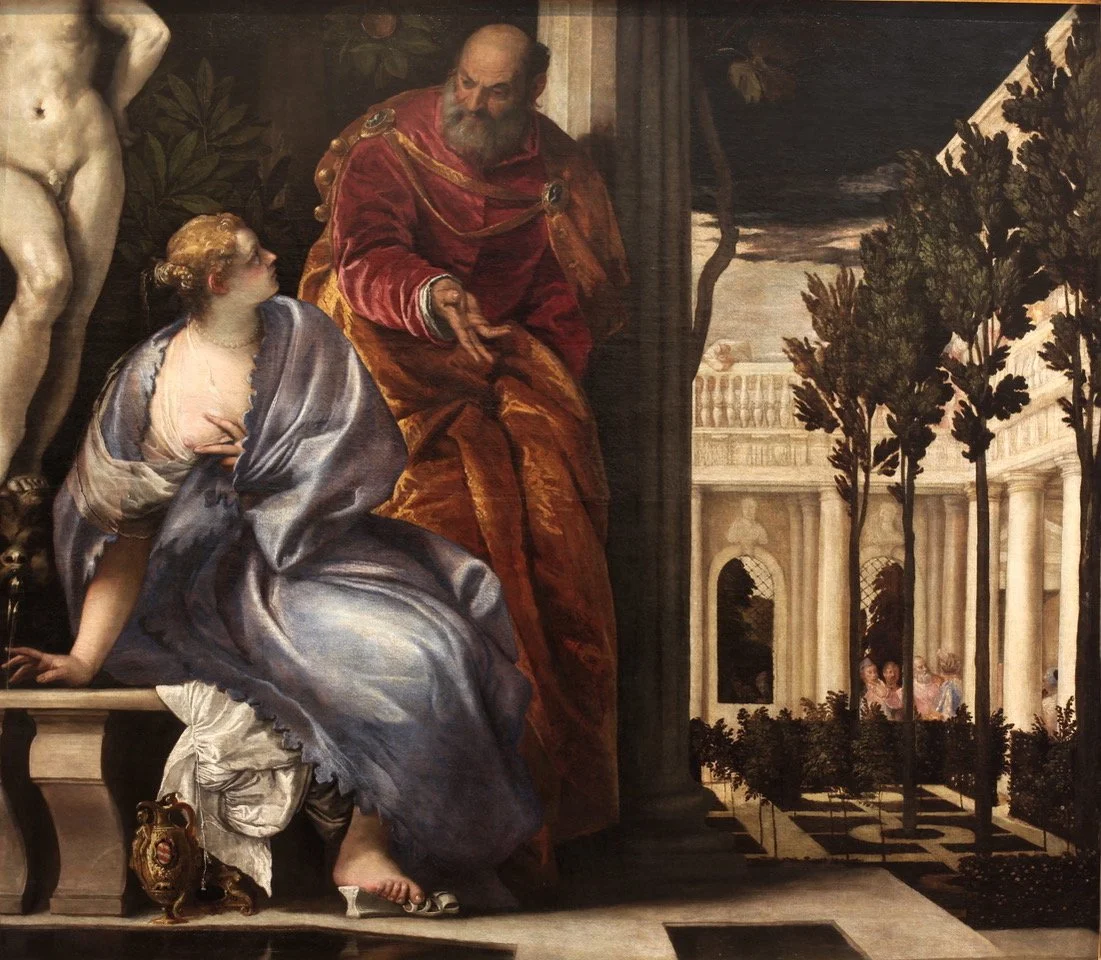
Figure 21. Bathsheba at her Bath, Veronese. King David saw a beautiful woman, the wife of another man. He called for her, had sex with her and got her pregnant. Her husband died (strange circumstances) David married her. God not happy
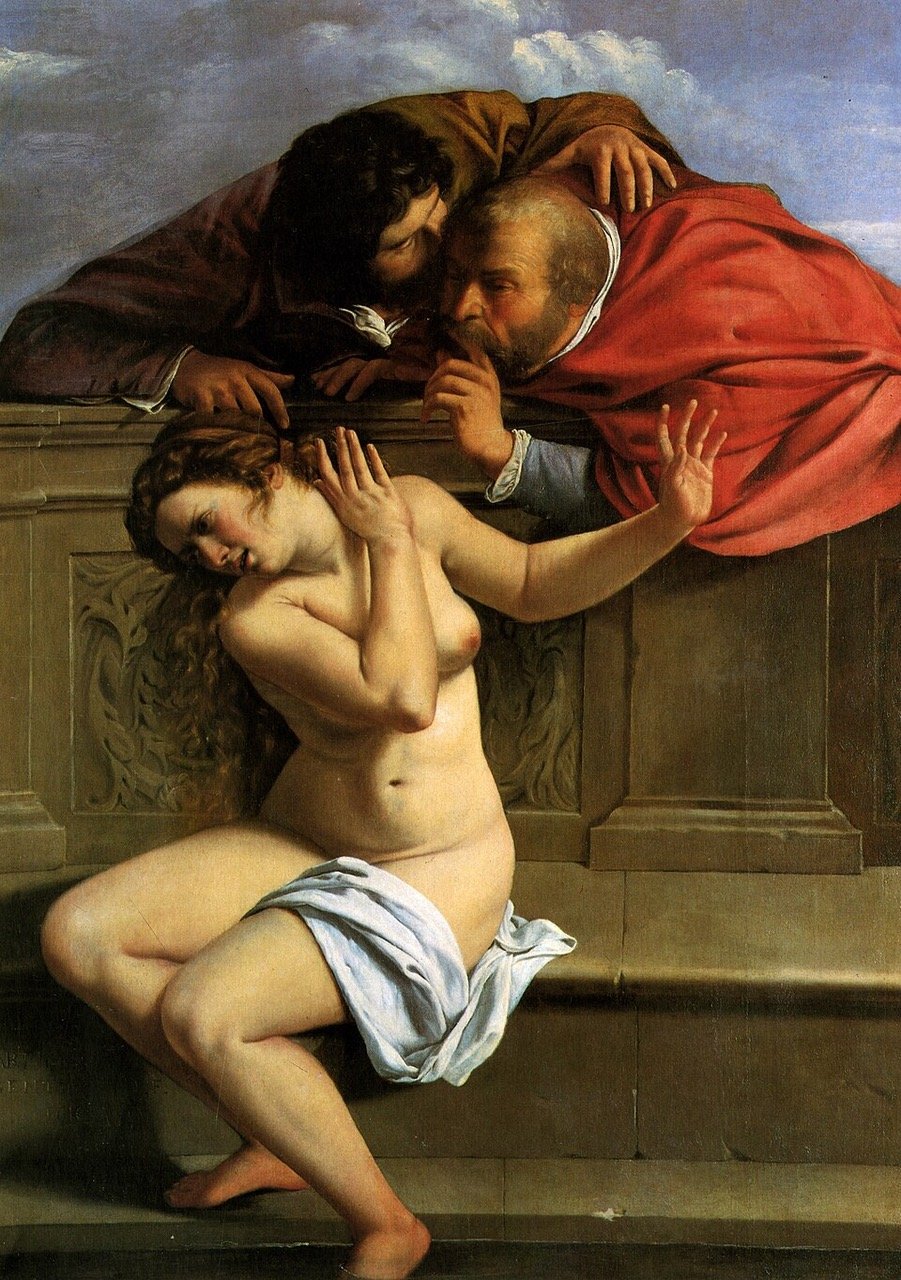
Figure 22. Susannah and the Elders, Artemisia Gentelleschi (she wouldn’t have sex with them, they said she did, they were punished)
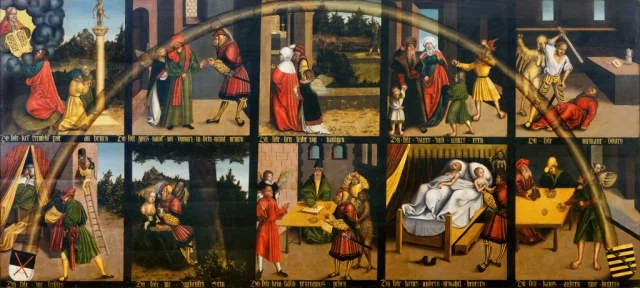
Figure 23. Ten Commandment panels, Lucas Cranach the Elder, 1516
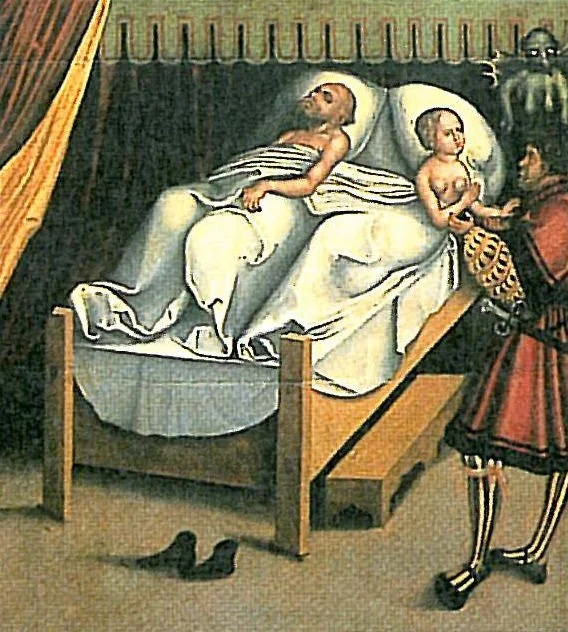
Figure 24. Thou Shalt Not Commit Adultery, Wittenberg Panel, Lucas Cranach the Elder (note devil above dressed man who is about to grab naked woman in bed with her husband
Who knew that the 10 Commandments would be in the news just as I was doing a bit of research on them. I read somewhere that, “Texas, Louisiana and Arkansas have passed laws requiring the Ten Commandments to be displayed in public school classrooms. Other states are considering similar measures.” Which of the 10 Commandments do you think the present administration is currently or has already disobeyed? We don’t know if Jeffrey Epstein was murdered, so ‘Thou shalt Not Kill’ is on hold. Which Commandment best describes a man who openly cheated on his wife and who has sexual relations with a sex worker while his wife is in the other room. Don’t know.
J. Banerjee (https://victorianweb.org/sculpture/triqueti/2.html) writes that Triqueti’s doors have been celebrated for their “originality of interpretation, compositional skill, coherent vision and intensity of feeling.” His panels simultaneously condemn the breaking of a Commandment while sympathetically acknowledge the suffering it caused the victims. The 'Thou Shalt Not Kill,’ panel doesn’t show Cain killing Abel, it shows the aftermath of the crime. Abel is dead and angels swoop down to comfort his grieving family. Other angels banish Cain from the scene. (Fig 25) The story that illustrates "Thou Shalt Not Covet Thy Neighbor's Wife," is one I did not know. It’s about Abraham and Sarah, from the Book of Genesis. They emigrate to a town whose king Abimelech takes a fancy to Sarah. Especially when he learns that Sarah is Abraham’s sister as well as his wife. Before Abimelech can touch Sarah, God intervenes. Triqueti shows God appearing to Abimelech in a dream, stopping him from committing the adultery he has in mind. He also shows Sarah, the intended victim of Abimelech covetousness, hiding her face in shame. (Figs 26-27) As Banarjee notes, “the warnings against breaking the commandments (are) dire precisely because of the extent of the suffering they cause.”
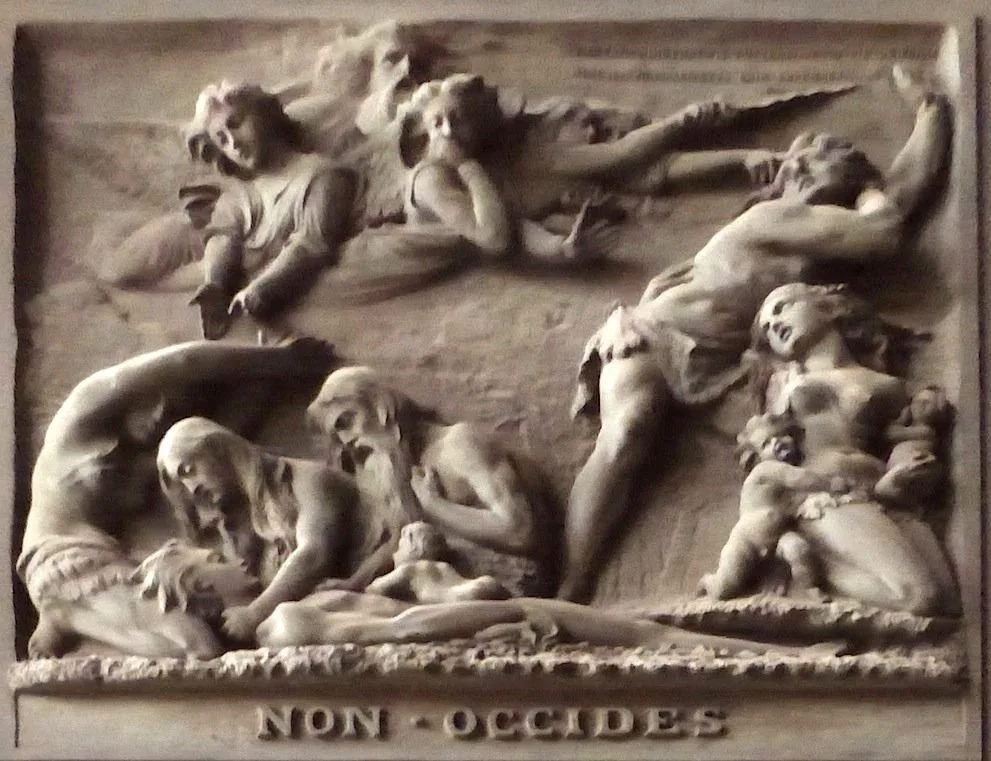
Figure 25. Thou Shalt Not Kill, La Madeleine, Triqueti
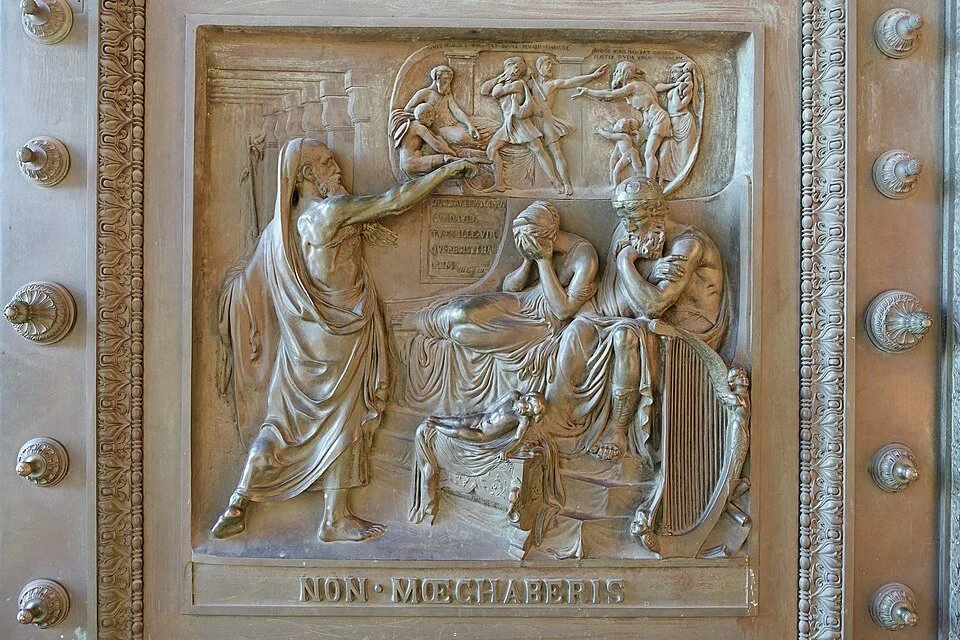
Figure 26. Thou Shalt Not Covet Thy Neighbor’s Wife, Sarah and Abimelech, La Madeleine Triqueti,
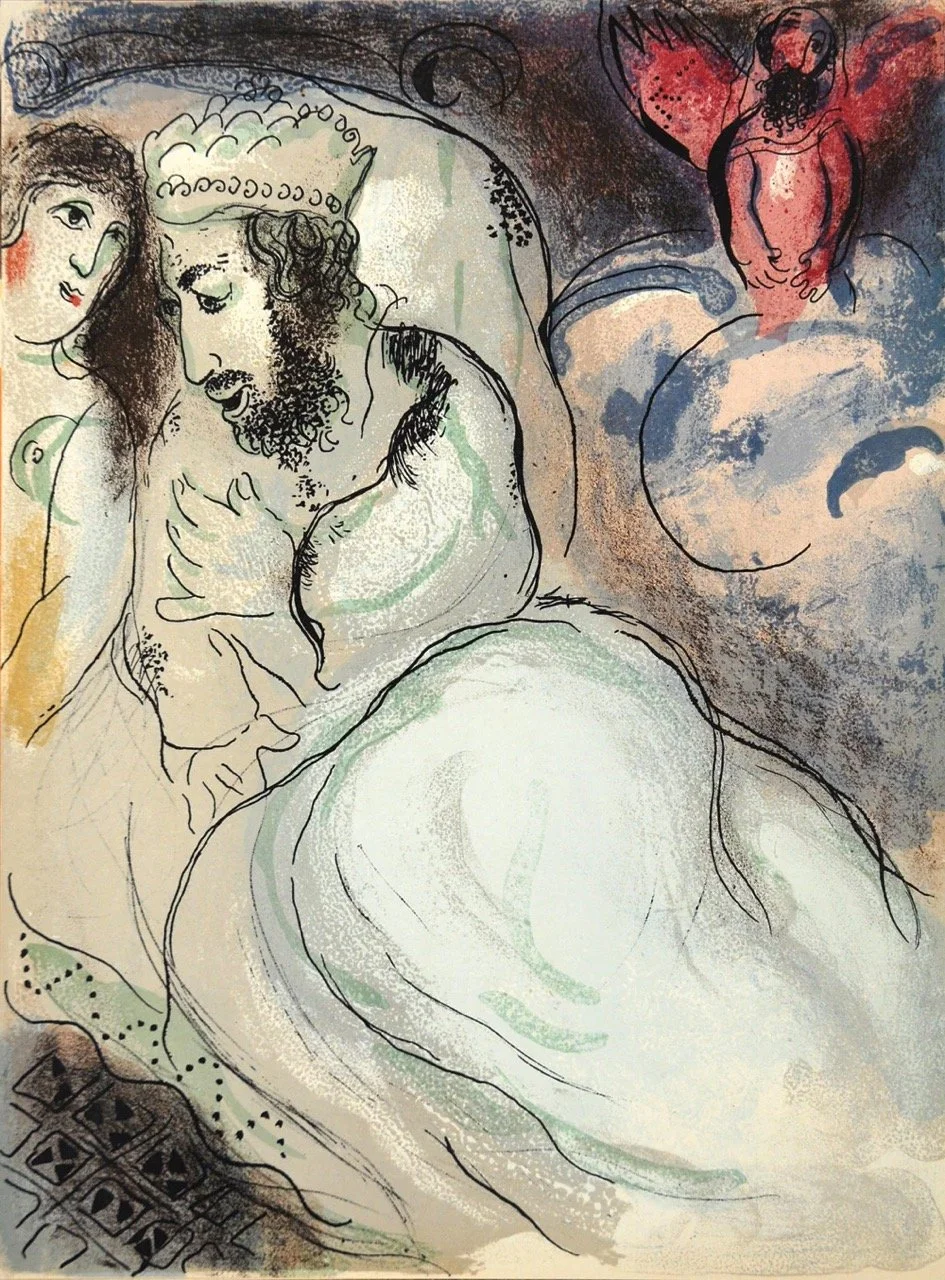
Figure 27. Sarah and Abimelech, Marc Chagall
The interior of the church is filled with sculptures and paintings and frescoes but there was one work that merited particular attention. A large fresco in the semi-cupola of the apse. Although nothing of the original Napoleonic program for the sculptural decoration of the church remains, this large fresco, called ‘History of Christianity,’ painted by Jules Ziegler between 1835 and 1837, is the only fresco in a Parisian church in which Napoleon appears. The fresco shows Christ around whom a host of significant figures have gathered. Among them, Mary Magdalene and the Apostles; Constantine, Joan of Arc and Dante; Pius VII is there with Napoleon, who wears his coronation robes, with the imperial eagle behind him. Napoleon’s position and size recall an earlier moment in French history and an abandoned project. (Fig 28).
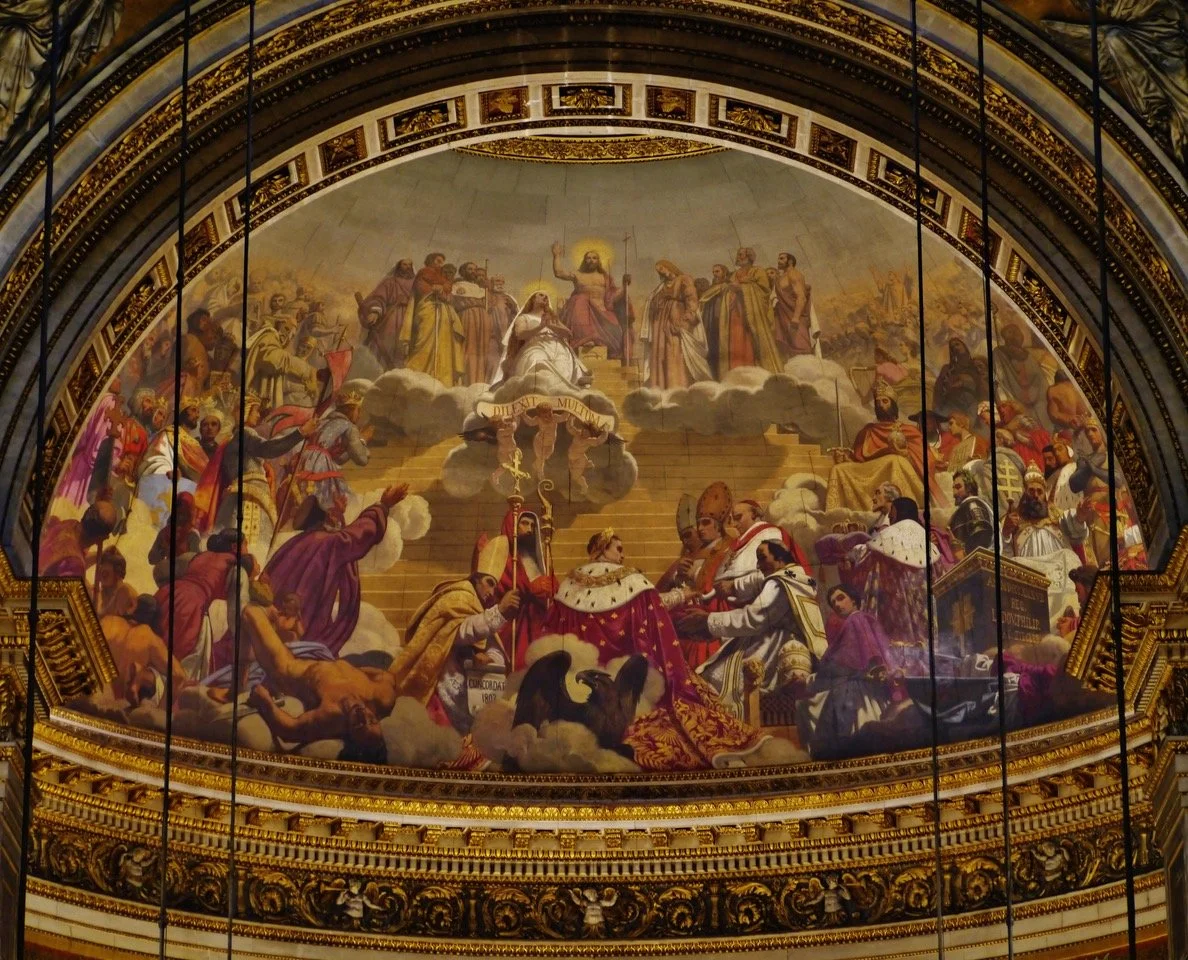
Figure 28. History of Christianity, La Madeleine, Jules Ziegler, 1835-37
Then it was the Curé’s turn to talk. He stood in front of and we sat looking at an illuminated reliquary in which was displayed Marie Magdalene’s femur. (Figs 29, 30) Which one, who knows. One of two, he joked, maybe one of three or more. There are other Mary Magdalene relics scattered around the world. The most important, if you assign importance to specific body parts, and I do, is the Magdalene’s skull which is at the basilica of Saint-Maximin-a-Sainte-Baume, in southern France. The Magdalene’s left hand is in a monastery in Greece, a bone from one of her feet is in a basilica in Italy. The Abbey at Vezelay, France has a rib and the Metropolitan Museum has a tooth.
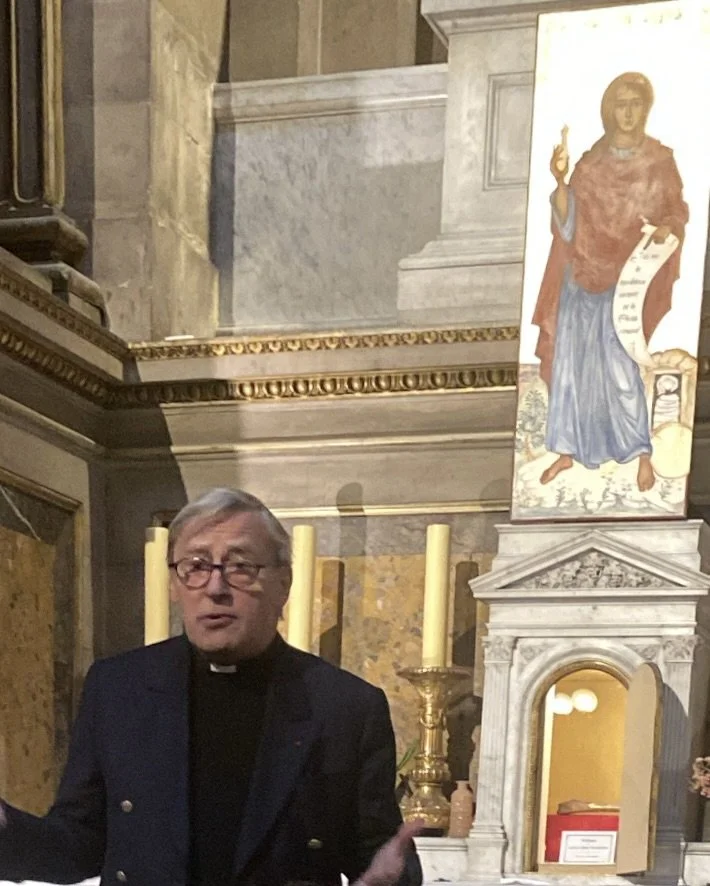
Figure 29. The curé talking in front of the reliquary containing Mary Madeleine’s femur, La Madeleine
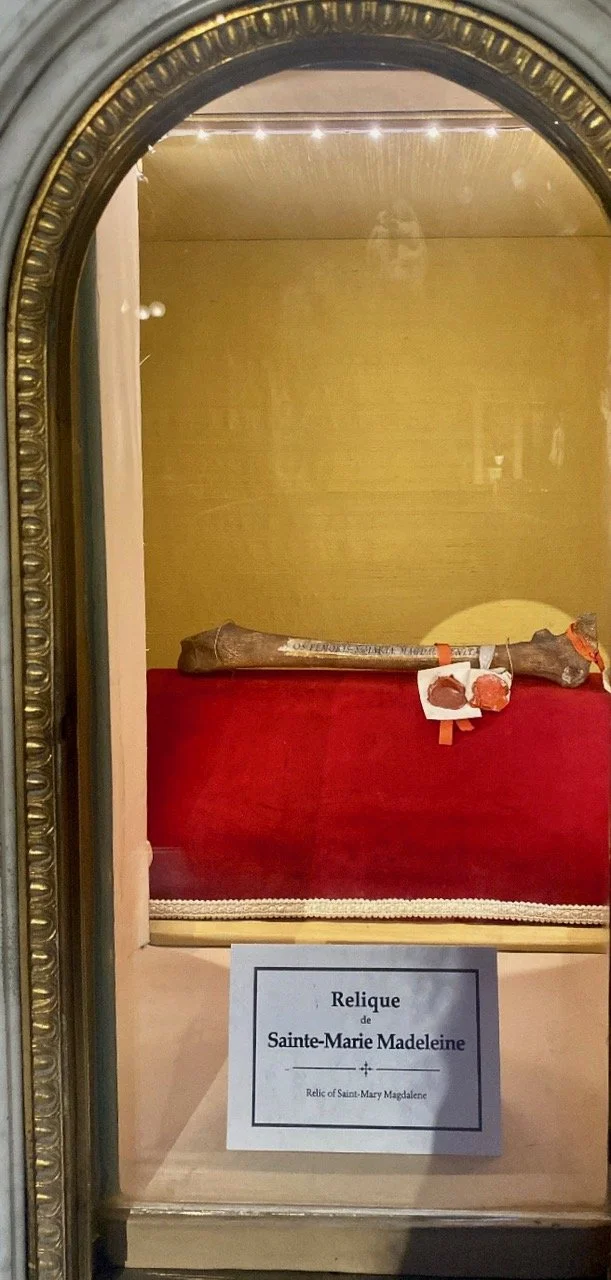
Figure 30. Reliquary with Marie Madeleine’s femur
We all know that Mary Magdalene played a significant role in Christ’s life and teachings. But what we think we know about her tells us less about the actual Magdalene and more about whatever the writer thought he knew or wanted us to believe. She has been described as a tormented soul, possessed by seven demons, set free when she met Jesus. St. Augustine (5th century) contended that Mary Magdalene was the unnamed woman described in Luke's Gospel, as a prostitute. According to the four canonical gospels, Mary Magdalene accompanied Jesus and His disciples from the very beginning of his Ministry. She was with him at His crucifixion. She was there when He died. She was the first person Jesus appeared to after His Resurrection. Was she a disciple or was she a hanger-on, a groupie? (F 31-33)
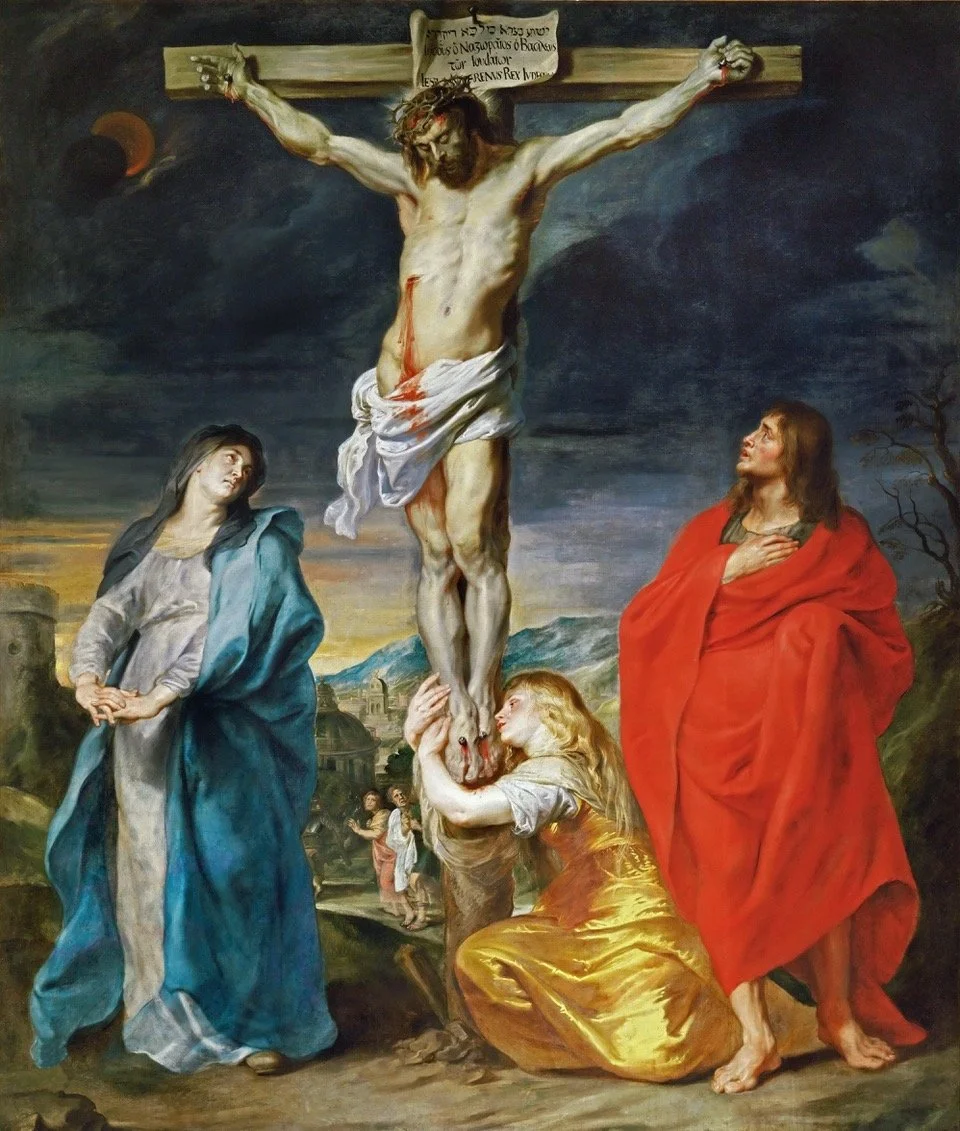
Figure 31. The Crucifixion, Mary Madeleine on her knees embracing the feet of Christ, Anthony Van Dyck
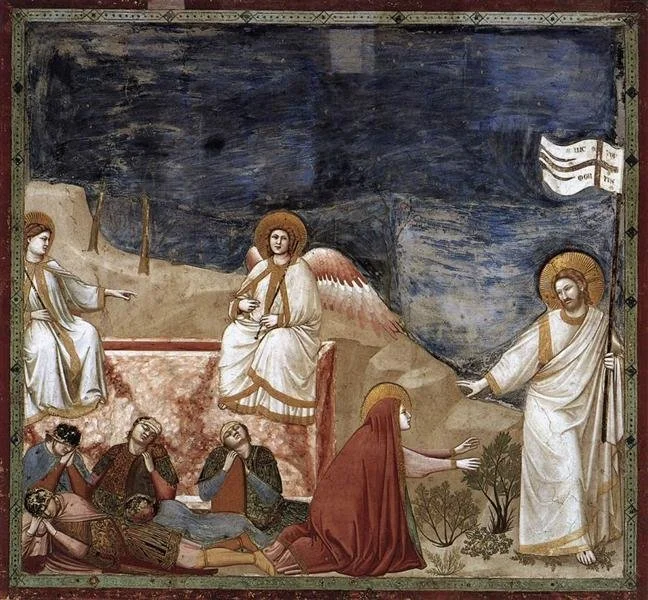
Figure 32. Noli Me Tangere (Touch me not for I have risen) Giotto, Arena Chapel, Padua
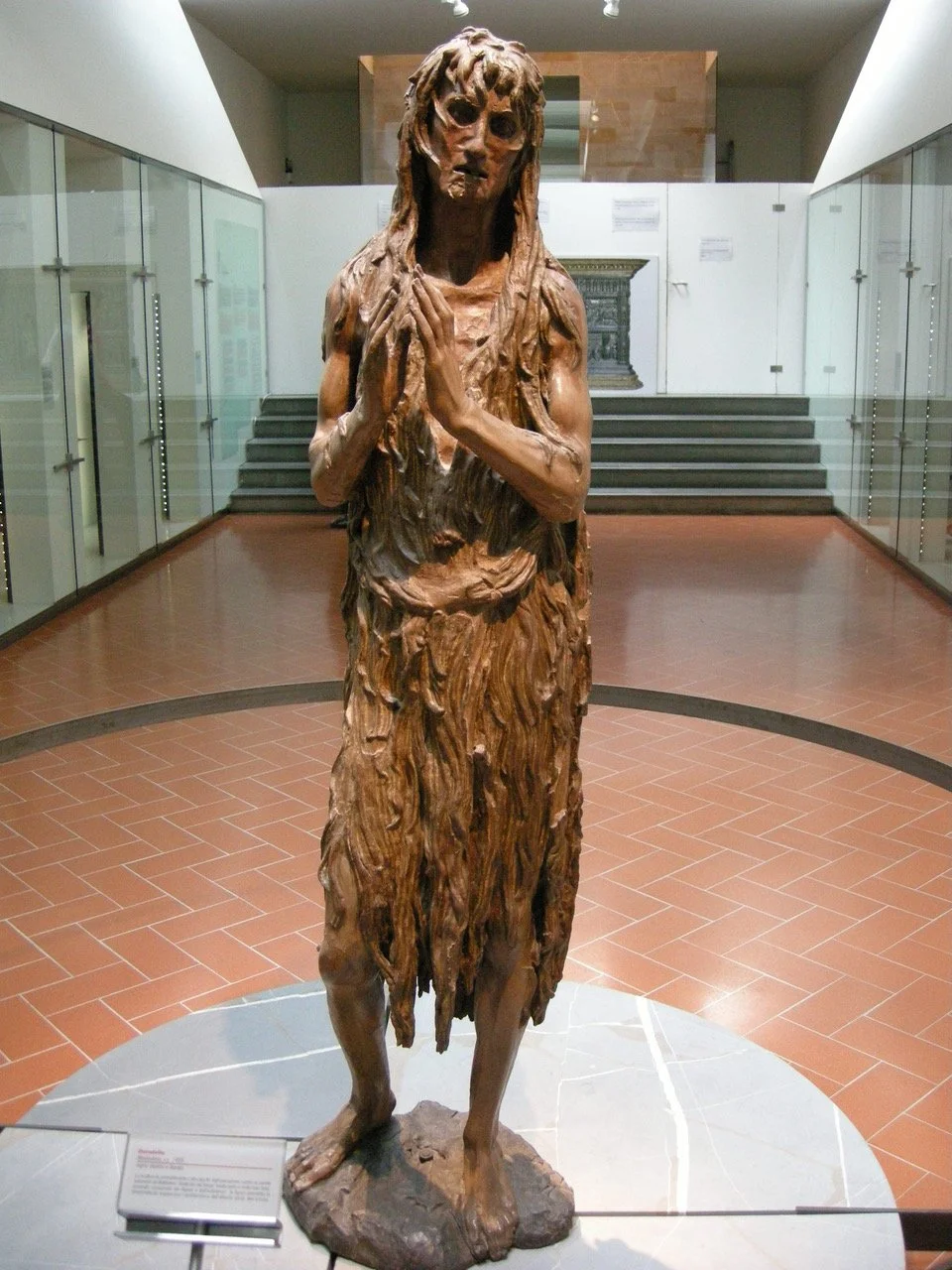
Figure 33. The Penitent Madeleine, Donatello (it shows sorry and repentance for crimes she never committed)
The curé referred to the Gnostic Gospels. As I was doing research for a course I devised many years ago, which I called Women as Artists / Women as Art, I discovered books and articles on early Christian history and the Gnostic Gospels written by the Princeton historian, Elaine Pagels. According to Pagels, in the Gnostic Gospels, Mary Magdalene is portrayed as a visionary and leader of the early movement. Jesus loved her more than he loved the other disciples. Which means that there may have been 12 male disciples but they weren’t the only disciples. Mary Magdalene was a disciple, too.
In her introduction to the 2006 book The Untold Story of History's Most Misunderstood Woman, (Burstein & de Keijzer, Editors) Pagels wrote this about Mary Magdalene. “..For nearly two thousand years, Mary Magdalene has lived in the imagination of Christians as a seductive prostitute; (and) in our own time … as Jesus' lover and wife, mother of his children. Yet the earliest sources that tell of Mary Magdalene…do not describe either of these sexualized roles…Was she, then, one of Jesus' followers, whose wealth helped support him, as the earliest New Testament gospel, the Gospel of Mark, says? A madwoman who had been possessed by seven devils, as Luke says? Or Jesus' closest disciple, the one he loved more than any other, as the Gospel of Mary Magdalene tells us? Or, in the words of the Dialogue of the Savior, (Gnostic text) the woman who understood all things.” To repeat Pagels reading of the texts, there weren’t just 12 male disciples. Mary Magdalene and the other women who traveled with Jesus were His disciples, too. (Fig 34)
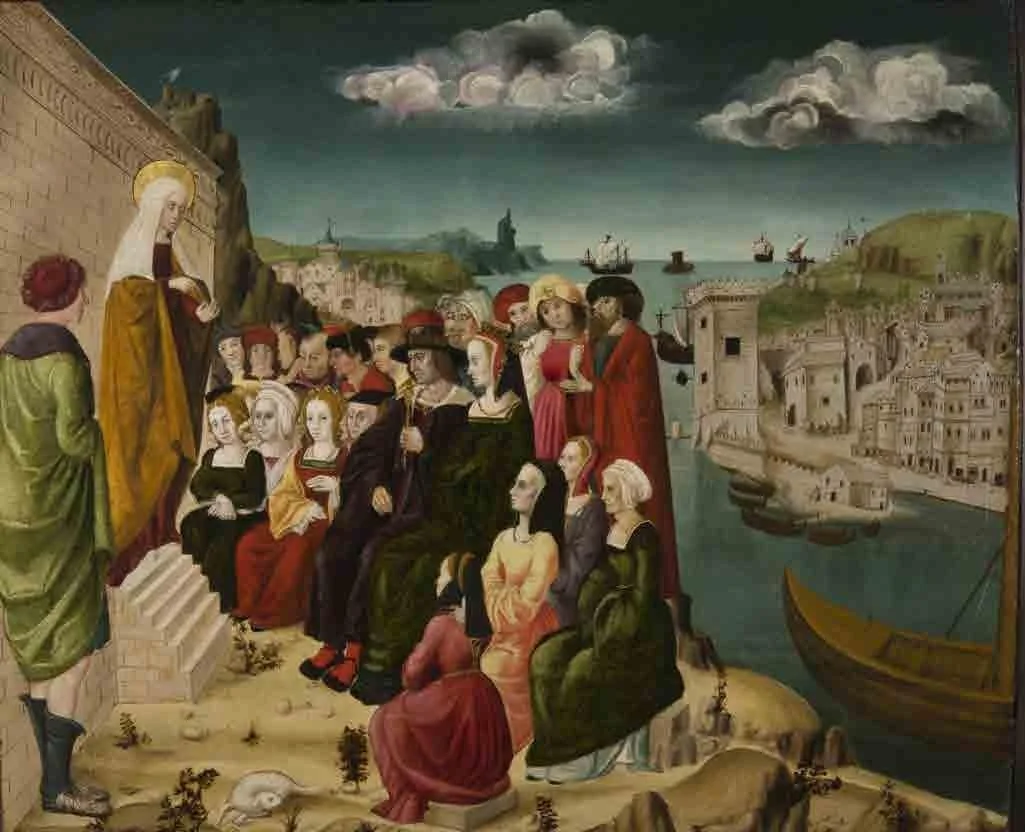
Figure 34. Mary Madeleine preaching in Marseilles, 1513
In a magnificent church dedicated to one of the most important woman in Christendom, it is best not to forget that misogyny, patriarchy and the (un)intentional (mis)reading of texts continue to marginalize women, encouraging them to stay at home, to remain ‘barefoot and pregnant,’ to change their faces and bodies so they can remain attractive to the men who suppress them. And so it goes. Gros bisous, Dr. B.
Thanks to everyone who Commented on last week’s post about Marie-Antoinette, another much maligned woman.
New comment on Let them eat brioche:
Dear Beverly Thank you so much for your always prescient descriptions of M-A at the V&A , and Le Concergerie in 2019 both of which I was privileged to attend. Your comments bring such depth wit and intelligence , and I anxiously await seeing the 20th Anniversary at Versailles with you ! Franny H, Larkspur, CA
A lovely column, Beverly. As always learned, informative and approachable, And you picked some goodies from the National., Not least The Rokeby Venus.Martin Walker, Dordogne, NY, London
what a treat!! love coppola × marie, and all the visual splendors that the queen inspired (also, I read that she said let them eat brioche, not cake, en rte to her decap)
p.s. the robe a l'anglaise is very similar to one shown in the current fantastic exhibit at fashion institute of tech in ny on art × fashion. Elena
What a delightful day! If you ever have additional time, one of my favorite places to have lunch is in the crypt of St. Martin's in the Firlds. It is cafeteria-style and inexpensive, but the vaulted ceilings provide tremendous atmosphere. I tried my first real curry there, and they are very generous in pouring the custard over the fruit crumble. Mmmmmm….
I'm delighted it ran so smoothly and that might encourage more visits when Eurostar is being generous-minded and I really will try to meet up. Kathy, Oxford, England