My Two exhibitions with Marilyn
Marilyn Monroe at the Cinémathèque in Paris and the National Gallery in London
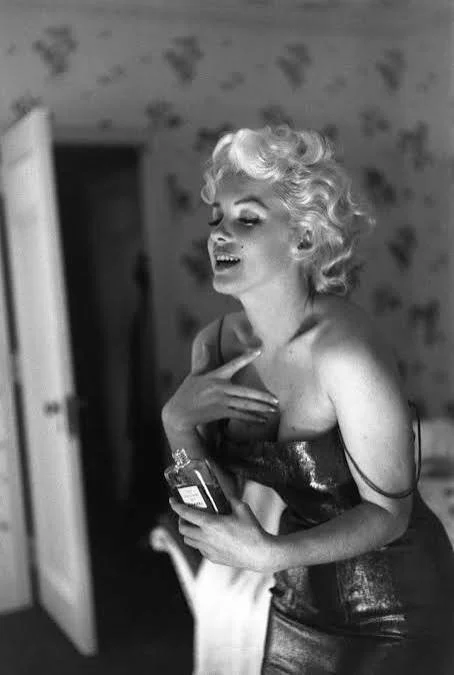
I was texting with some idiot (read - MAN) I met on Hinge and after not much effort on my part, I had pushed him into his sub intellectual corner. He was forced to play the only hand he had left, and as they all invariably do, he texted me: “What are you wearing?” Original very original. To which I triumphantly replied “Chanel no. 5”
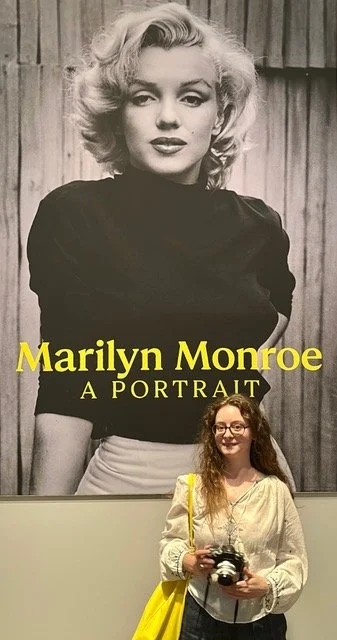
This year marks the centennial of the birth of Marilyn Monroe. And in celebration my favorite museum visiting companion and I went to see two exhibitions about the star. One was at the Cinémathèque in Paris and the other was at the National Gallery in London. It was very fitting that a celebration of Marilyn would take place at these two museums because they each represent the mediums that defined Marilyn: Film and Photography. These two mediums created Marilyn and Marilyn in turn created them. Marilyn was indeed a creation. But it was not a one way street. She was as much her own creator as were those who captured her in film and photography. She was both a created image and a created identity. Her name is a creation, her hair, her makeup, her entire look, but the way she moves in front of the camera and on film and the Marilyn who comes out to play in interviews, that was all her own. She was the first true film actress and the most photographed woman in the world. She shaped these medias as much as they shaped her.
You can’t talk about Marilyn without talking about either film or photography. She is completely intertwined with these two art forms. Sir Lawrence Olivier was very critical and disparaging of Marilyn but begrudgingly acknowledged her onscreen magnetism and photogenic qualities which traditional stage actors often did not have.
During the filming of the Prince and the Showgirl, her co-star the veteran stage actress Sybil Thorndike came to Marilyn’s defense, “We need her desperately. She's the only one of us who really knows how to act in front of the camera.”
In her New York Times opinion column Maureen Dowd said that she was excited about the big birthday bash coming up, not America’s 250th which was going to be crass thanks to the Donald, but Marilyn’s 100th. It was dear Maureen who alerted me to these two exhibitions one across the Manche (English Channel) from the other. Dowd discusses Marilyn’s enduring image and our enduring adulation of her. She calls her the “smart dumb blonde” and I think for me that has been what has always intrigued me about Marilyn. She was really really smart but knew how and when to play really really dumb.
The Cinémathèque in Paris, a museum for the art of film which is housed in a building designed by Frank Gehry, had an exhibition on Marilyn called “Cent Ans de Fascination”. We begin with an introduction to Marilyn’s troubled upbringing, touching on her time as a foster child, her absent father and her difficult mother. They didn’t elaborate with too many details, but you get the idea. The exhibition leads you chronologically through Marilyn’s film career. There are different areas for each of her films with costumes and memorabilia - you are immersed in the cinematic vision that was Marilyn, getting a feel for her presence on screen - her magnetism!- and the variety of roles she played. The exhibition also gives you an idea of Marilyn the person.
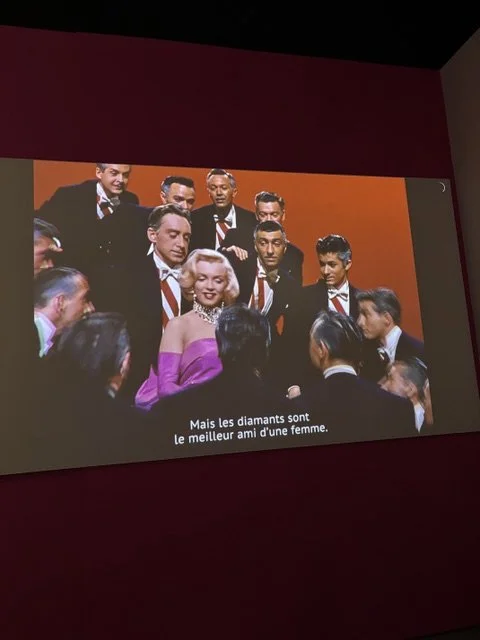
The famous Diamonds are a Girl’s best friend number.
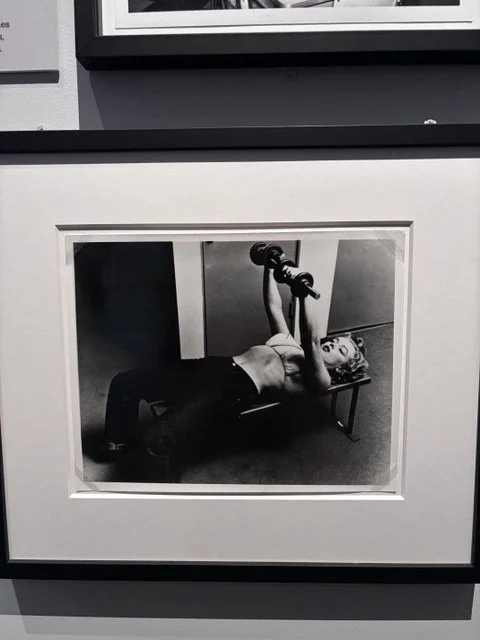
Marilyn getting swole.
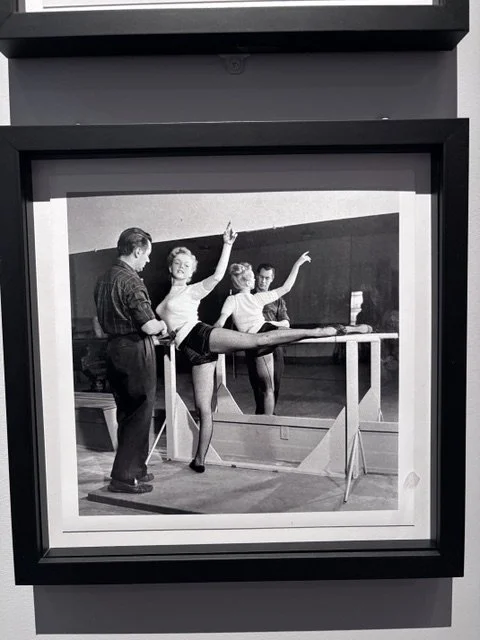
Marilyn doing Ballet!!
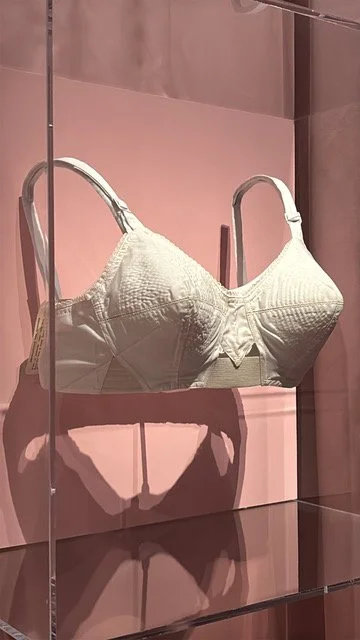
Quite a bra!
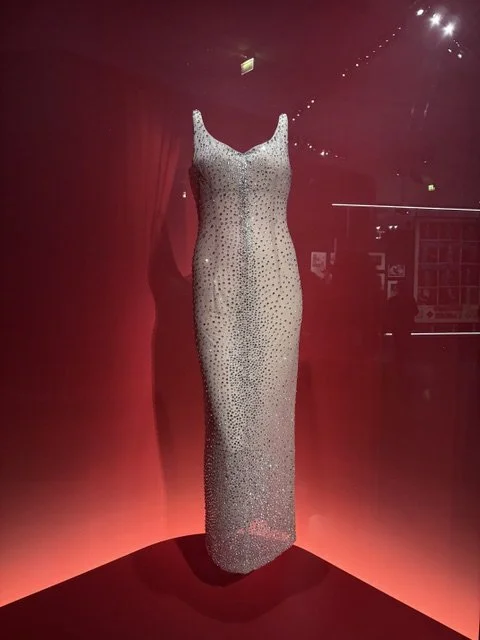
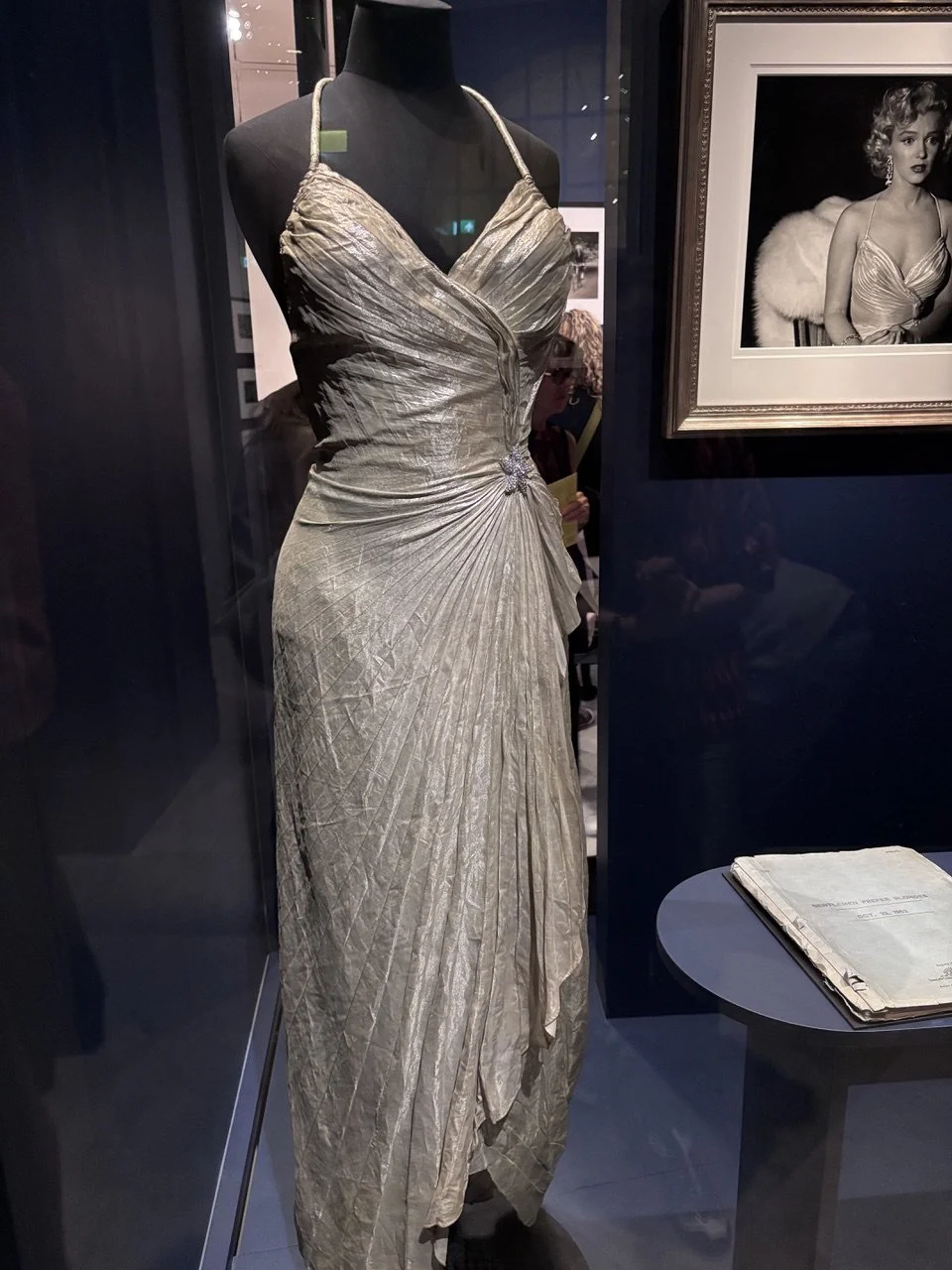
Tiny waist!!
In one very interesting section, there is a collection of hair styling paraphernalia, like the old fashioned hair dryers that women had to sit under to dry their hair when it was in curlers. An interview with Jane Fonda plays on the wall near the paraphernalia. The interview, in black and white, takes place in Fonda’s hotel room as she is getting ready, presumably for a film. She talks about all the ways that the Hollywood “machine” wanted to change how she looked. They wanted to dye her hair and pluck her eyebrows. They told her that she would never get a dramatic role because of her nose. Jane Fonda said no to all their suggestions. She took a stand and preserved her own image. Was the Cinematique telling us that Marilyn’s image was highly manufactured? That does appear to be the case. When you look at the earliest photos of Marilyn, you see right away how disarmingly beautiful she is. Dying her hair and styling it; doing her brows and her lips and everything else, did indeed contribute to her image. But she was absolutely beautiful either way. While I commend Jane Fonda for taking a stand, I think for Marilyn, all the interventions enhanced her persona. I think those manipulations became a kind of armor for her. That’s how she described it - all of that surface stuff that is “Marilyn” the manufactured image, it was like an overcoat she put on, to cover and protect Norma Jean before she had to go out into the world.
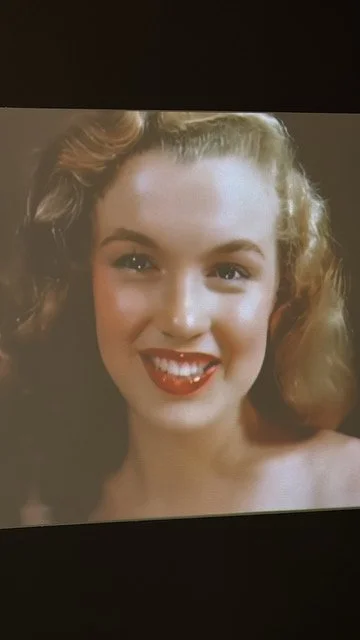
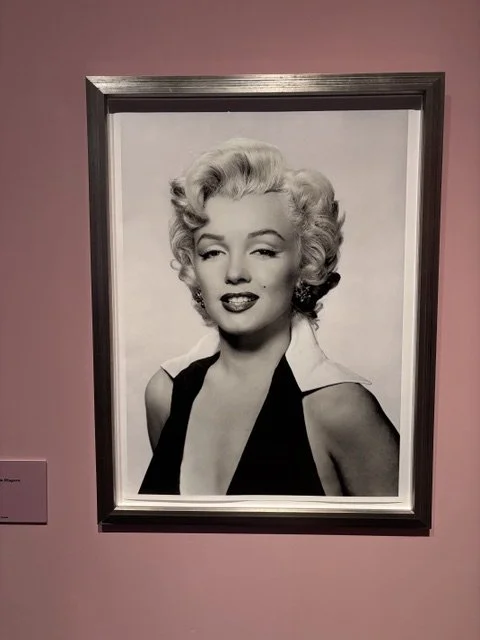
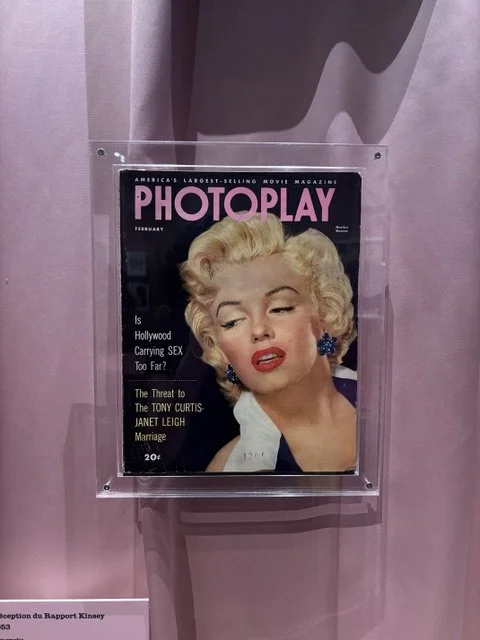
Towards the end of the exhibition there is discussion about her last role and how she was increasingly quote unquote unprofessional, showing up late, not knowing her lines, staying in her dressing room. We have come to learn that in fact this erratic behavior was not the result of a spoiled starlet, or even a substance abuser, but a human being in a lot of pain. Physical Pain. More and more Marilyn’s behavior is being read as a direct result of endometriosis, a painful condition that affects the uterus, and is essentially when uterine cells migrate elsewhere and so the person with the condition has intense excruciating pain both within and outside the uterus and not just during their period. Practically all the time. Can you even imagine? Women’s health has been dismissed for centuries, so it is unfortunately quite believable that Marilyn suffered with this condition and either got no help or barbaric interventions. Doctors at the time called what Marilyn was suffering from a condition that affected “working women”. It is also believed that this is what led to her death, she was in so much pain from endometriosis that she overdosed on pain medication.
It is all of this combined - her beauty, her fragility and her pain along with her intelligence, her quick wit and her intense strength of character that makes her one of my heroines. Beautiful and smart and yet so mistreated, suffering from a disease that so cruelly affects women. Stop me if I am going too far or if I am being influenced unduly by Odysseus but to me, Marilyn Monroe is the heroine of a Greek tragedy. In so many ways she is a mortal goddess, real but unreal.
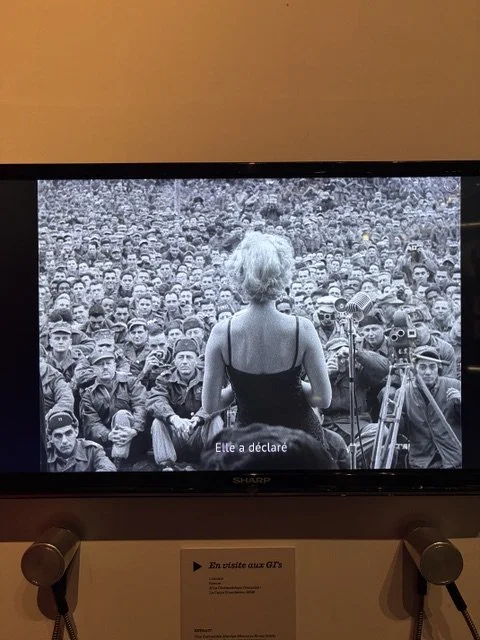
Marilyn supporting the troops in Korea - this was something that was important to her and she was very proud to have done it.
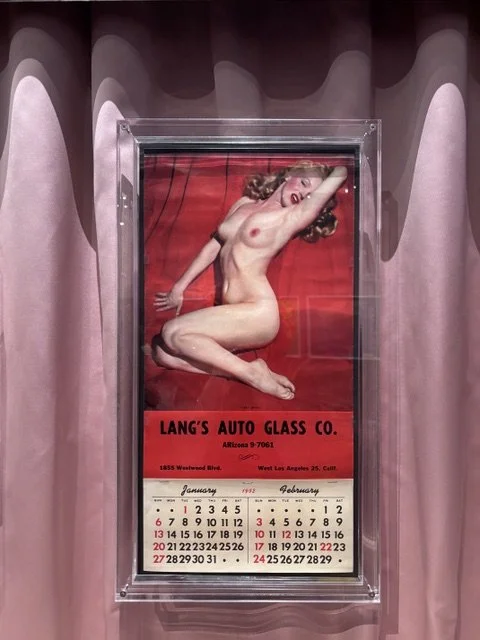
Her nude portrait which was used without her permission and without payment.
Towards the end of the exhibition there was a curtained off area that you walk into and an announcer, like at a talent show, announces different actors and musicians, etc. who have put on the guise of Marilyn Monroe. From Madonna to Ryan Gosling. It’s a fun little section and shows how pervasive her image is. At the very end are the final images of Marilyn Monroe. This was hard to look at and truly shocking when you think about how even in death she was given no privacy. The idea that images of her on the coroner’s examination table were not only taken but then printed is beyond belief.
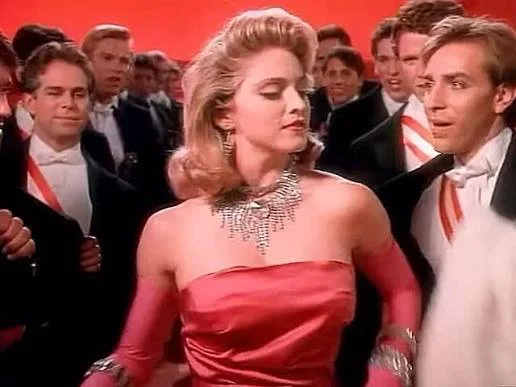
Madonna’s music video for her song “Material Girl” directly borrows from Marilyn’s performance of “Diamonds are a Girls Best Friend” in “Gentleman Prefer Blondes”
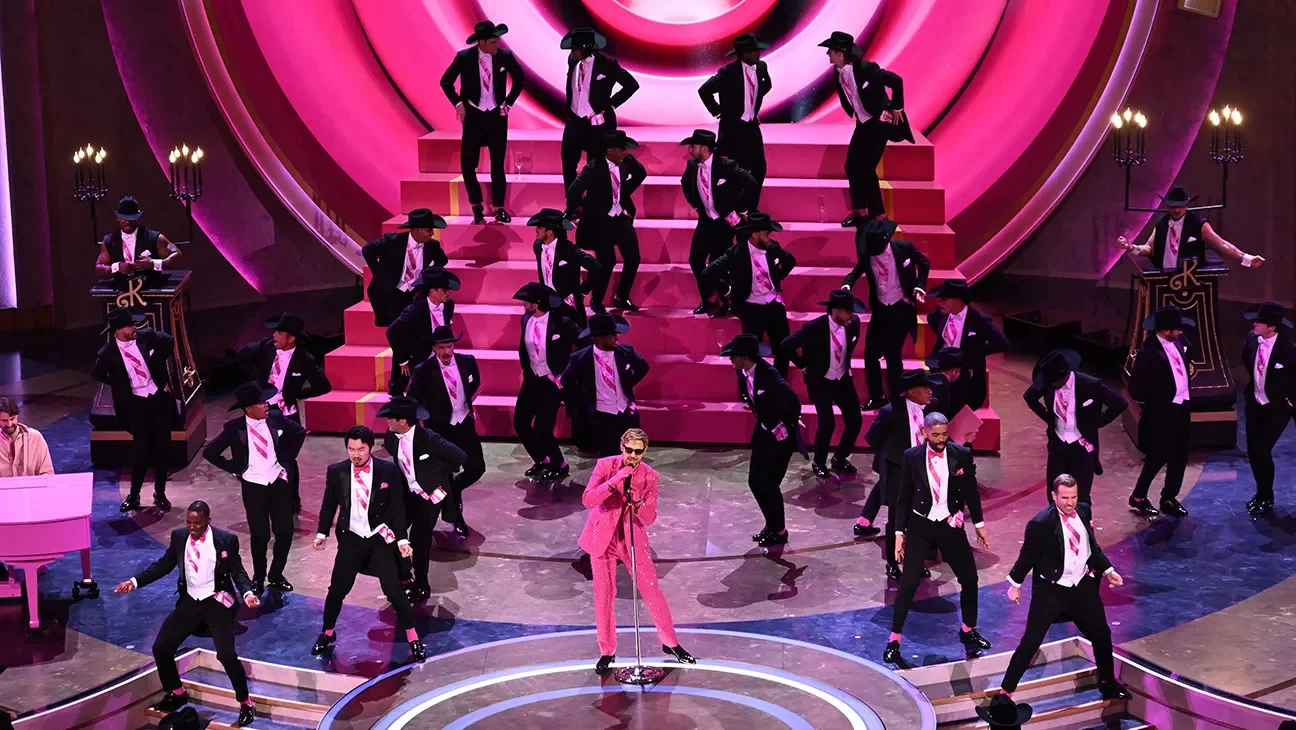
Ryan Gosling giving a magical performance of “I’m Just Ken” at the 2024 Oscars, a lovely homage to Marilyn in “Diamonds are a Girl’s Best Friend.” If you haven't seen it or if you have watch it again, it’s so fun.
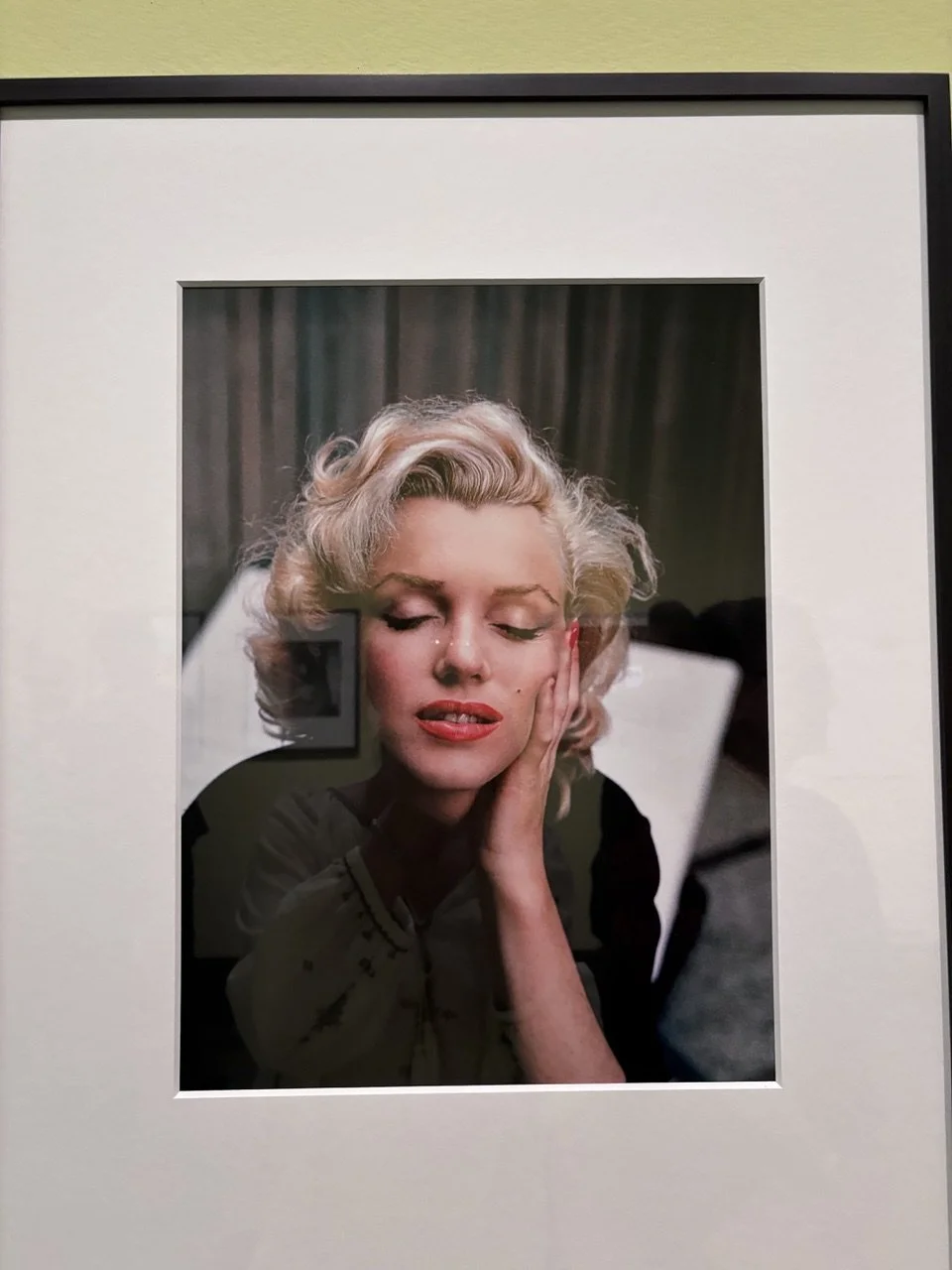
The exhibition at the National Portrait Gallery in London was also very well done. As a portrait gallery, the emphasis was on Marilyn’s relationship with various photographers. So the photographs were presented in groups according to which photographer took them. It was nice to see how each one showed her in a different way and you see a lot of photos by photographers who are not well known. The photographs are also a tribute to the innate beauty of film photography.
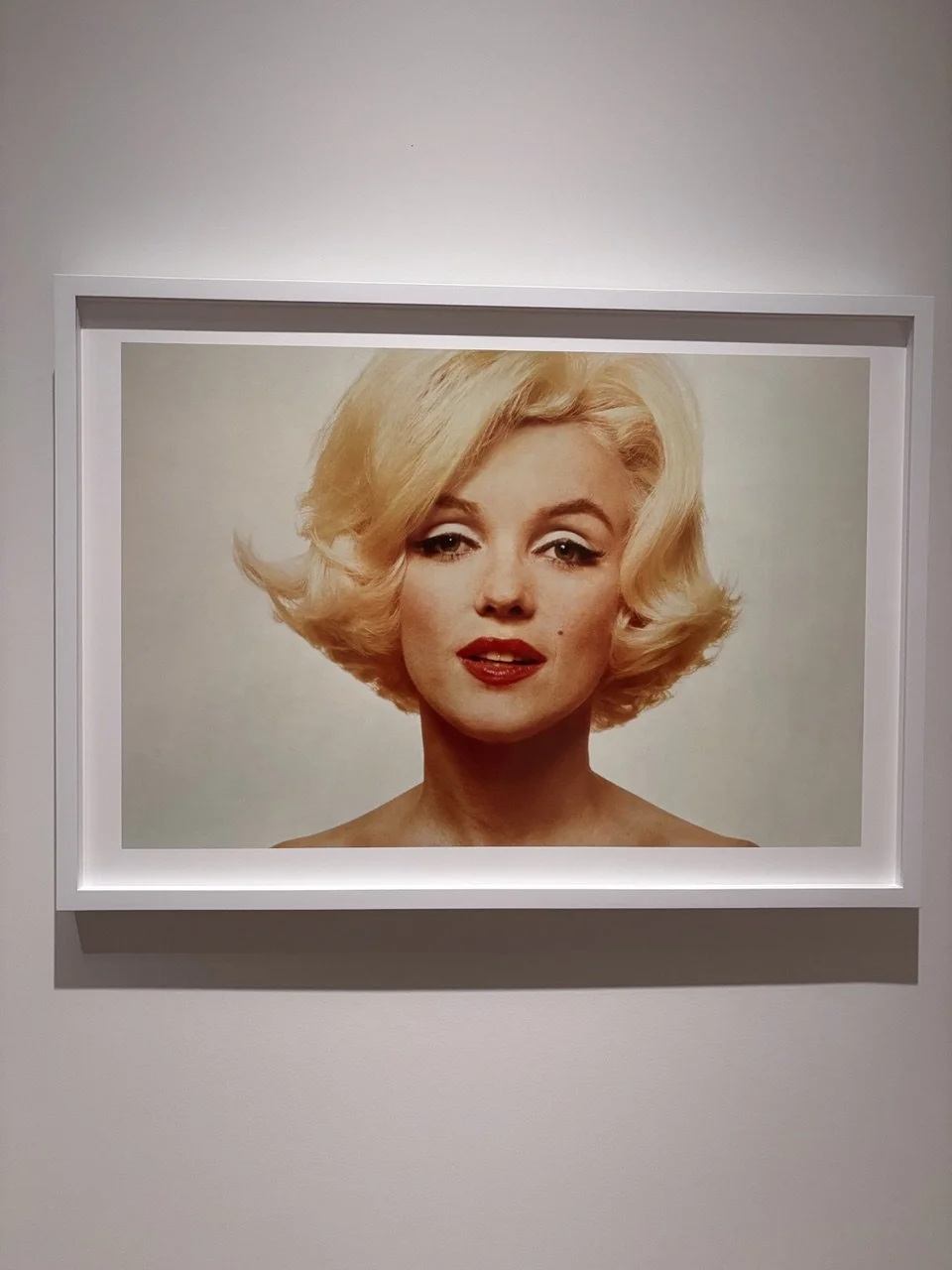
Love this one.
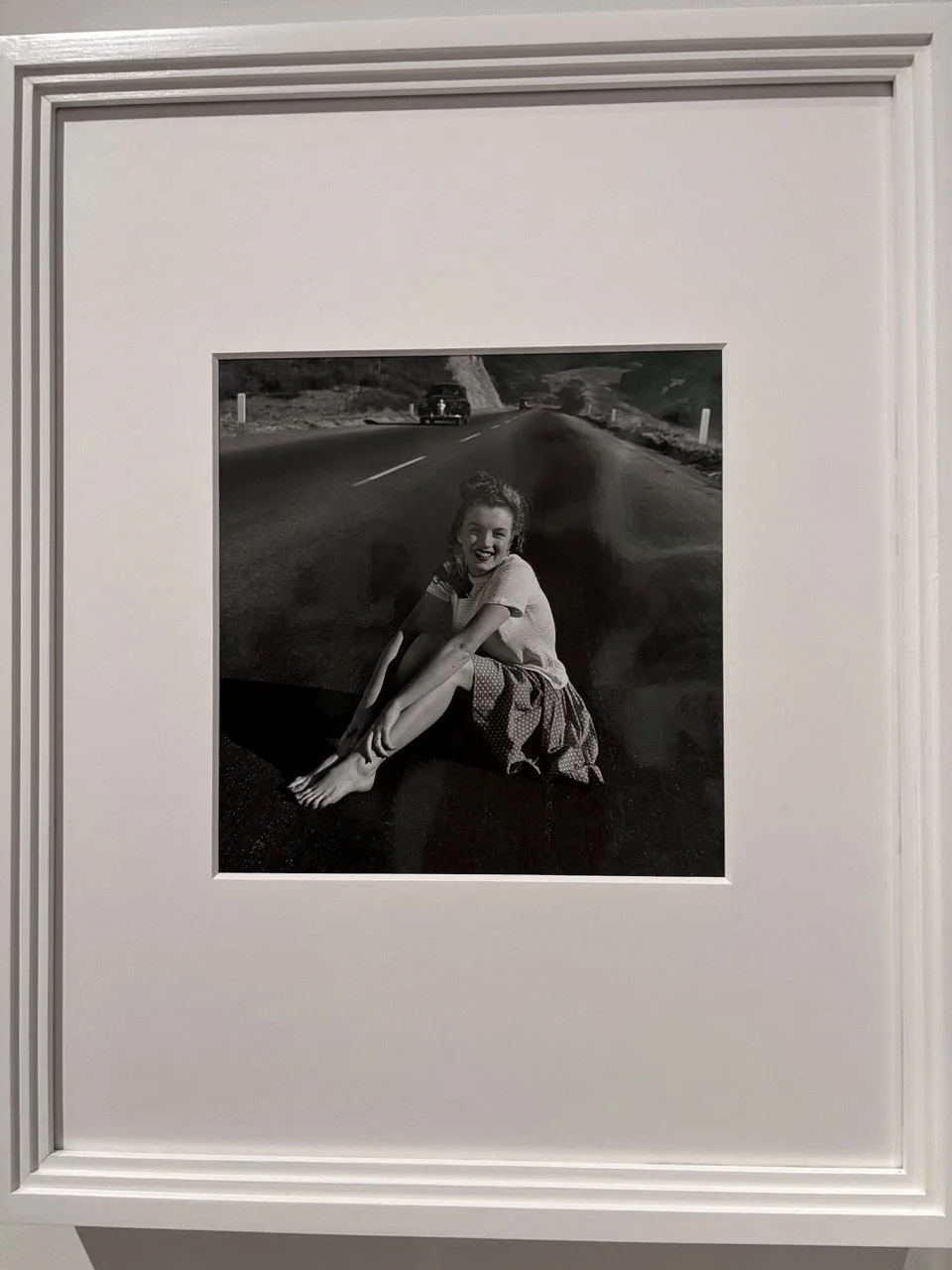
In one part we learn of a road trip she took with a young male photographer when she was first starting out at as a model and with whom she had a brief relationship during the course of their time together. She moved on - he never did. We are shown a sort of shrine to Marilyn that he created. It’s creepy but it’s important to see because she probably encountered a lot of this kind of thing.
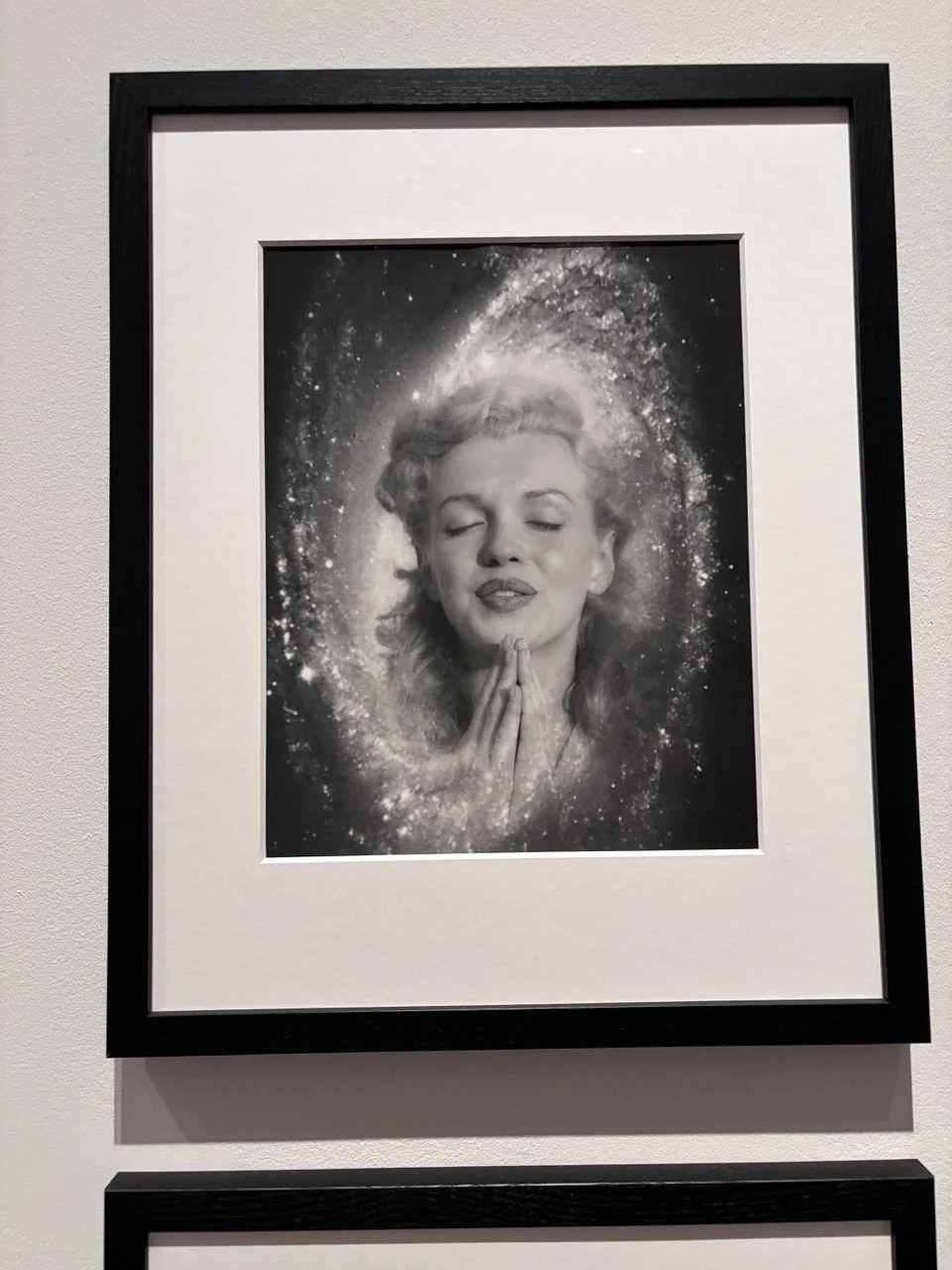
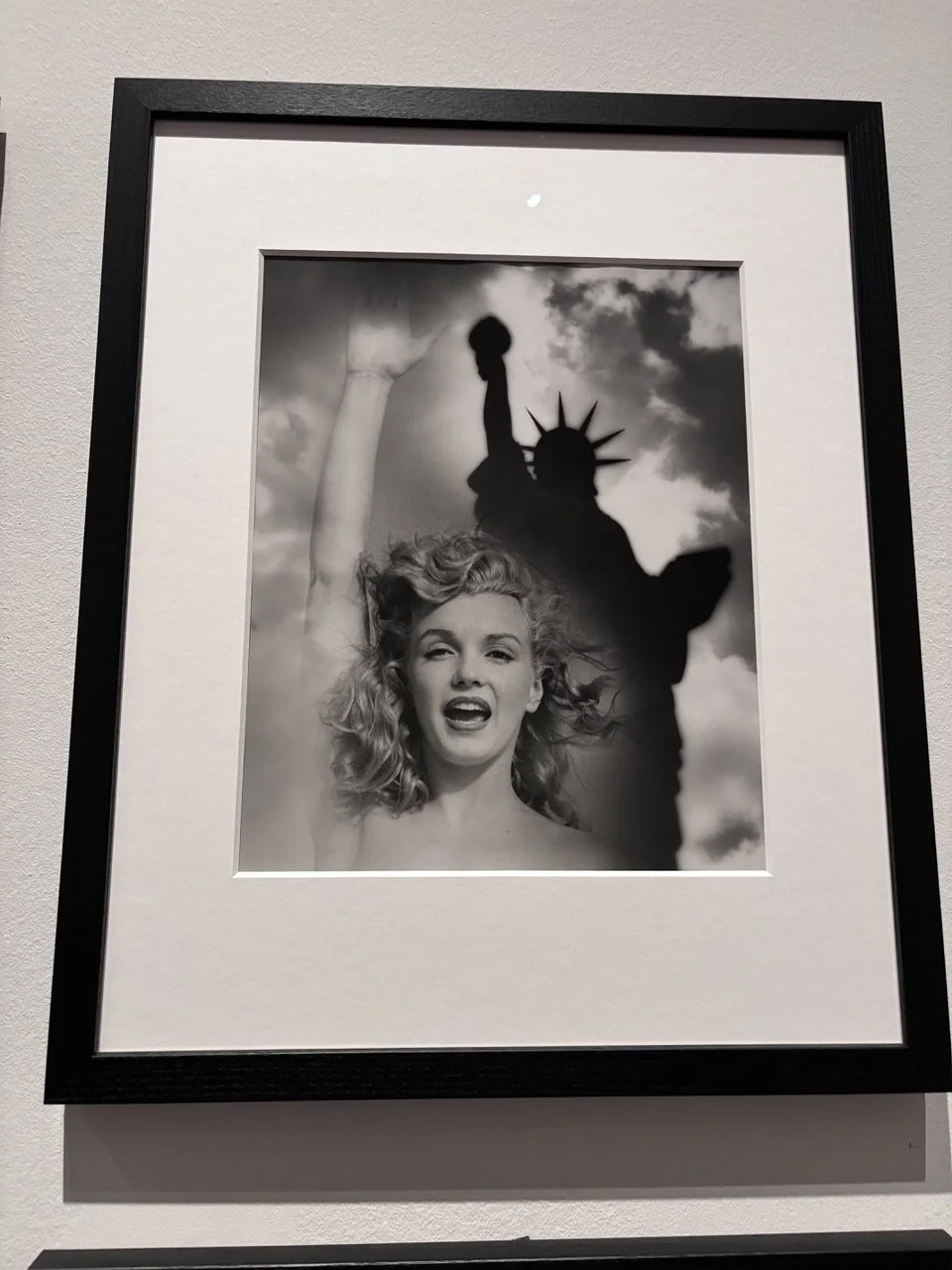
A photographer using images of Marilyn to create double exposure fantastical images
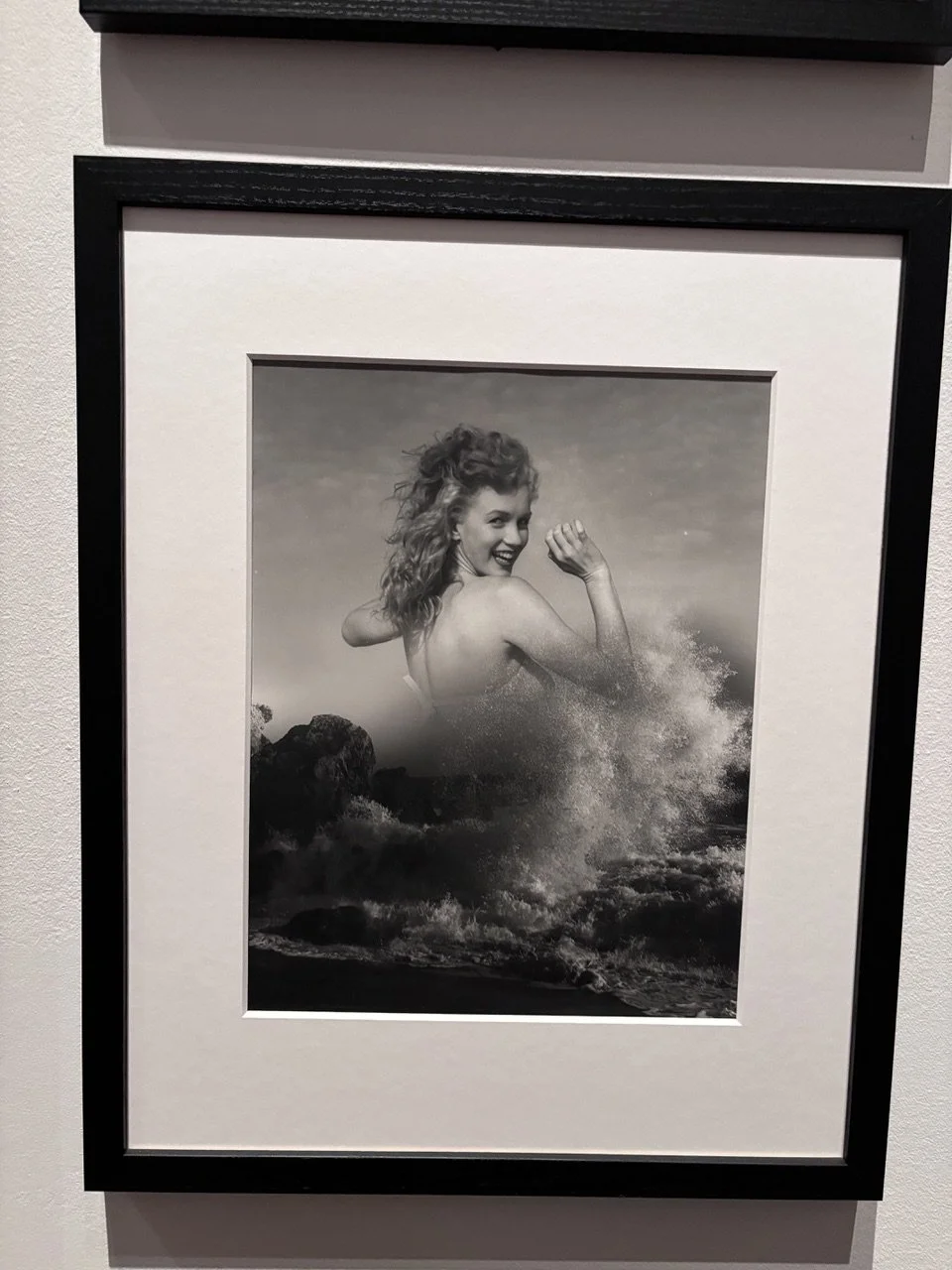
We also see the original nude which was used without her permission as the first cover of Playboy. The nude is beautiful and tasteful and Marilyn said she was not ashamed of it. Nor was there any reason for her to be ashamed. The photos have the beauty and the grace of Italian Renaissance nudes. The only shame should be on Hugh Hefner and the photographer, neither of whom paid Marilyn for the use of her image. That is shameful.
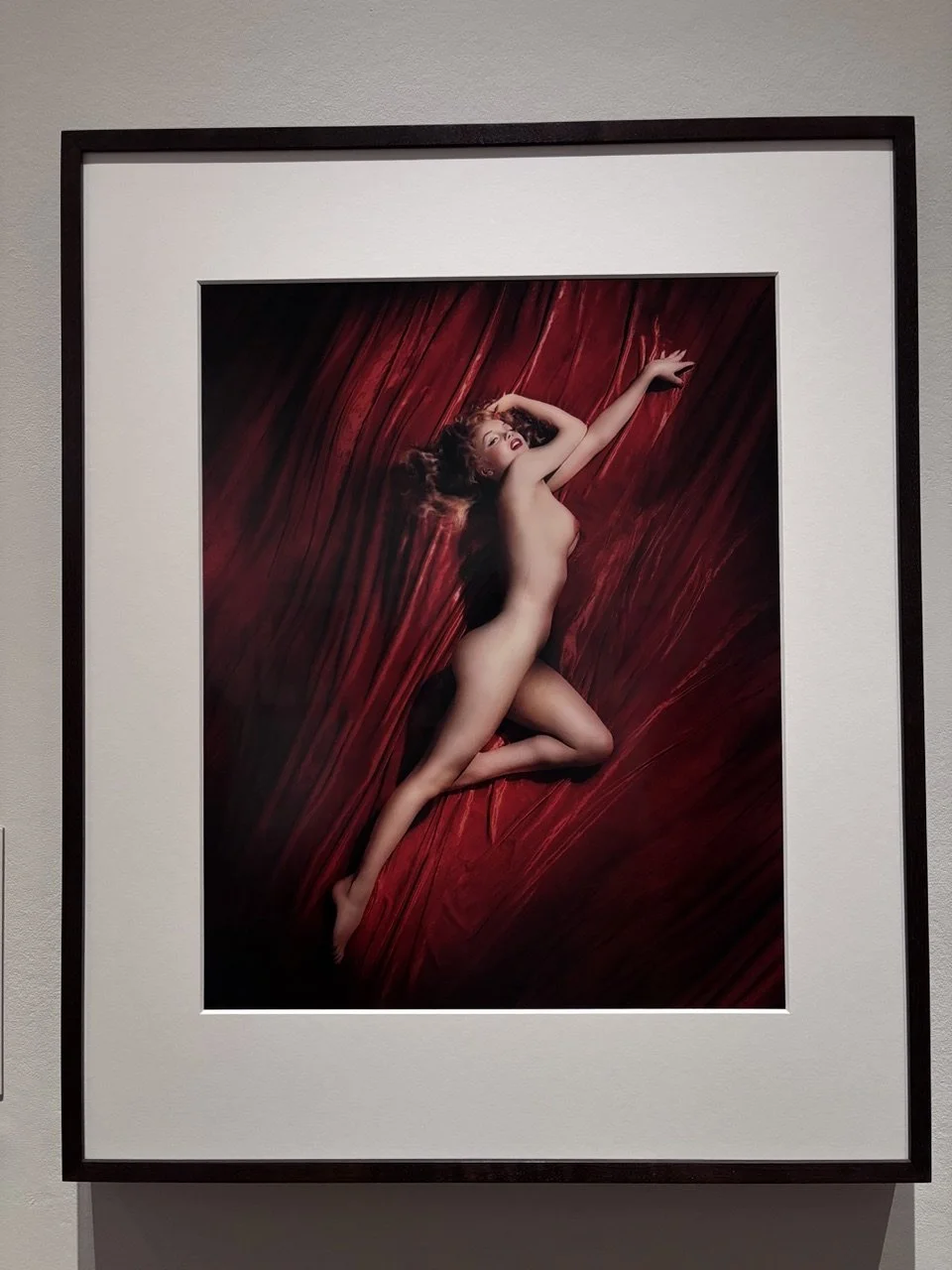
Marilyn’s “shameful” nude. Gorgeous.
We get two sets of Life magazine covers. It’s interesting to see how both shots came about. In one Marilyn is jumping in a black cocktail dress, we get to see all the fun outtakes, and on a projector we see them very large. And then there is one little black and white of Marilyn jumping with the photographer! Holding his hand! This was how he got her to be comfortable in the photographs and then we see how much fun she had. The other life magazine cover came from a shoot in her apartment in LA. The shot that was used for the cover is Marilyn in a corner of her bedroom. Not some exotic locale, and its perfect! Interestingly the great photographer Irving Penn actually manufactured this in the corner look in his studio by placing two enormous boards together creating this exagerated corner, he then put his subjects in there to great effect. He pushed a lot of famous people into a corner!!
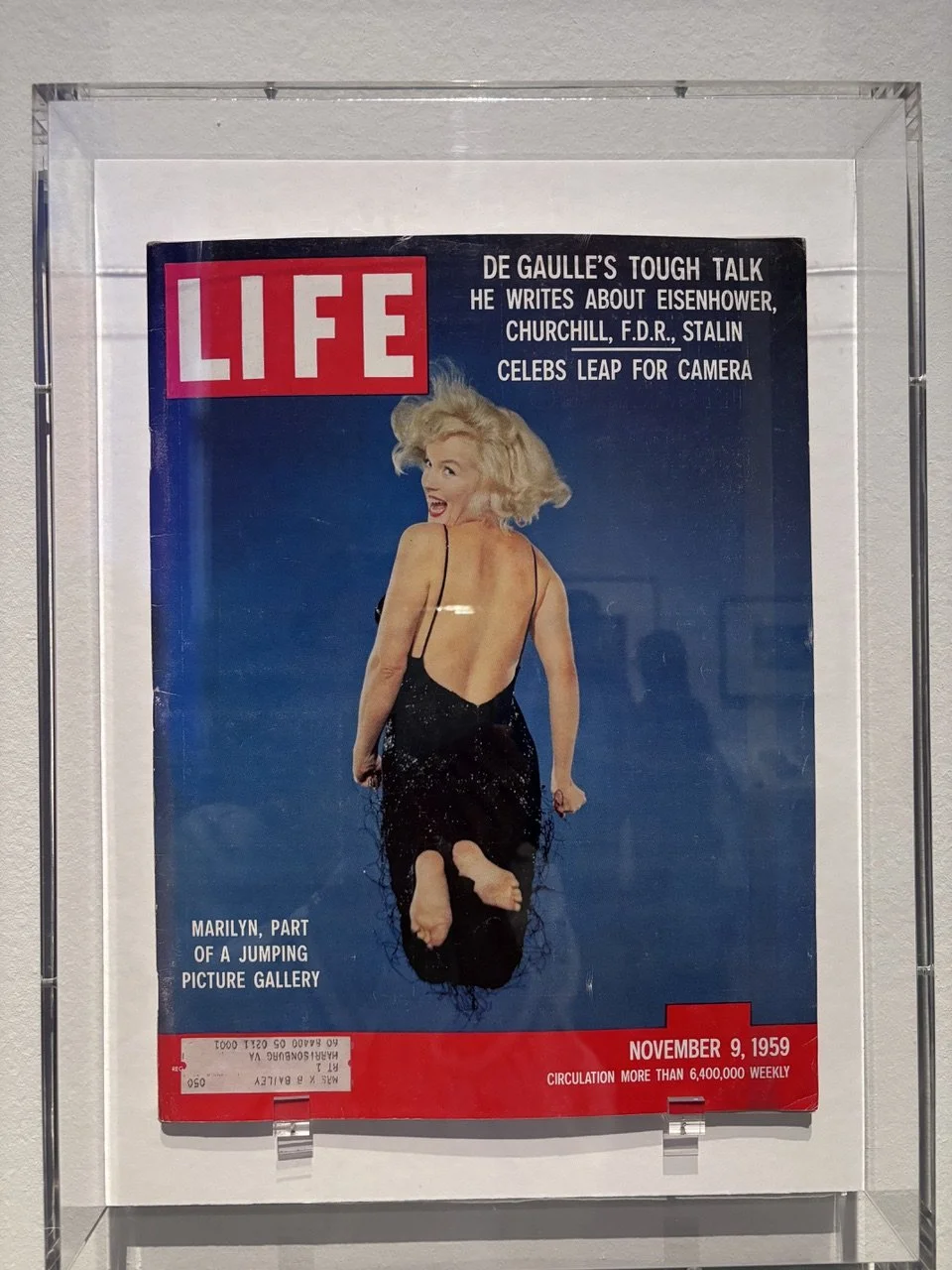
Marilyn cover of life magazine, 1959
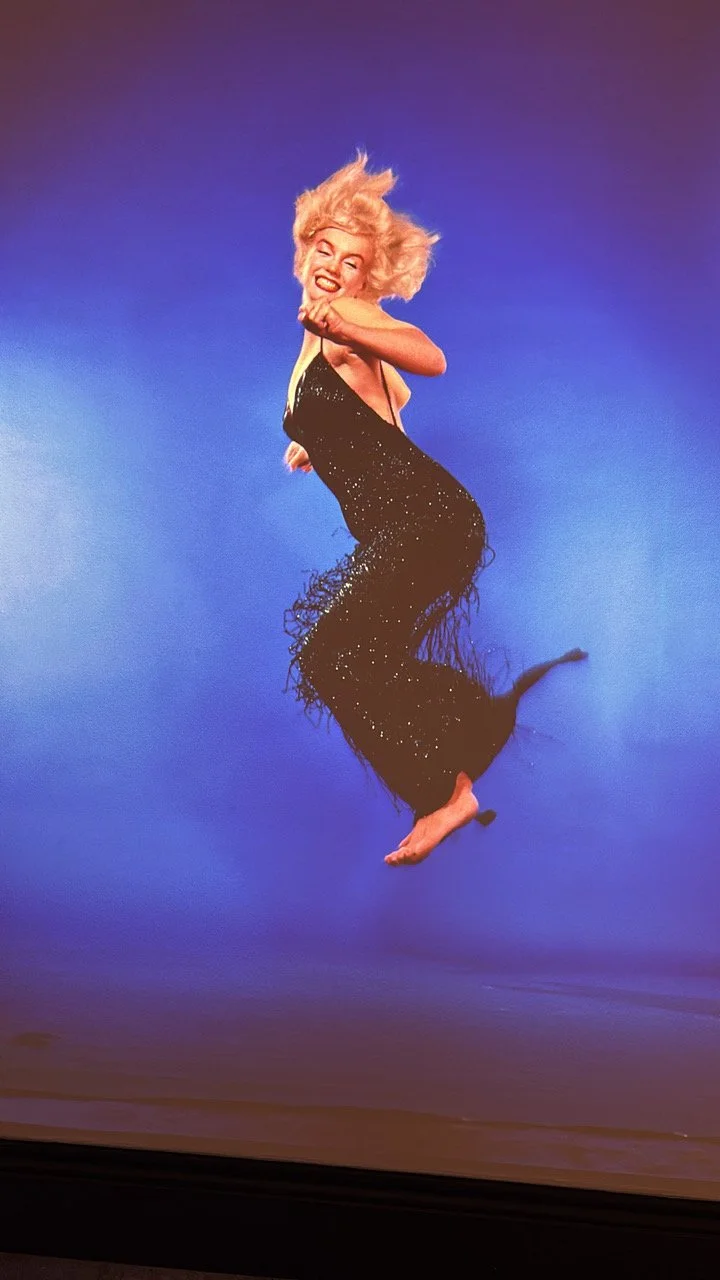
One of the outtakes for the Life Photo
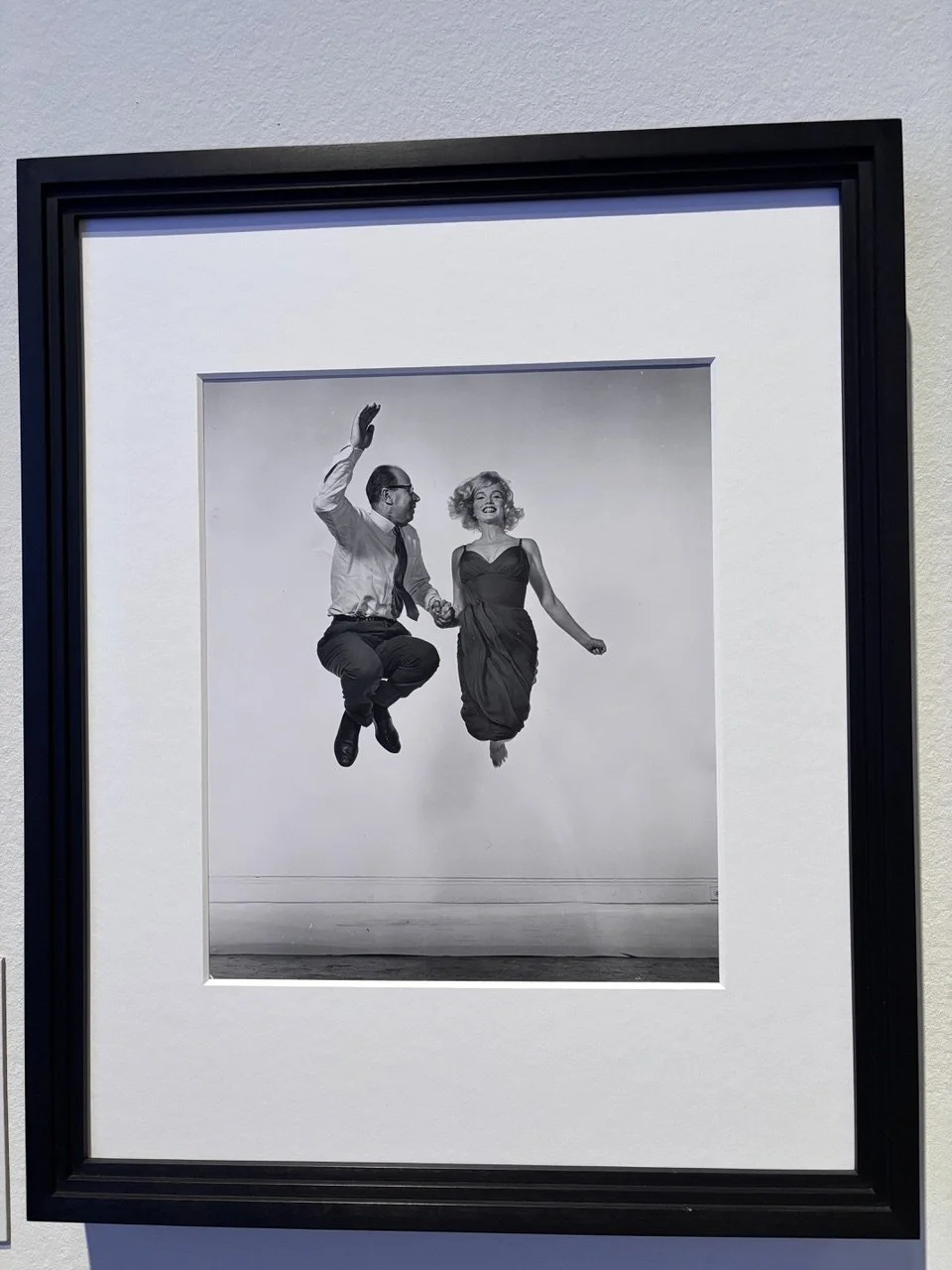
Here we see the photographer jumping with Marilyn, to get her comfortable jumping, which is very cute.
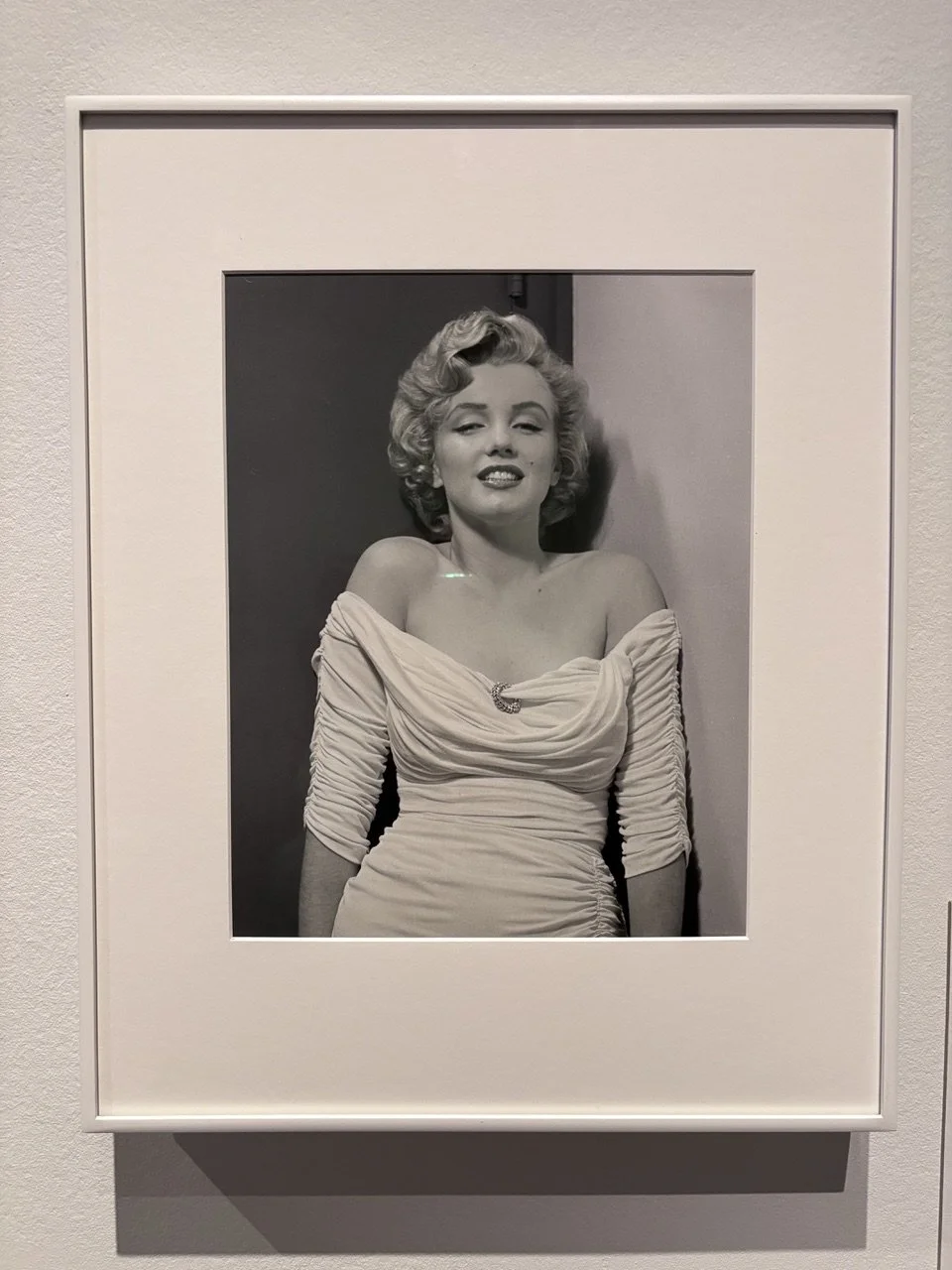
Image used for the cover of life Magazine, it was actually taken in her small appartment in a corner of her bedroom. This “in the corner” shot was also a technique used by Irving Penn
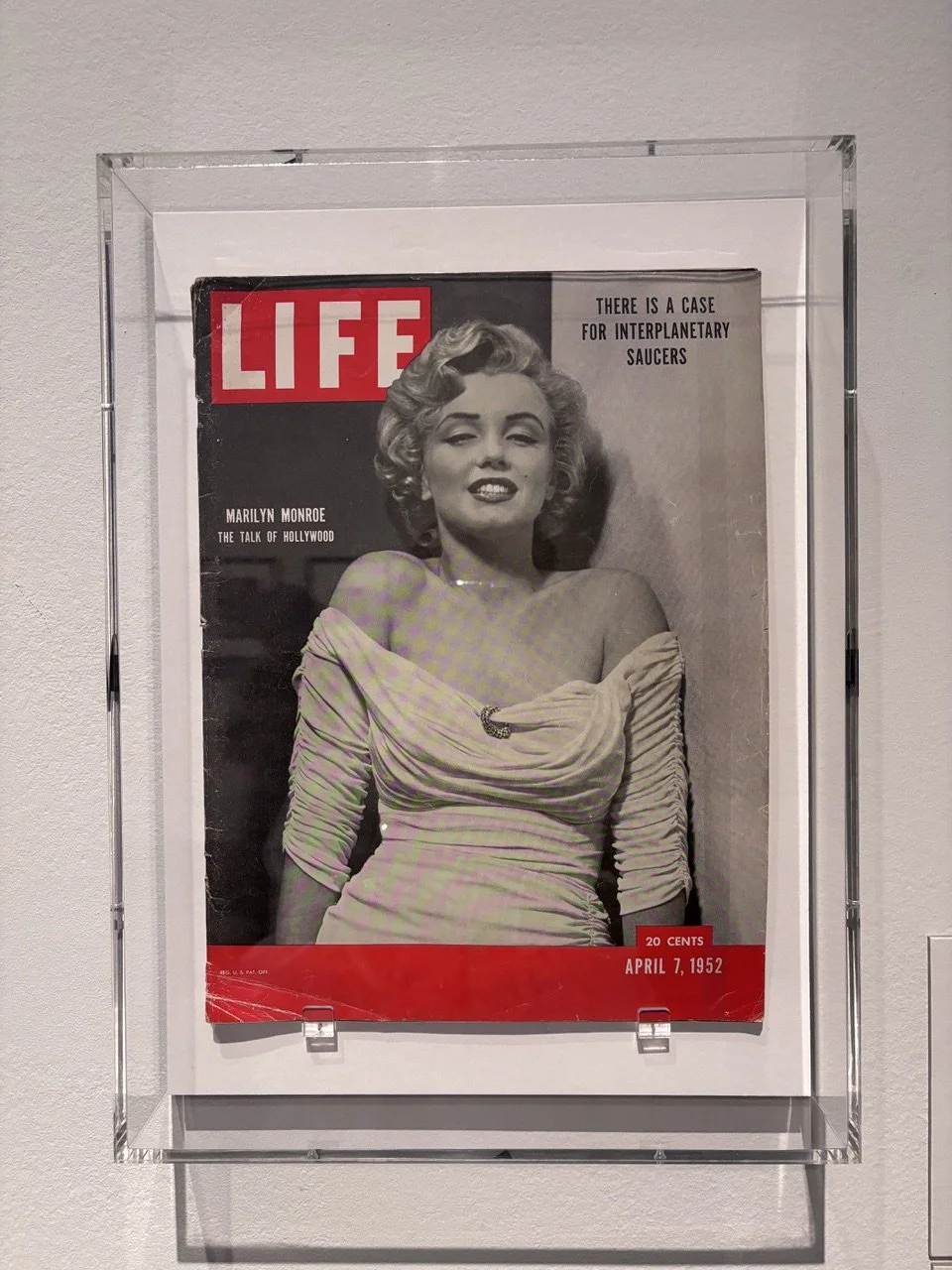
With the full Life magazine front cover look, its oh so glamorous!
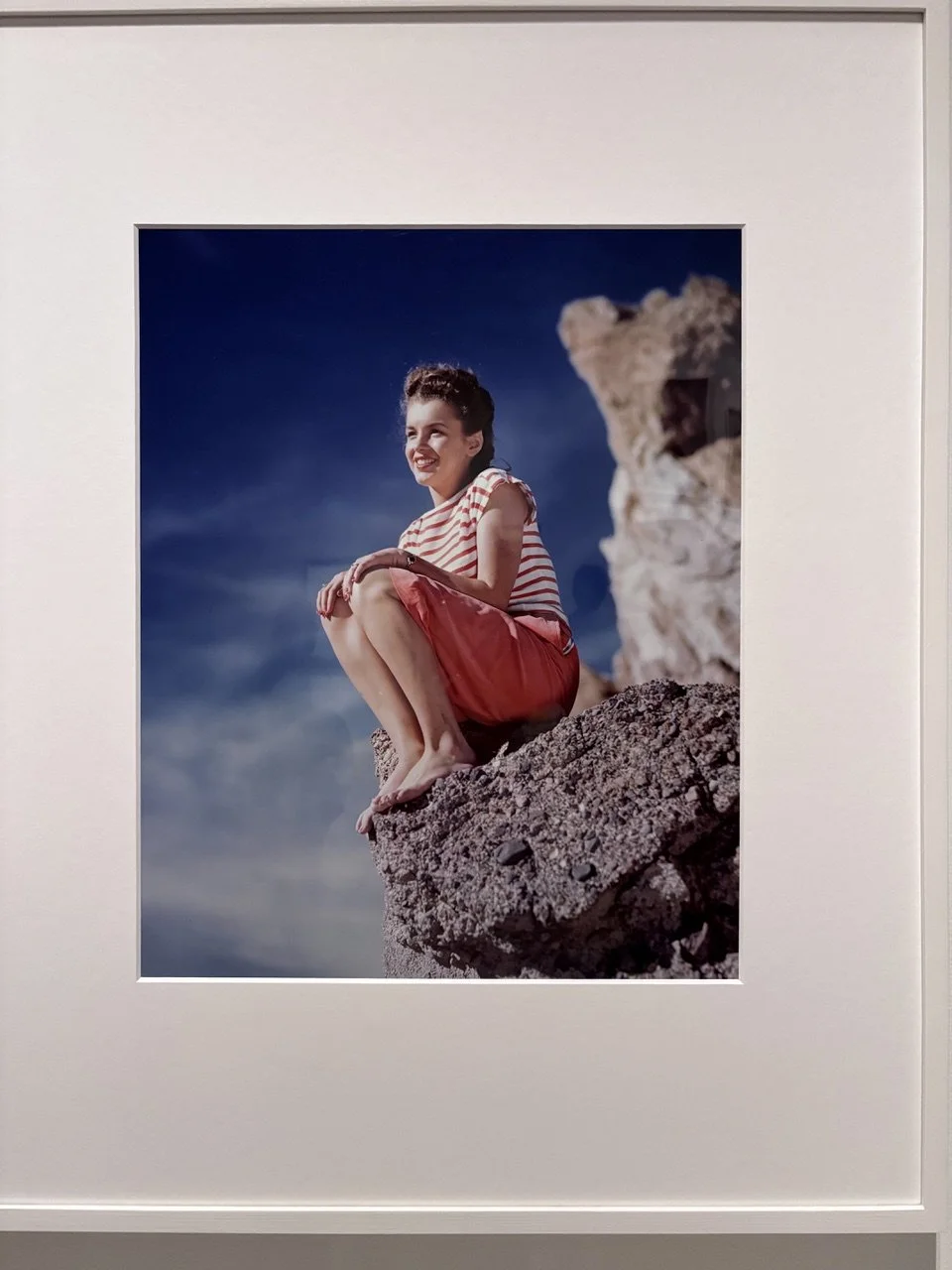
There are pictures of her very young and you see immediately her photogenic qualities. There are photos of her at the beach, in her home, all sorts as different photographers took her as their subject matter and their muse. Each set of images comes with a biography of the photographer and a quote or two from the photographer about what it was like to work with Marilyn. Every single one described what a lovely person she was who “gave so much to the camera.” I found this to be a really interesting phrase - gave so much to the camera. Because it suggests that the success of the photos were as much her doing as theirs. It seems like they were saying that not only was she “a natural” in front of the lens but she also knew how to create an image.
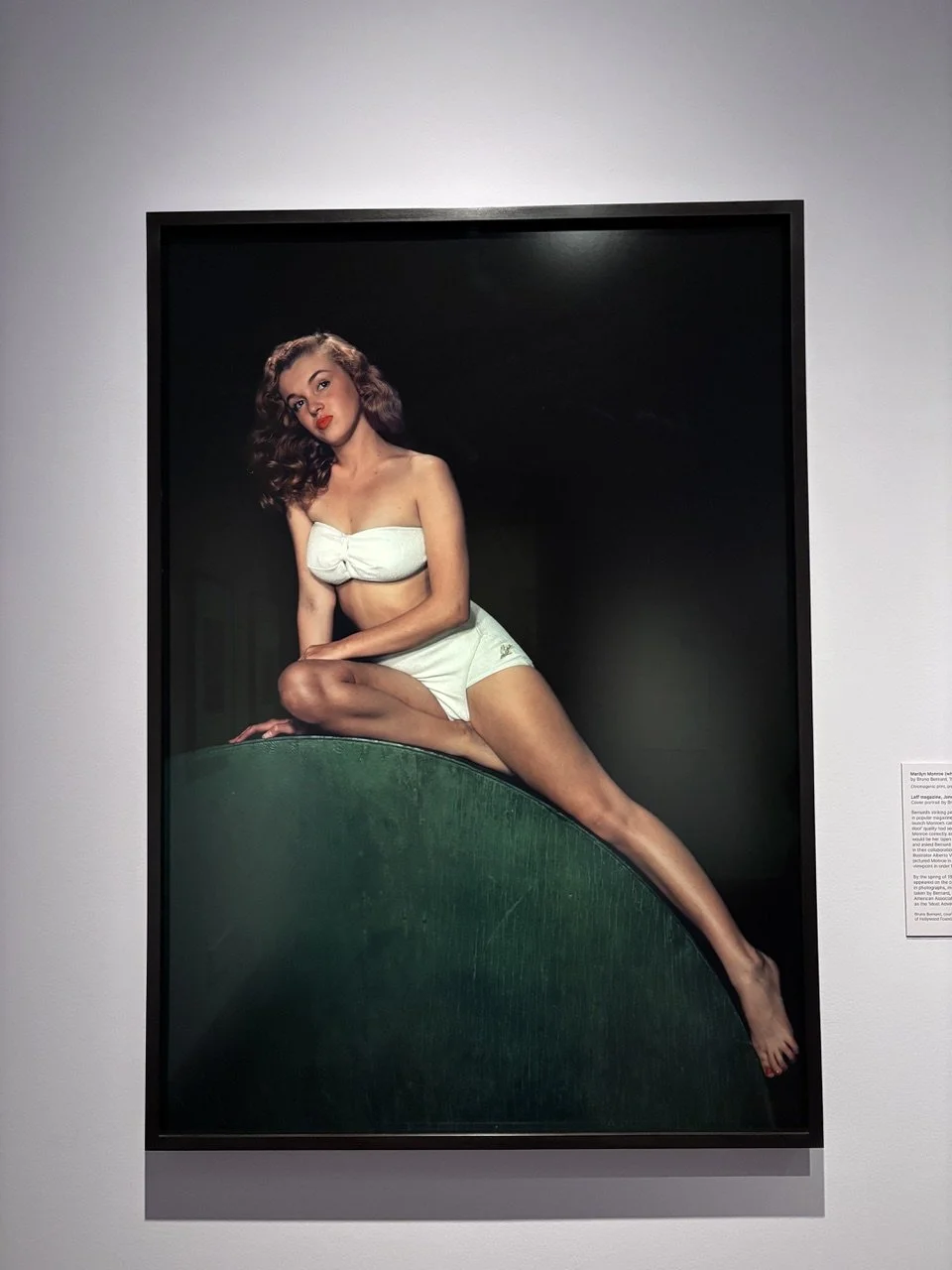
Young Marilyn as a pin-up
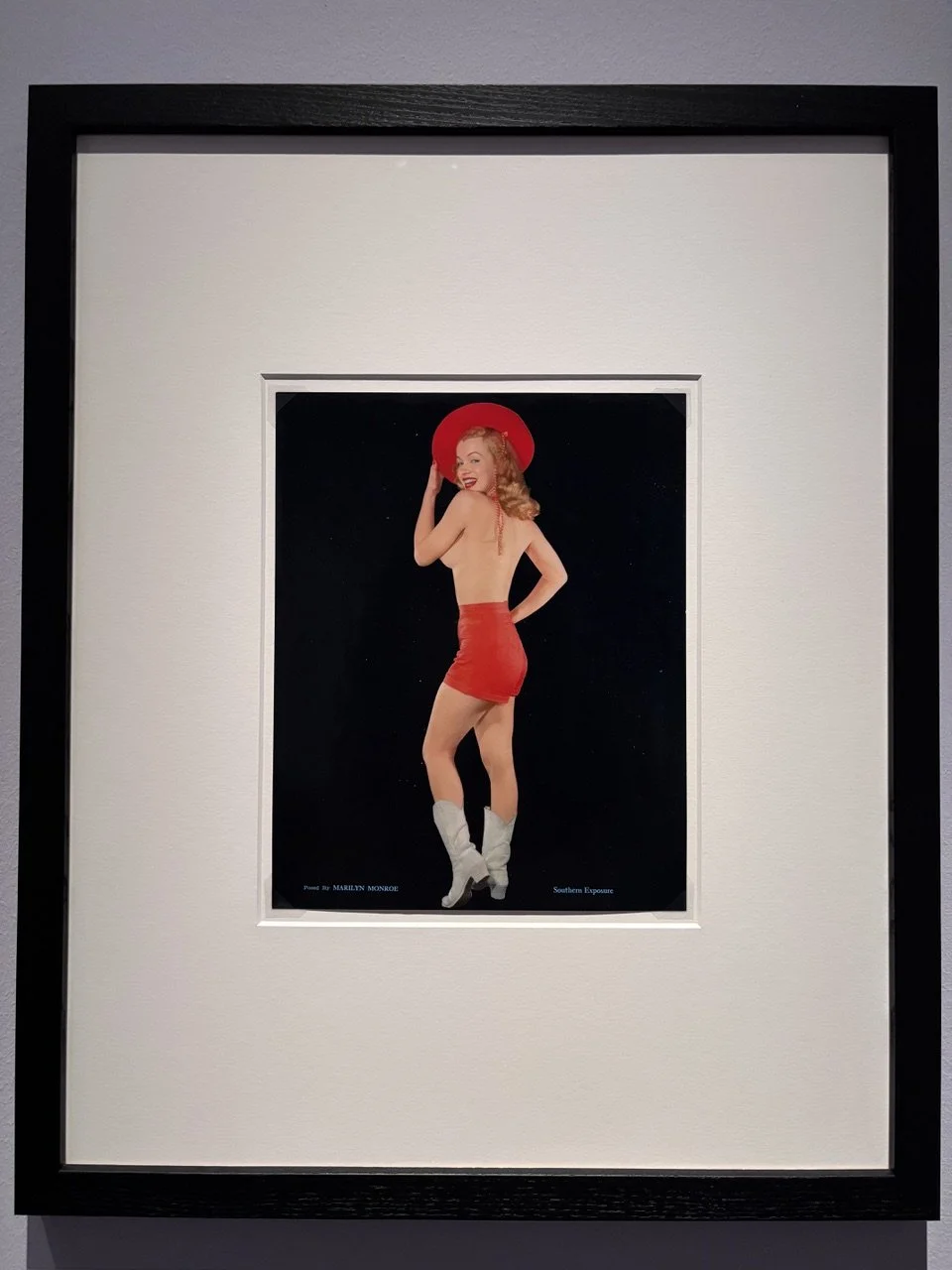
Shirtless cowgirl look
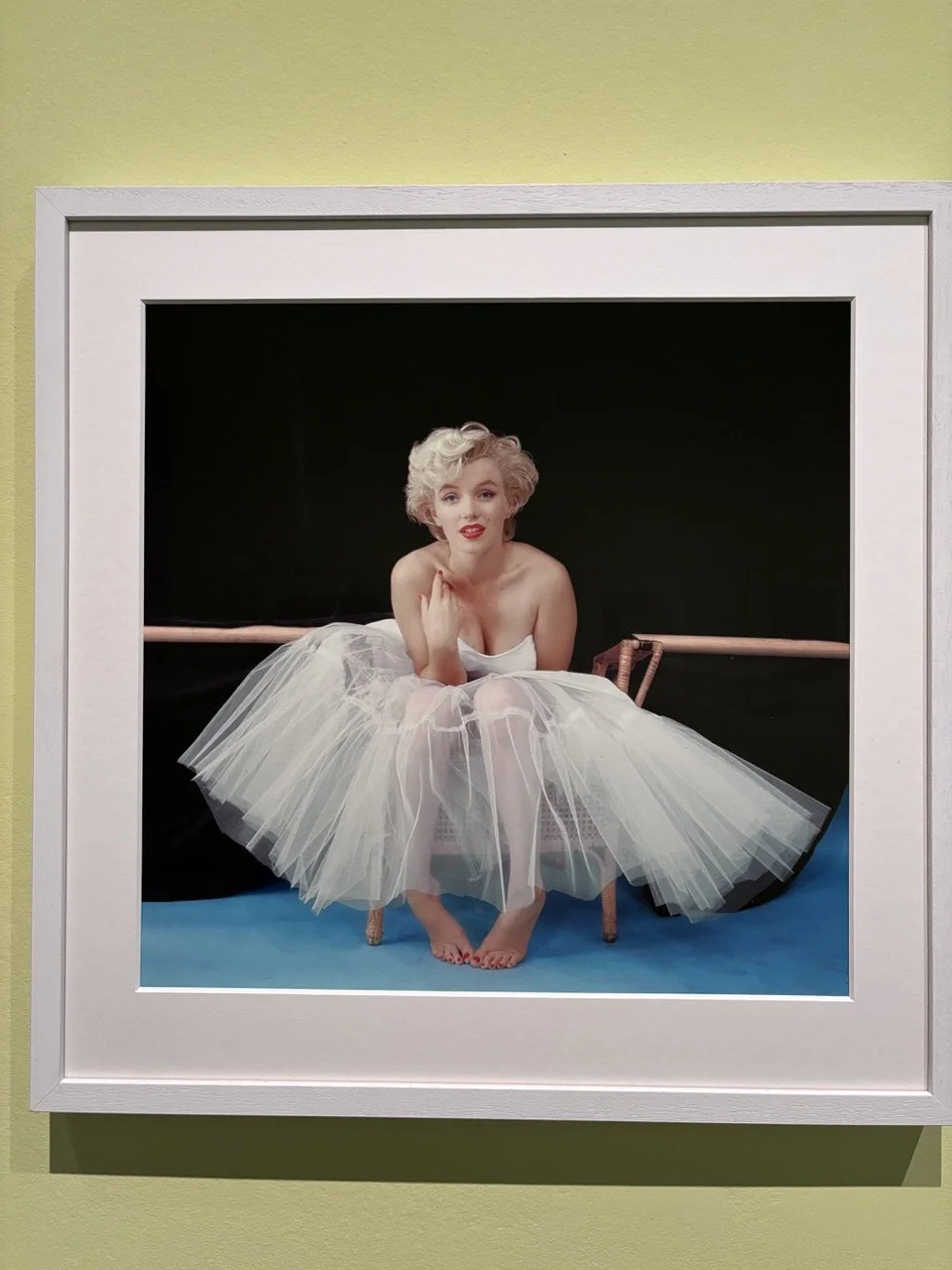
For this photo, Marilyn was given a tutu but the bodice didn’t fit so she held it up, this “mistake” makes the photo iconic
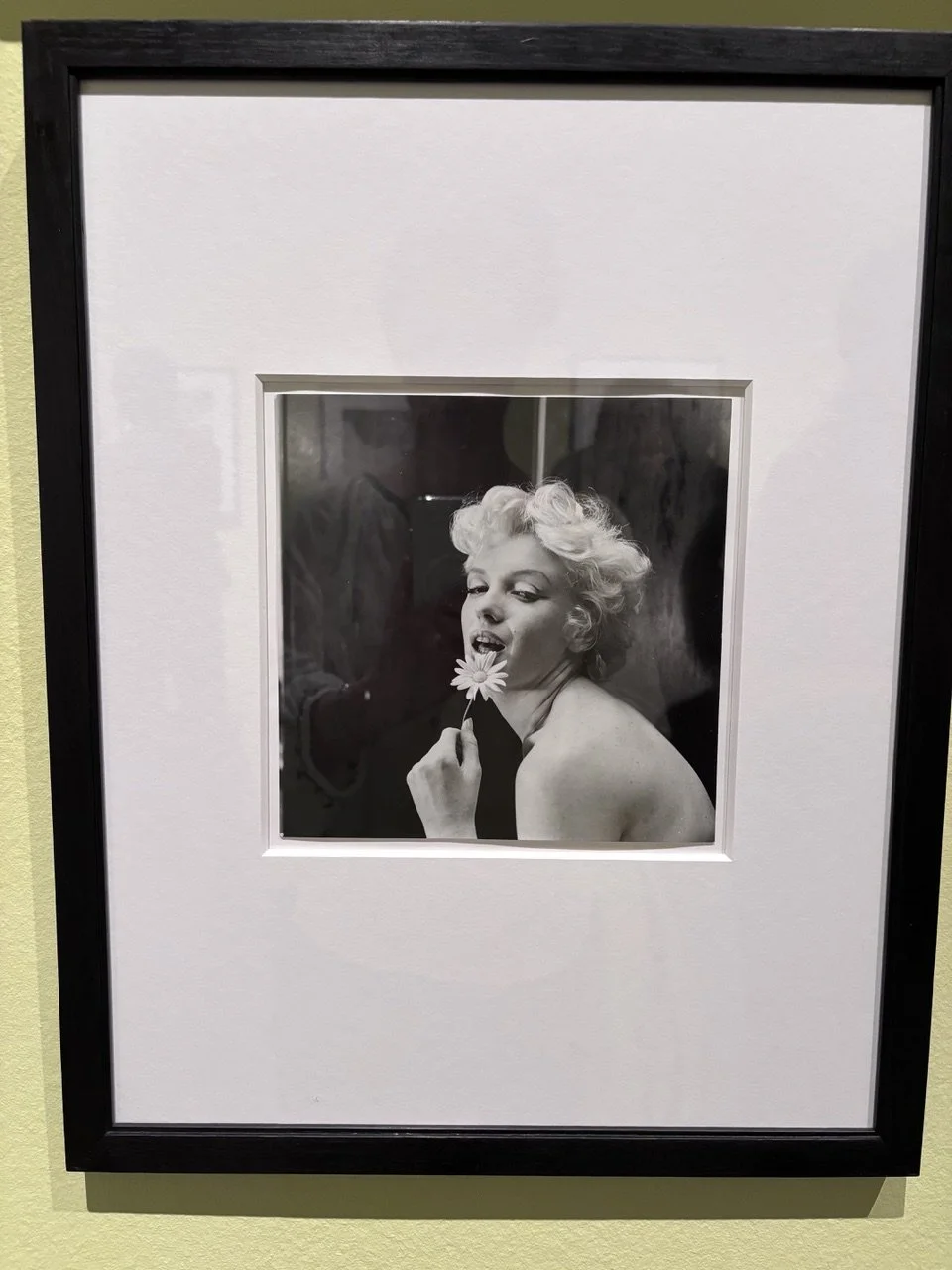
Giving to the camera!
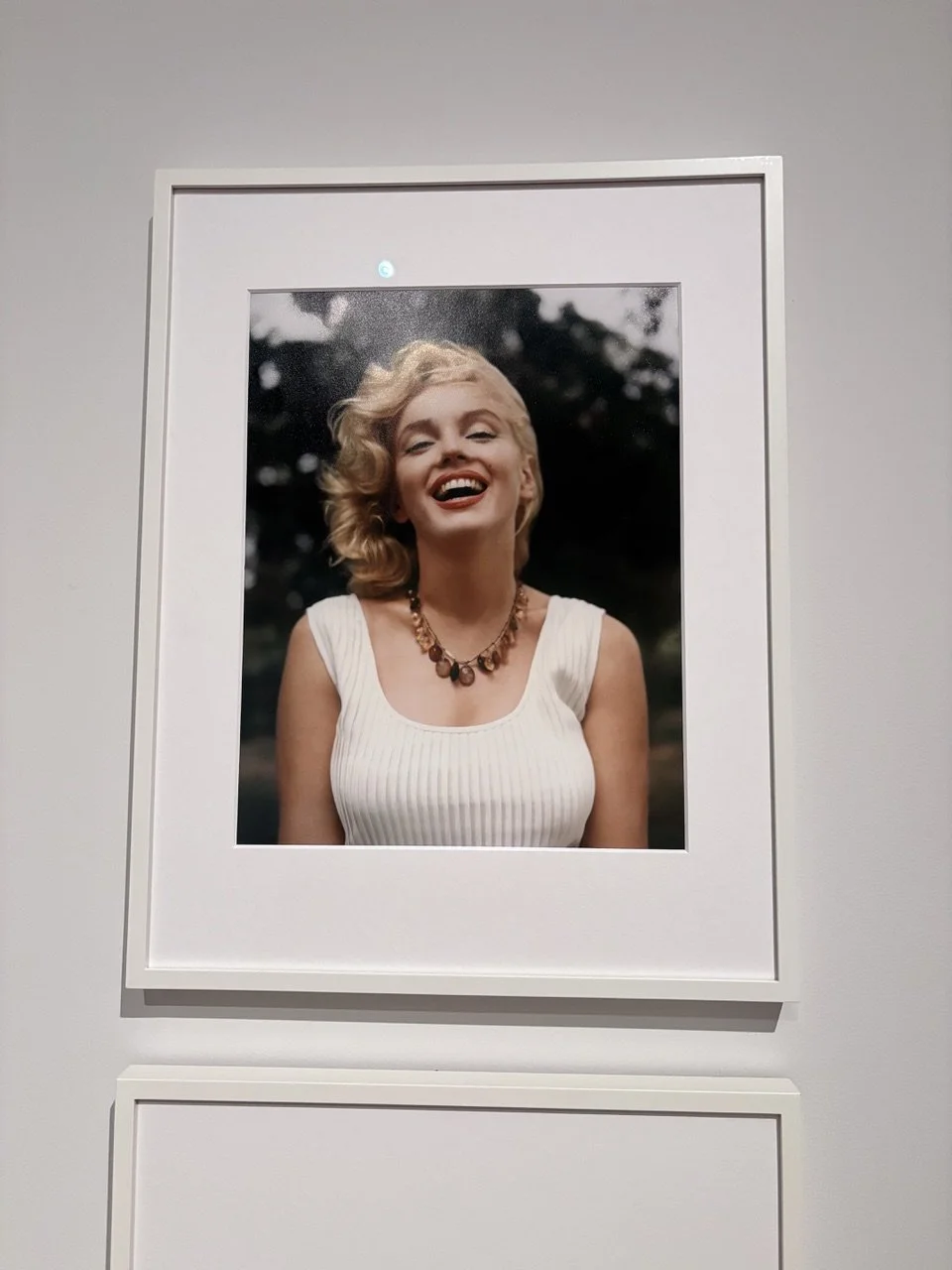
That smile!
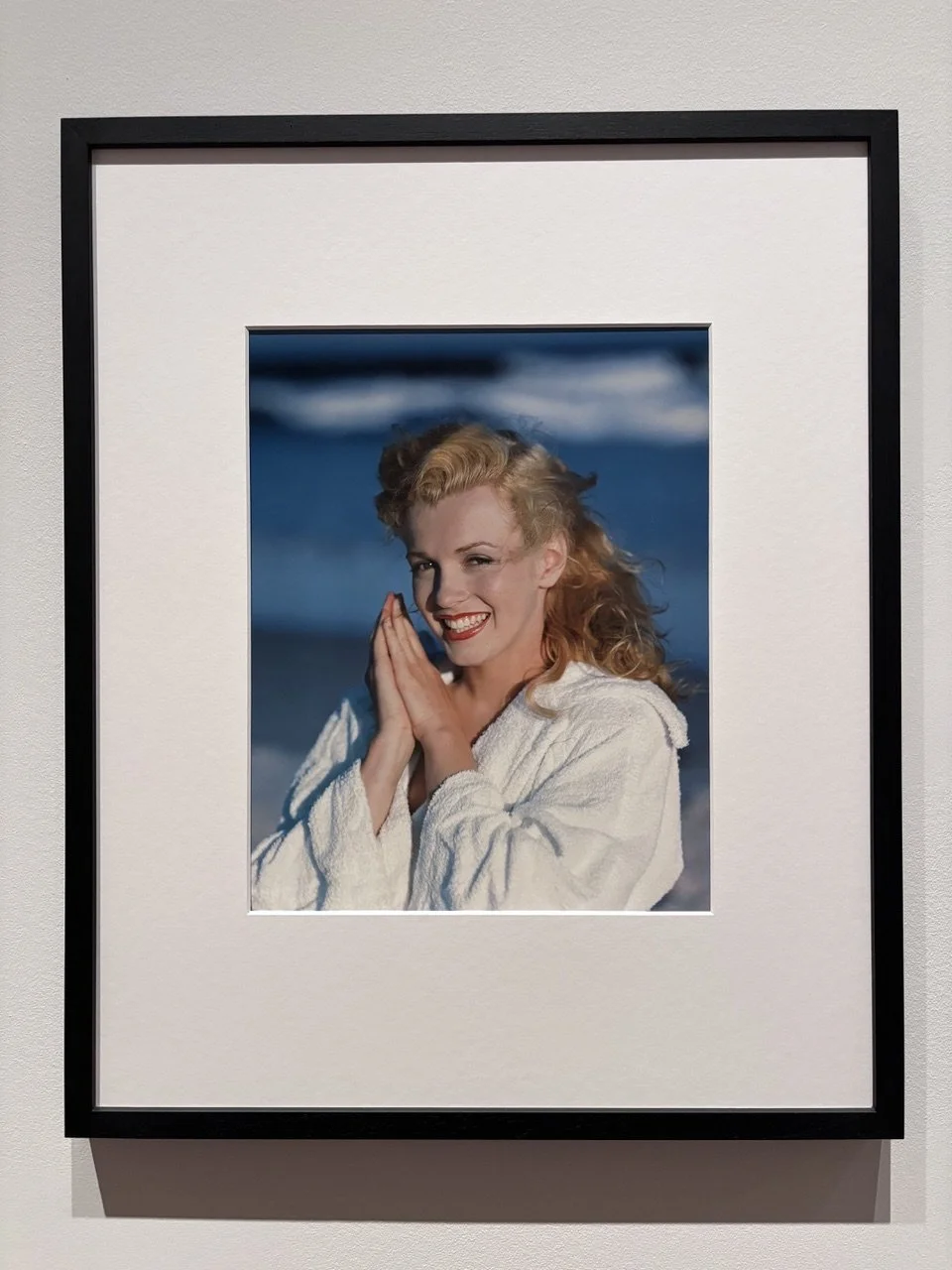
Marilyn at the beach!
That being said, she was very protective of that image and insisted on choosing which images would go to print (probably in no small part because of her earlier experiences with her image being used without her permission). There are many beautiful photos of her that she marked up and scratched up the negatives of. Many photographers who wished they hadn’t given her the negatives! What is so interesting is that these mark ups with red ink, the scratches themselves are now an intrinsic part of those images.
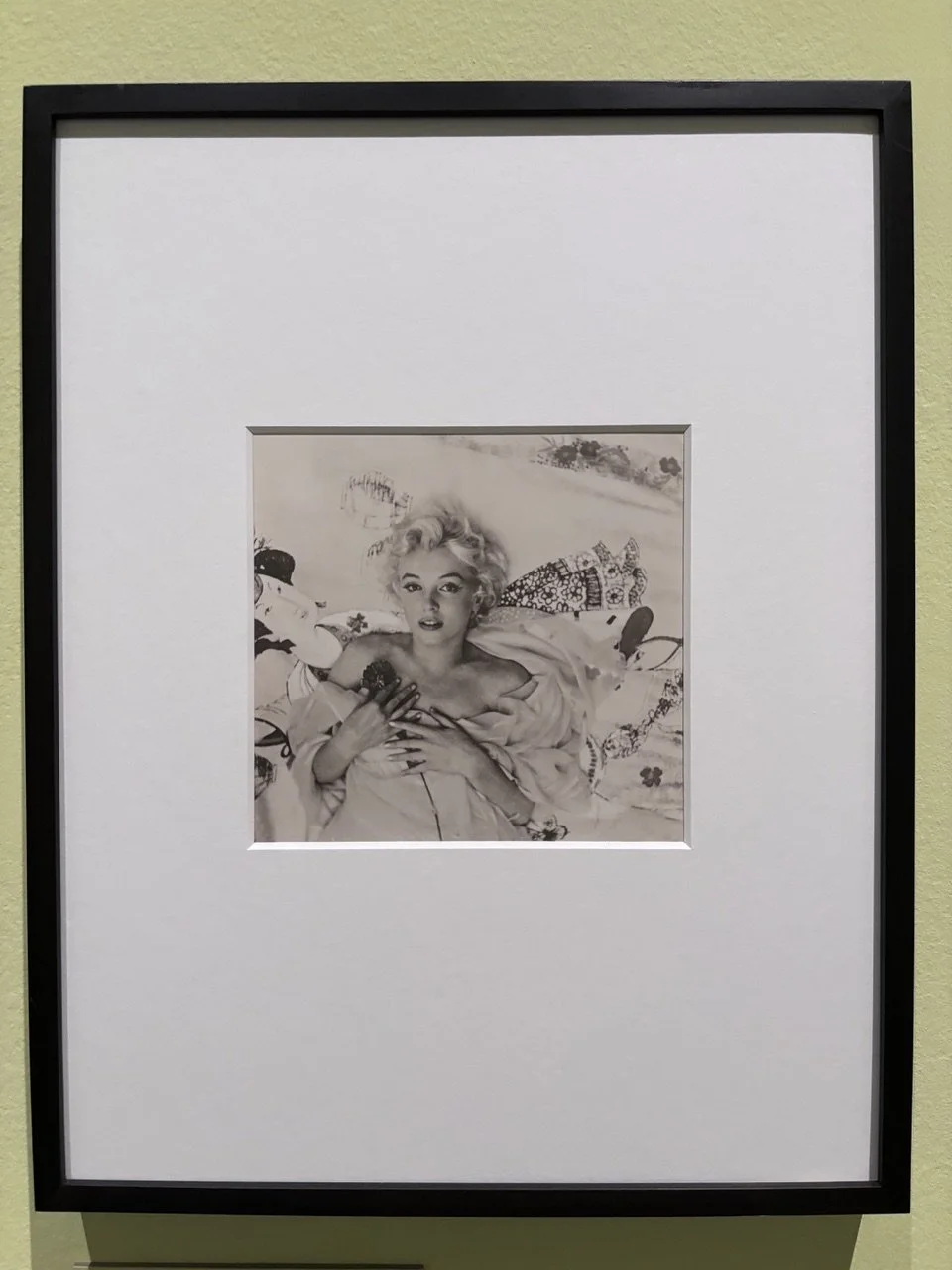
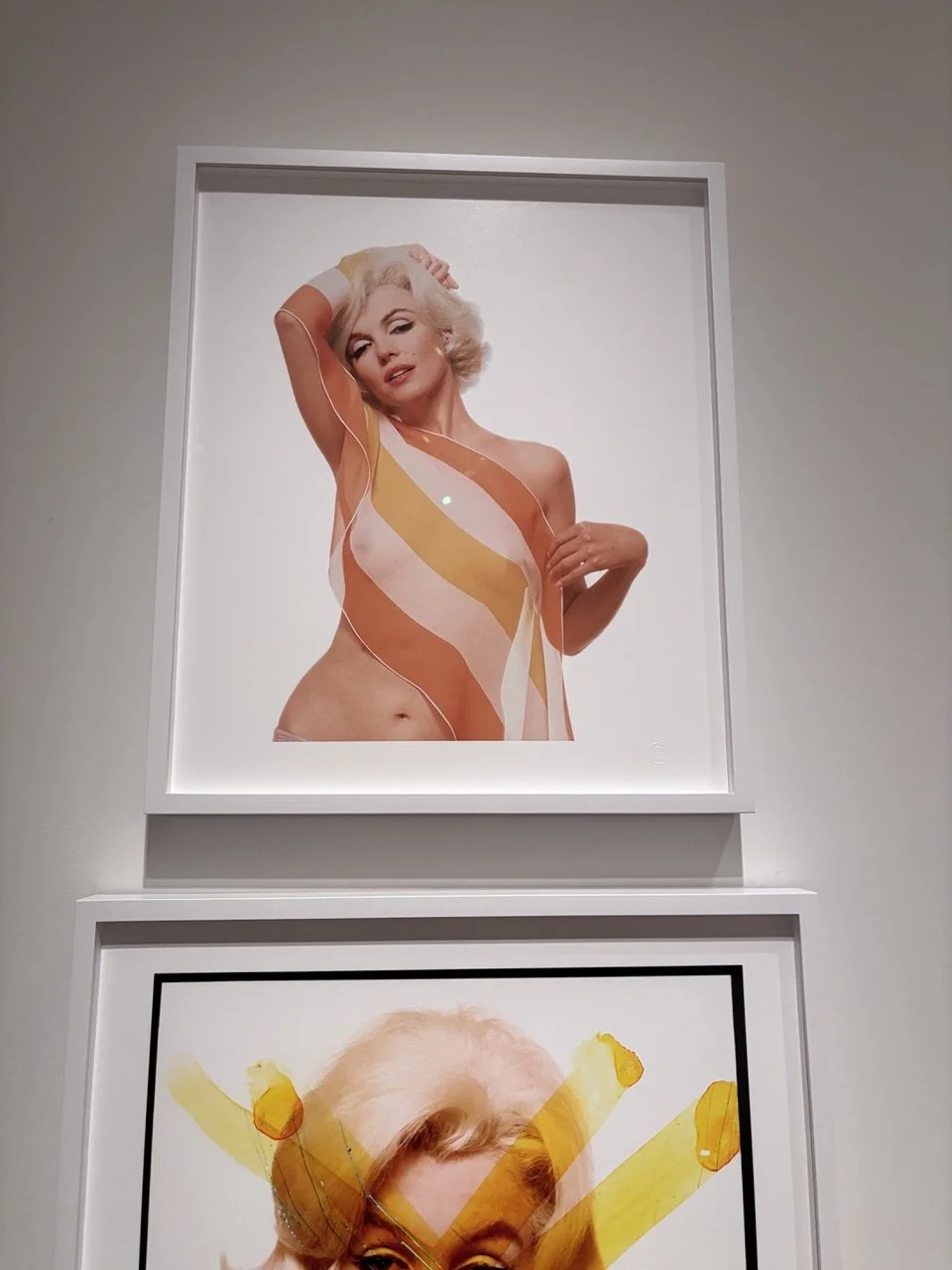
Bottom photo marked up by Marilyn
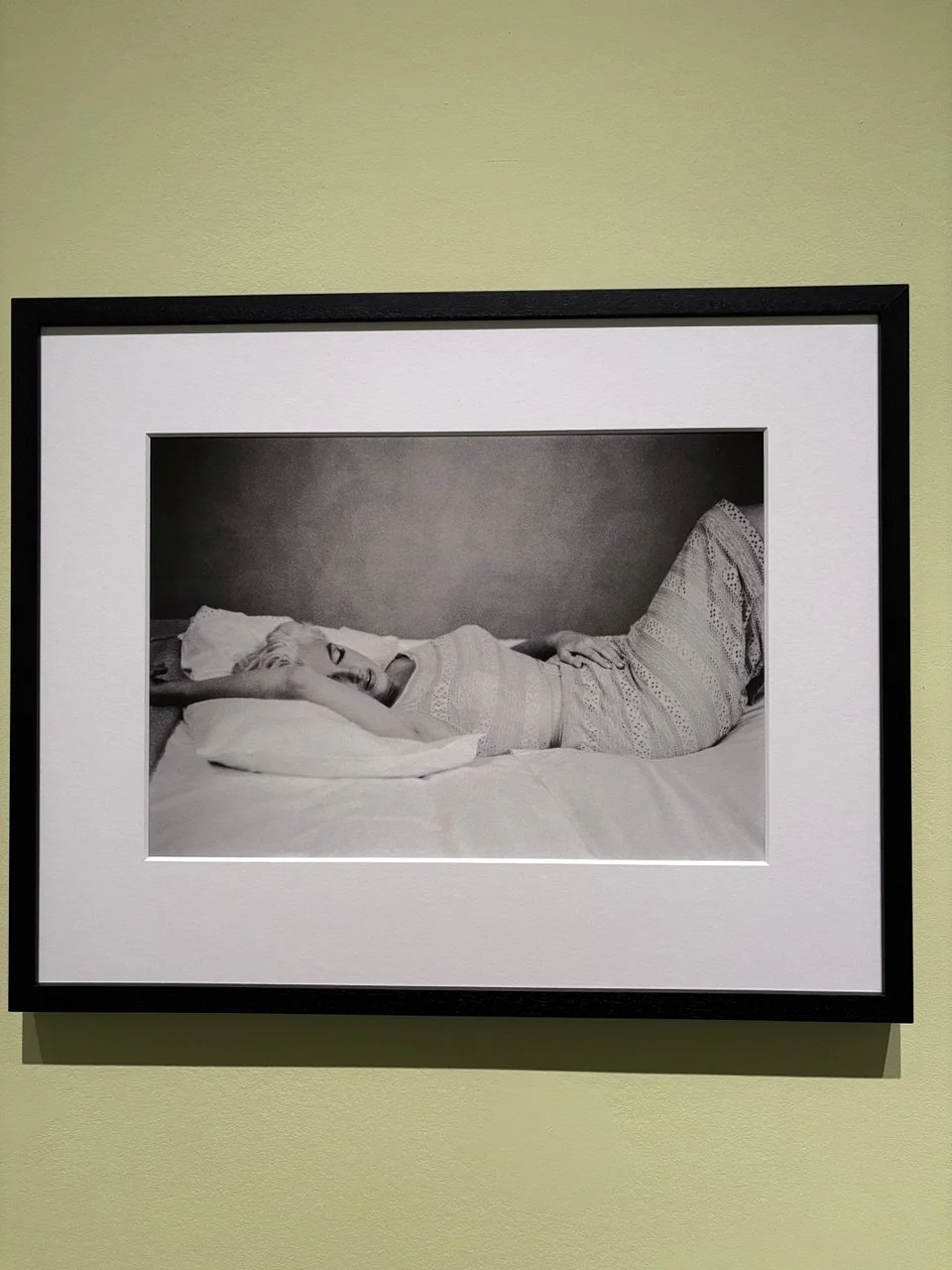
Marilyn at home
There was also a little display case of small wallet size images. These were photographs taken by a group of young fans who would show up at Marilyn’s premiers. According to these young fans, Marilyn never once said no to them when they asked for a photo. I loved this. The images are adorable, you can tell she is having fun and she is willing to give because there was a pureness to their request. They liked her and she liked them. It’s sort of the opposite of the relationship between celebrities and paparazzi we have now. Those kids wanted photos because they adored her. The paparazzi are part of a money machine feeding a monster that it’s not even clear the general public want. Like do you actually want a picture of Brad Pitt going for a walk?
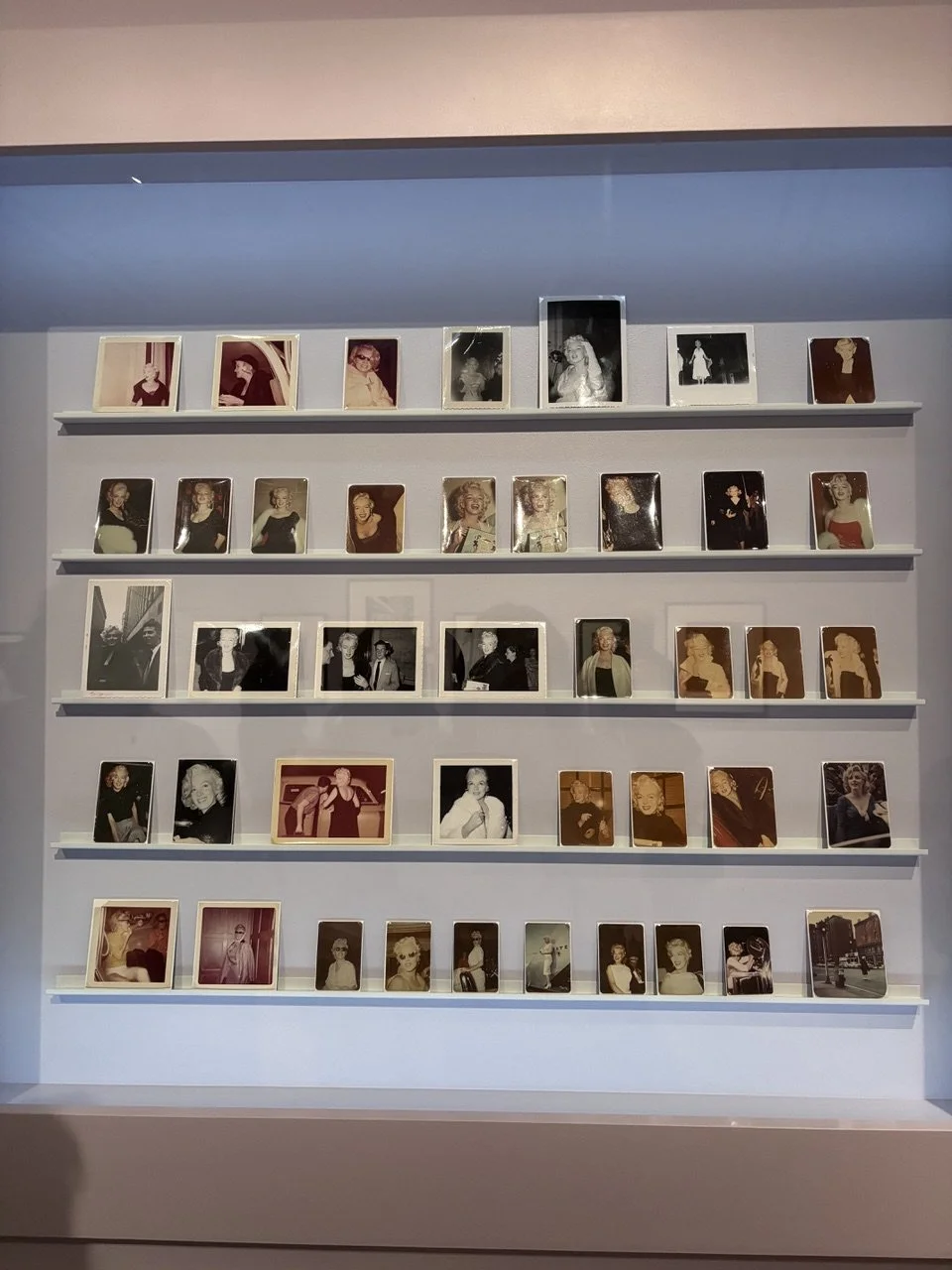
The wallet photos by Marilyn’s cute fans.
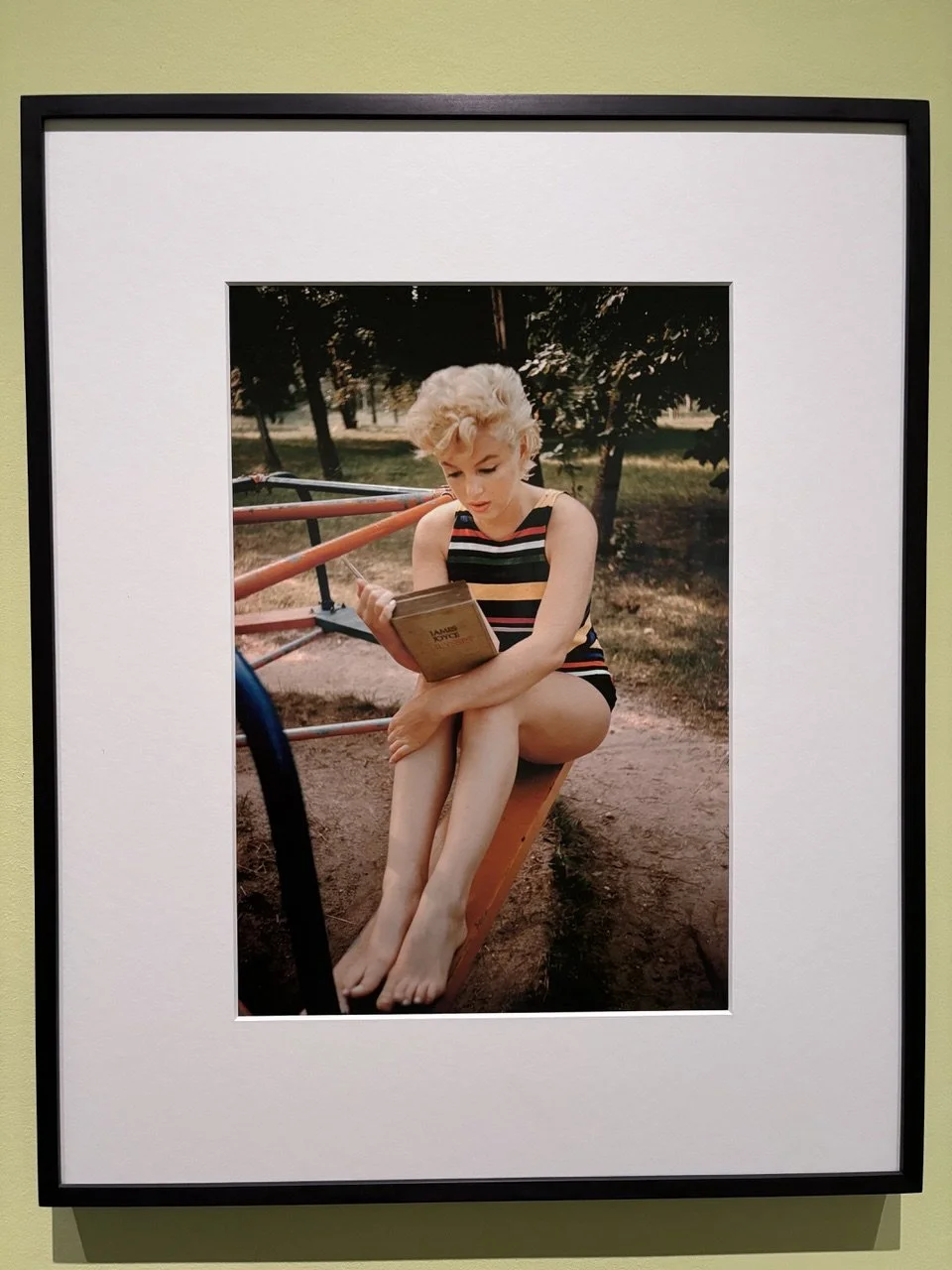
Marilyn was a nerd - another reason I love her.
There was a section of photos of Marilyn with Arthur Miller. The exhibition made me kind of hate Arthur Miller. I mean honestly what a loser, couldn’t cope with how beautiful and famous she was. It just showed me that he is absolutely no Travis Kelce. Also it reminded me of how Fran Leibowitz talks about her dislike for Andy Warhol, like all of your friends are on drugs and dying and you are doing what? And here is Arthur Miller and Marilyn is in pain and trying to self medicate and he does what about it? Asks for a divorce. Nice. Also, the photographer taking the photos said she could sense the marriage wasn’t going well. The photographer later became Miller’s wife! Talk about conflict of interest!!
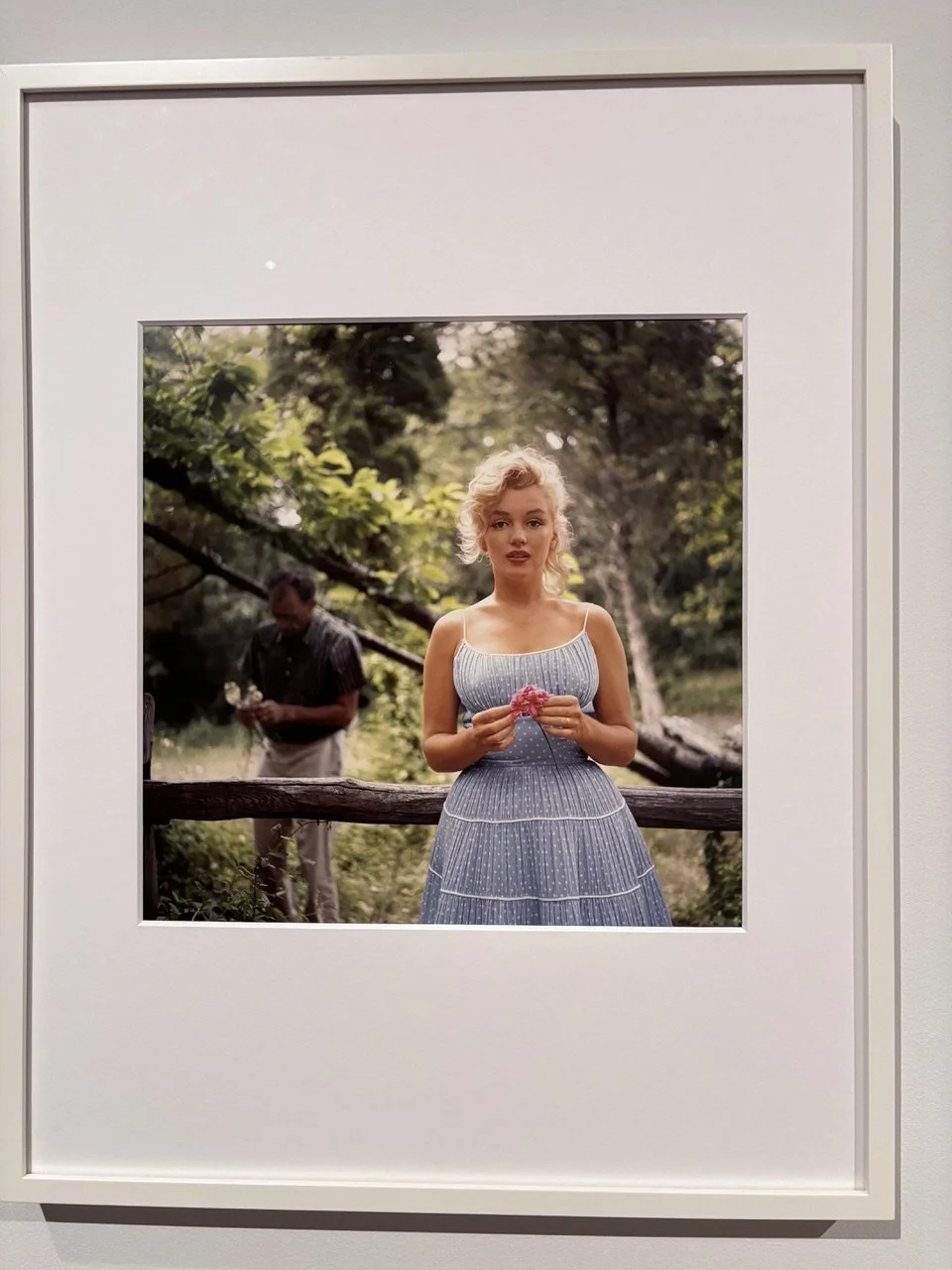
Arthur Miller in the background. Puke.
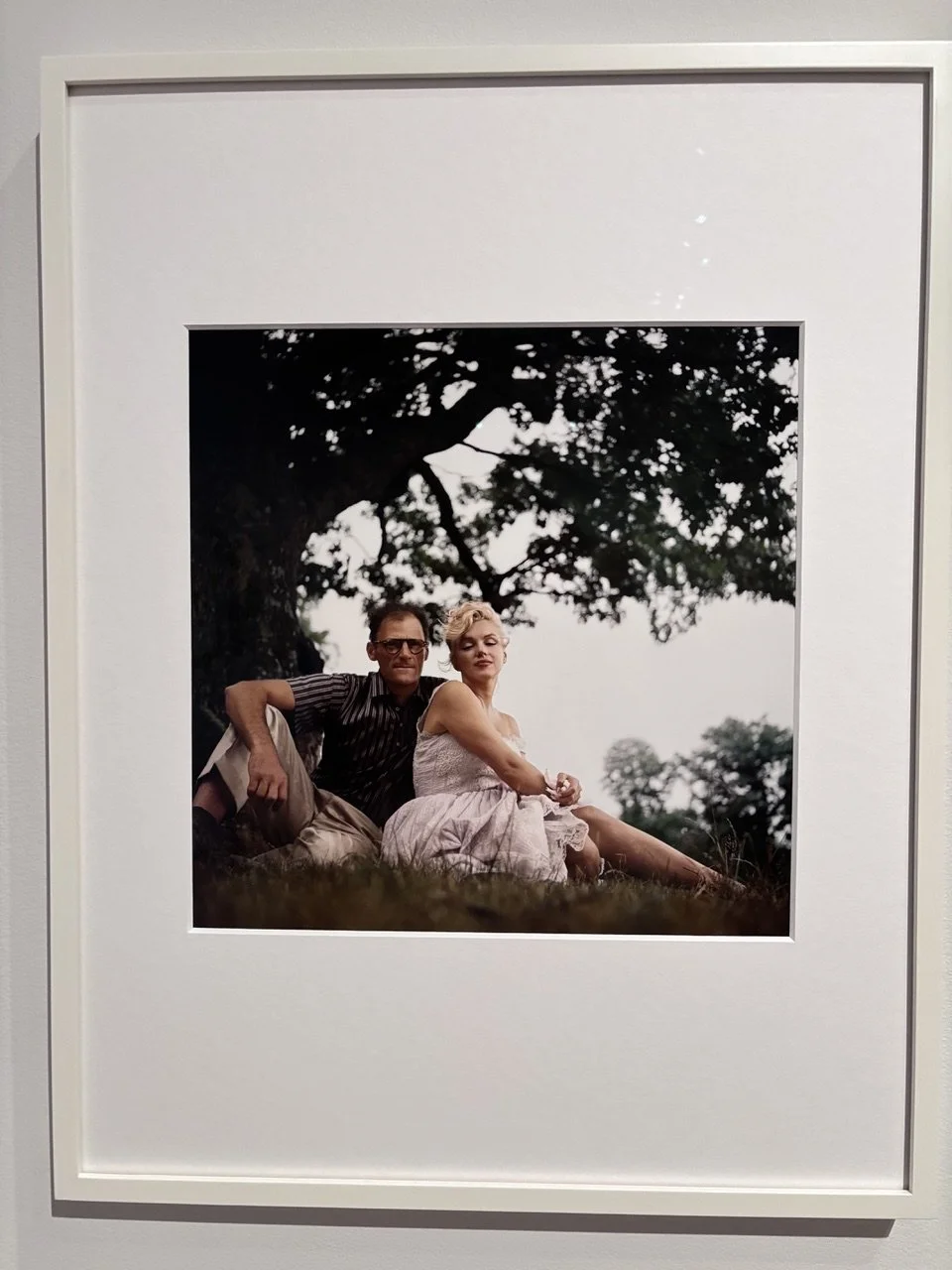
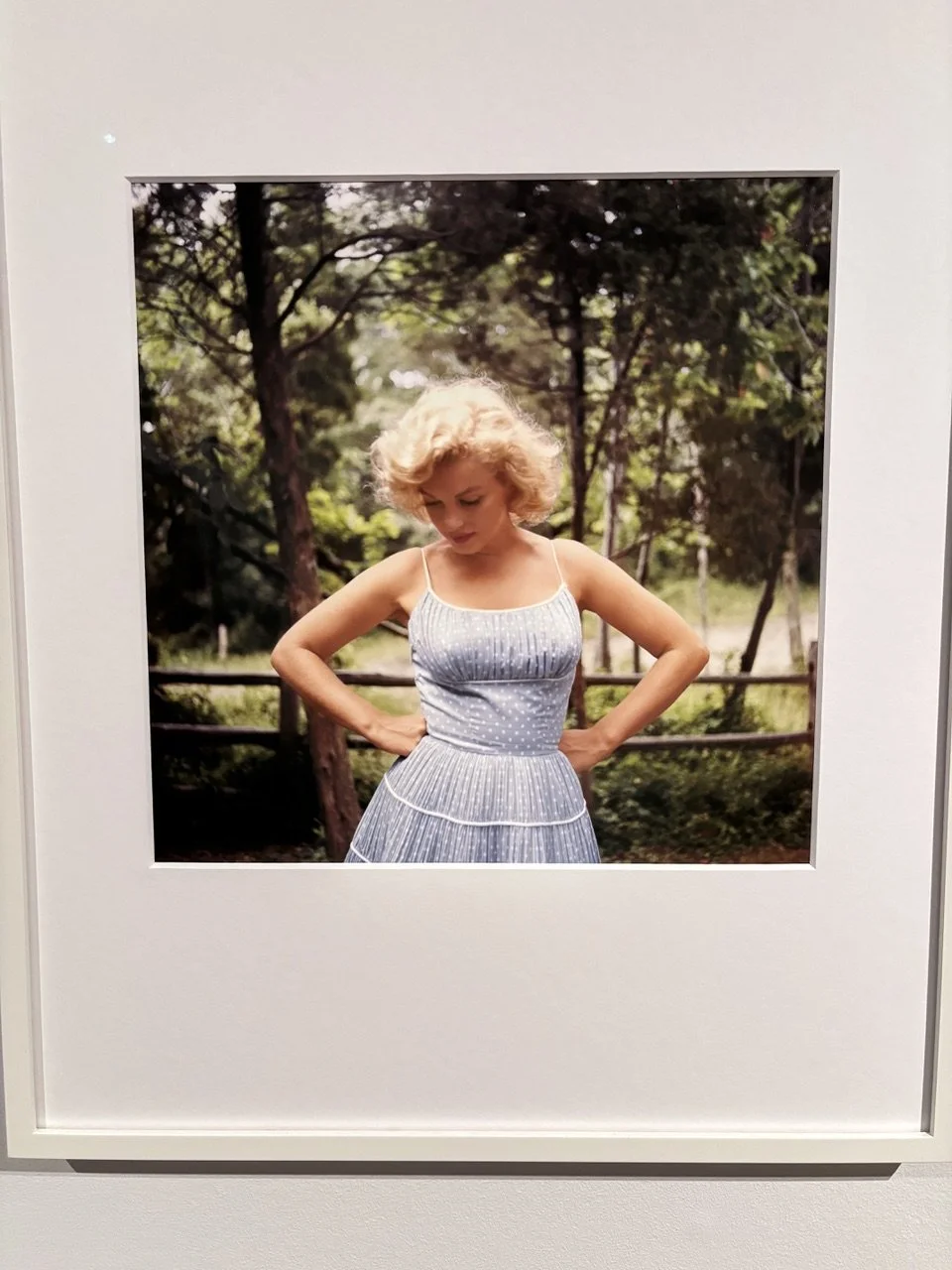
Gorgeous, and no Arthur Miller ruining this photo.
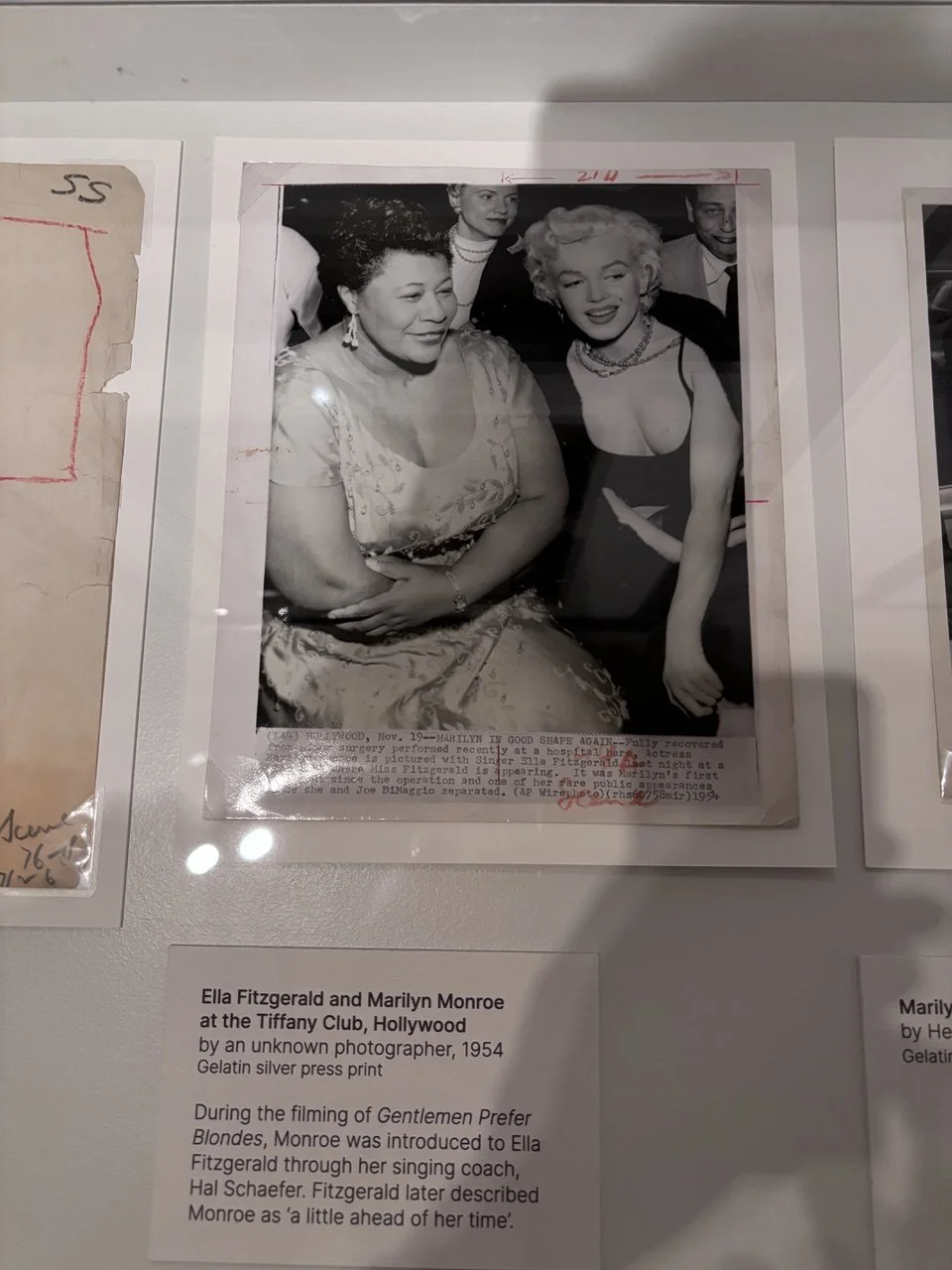
In another small display case are two photos one of Marilyn with Ella Fitzgerald and the other with Joe DiMaggio. Marilyn Monroe met Ella Fitzgerald during the filming of Gentleman Prefer Blondes (1953), they were introduced by Monroe’s singing coach. The photo shown here is of Marilyn and Ella in 1954 at the Tiffany Club and in 1955 Marilyn personally contacted the owners of the Macambo club in Hollywood and told them to book Ms Fitzgerald. They hesitated and Marilyn said she would sit front row every night Ella performed. Fitzgerald was booked for two weeks and Marilyn kept her promise sitting front row every night which attracted a ton of media attention, extended Ella Fitzgerald’s contract at the club and effectively launching Ella’s career mainstream, it also broke down racial and industry barriers. Ella Fitzgerald frequently credited Monroe, saying "I owe Marilyn Monroe a real debt... it was because of her that I played the Mocambo". She also described Monroe as “a little ahead of her time.” That’s for sure.
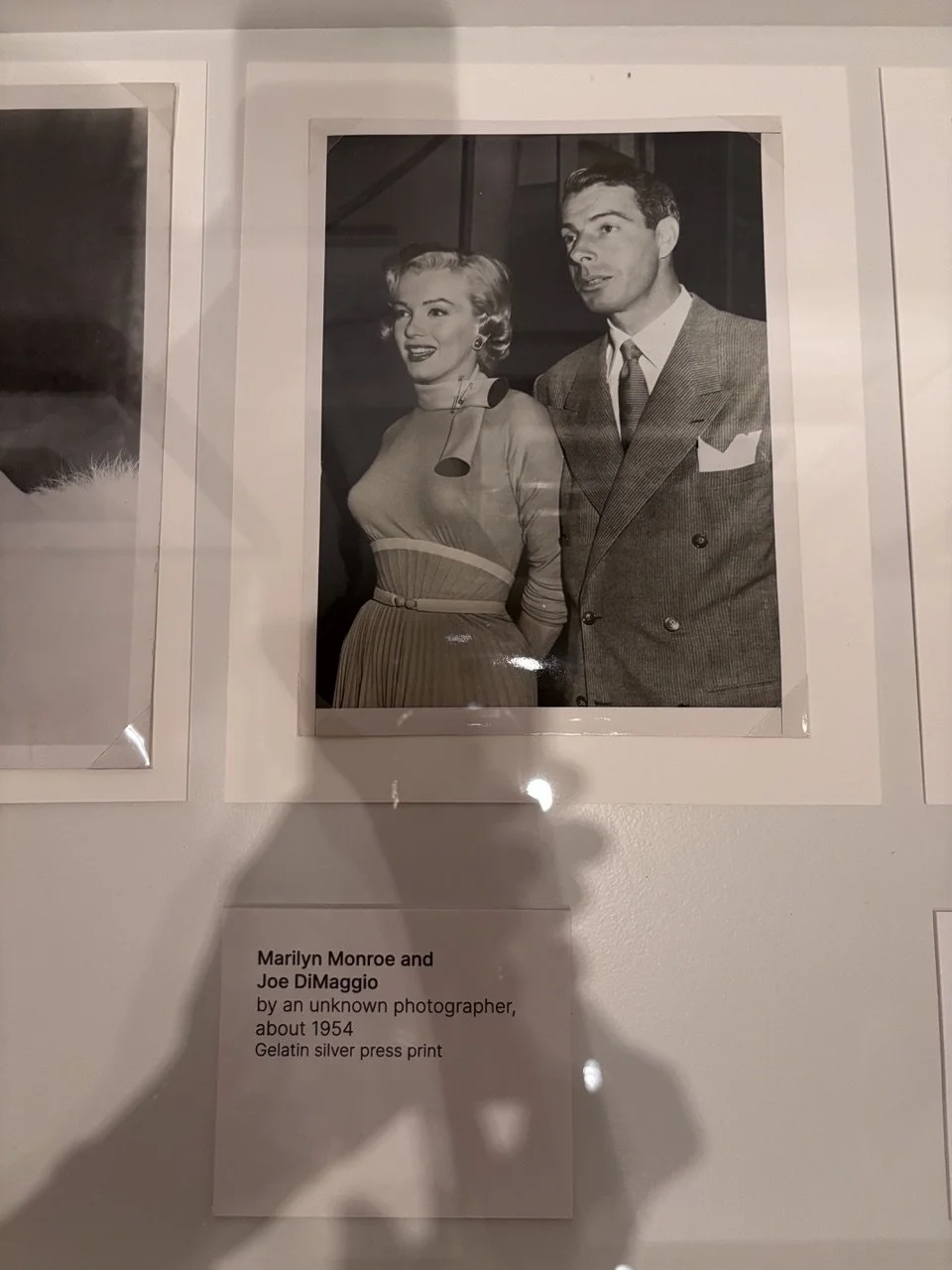
Marilyn and Joltin’ Joe DiMaggio were married for a brief period, 9 months of 1954 to be exact (she and the San Francisco native married at San Francisco City Hall!!!) however it was Joe DiMaggio that she called when she was hospitalized at a Psychiatric Clinic in 1961 and wanted out and it was Joe who was by her side when she woke up from gallbladder surgery. When Joe DiMaggio died in 1999 his last words were "I'll finally get to see Marilyn".
The National Potrait Gallery is not just for photography, as we know. So a number of paintings and artistic renditions of Marilyn and what we like to call Marilyn-adjacent subjects are included in the exhibition which was a wonderful counterpoint to all the delicious photography. Although I must confess I paid way less attention to these pieces because photos of Marilyn Monroe are so addicting!
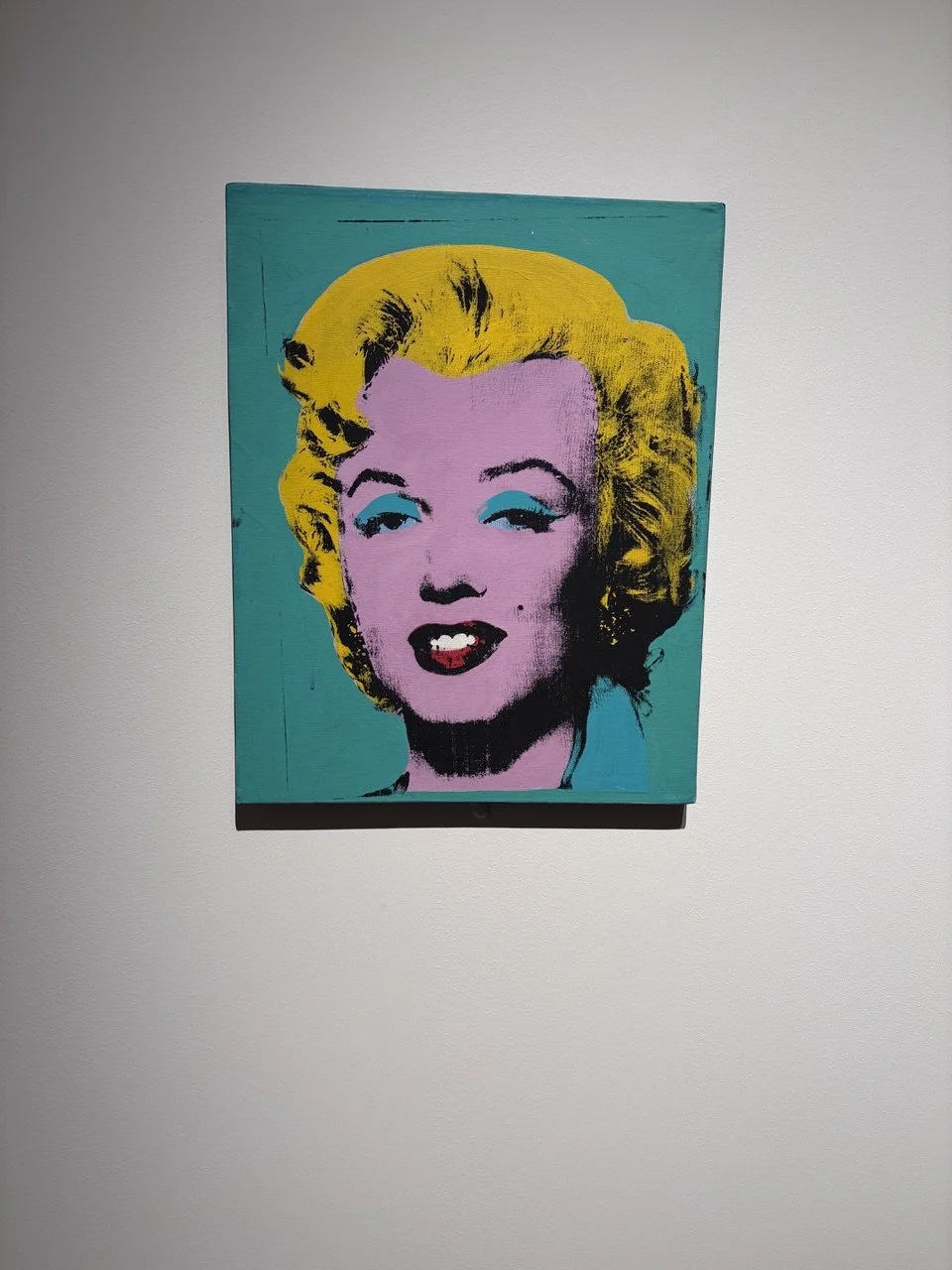
Warhol! of course from that famous photo. This would not exist without the photo!!!
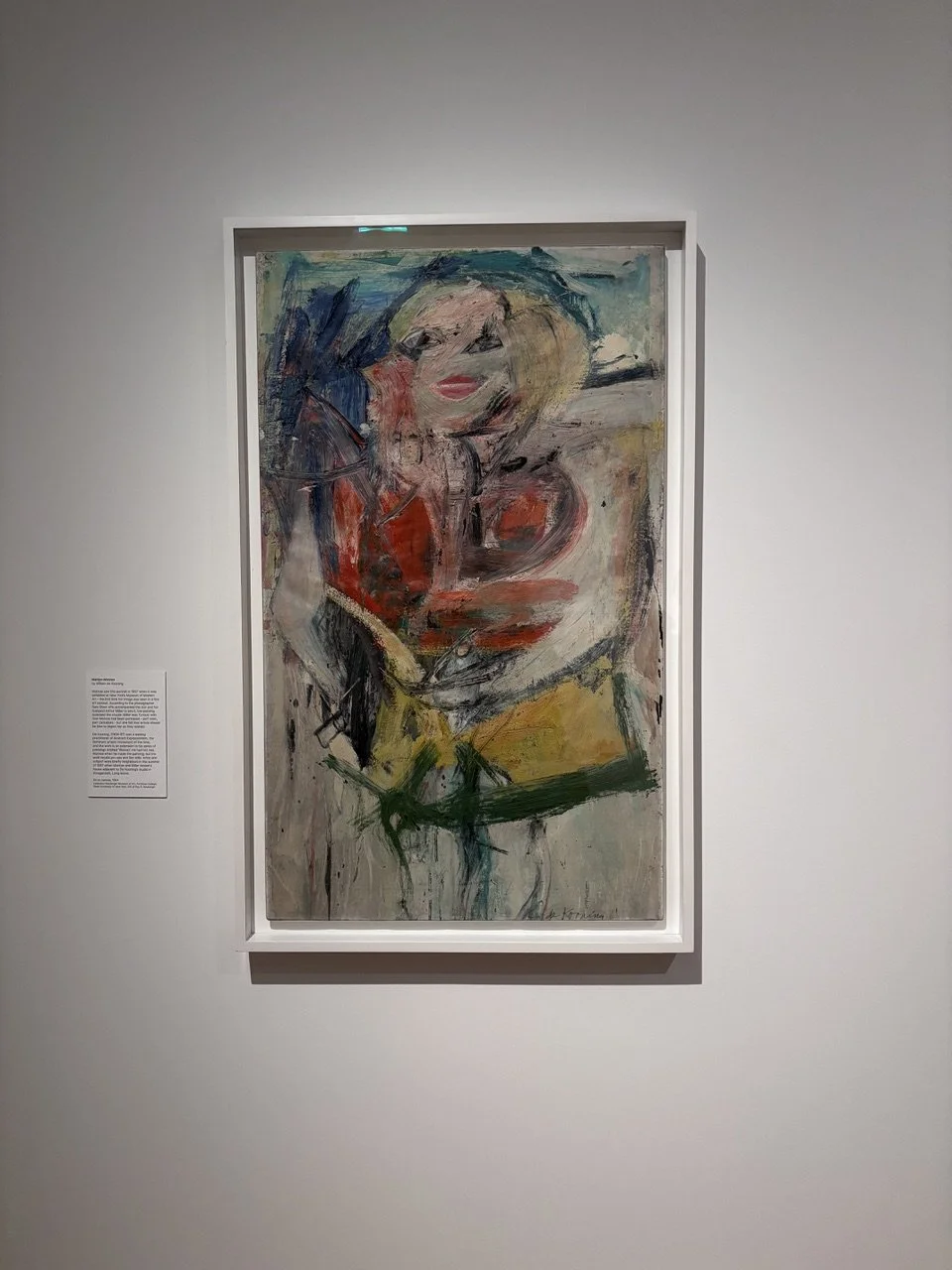
A painting of Marilyn by Willem de Kooning, 1954 - Marilyn loved it by the way! (Arthur Miller did not, no surprise. again puke Arthur Miller)
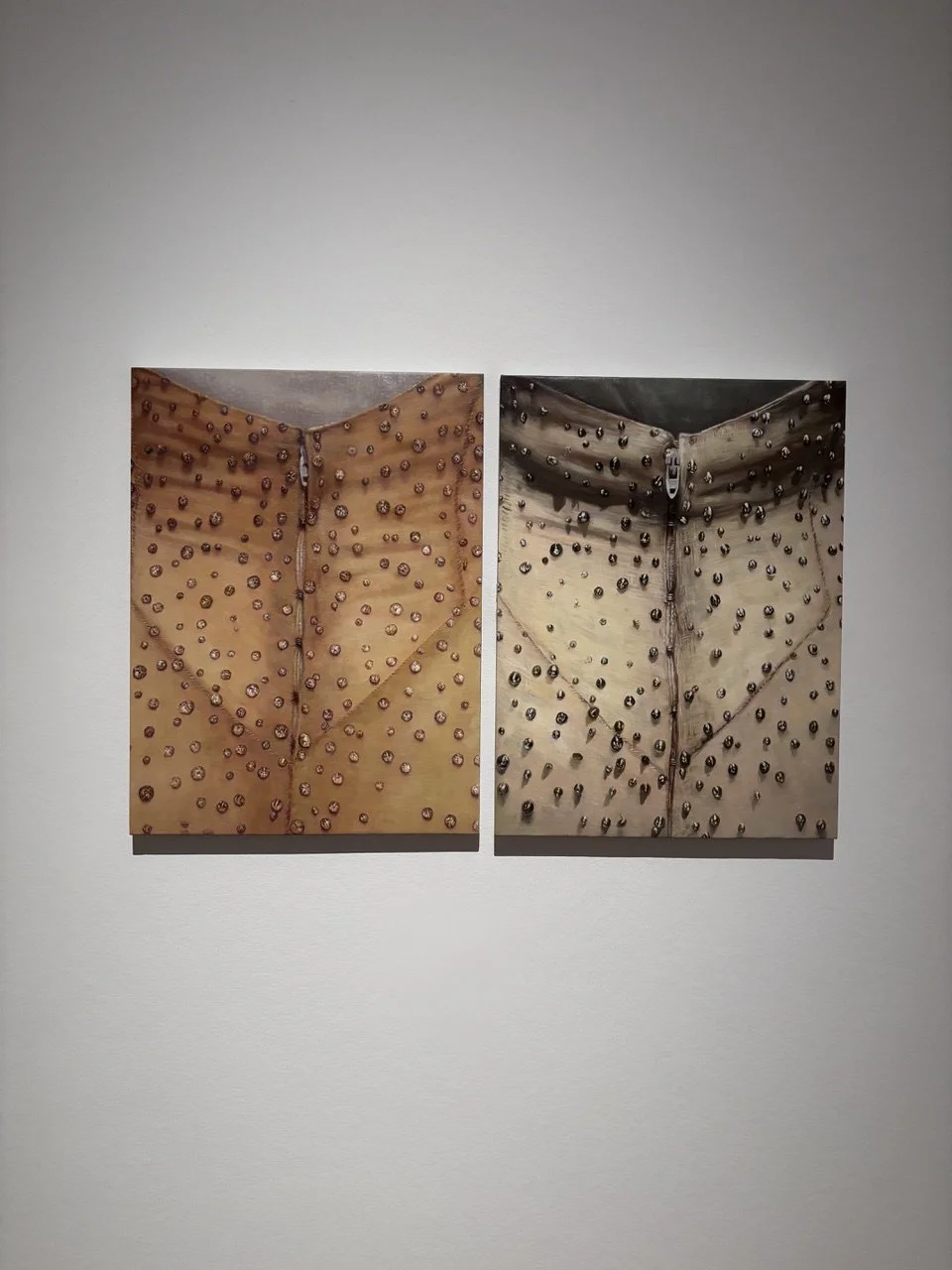
This is an artist’s commentary on what happened to Marilyn’s Happy Birthday Mr President dress when and here I directly quote Dr. Beverly Held: “Kim Kardashian put her big fat ass in it and ruined it. Such trash!”
In a world in which we are saturated with images, where the camera is absolutely pervasive and in many ways invasive of our daily lives, it was fascinating to see someone whose life was so intertwined with her image but who nonetheless maintained control of what we see and who she was. She had such integrity and was a true artist in that she was one herself but also recognized and championed the talent of others.
In 1952 in an interview with Life Magazine a journalist asked Marilyn an intimate question, “What do you wear to bed?” To which she responded “Chanel no. 5”