Song Dong at Le Bon Marché; Sheila Hicks at Musée Quai Branly
And Yayoi Kusama!
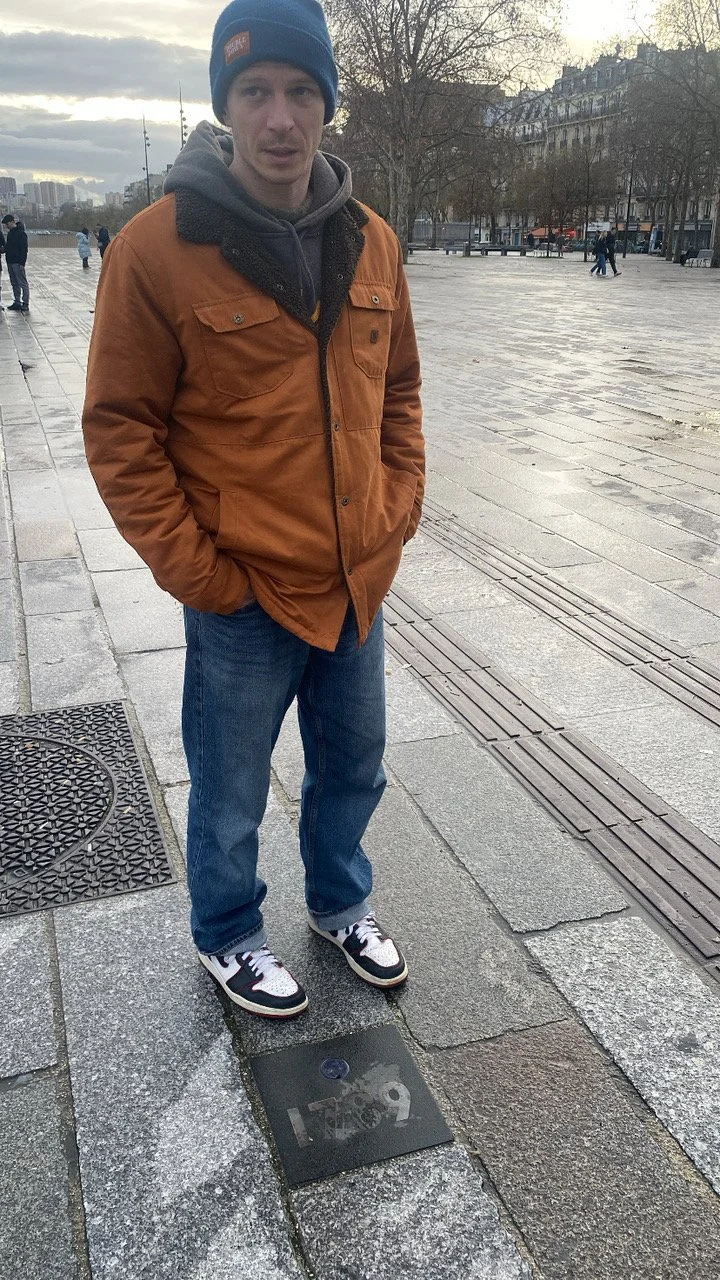
Nicolas standing on one of the many stone markers of French battles at the Place de la Bastille.
This date is surely the best known one, 1789
Bienvenue and welcome back to Musée Musings, your idiosyncratic guide to Paris and art. I’ve had a busy week, an enjoyable week, a week that could only have unfolded in Paris. One day, I went to Le Bon Marché. I started by walking - past the Place de la Bastille, where there are lots of dates on stones in the ground, among them 1789, 1815, 1830, 1848, 1871 - all battles in which the French fought, useful combinations for 4 digit codes (shh, don’t tell anyone). Then, along the Canal St. Martin/Basin d’Arsenal, across the Seine on the Pont Austerlitz to the Jardin des Plantes, where I boarded the #5 Metro. A few stops later, I was at Sevres-Babillon and Le Bon Marché.
I was on a two-fold mission. The first, of course, was to check out the sales. I never buy retail, anyone can buy retail. It’s nearly impossible not to find something, at full price, that suits you. The beginning of sales, when prices are only modestly reduced, is also not for me. Again, too many choices. I like to arrive just before the sales are over, when everything is in disarray, when you have to be an explorer to find anything.
Alas, I didn’t find anything to buy this year. Not, I think, because there wasn’t anything to choose from. I think what put me off this year was the other reason I was at Le Bon Marché. Every January, since 2016, Le Bon Marché has invited an artist to take over, to inhabit, the store’s mighty central space. And fill the windows along the rue de Sevres, too. Among the artists whose works have been displayed at Le Bon Marché during the (mostly) dismal months of January and February are Ai Wei Wei (the first artist invited to bring his magic to Le Bon Marché) and Daniel Buren (2024). This year’s artist is Song Dong, (Fig 1) a Chinese conceptual artist whose work usually includes lots of stuff. Interestingly (or maybe expectedly) all his stuff put me off accumulating more stuff for myself. In retrospect, I could also blame my lack of interest in accumulating more stuff to the fact that I bought a few things at Eileen Fisher on Fillmore St, before I left for Paris and another few items at agnès b. on Blvd Beaumarchais before I made it to Le Bon Marché.
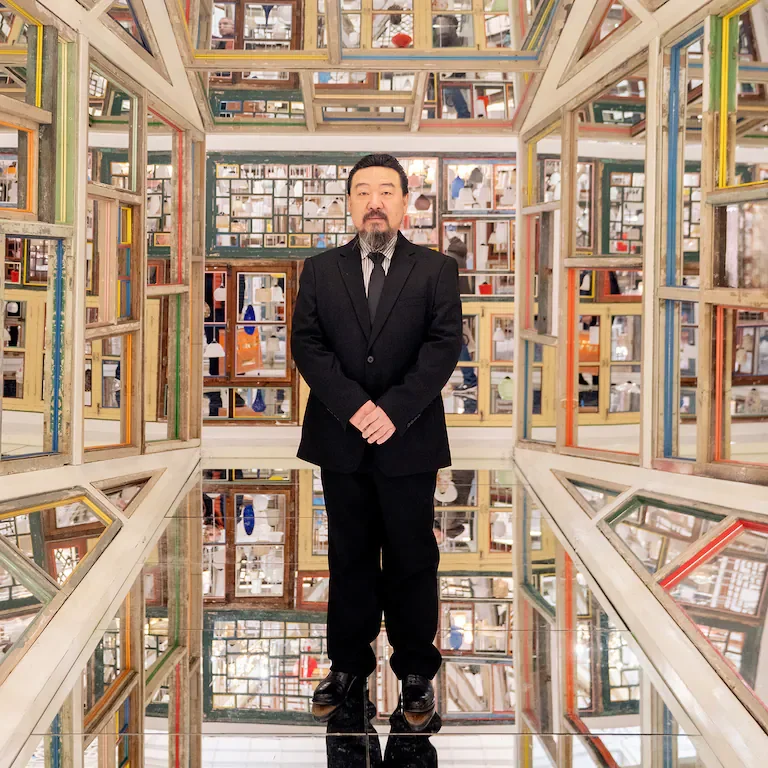
Figure 1. Song Dong at Le Bon Marché
Upon leaving Le Bon Marché, I was empty handed but delighted with having found a new artist whose work I admire and about whom I will be telling you soon. I was feeling the opposite of buyers remorse. It must have been buyers regret. I contemplated returning to Le Bon Marché a few days later in a better buying mood. But it was too rainy. Instead, I walked over to Merci and bought 3 (!) pairs of corduroy pants, at (just) 50% off. Song Dong is at Le Bon Marché until 22 February, if you’re here, GO!
Another day, I wanted to pick up a few books at the American Library in Paris. Since the library is so far from my flat, I always try to combine going there with doing something else. You guessed it, visiting a museum. There are several to choose from nearby: the Palais de Tokyo, Musée de l’Homme, Cité de l’architecture et du Patrimoine, Musée Quai Branly with the Musée Marmottan-Monet a little farther away.
I decided to go to the Musée Quai Branly because there’s a small exhibition on the work of textile artist, Sheila Hicks. (Fig 2) My dear friend Betty Werther mentioned her friend Sheila Hicks to me quite often. Why I didn’t ask her to introduce us, I don’t know. I started noticing her pieces popping up a few years ago. At the Palais Galliera for an exhibition on the photographer Paolo Roversi, known for his official portraits of Kate Middleton at 40 and models wearing Comme des Garçons creations. When I was at SFMoMA to see the KAWS show in December, a small exhibition of Sheila Hicks’ work was there, too. So, the timing of this exhibition at the Musée Quai Branly was perfect. I’ll be telling you about her exhibition, soon. It’s on until 8 March. If you’re in Paris, go see it and take time to explore this fascinating museum designed by France’s own superstar-architect Jean Nouvel.
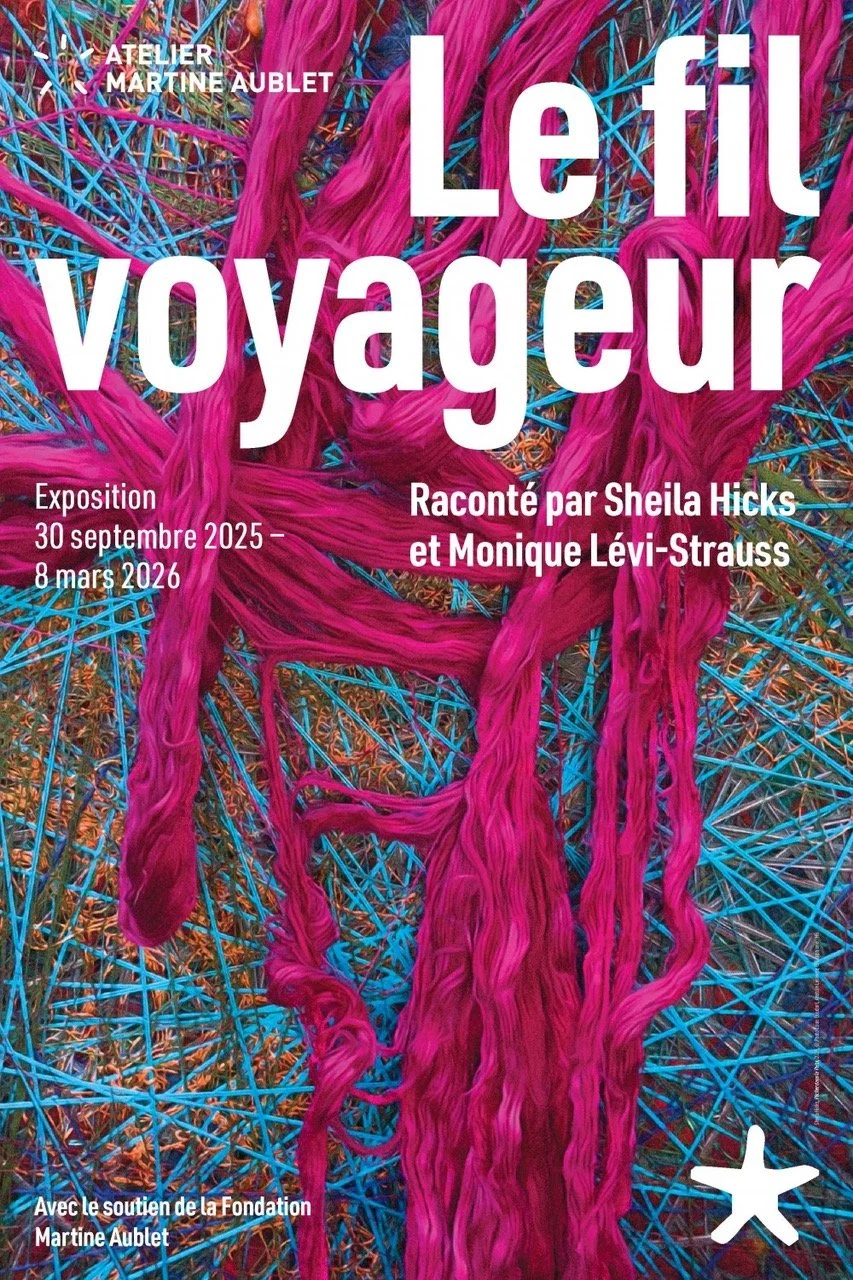
Figure 2. Sheila Hicks, Musée Quai Branly
This week, Nicolas, who flew in from Xi’an, China during his school’s winter break ahead of the Lunar New Year [February 17] to help me, and I are in the Dordogne, at Petit Bout. He’s helping me sort through more than 30 years of life. Because, drum roll please, I have finally sold my little pigeonnier. The journey to sell our 17th century ruin has been fraught with set backs and mishaps. For someone familiar with the housing market in San Francisco, the long wait and low prices in the Dordogne came as a very unwelcome shock. Our problem was simple in retrospect. We improved the property beyond what the neighborhood warranted. It’s not for nothing that buyers are told to buy the cheapest property in the best neighborhood. Instead, my husband took a ruined pigeonniere and made it into a jewel, by far the nicest house in a modest neighborhood that has more goats than people. But taking the long view …. while it was a ruin, it provided us with years of dreaming and planning. Once it became our home, it was a place where both Ginevra and Nicolas were free - of traffic, of city noise, of television. Neither of them want it and I’m a city girl, happiest either at home in the city or exploring new rural areas, ones near towns and villages with museums!!!
A new reader from the Netherlands thanked me for my post on Yayoi Kusama, who celebrates her 97th birthday next month. So today enjoy a read of Part 1 of my two part discussion of Kusama’s life and work. (Fig 3) Her journey was as difficult as her art is joyful. So maybe enjoy reading about Kusama while you wait for Bad Bunny to appear. Gros bisous, Dr. B.
“The hate gets more powerful with more hate. The only thing that is more powerful than hate is love. So please we need to be different, if we fight, we have to do it with love.” - Benito Ocasio
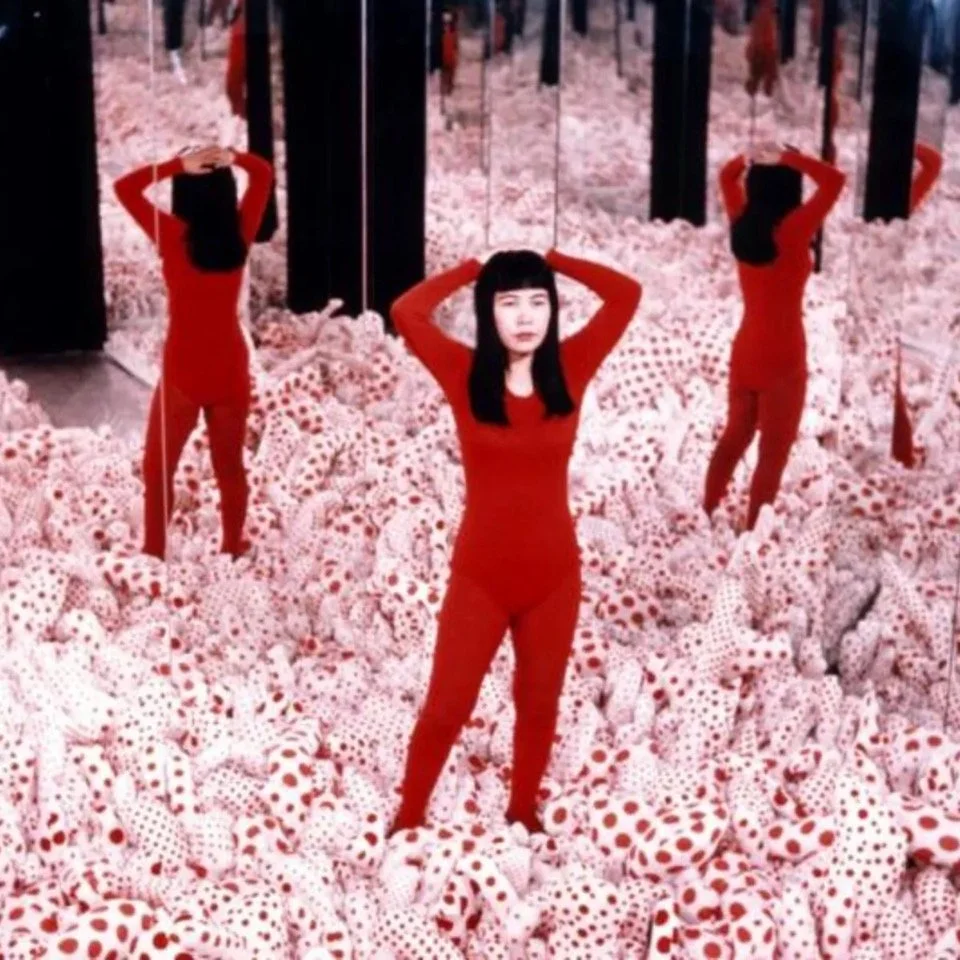
Figure 3. Yayoi Kusama, 1965