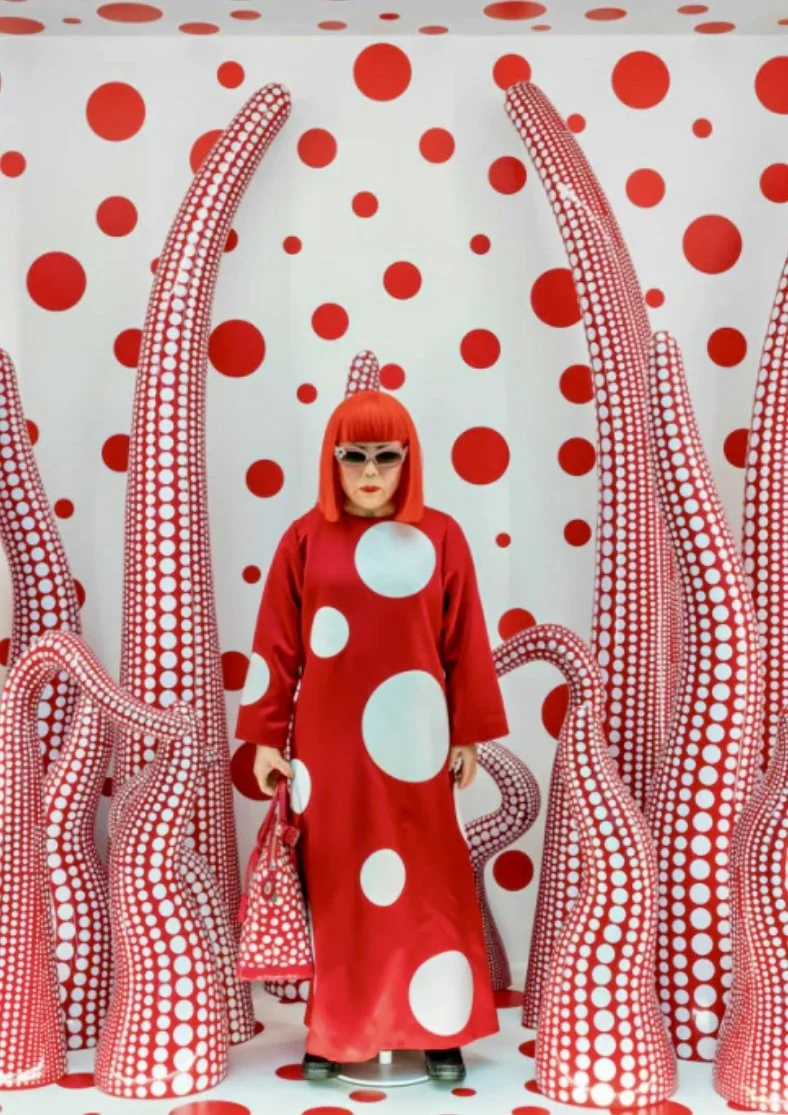
Kusama in Japan: From Surviving to Thriving
…with a Proustian prologue

Me in Infinity Room, Yayoi Kusama, Louisiana Museum outside of Copenhagen
Bienvenue and welcome back to Musée Musings, your idiosyncratic guide to Paris and art. Today, Kusama, Part II, From Surviving to Thriving. But before I get to that, a more or less public service announcement. As many of you know, I’ve become a wee bit obsessed by Marcel Proust’s masterpiece, A la recherche du temps perdu. When I finished reading it, I felt lost. I tried to self medicate by reading books about Proust, facilitated by my friend Melinda’s husband, Arnie. When Melinda died, Arnie invited me over to look over Melinda’s Proustiana and take any books that interested me. Since I anticipated that Arnie would extend the same gracious offer to members of Melinda’s Proust book club, I prudently took only a few, okay, maybe 5, books by authors who wrote about how Proust had inspired them in one way or another.
But it didn’t really help. So I decided that if David Hockney could read A la recherche du temps perdu at least twice, I could, too. And I am here to tell you that what people say about reading books again is true. It’s not the same book because you are not the same reader. In both simple ways and profound.
Here are a few examples. The first time I read A la recherche du temps perdu, I had only been to some well known places in Normandy - like Rouen, Deauville and Honfleur. Since then, I have made Proust’s beloved Cabourg and nearby Dives-sur-Mer my base for short winter and long summer holidays. So this time, when I read the names of places the author mentions, I know where he is talking about. This summer, for example, we were driving from Dives to Honfleur and passed a town called Pennedepie. Which didn’t sound very French to me. I remarked upon the strangeness of the name and then mostly forgot about it. The next week, back in Paris, as I was finishing Book 4, Pennedepie popped up. The pompous Professor Brichot, whose passion is the etymology of place names, explains the name Pennedepie to the narrator who (like me) considered it a “name that was at first sight as individual as the place itself,” a name “…as coarse, savory and hard as a certain Norman cheese.” Don’t ask me what cheese, the author doesn’t say. Brichot, explains that the name is from the Gallic word ‘pen' which means mountain which linguistically links Pennemarck (in Brittany) and Pennedepie to the Apennine mountains.
My summer hometown Dives-sur-Mer appears at the beginning of Volume 5. It was from Dives that William the Conqueror set out to conquer England. The street on which I stay is rue Hastings, which has nothing to do with Poirot’s sidekick and everything to do with the battle celebrated in the Bayeux Tapestries. Proust compares an Innkeeper in Dives to Mme de Guermantes, “a woman who knows the charm of what she possesses and is not going to spoil it with a coat of modern varnish.” Just like the “Norman innkeeper, landlord of the "William the Conqueror" at Dives, who had carefully refrained—a rare thing indeed—from giving his hostelry the modern comforts of a hotel.”
Another reference that I hadn’t understood the first time I read the book, I understood this time around. At the beginning of Book 5, the narrator’s mother chastises him for behaving like Charles de Sévigné. I knew who she meant this time because I have recently written about the exhibition at the Musée Carnavalet, on Mme de Sévegné. Charles de Sévigné was Mme de Sévigné’s son. He was, like his father (who was killed when Charles was a baby, in a dual over a mistress) a spendthrift. The Narrator’s mother tells him that “It is distressing enough that, like Charles de Sévigné, you do not know what you want .. but do try at least not to be like him in spending money so that I may never have to say of you: ‘He has discovered how to spend and have nothing to show, how to lose without gambling and how to pay without clearing himself of debt.’ Using Charles de Sévigné’s extravagant behavior as a cautionary tale, the Narrator’s mother implores her son not to be so extravagant, not to spend so much money on Albertine. (Figs 1-3)
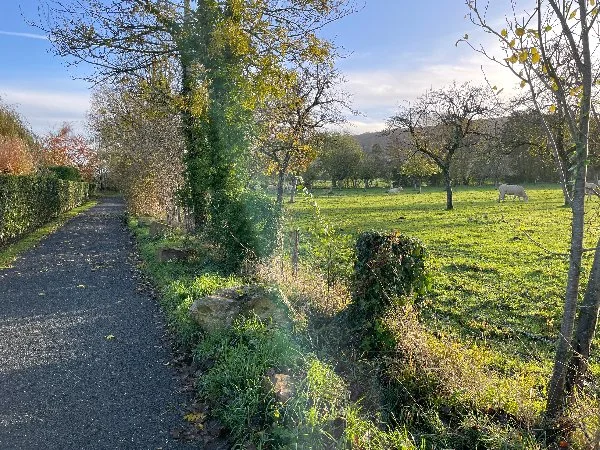
Figure 1. Pennedepie, Normandy, France
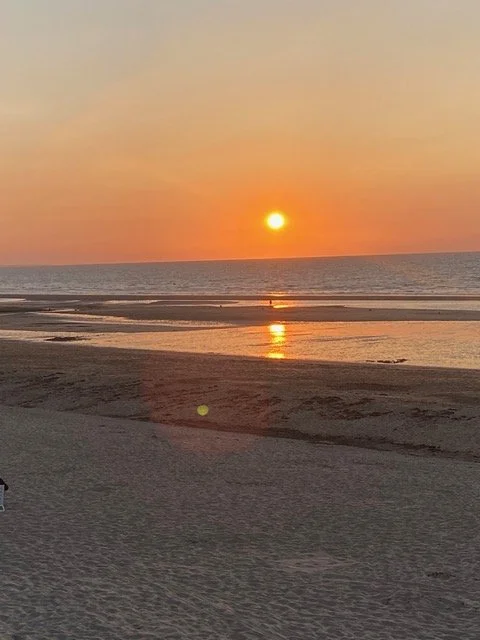
Figure 2. Dives / Houlgate Beach at sunset
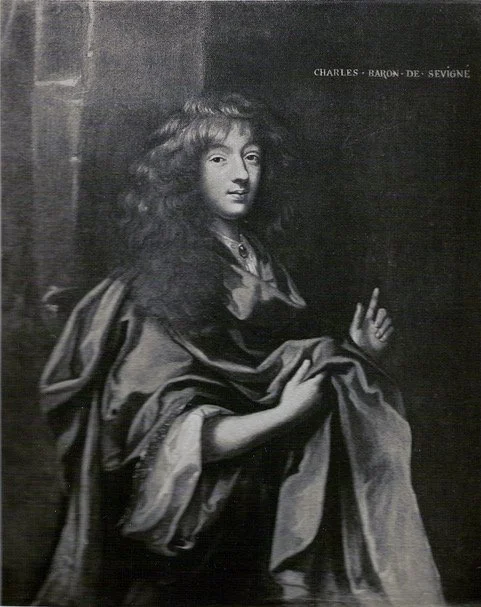
Figure 3. Charles de Sévogné, Mme de Sévogné’s spendthrift son
But it’s not just geographical and historical references, it’s personal ones, too. I have gotten to the point in my life when I recognize myself in photos of my mother at my age more than in photos of myself when I was younger. The way in which the narrator described his mother really resonated with me. (Again Volume 4) “For a long time past my mother had resembled my grandmother, far more than the young and smiling Mamma that my childhood had known.” As I get into the homestretch of finishing Proust’s masterpiece for a second time, before I tackle it for a third, I think I will reread Virginia Woolf’s books or maybe I should finally read Middlemarch. Gros bisous, Dr. B.
Now let’s follow Yayoi Kusama artistic journey in Japan: