Down a Rabbit Hole of Research to Fill a Lacuna:
Mme de Sévigné at Musée Carnavalet
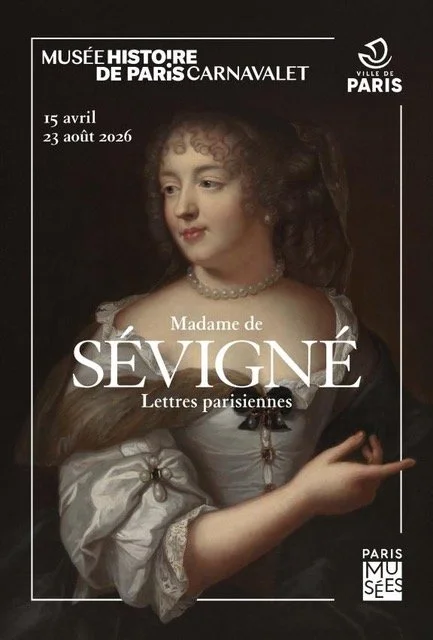
Bienvenue and welcome back to Musée Musings, your idiosyncratic guide to Paris and art. As soon as the Musée Carnavalet began advertising their exhibition on Mme de Sévigné, I impatiently waited for it to open. Why? Proust, of course. Let me admit that I knew Mme de Sévigné’s name but not much more before the grandmother of Proust’s narrator in A La Recherche du Temps Perdu began quoting from her letters, more or less non-stop. Reading Mme de Sévigne was her cure for whatever ailed anyone, including her grandson, the book’s narrator. When he suffered from insomnia, for example, she told him to, ‘read something,’ and handed him a volume of Mme de Sévigné’s Letters.
That was art mimicking life. At the exhibition ‘Proust Côté Mère’ (2022) at the Musée d'Art et d'Histoire du Judaïsme (MahJ), I learned that Proust’s mother Jeanne, was well-educated, well-read and well known for citing authors like Molière, La Fontaine, Racine and Madame de Sévigné. Following her own mother’s example, her correspondence was filled with quotes from Mme de Sevigne’s letters. And according to one biographer, to Marcel, his grandmother Adele (his mother’s mother) seemed “more Sévegné than Sévigné herself.” (Figs 1, 2)
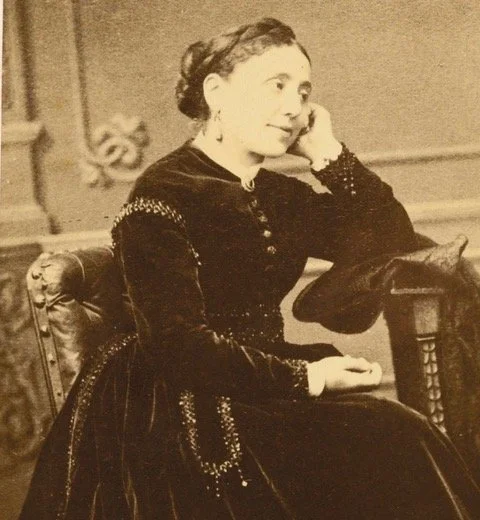
Figure 1. Adele Weil, Marcel Proust’s grandmother
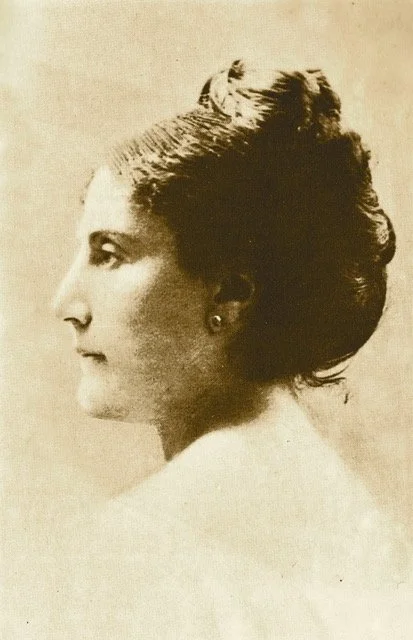
Figure 2. Jeanne Proust, Marcel Proust’s mother
According to Alvin Labat, (Proust’s Mme de Sévigné, L’Esprit Createur, 1975), the recounting of “events, people, and places … over long periods of time…aristocratic and literary names charged with symbolic significance, the enchantments of nature, country life and the world of the salon…are characteristics” of both Proust’s novel and Mme de Sévigné’s letters. In the novel, the narrator’s grandmother is the 'literary counterpart’ of Mme de Sévigné. These two mothers share an “esthetic response to reality, shaped and refined by maternal love….Mme de Sévigné’s art (her letter writing) was born of necessity; (her daughter) Mme de Grignan's absence (she moved to the south of France when she got married) was directly responsible for its development and perfection.” (Figs 3 - 9)
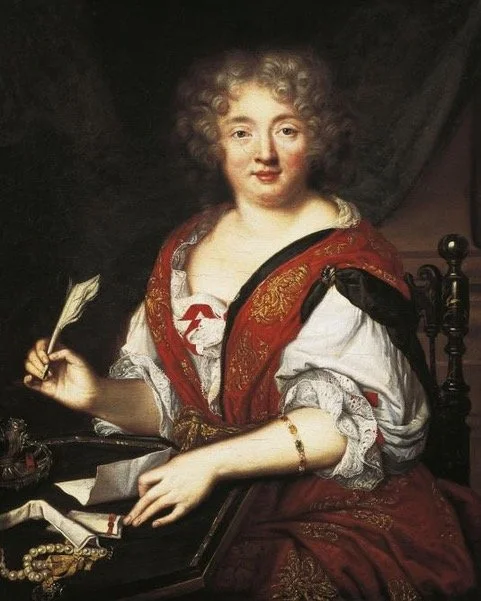
Figure 3. Mme de Sevigne writing
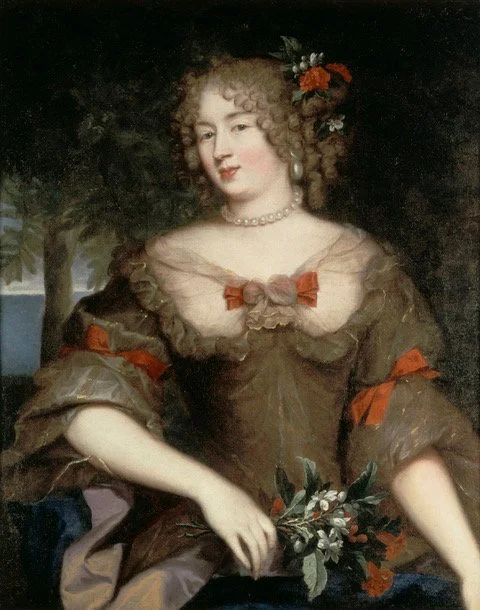
Figure 4. Mme de Grignan, née Françoise de Sévigné (Mme de Sévigné’s daughter)
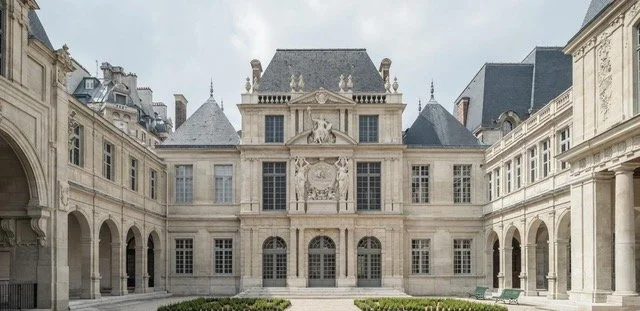
Figure 5. Musée Carnavalet, now a museum, it’s where Mme de Sévigné lived for nearly 20 years, from 1677 until 1696
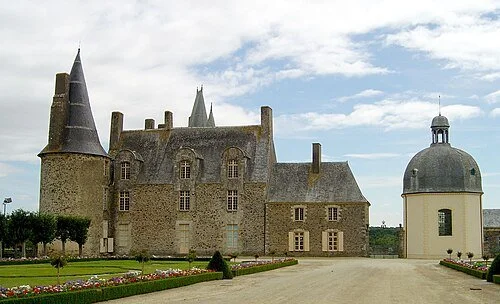
Figure 6. Les Rochers, Brittany, home of Mme de Sévigné’s husband, Henri de Sévigné
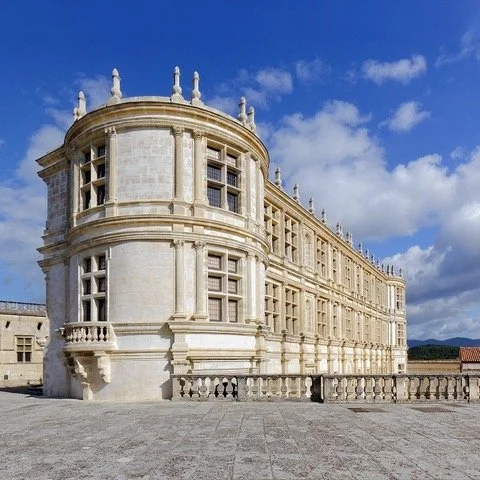
Figure 7. Chateau de Grignan where Mme de Sevigne’s daughter lived after she married located in Drôme Provençale.
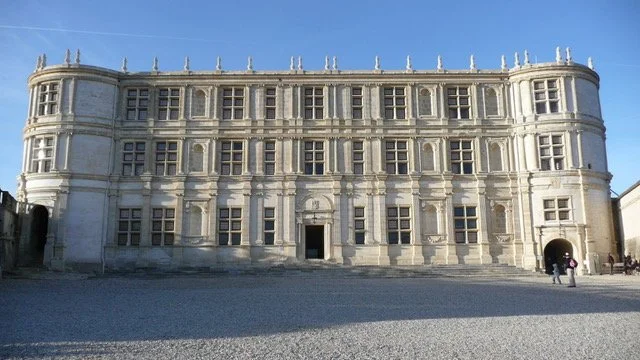
Figure 8. Chateau de Grignan, another view, Mme de Sévigné stayed with her daughter here often
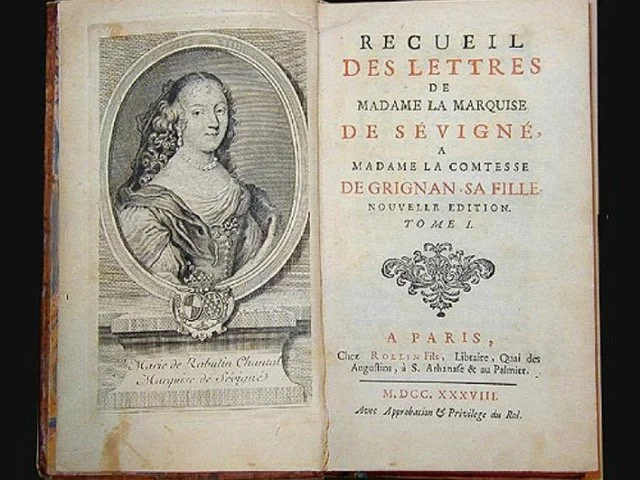
Figure 9. Letters written by Mme de Sévigné to her daughter, published after Mme de Sévigné’s death
Pierre Pachet (Lectures de Mme de Sévigné chez Proust, 2016) put it this way, “Proust ’s familiarity with (Mme de Sévigné’s) letters is evidenced by “the precise understanding of them he attributes to his characters.” And it wasn’t just the grandmother, mother and narrator who quote the Letters and speak to one another ‘using their phrasing,’ Mme de Sevigne pops up elsewhere, too. In the second volume of the novel, Madame de Villeparisis tells her nephew the Baron de Charlus, that she "saw a touch of literary affectation in that despair at being separated from the tedious Madame de Grignan…” According to Pachet, Mme de Villeparisis assessment “was not without merit, given the notoriously difficult relationship between mother and daughter. “To which Charlus replies: "But the important thing in life is not what one loves, it is ‘to love.”
Dear readers, I must confess that I missed Mme de Vileparisis’s description of Mme de Sevigne’s daughter as ‘tedious’ when I read “Within a Budding Grove” the first time and missed it again on my second reading. I don’t remember Mme de Sévigné’s daughter being called tedious in the exhibition about Proust’s mother at MahJ in 2022 or in the exhibition about Mme de Sévigné currently on at the Musée Carnavalet. But, as a mother, it certainly piqued my curiosity.
The idea of writing more than 1700 letters during a 25 year period (that’s 2 to 3 letters a week) interspersing “intimate sentiments with news from the Court and the City” to a ‘tedious’ person with whom you have a contentious relationship is difficult to imagine. But once I started looking, I found lots of references to Mme de Sevigne’s strained relationship with her daughter. In a 1984 New Yorker review of a biography of Mme de Sévigné written by Frances Mossiker, Naomi Blivin, writes that Ms Mossiker chose to focus on the relationship between mother and daughter because “the Marquise’s anguished involvement with her daughter, (comes) closest … to twentieth-century readers, who are unlikely to know anything resembling the glamour and splendor of the Marquise’s world but are certainly somebody’s children and possibly somebody’s parents.”
Mme de Sévigné’s daughter, who became the Countess Grignan when she married, at age 25, a man 14 years her senior, is described as “beautiful, intelligent, and graceful but widely detested.” She danced in ballets at court, often with Louis XIV himself and yet her cousin Roger de Bussy-Rabutin (a contemporary of her mother’s) wrote of her in 1678, “That woman has wit, but wit of a bitter kind, and her pride is insufferable. She will make herself as many enemies as her mother has friends and admirers.” Mrs. Mossiker thinks that the Marquise’s worship of her daughter is proof of Proust’s theory that “one loves most where one suffers most.” Or, as Baron de Charlus put it, the quality of your love isn’t diminished if the object of it doesn’t deserve it.
Why was Mme de Sevigne’s daughter so unpleasant. Was it Mme de Sevigne’s fault? Her daughter seemed to think so. One of her daughter’s complaints was apparently that her mother overshadowed her. To which Mme de Sevigne replied, “I do not like to hear you say…that I was like a curtain which concealed you…What if I did once overshadow you? You were simply all the more dazzling when the curtain was drawn aside.”
To her daughter’s insistence that they were incompatible, Mme de Sévigné wrote, “I will always be attracted to some light reading because I have lowbrow tastes like your brother. Abstract thoughts come naturally to you, but not to me….Even if my hypersensitivity and the unwarranted accusations I made have sometimes caused friction between us, I implore you to make allowances for these failings of mine.” Oh dear.
Mme de Sévigné started writing letters at age 20 and continued writing them for the next 50 years, until her death at age 70, in 1696. It wasn’t until she was in her late 40s that her daughter became her primary correspondent. Her first letters were written to a small circle of friends to whom she recounted, with a breezy, open style, what she was doing wherever she found herself, whether that was Paris or the countryside. When Mme de Sévigné’s correspondents received her letters, they shared them with others - reading them aloud and discussing them. Copies of her letters were sent to friends farther away, further enlarging the circle of friends and friends of friends who read Mme de Sevigne’s letters. As Naomi Blivin notes, Mme de Sevigne was “a beauty, a wit, and a charmer,” someone people naturally flocked to, someone people talked about and someone who, thanks to her letters, they quoted. Mme de Sevigne wanted to please others, she was responsive to them. One of the few people (the only person?) who resist Mme de Sevigne’s magnetism was her own daughter. As a mother, I find Mme de Sevigne’s often unsuccessful efforts to please her daughter a little disturbing and a little comforting, too.
Before newspapers became a thing, letters written and shared, both orally and through hand printed copies, were the way in which information was disseminated. Mme de Sevigne’s letters were popular because they were full of her personal take on the events of the day and of course, because they were well written. One could say that she was an early adapter of this important form of communication. In a documentary about Mme de Sevigne hosted by Stephane Bern called, “Secrets d’histoire - La marquise de Sevigne, l’esprit du Grand Siècle,” one of the historians went even further - he described Mme de Sevigne as the best known bloggeuse (blogger) of her day!
What motivated Mme de Sevigne to spend so much time writing letters to friends and family far away? Could her childhood or her husband provide clues? Let’s take a look. Mme de Sévigné was born Marie de Rabutin-Chantal, in Paris, in the Place des Vosges (then the Place Royale) in 1626 (400 years ago this year, hence the exhibition) into a wealthy Burgundian family. Her father, the Baron de Chantel was killed in battle when she was 18 months old. Her mother was dead before she turned seven. Her maternal grandparents assumed responsibility for her but within 3 years, they were gone, too. It was a childhood filled with death. Her mother’s brother became her guardian. It was he who made sure that she received an excellent education.
In 1644, when she was 18 years old, she married Henri, Marquis de Sévigné, a nobleman from Brittany who was “allied to the oldest houses of that province, but with no great estate.” Which I suppose means that he didn’t have any money. According to Wikipedia, Henri was a serial philanderer who spent money recklessly. Thankfully, the Marquise’s uncle exercised financial oversight of her fortune and was able to keep much of it separate from her husband. As an aside, we all know that rich American heiresses married impoverished European nobility in the early years of the 20th century. Now we see that poor guys marrying rich girls was a thing long before the American Robber Barons bought titles for their daughters. As another aside, a woman who attended one of my watercolor workshops in the Dordogne was a member of the Singer family (sewing machine fame and fortune). When her grandmother married a penniless French nobleman, her father put into his will that none of the money she was going to inherit could be used to renovate his family’s chateau. That’s one of the surest ways to burn through a fortune.
Two years after their wedding, Mme de Sevigne gave birth to a daughter, Francoise. Two years later a son, Charles was born. According Blivins, Mme de Sevigne “seems not to have known unkindness until she married. Her husband, a good-looking young Breton noble, was one of the few men on record who did not admire her.” While she and their two children stayed in his family’s medieval chateau in Brittany, the Marquis was in Paris spending his time and as much of her money as he could, on courtesans. He was 28 when he was killed in a duel over one of those courtesan. When Mme de Sevigne became a widow at 25, she had two small children and because of her uncle’s foresight, most of her fortune intact. Although, in that regard, it helped that her husband died so young. (Fig 10)
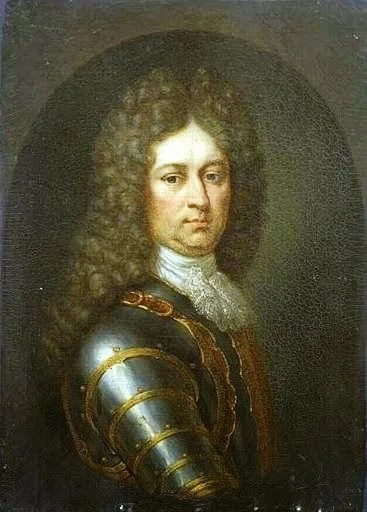
Figure 10. Henri de Sévigné, Mme de Sévigné’s husband who died in a dual at age 28
Is Blivins’ reading of the Marquis de Sevigne’s indifference to his wife a 20th century feminist read on the couple’s relationship? Theirs was an arranged marriage and male philandering was a way of life amongst the nobility (who could afford it). Several of the scholars interviewed for the Bern documentary were of the opinion that the Marquise chose to avoid intimacy with her husband after the birth of their son. It wasn’t quite ‘heir and a spare’ but two children was enough, at least for her. She wasn’t motivated by religion or pudeur, it was survival. She knew the statistics. Every time a woman got pregnant in the 17th century, the odds were good that she would die in childbirth. And if childbirth didn’t rob her of her life, multiple pregnancies would have stolen her youth and figure. This reading seems more plausible when one reads one of the letters she wrote to her daughter urging her daughter to stop having marital relations with her husband. Her daughter’s response was that she and her husband were planning to sleep in separate beds. Mme de Sevigne replied that two beds was not enough of an impediment and urged her daughter to have someone sleep in the bedroom with them!
Mme de Sévigné was right to urge caution. Her daughter was pregnant at least 9 times including miscarriages and stillbirths and early deaths. Two of her daughters lived into their 60s, one into her 50s. One son lived into his 30s, another into his 40s although neither had children. Her husband had been widowed twice, his first wife died 6 years after they were married, his second wife died in childbirth. When, at 37 he met Françoise de Sévigné who, at 25 was almost too old to get married, he was happy to have her money when he got it, although it didn’t keep them from eventual financial ruin. (Fig 11)
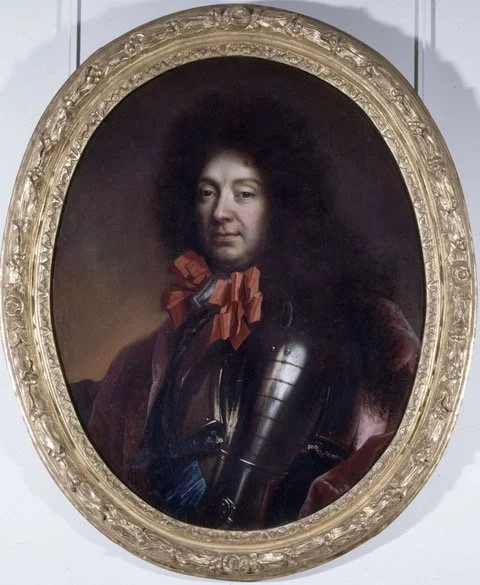
Figure 11. François de Grignan, Mme de Sévigné’s son-in-law who outlived his younger wife by 9 years.
Not wanting to get pregnant or infected with a sexually transmitted disease were practical reasons for not remarrying or becoming someone’s mistress. The Bern documentary suggests that Mme de Sevigne brief sexual experience in an arranged marriage hadn’t impressed her much either. Sure she flirted with the attractive noblemen who came her way. But their goals were different from hers. They flirted with the intention of eventually bedding her. She flirted as an end in itself.
The documentary also discussed Mme de Sevigne’s decision not to remarry in the context of a group of women, of which she was a member. Labeled les Précieuses by their detractors who mocked them and their ‘precious’ manners, they were an intellectual, witty and educated group of mostly women who met most often at the salon of the Marquise de Rambouillet. In the chambre bleue of her Parisian hotel particulier, they escaped the political factionalism and coarse manners of the royal court during Louis XIV’s regency. (Figs 12, 13) They spoke and wrote in a style rich with periphrases (using more words when fewer would do - a disease I think I may have inherited from them), hyperbole and puns. The theme of their conversations and writings was most often courtly love. Not crude carnal love, but an idealized, poetic love, devoid of physical intimacy.
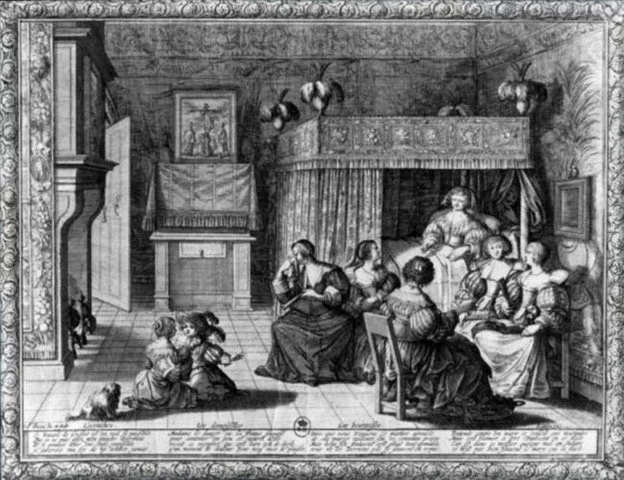
Figure 12. Chambre bleue of Mme de Rambouillet
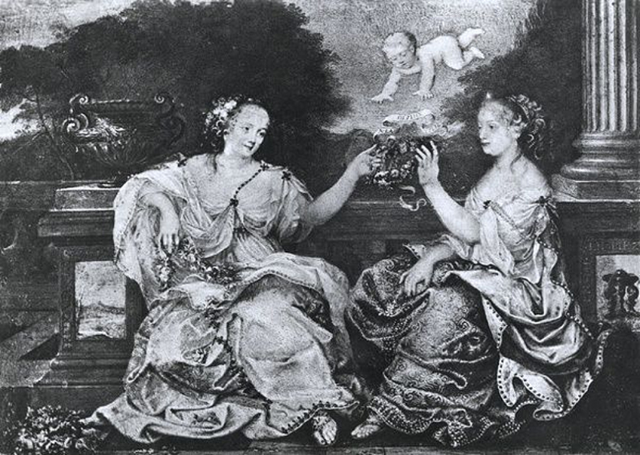
Figure 13. Mme de Rambouillet and her daughter
Courtly love was developed in the Middle Ages by the troubadours of southern France. (Figs 14, 15) A highly conventionalized tradition, it celebrated the unconsummated love between a knight and a married noblewoman when such a love was regarded as an enriching, improving, ennobling passion. Medieval literature is filled with examples of knights setting out on adventures and performing various deeds for their ladies. From the Middle Ages onward, gallantry and courtesy were the norms at Court. The tradition was alive and well during the reign of King Henri III who surrounded himself with courtiers and imposed strict etiquette. But it all declined with his successor, Henri IV and disappeared during the Regency of Louis XIV. What choice did les Preciouses have other than to flee this crude court and gather in their own refined salons.
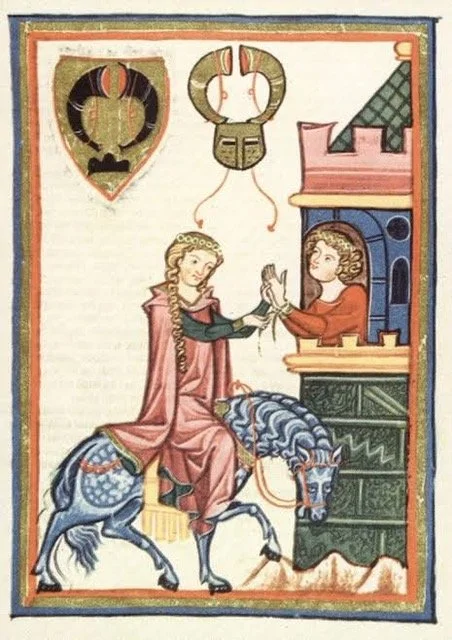
Figure 14. Medieval representation of Courtly Love
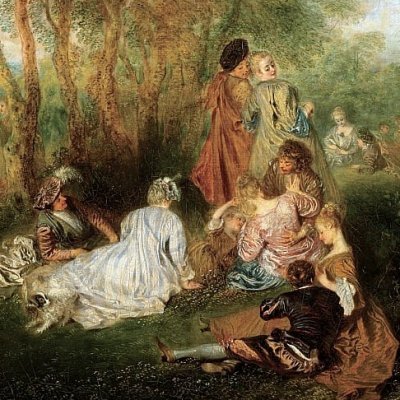
Figure 15. Mostly courtly love except for man who grabs woman in pink (her back toward us) and making a terrible ‘faux pas’ Antoine Watteau
Members of the group included Madeleine de Scudéry (1607-1701), author of Recueil des femmes illustres (Collection of Illustrious Women) who encouraged women to enrich their education to better participate in the literary life of their time. Mme de Scudéry’s books embodied the preciosité concepts that she and the other members of the group held dear - feminine elegance, etiquette and courtly platonic love. The latter was a theme hugely popular with these women, but which was, not surprisingly, scorned by most of the men they knew, among them Moliere who satirized the precieuses in his comedy Les Preciouses Ridicules (1659). (Figs 16, 17)
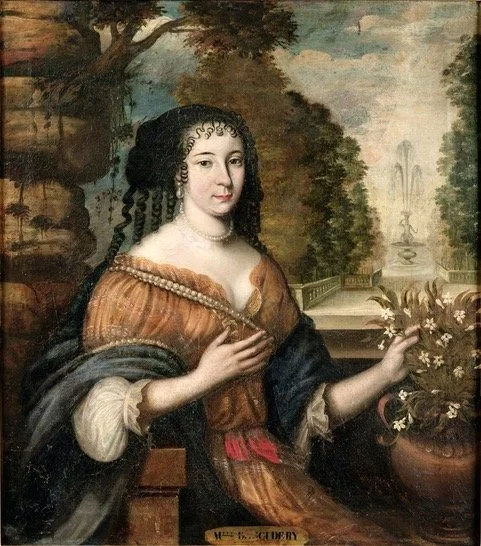
Figure 16. Madeleine de Scudéry
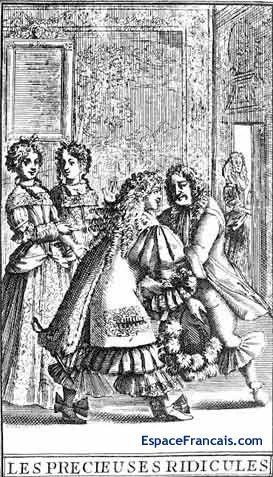
Figure 17. Les Précieuses Ridicules, Molière
One source calls these women feminists before their time, rejecting as they did marriage, which they believed restricted their freedom. So, Naomi Blivins was right to give Mme de Sévigné’s reaction to marriage a feminist slant. And yet the decision not to marry was courageous, especially when wealthy widows in Europe and New England were accused of being witches, mostly by men who wanted their fortunes. Mme de Sévigné lavished money on her adult children. They could hardly accuse her of withholding their patrimony. Which was too bad since both of them inherited their father’s profligate gene.
Right, the exhibition on Mme de Sévigné at the Carnavalet. Next week, I promise! Gros bisous, Dr. B.
Readers Comments - thank you so much I love hearing from you!
Comments on:
A little bit of Normandy, a little bit of Paris and a little bit (too much) of Versailles
Loved reading about how you and Ginevra managed to still make the most of your time together through the heatwave in Paris that we keep hearing about. Hope it has started to cool off a bit by now! Sydney, Portland, Oregon
It was interesting to read about Lee Miller and her career as a war photographer--and her bathing in Hitler's bathtub. She was born in Poughkeepsie, NY at a house on the corner of S. Clinton St. and State St. Her father was CEO of a large manufacturing company. Her brother, John, was also an interesting character. He was one of the first pilots in the area and flew for about 75 years up until age 100; he died at 105., Vincent
Thank you, Beverly, I enjoyed the introduction (for me) to Joseph Cornell. And I loved that you shared some of your own collections. My favorite of yours was the little bottle of Beverly. I, like you, have a name that you don't often find on fun things to buy so I understand how special it is when you discover something that does:-) Keep enjoying and sharing! Sydney, Portland, Oregon
I LOVED your daughter’s article. Watch out she may take over your spot.
Are you getting prepared for tomorrow’s crazy day in France. My women’s club is having a special Bastille Day lunch and speaker. ( not about soccer but about Lafayette. Enjoy the festivities. Deedee, Baltimore