Claude Monet to Sarah Moon
Bienvenue and welcome back to Musée Musings, your idiosyncratic guide to Paris and art. Today is art, although the events of the past two weeks continue to haunt. I’m not quite ready to ‘turn the page.’ and ‘stay in my own lane,’ as someone told me to do when I lamented the direction the U.S. was turning under our dear leader.
The demonstrations here on October 24 were much calmer than those the week before. Calm that is until the end of the day when the casseurs came out, as one commentator put it, to “play their cat and mouse game with the police.” But in cat and mouse games, the cat usually wins. In the confrontations with the police, the casseurs seem to win. Maybe it’s more like cat and rat games and I think cats are afraid of rats.
Casseurs ‘traditionally’ show up at the tail end of demonstrations, so their early arrival on October 17 was an aberration. The destruction and suffering caused by what the government allowed to happen on that Saturday reminded me of the violent attacks against Jewish businesses and neighborhoods during Kristallnacht (night of the broken glass). In Germany and Austrian on November 9, 1938, Nazi paramilitary forces, the "Brownshirts" instigated and perpetrated violence, destruction and looting. Three words that alas describe to a tee what happened here on October 17. Although the far left has traditionally been anti-racist, not anti-semitic, in this century there’s been a shift from anti-imperialism to anti-zionism to anti-semitism. As critics have noted, anti-semitism has historically been the domain of the far-right, which is now trying to position itself, under Marine Le Pen, as pro-Israel. While parts of the far left, such as La France Insoumise, led by Jean-Luc Mélenchon, that party’s candidate for President, has conflated anti-Zionism and criticism of Israel into a general antisemitism “under the guise of anti-imperialism”
What happened at the U.S. Capitol on January 6, 2021 was encouraged and manipulated by the candidate who lost the election. Who sanctioned what happened here in France? Can it really have been ineptitude on such a grand scale? Ineptitude is better than intention but either way, it’s not good. This whole past week the conversation has centered around violence. One commentator noted that when the politicians elected to do their jobs don’t, there is violence on the streets in France. According to historian David A. Bell (New York Times, Oct. 9, 2026) “Protests are so embedded in French political life that ‘the streets’ are considered a fourth branch of government, a last resort when the legislative, executive and judicial are unresponsive.” As I worked my way through the propositions that weighed down my San Francisco ballot, I can understand the problem but maybe not the solution. Politicians not wanting to take the blame, (there’s never any credit), let citizens vote on deceptively written propositions.
The other issue discussed this past week was what was likely to happen on Halloween. We were told not to open our doors to young men, dressed in black, wearing masks. They won’t be trick or treaters, we were told, but casseurs wanting to get into private homes to break things. Is that possible? We’re being warned about home invasions? Am I back in the United States? Anticipating the midterm elections without one bit of confidence, I wonder if there’s anyone anywhere who knows what s/he’s doing.
So right, back to art. A few weeks ago, my cousin Kathy, who lives in Oxford, was here. Her mid-July arrival coincided with one of the canicules (heatwaves) that ruined summer here. When we realized how hot it was likely to be, she decided that an air-conditioned hotel room would be better for us (well certainly for her) than sleeping on the sofa bed in my living room and trying to amicably share my single fan.
Our museum visits did not go well. In the Bourse Rotunda, the Cloud exhibition was a disappointment. The glass dome of the Rotunda let in so much heat that it felt more like a steam room than San Francisco on a normal August day. A guide told us that the hot Fog was ruining the Bourse floors. (Figs 1, 2) On 14 Juillet, we went to see French Revolution paintings and objets at the Musée Carnavalet. But we couldn’t. The museum is not air conditioned and the hot second floor, (where the 18th century stuff is), was closed to visitors. The objects had been removed and put into (cool) storage areas.
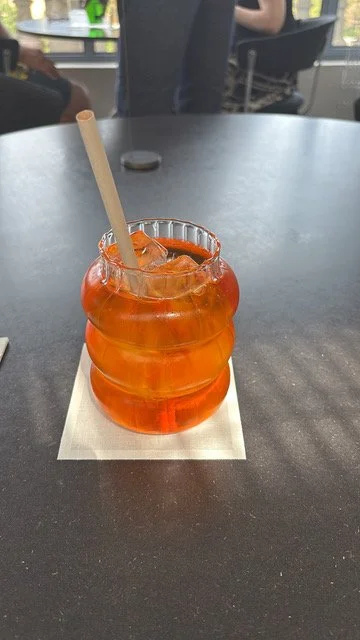
Figure 1. The refreshing non-alcoholic drink I enjoyed in the restaurant at the Bourse
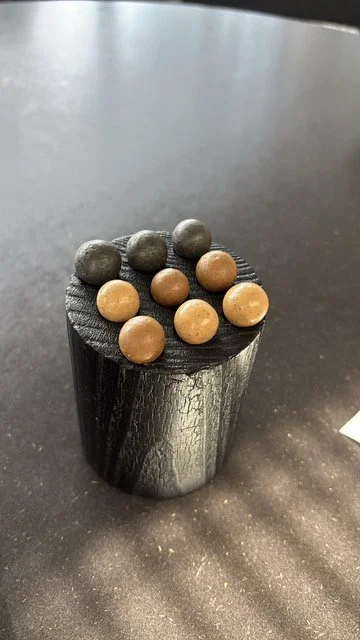
Figure 2. The chocolate bonbons that accompanied our drinks, looks more like a game of tic, tac toe
This time, the weather was fine, there was even a slight chill in the air. And then, I got a cold, the first symptom of which was laryngitis. I texted Franny who had just arrived from San Francisco. She was delighted to join us on our outings which gave Katherine a new friend to chat with and I could avoid straining my voice.
Katherine gave me carte blanche for deciding where to eat (I’ve written about that here: Food for Thought) and what exhibitions to see. There were lots to choose from, so many had just opened to coincide with the Rentrée, the return to school after the summer holidays. It’s the beginning of the year in France. It’s been the beginning of my year, every year ever since I was a student and then a professor and then a mother of students, a title I reluctantly relinquished a decade ago when Nicolas graduated from art school.
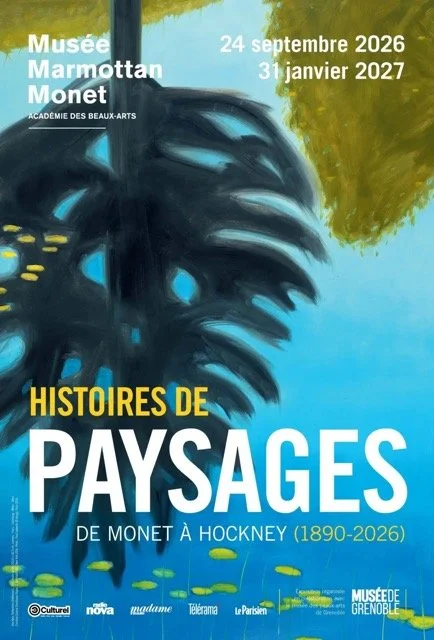
Katherine’s first full day in Paris coincided with the first Sunday of the month. Many museums are free that day. If you can afford it, it’s best to avoid those museums. So my choice for Sunday was the Musée Marmottan-Monet, which is not free. The exhibition, called ‘Histories of Landscape: From Monet to Hockney (1890–2026)’ honors the 100th anniversary of Monet’s death as did many of the exhibitions I saw in Normandie (here: Impressive Impressionists.) There is only one painting by Hockney, which you could easily miss. Franny (who’s as big a Hockney fan as I am) felt it was false advertising. She’s probably right but the exhibition was so visually rich and intellectually engaging, that even without a host of Hockneys, the exhibition was a feast for the eyes and mind. (Fig 3)
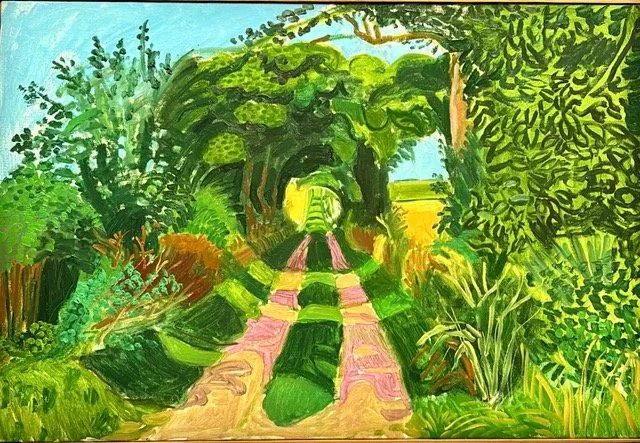
Figure 3. The only David Hockney painting in the exhibition
This is a kind of exhibition Trump would never allow. It’s too smart, it asks too many questions, it’s too ‘woke.’ If it had been planned for the Smithsonian, it would have been canceled. If at an institution not owned by the government, pressure would have been put to bear, funding would have been denied. To give you an idea, the gallery sheet has a “Points de Repere” (list of dates & events) which begins benignly enough with the date Monet acquired Giverny. The second date is WW I, the third is 1922, the date a Russian geologist declared that we are living in the Anthropocène age, when “human activity has become the dominant influence on Earth's environment, climate and ecosystems.” Which means, that despite the climate change deniers denials, almost everything that’s wrong with our planet is our fault. On this list is 1929, the beginning of the Great Depression and 1945 the date the U.S, dropped the first nuclear bomb. There’s the year the Berlin Wall was built and the year it fell; the first Gulf War and the end of the USSR. Eleven dates from 1890-1991. Three dates in this century - 2000, since then, most people on earth live in urban areas. 2022, the year Russia invaded the Ukraine. And this year, the hottest year on record. Quite a round-up for a landscape exhibition.
The exhibition is works of art from Europe and America, from Monet’s time to our own. The curators contend that during the ideological and historical upheavals of the past 135 years, landscape has become a major focus of artistic exploration and innovation. Accordingly, what was once a category of painting (like still lifes and portraits) isn’t just that anymore. “Whether in photography, sculpture, video or painting, artists…give form to our history through the landscape.” It is a witness to our era, acting as “an escape from the harsh realities of political events and climate change” while at the same time, “bearing witness to (earth’s) disasters - both natural and man-made.”
Section 1 is called ‘Water Lilies for History.’ On 12 November 1918, Monet wrote to French Prime Minister, Georges Clemenceau: "I am on the verge of finishing two decorative panels ….which I want to offer to the State…” Over the next few years, Monet and Clemenceau conceived of a grander monument to commemorate the end of the ‘Great War.’ That monument, 8 huge panels, is at the Musée de l’Orangerie where after a lukewarm reception, it has been a comfort to many world and war weary visitors. Monet modeled his panels on battle panoramas. Like those scenes of war, it is in a rotunda, displayed in a continuous circle. Unlike those scenes, it does not celebrate victory over a fallen enemy, instead it’s a “refuge of peaceful meditation.” (Figs 4 & 4a)
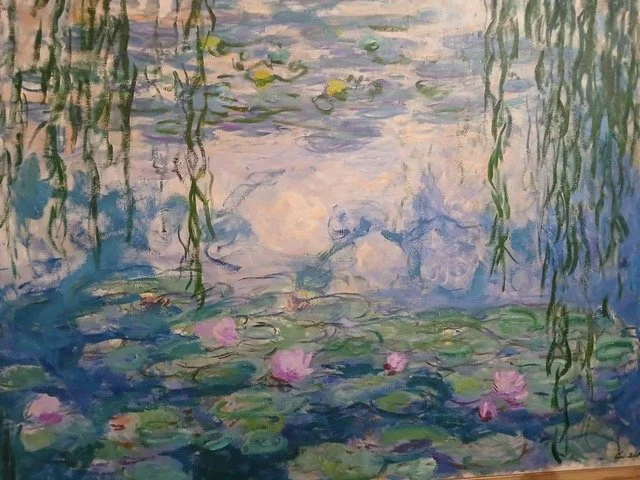
Figure 4. Waterlilies, Claude Monet
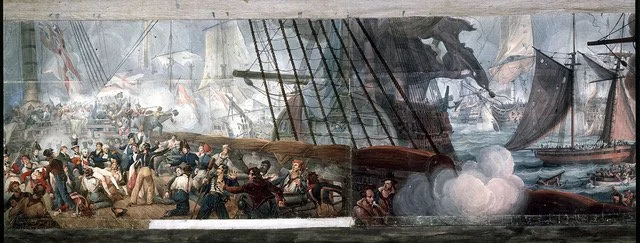
Figure 4a. Panorama Battle of Trafalgar,1805, Royal Museums Greenwich, William Heath, 1820
Section 2, ‘Landscapes at War’ documents the ‘tragic encounter between history and landscape,” specifically man’s attempts to seize control of territory. The result is a landscape disfigured, as by the gashes caused by the trenches of WW I warfare where all that was visible on the earth’s surface, was “smoke, explosions, and destruction.” (F 5-7)
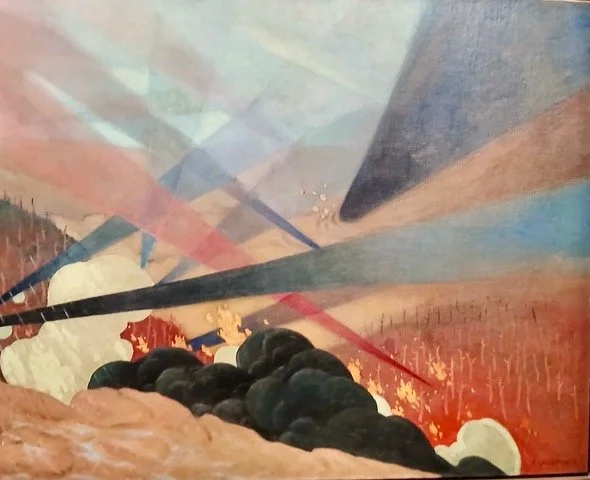
Figure 5. Verdun, War, Felix Vallotton, 1917
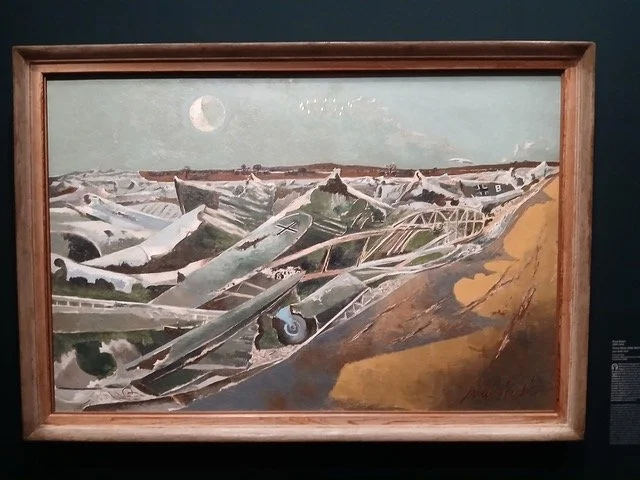
Figure 6. Dead Sea, Paul Nash, 1940
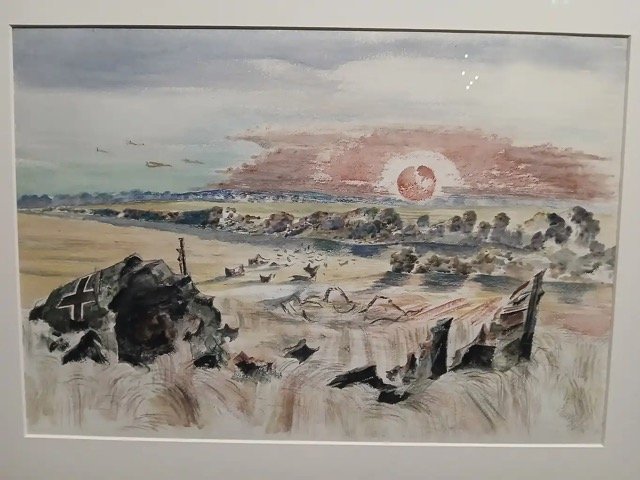
Figure 7. Bomber in the Corn Field, Paul Nash, 1940
Section 3, “Pays, Paysage’ includes some iconic American photographs in a new and interesting context. The subject is two photographic projects, one commissioned by the U.S. the other, by France. They “reveal an intersection between landscape, heritage, and the construction of a national imaginary.” From 1935-1942, photographers were commissioned by the USA Farm Security Administration to document the consequences of the Great Depression on rural populations. From 1984-1989, the DATAR photographic mission invited French photographers to document the French landscapes of their era. (Figs 8, 9)
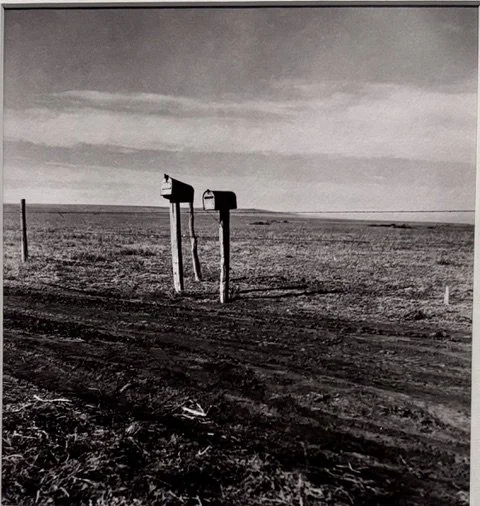
Figure 8. Dorothea Lange, for the Farm Security Administration 1935
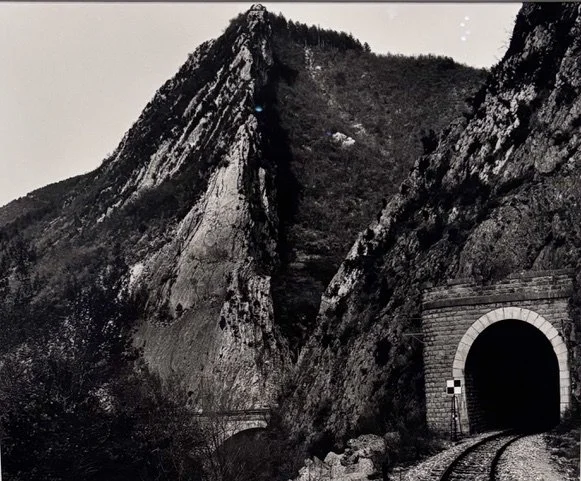
Figure 9. Sophie Ristelheuber, Nice-Digne Line for DATAR, 1984
Section 4, called Abstracting Nature shows how, “In the aftermath of the two world wars, the landscape was no longer (either) a specific place or (just) a backdrop. Artists wanted to show the upheavals that had happened and the emotions they evoked.” To do so, some artists turned to abstraction. Another section, 'Inner Landscapes’ notes that through Freud’s influence on Surrealism, landscape artists began to create works of art that were less about what we see than about “what we feel, imagine, or dream,”
The section, After History, reminded me of Thomas Cole’s series, painted in 1833, called the Course of Empire. Cole’s series is five paintings that go from Savage, Arcadia, Consummation, Destruction to Desolation. (Fig 10) But in Cole’s Desolation, there is hope, the landscape waits for the human cycle to begin again. But in this exhibition, we’re not so sure about that, because man isn’t only destroying himself. In the 21st century, man is, through greed and ignorance, destroying the landscape, the planet, too. After History shows that "landscape is what remains when everything else has vanished,’ when ‘history is buried and its traces concealed.’
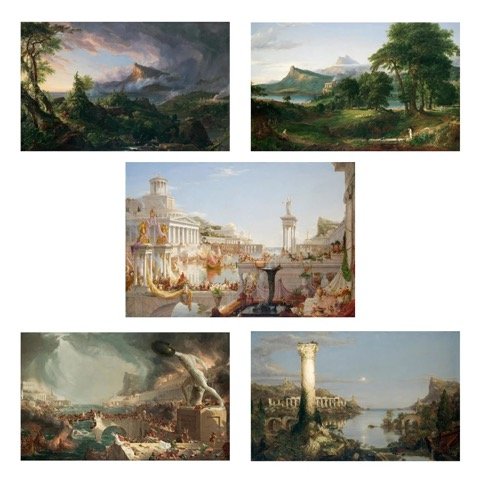
Figure 10. Course of Empire, Thomas Cole, (Desolation is bottom right panel)
The final section is Paradise Lost. The past 4 years have been the hottest in recorded history. Artists have been “observing, documenting and bearing witness to the shifts in our environment..” Art is preserving the “traces of landscapes that have become fragile or are destined to disappear.” At fault are the deniers, in the U.S. and elsewhere, who continue to ignore Al Gore’s warnings from 50 years ago, and who prioritize their own profit over the health and well-being of the planet and its inhabitants. No wonder Musk is looking for another planet to live on, he’s destroying this one. (Figs 11-22 are a taste of the variety of images here)
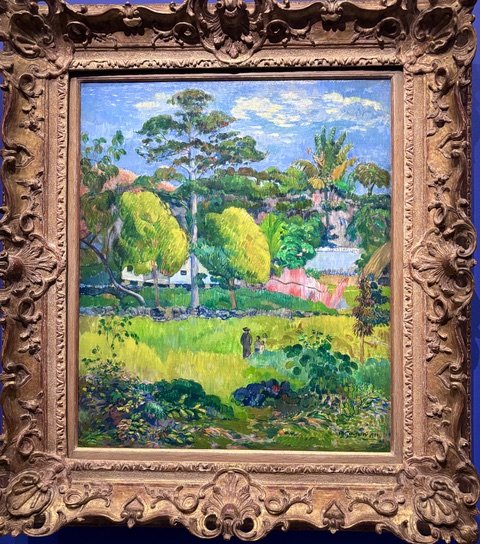
Figure 11. Landscape, attributed to Paul Gauguin, 1901
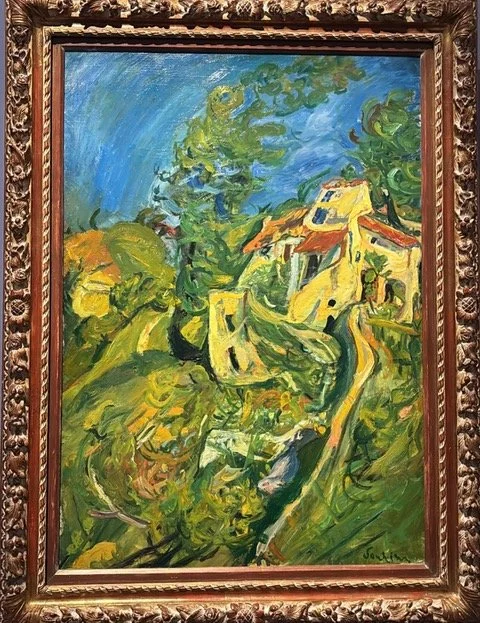
Figure 12. Landscape, Chaim Soutine, 1920-22
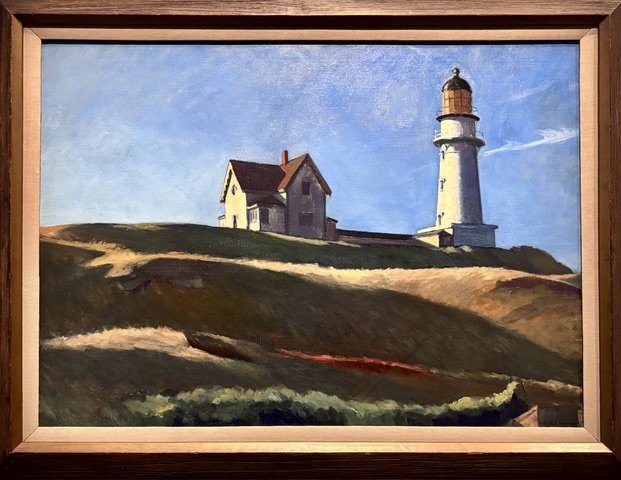
Figure 13. Lighthouse, Edward Hopper, 1927
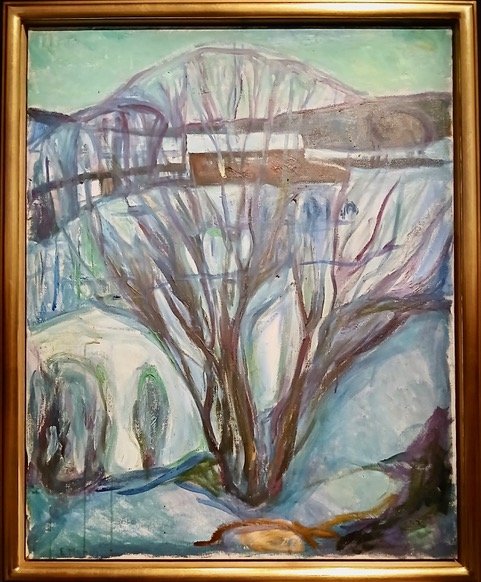
Figure 14. Winter Night, Edvard Munch, 1923
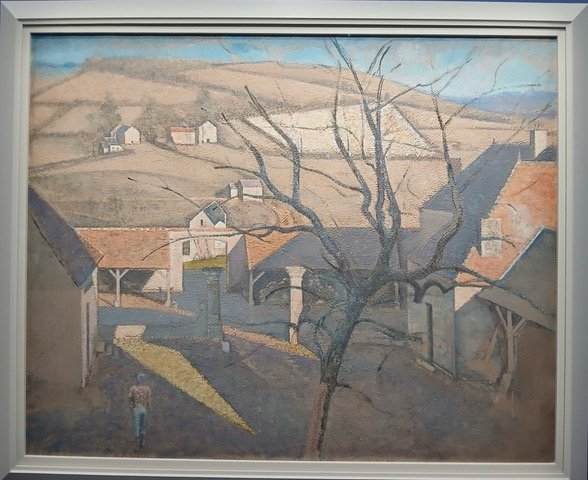
Figure 15. Balthus, 1960
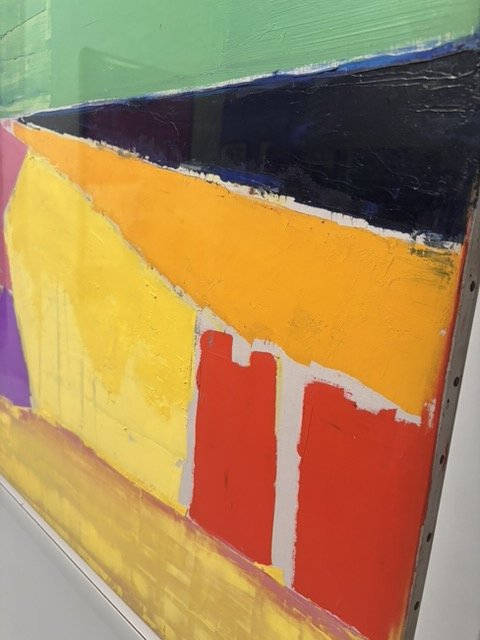
Figure 16. Sicile, Nicolas de Staël, 1954
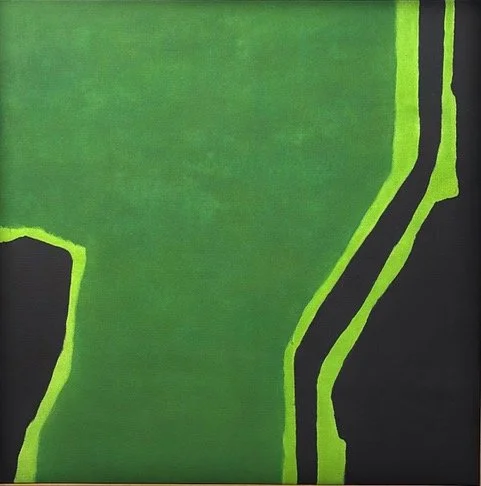
Figure 16. Untitled, ‘ Green’ Charles Pollock (Jackson Pollock’s brother) 1964
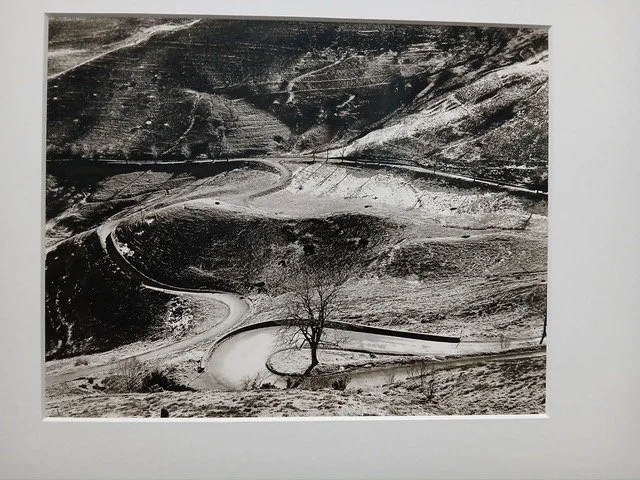
Figure 17. Haute-Pyrenees, Alain Ceccaroli, 1985
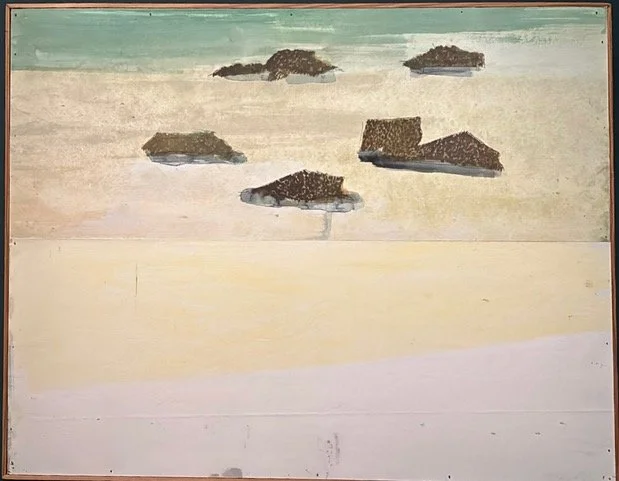
Figure 18. Blokoss, Maree Basse, Pierre Buraglio, 2005
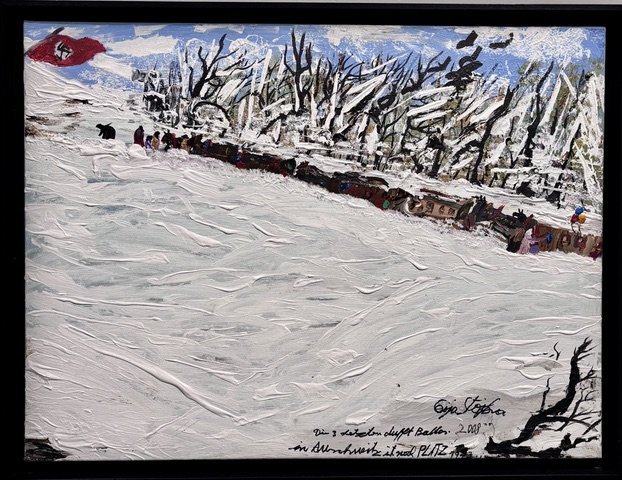
Figure 19. Auschwitz, Ceija Stojka, 2008
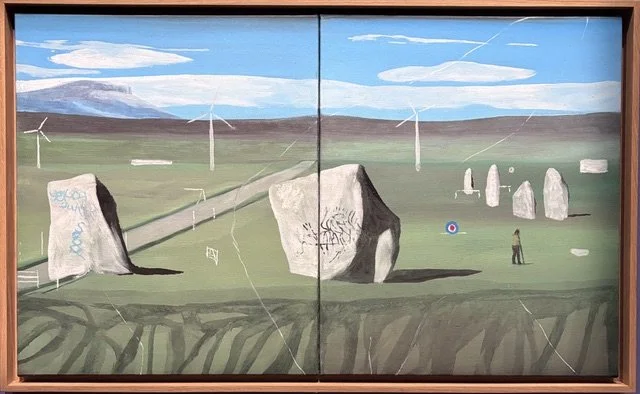
Figure 21. Cible, Marc Desgrandchamps, 2021
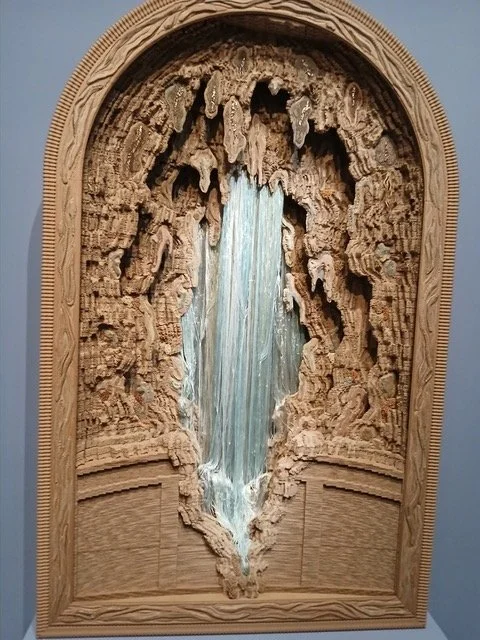
Figure. 22, Grotto, Eva Jospin, 2025
On Monday, when most museums in Paris (except the Louvre) are closed, we walked over to the Jardin des Plantes, where I go often, to walk among the formal beds planted in a rich and exuberant cacophony of colors and shapes and sizes of flowers. One day, I noticed a gorgeous poster on the garden’s entry gate announcing an upcoming exhibition entitled, ‘Artistes au Muséum’ to be held at the Grande Galerie de l’Évolution. (Figs 23, 23a, 23b)
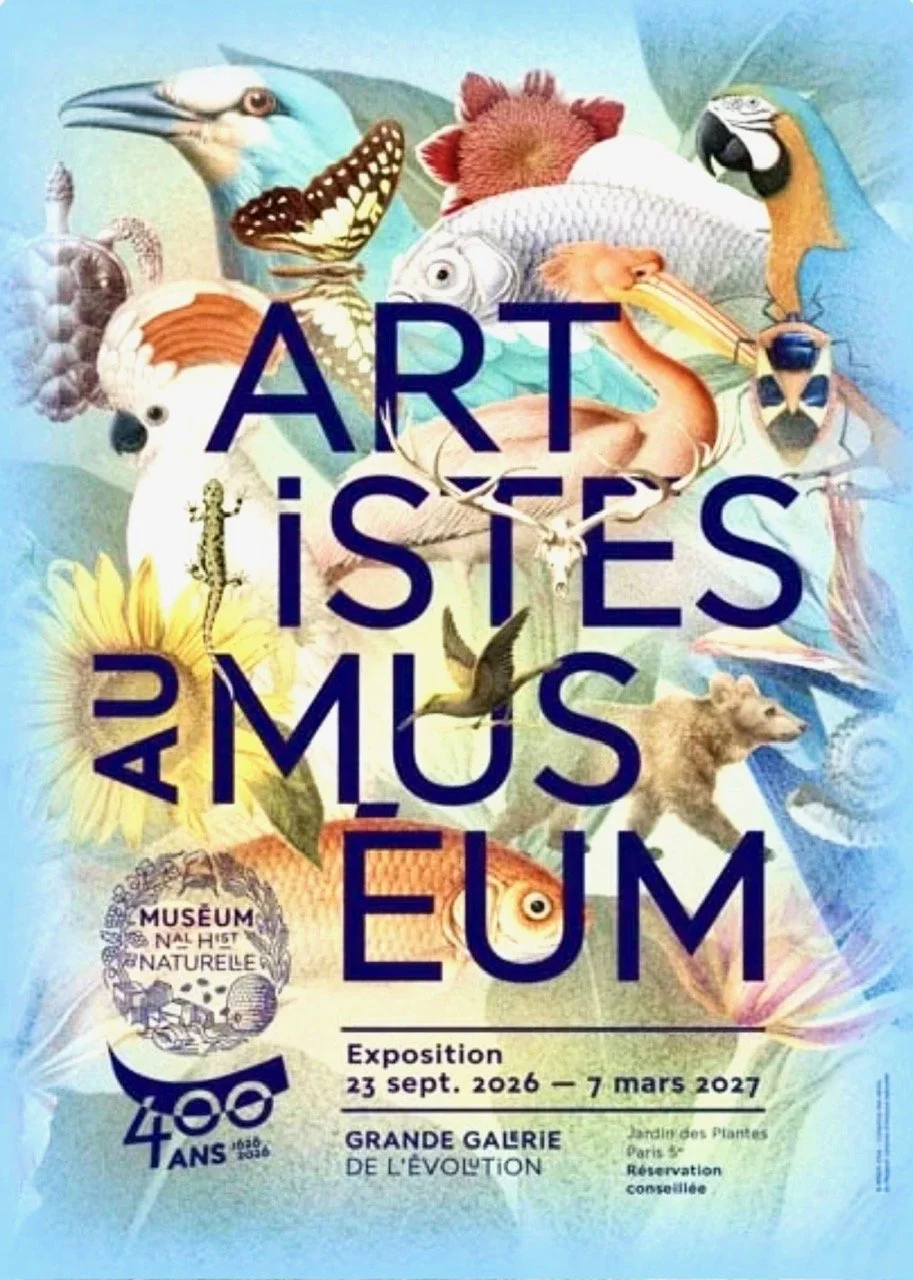
Figure 23. Poster for exhibition Aartistes au Muséum, Grande Galerie de l’Évolution
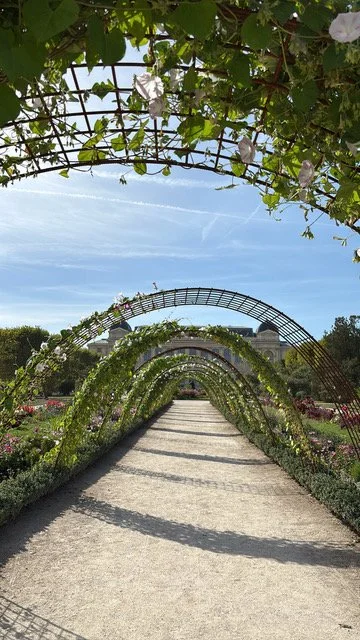
Figure 23a. Jardin des Plantes
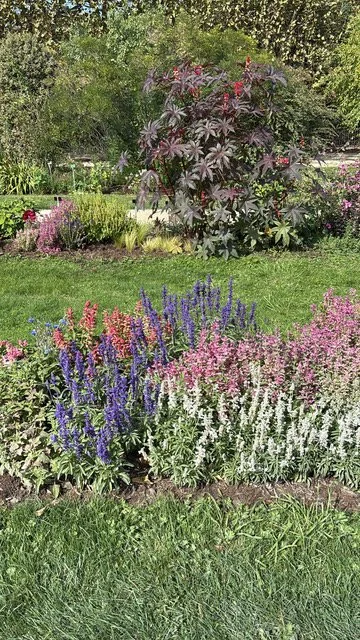
Figure 23b, Jardin des Plantes
In looking at the poster, I wondered about the word, muséum. A little research and I learned that in French, the word musée, is used for art, history, and cultural collections (human creations) and the word muséum, is reserved for natural history collections, like zoology, botany, geology and paleontology. So, now we all know.
The exhibition gets off to a great start, with Le Douanier (Customs Officer) Henri Rousseau's 1905 painting, The Hungry Lion Throws Itself on the Antelope, juxtaposed with the taxidermied scene of exactly that, Rousseau’s model for the painting. (F 24, 25)
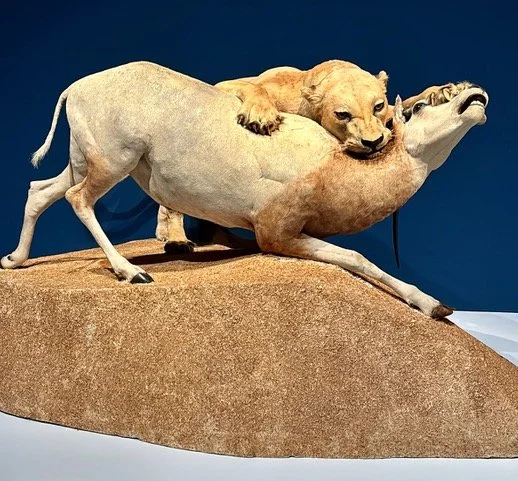
Figure 24. Taxidermied Lion and Antelope
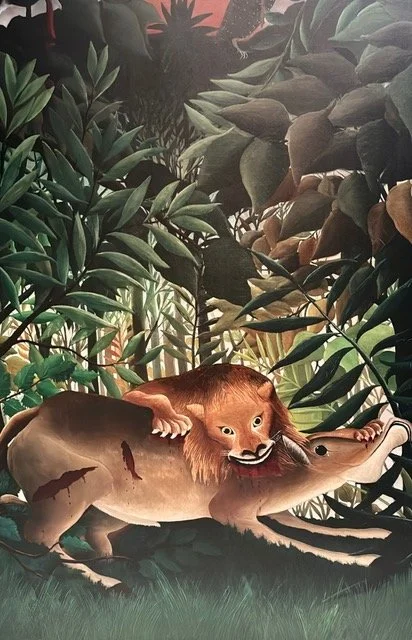
Figure 25. The Hungry Lion Throws Itself on the Antelope, Henri (Le Douanier) Rousseau, 1905
Like the best temporary exhibitions at art museums - works from the permanent collection interact with and inform the works in the temporary exhibition. This exhibition “show(s) how artists and scientists have worked together for centuries to understand and document the living world.”
The first section is entitled, ‘The Shared Journey of Art & Science,’ and focuses on artists who accompanied scientists on voyages of exploration and those who worked in the museum’s laboratories. Artists, like explorers and scientists, brought their own expectations and prejudices with them on voyages of discovery. They had assumptions about what they were going to see, what they were going to find. And then there they were, set the task of illustrating animals and plants they had never seen before, whose colors and shapes were completely new to them. This section shows how “artistic representation has always been a valuable, indeed essential element in scientific discovery and communication.” (Figs 26, 27)
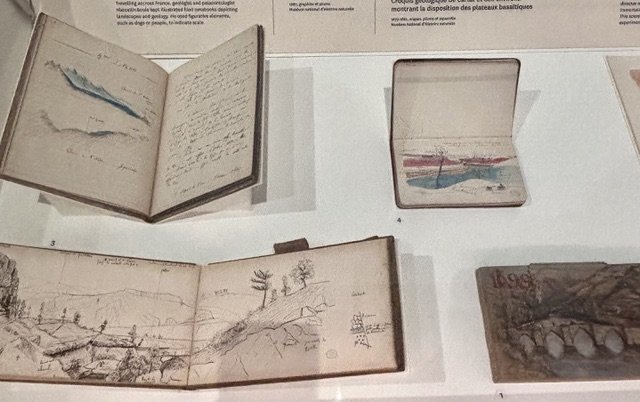
Figure 26. Sketchbook from Voyage of Science & Discovery
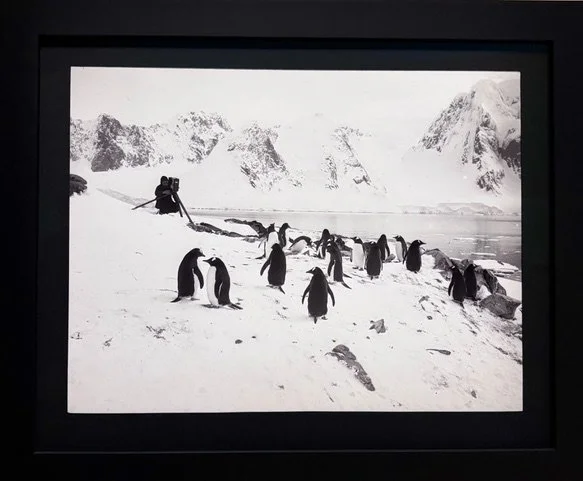
Figure 27. Penguins
The second section is entitled, “Techniques for Representing Nature.” The muséum’s own vellum (calf skin parchment) paintings are displayed here on rotation (they are very light sensitive). They have been in the Muséum’s collections since the 17th century. The works are delicate and beautiful and a pleasure to look at, closely. (Fig 28)
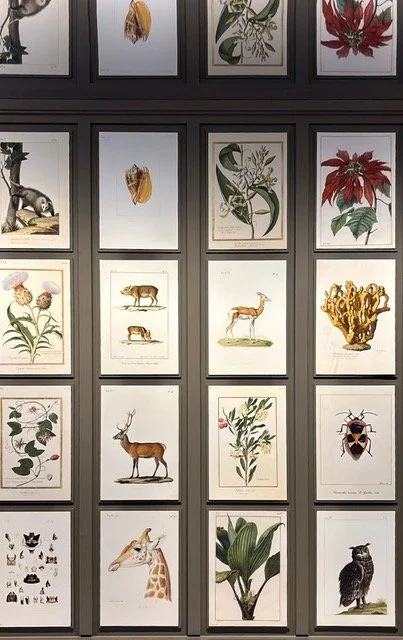
Figure 28. A wall of illustrations on vellum (calf skin), the Muséum has a vast collection of these
The third section is the biggest, The Museum as a Creative Sanctuary. It was surprising to see how many well known artists hung out at the Muséum, from La Douanier to Delacroix to Dali. Le Douanier, whose painting of the antelope being attacked introduced the exhibition, also sketched the exotic plants in the greenhouses for his jungle scenes. As for Delacroix, there’s a story that he and his friend, the animal sculptor and museum’s drawing professor, Antoine-Louis Barye, sketched the lion Coco being dissected after his death. The studies Delacroix made that day, along with his sketches of lions in the menagerie, survive in his famous Lion Hunt series. (Fig 29)
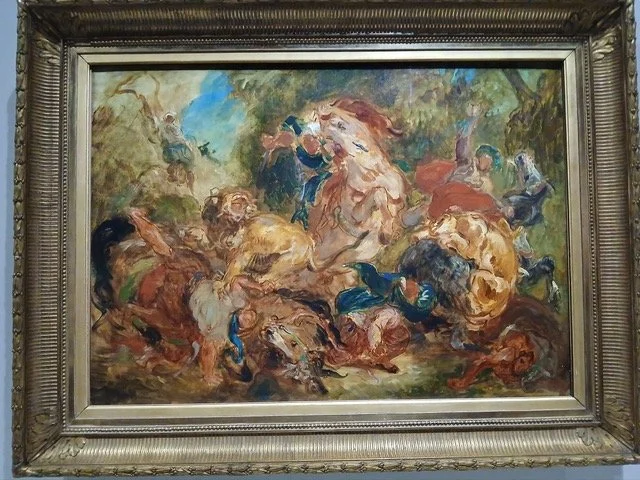
Figure 29. Lion Hunt, sketch, Eugène Delacroix
The animal painter Rosa Bonheur knew the Muséum well. As a young artist, she often visited the Jardin des Plantes and its Ménagerie (as well as Parisian markets and slaughterhouses) in her quest for strict anatomical accuracy in her paintings. When she acquired a pair of lions from the Marseilles Zoo, she gifted them to the Muséum!
The huge room filled with animal sculptures by François Pompon, confirms that he was an important presence at the Muséum. He visited the Ménagerie often, drawing and observing the hippopotamus, the panthers, the exotic birds. Then, in his studio, with his sketchbooks nearby, he stripped away the "falbalas" (frills) of the ‘real’ animals to create his sculptures, ”the smooth, pure essence” of those same animals. (Figs 30 - 32)
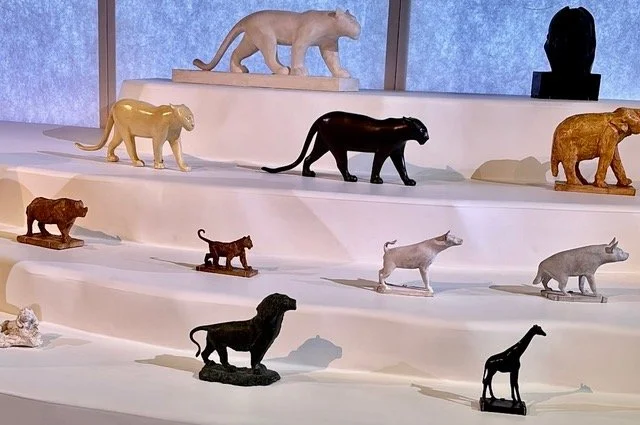
Figure 30. Section of the large room given over to the sculptures of François Pompon
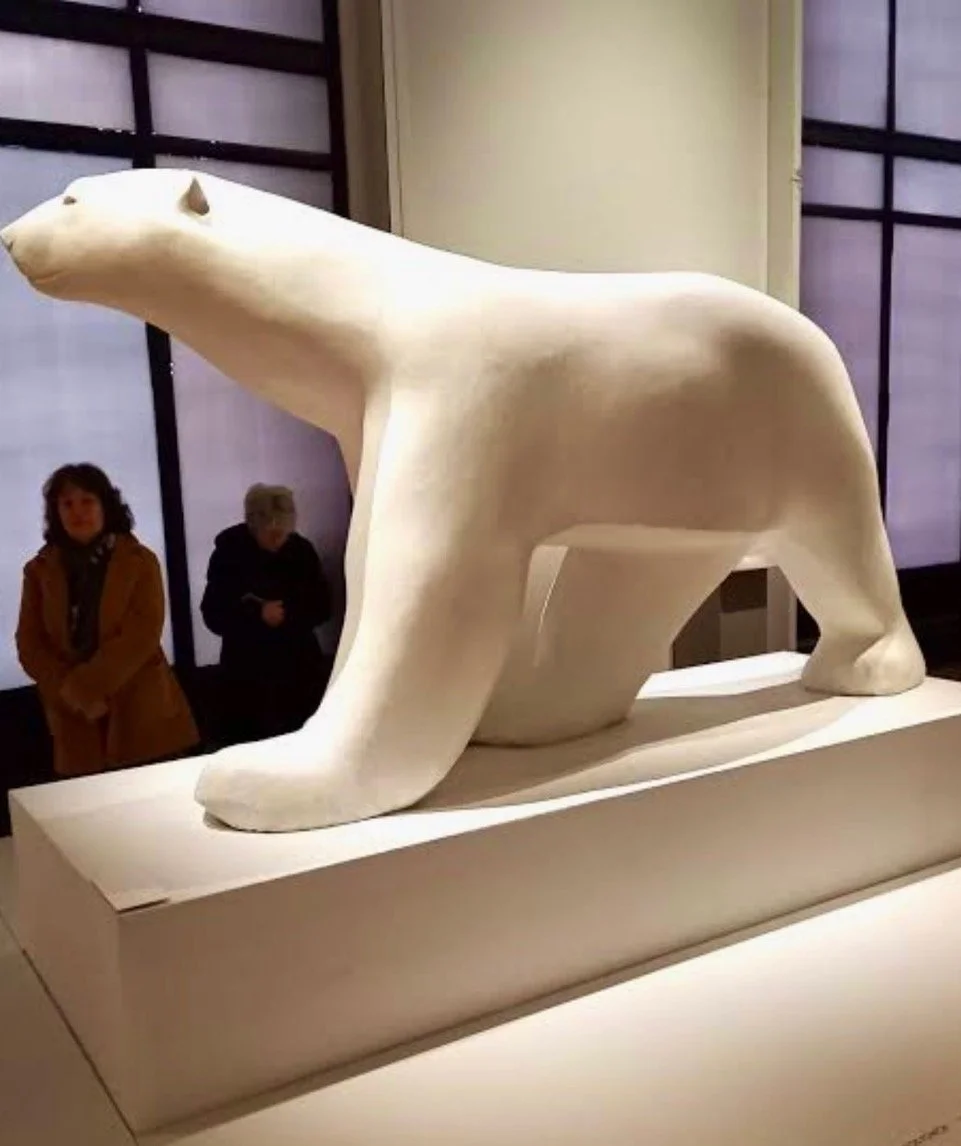
Figure 31. Polar Bear, François Pompon
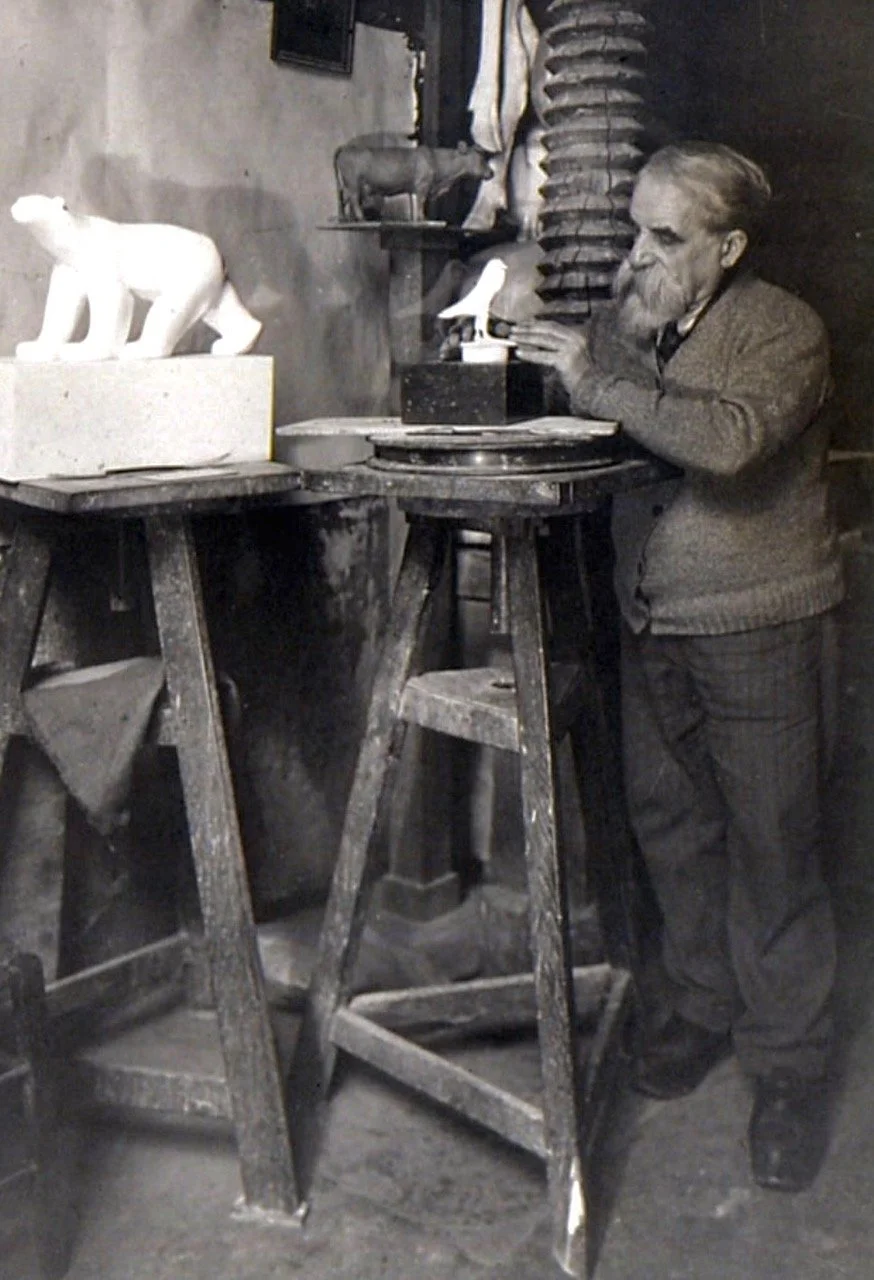
Figure 32. François Pompon at work in his studio
Alberto Giacometti’s goal was not so different from Pompon’s, although the results were. Giacometti sketched animal skeletons in the museum’s paleontology and anatomy exhibits. He drew animal rib cages, joints, and spines. Pompon wanted to get rid of the ‘frills,’ Giacometti wanted to strip away the ‘clutter’ of flesh to find the structural truth, the ‘skeleton in space.’ The animal skeletons also inspired Giacometti’s 1930s Surrealist phase. (Figs 33-36)
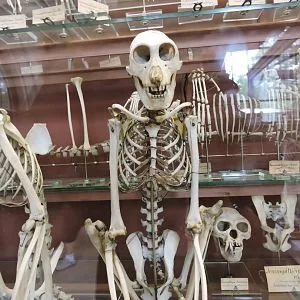
Figure 33. Paleontology Gallery, Jardin des Plantes
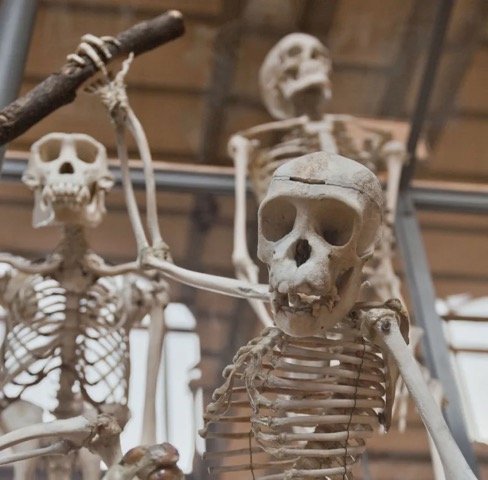
Figure 34. Paleontology Gallery, Jardin des Plantes
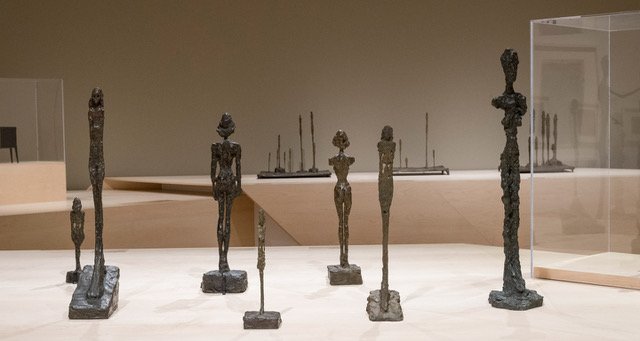
Figure 35. Figures, Alberto Giacometti
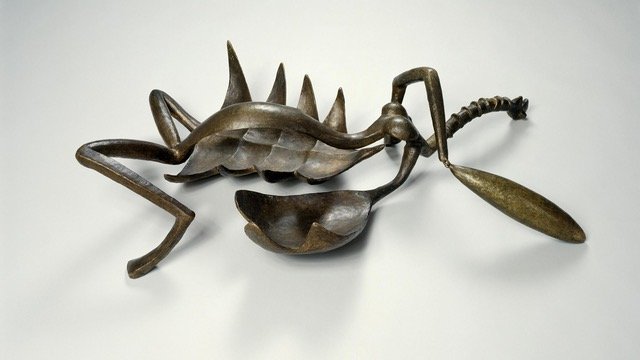
Figure 36. Surrealist objet, Alberto Giacometti
There’s a 1955 video on a constant loop documenting Salvador Dalí’s day in the Zoological Park.. His preposterous performance required the participation of a rhinoceros as he painted a surrealist interpretation of Vermeer’s painting, The Lacemaker. Dalí charged around holding a lance with which he pierced a reproduction of the painting as “a crowd of astonished scientists, keepers, and photographers looked on.” I guess Dali’s dalliance is included to show what good sports scientists can be. (Figs 37-39)
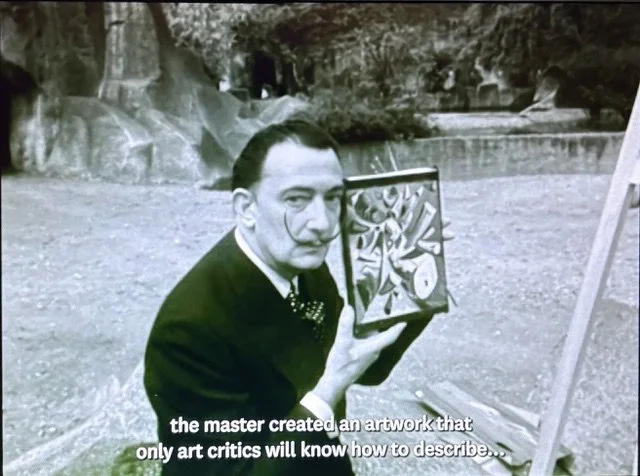
Figure 37. Dali at the Zoological Park, 1955 video
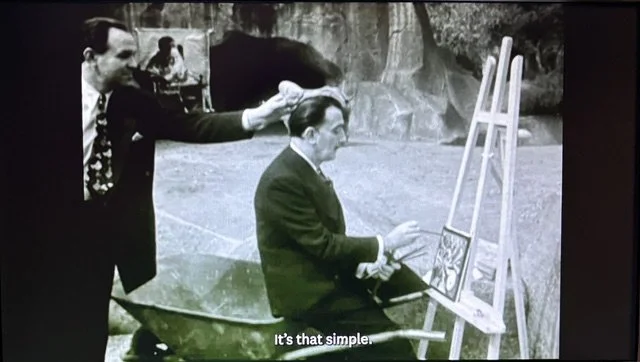
Figure 38. Assistant putting slice of bread on Dali’s head at the Zoological Park, 1955 video
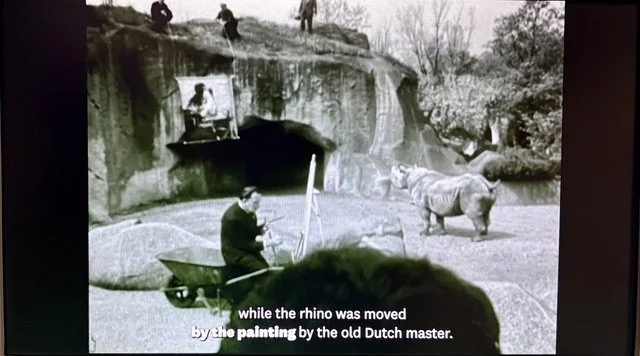
Figure 39. The rhinoceros is completely indifferent to Dali, 1955 video
Photographs by two of my favorite photographers are here - Robert Doisneau and Sarah Moon. Doisneau came to the Muséum twice. In 1942-43, he photographed scientists and staff dong their work during the Nazi occupation. He returned 45 years later for more behind-the-scenes shots of scientists, taxidermists, and researchers at work. Doisneau called himself a ‘pêcheur d’images (a fisher of pictures) rather than a hunter of images, as Cartier-Bresson was. The world Doisneau photographed was not the world he found but, after a bit a manipulation, the world as he wished it to be. (Figs 40-42)
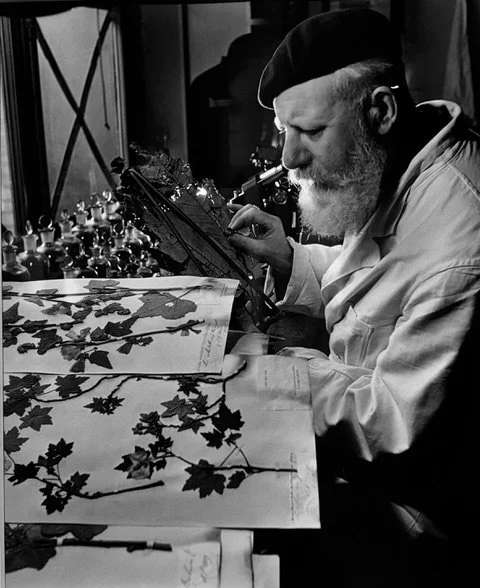
Figure 40. Scientist at Work, Robert Doisneau
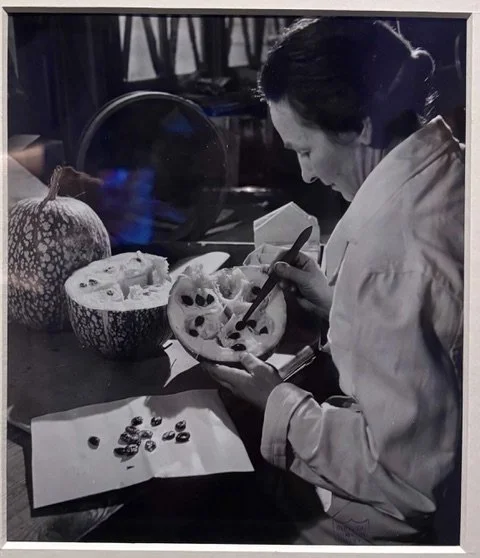
Figure 41. Scientist at Work, Robert Doisneau
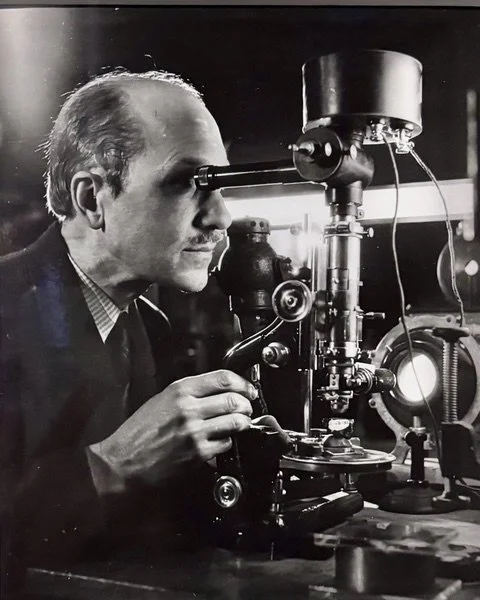
Figure 42. Scientist at Work, Robert Doisneau
Sarah Moon was given free reign to photograph in the Muséum in 2011. She chose to take pictures of taxidermied animals, live animals, and a variety of vegetal, mineral, and animal life forms. Unlike Doisneau’s clean, crisp Leica or Roillflex images of people where they worked, Moon’s Polaroid photographs have a ghostly, painterly aesthetic. They are intentionally blurred and filled with imperfections. By employing a slow, delayed negative technique, Moon’s 20 year old photos “look like rare 19th-century artifacts exhumed from a long-lost archive.” (Figs 43 - 45).
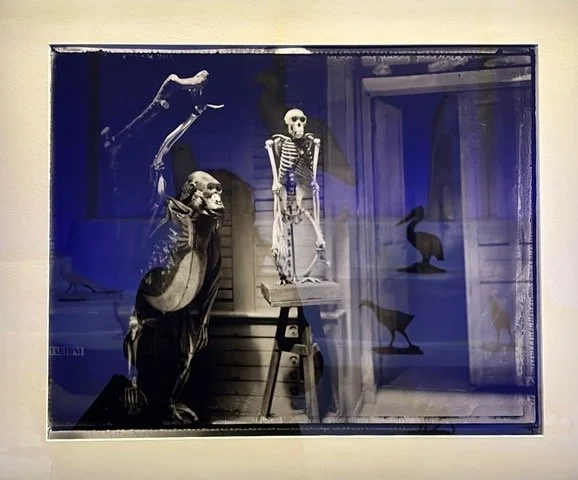
Figure 43. Sarah Moon at the Muséum, 2011
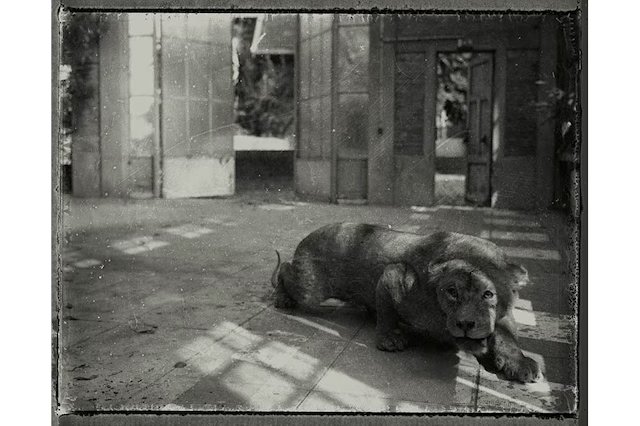
Figure 44. Sarah Moon in the Menagerie, 2011
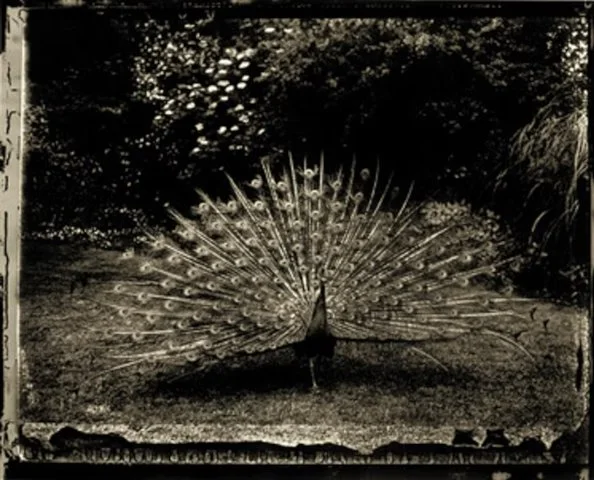
Figure 45. Sarah Moon at the menagerie
This exhibition was a joyful anecdote (Figs 46-48) to the beautiful but somber exhibition at the Marmottan-Monet. But the case has been made, our planet is at stake. Intelligence and thoughtfulness must replace greed and ignorance if we are to survive. Gros bisous, Dr. B.
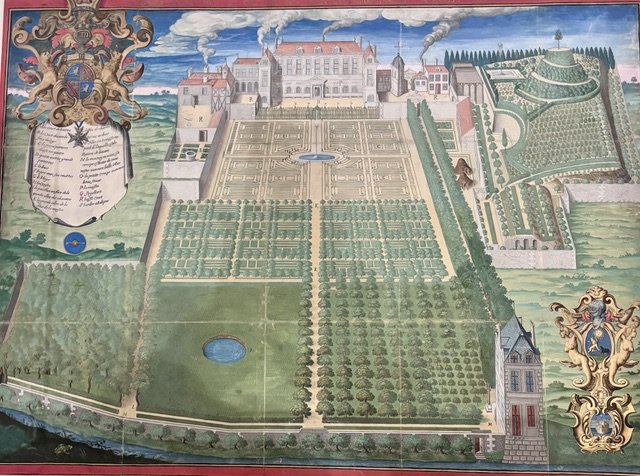
Figure 46. The original Jardin des Plantes. The beds are still there but the plantings are exuberant now
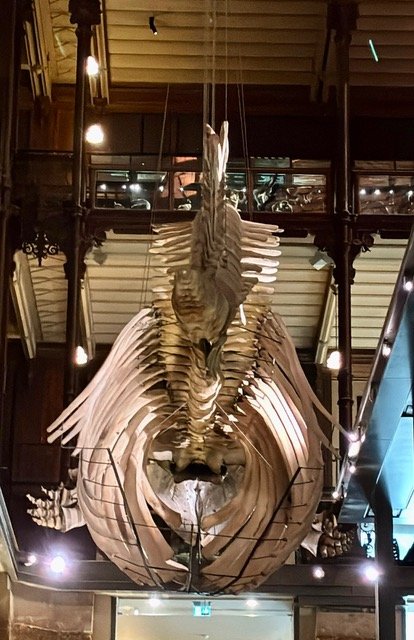
Figure 47. The skeletons just outside the exhibition
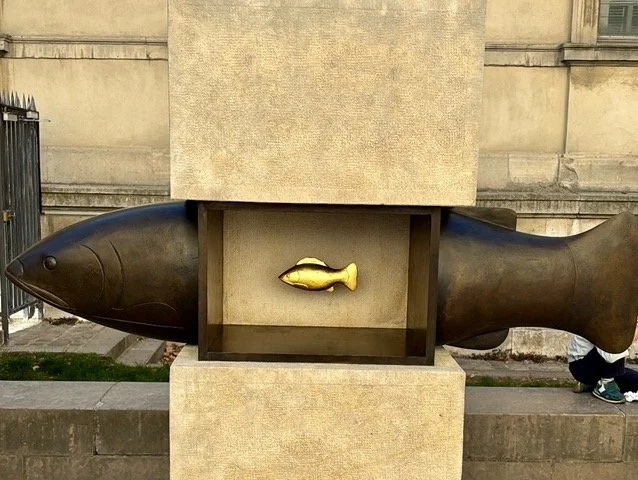
Figure 48. Le Poisson ( Galerie de l’Evolution couryard), Fançois Xavier Lalanne, bronze, 1994
Thanks to everyone who took time to send a Comment on last week’s post, Paris is Burning :
I’m so grateful for your observations of these events in Paris that the whole world was watching. It can be complicated for those of us outside France. I’m glad you added that LeMonde says the protests are the evolution of Macron’s presidency whereas Some of the US press links it to immigration. (I’m sure you saw Jon Stewart’s short clip debunking that link). I always benefit so much from your explanations. You not only combine the politics of the protest through the eyes of art and culture, but you have the ability to see through the eyes of different national contexts. And thus, added some great photos, and great references to memorable films. Thanks for your hard work Noreene, Virginia
Thanks for the update. We have had three such events in Baltimore during my lifetime starting in the 60's. There is no excuse for destruction and looting usually caused by outsiders taking advantage of peaceful demonstrations. Looking forward to four peaceful days in Paris next week. Regards Ben, Baltimore
Very very interesting article from someone who lived through it. It did kind of remind me of January 6 although it was only on one building and not a whole community.
I understand that they’re planning a few more protest and have given the dates and one of them is November 5 and that’s the day we planned to land in Paris hopefully things will be much quieter by then looking forward to seeing you, Deedee, Baltimore
Thank you for your frank observations and comparisons. which area bit eery! from my standpoint in SoCal. Stay safe.
Very good piece of description and analysis. I saw bits on tV while on book tour in Germany. All very depressing, not least the thought of the next French government, Martin, London & Dordogne.
Dearest Beverly (Dr B), I am utterly transfixed by your piece on the Paris events of mid-October. Your unique ability to marry the exacting eye of an art historian with the fearless curiosity of a journalist is nothing short of breathtaking. You possess the rare gift of making complex truths not only visible, but unforgettable. Your extraordinary analysis of the October 17th and 18th events in Paris is a masterclass in critical insight. By cutting through the noise with such intellectual rigor and luminous prose, you haven't merely reported history. You've illuminated its enduring resonance. Truly exceptional work. A brilliant tour de force. Your profound reading of the October 17–18 Parisian landscape demonstrates the very best of cultural journalism, fearless, impeccably structured, and profoundly evocative. Heartfelt congratulations on such a triumph of intellect and style. Bravissima ! Gerard, Paris
I too really appreciated this clear overview and am so thankful I missed the violence when I was over in Paris. So very sad to see such a magnificent city suffering and those that are really suffering the struggles of life now being drowned out by the violent mob. Katherine, Oxford, England
Beverly , Well done ! Thank you so much for bringing light into the darkness of despair of the past horrific week with such clarity. Walking back to my apt in Le Marais I unexpectedly found myself caught up and witnessed close hand the manifestation of 17 October but I was without comprehensive knowledge of the cultural and political background that caused the manifestations, riots and looting. I appreciate so much your keen insight and knowledge that provides a more informed understanding of these complex events.Larkspur, CA
New comment on Gardens: where Art and Nature meet:
I love the Foundation Giacometti and we visited this exhibition just last week ona gloomy, rainy day. It was a serene experience to enjoy the works in that lovely intimate building. This past spring, the Metropolitan Museum had a temporary exhibition of Giacometti sculptures placed around the Temple of Dendur which made one see both the sculptures and the Egyptian temple in new ways. Thanks always for your essays. Maribeth